Entertainment
10 Greatest Fantasy Movie Masterpieces of the Last 80 Years, Ranked

In times of turmoil, it’s nice to have an escape, and there’s no better escape than fantasy movies. They whisk us away to far-off lands where good actually triumphs over evil and magic is real. It beats doomscrolling into oblivion, that’s for sure. Even when they turn dark, as many fantasy films do, they can still enthrall us with their enchanting visuals and imaginative storytelling. There is no shortage of fantasy film masterpieces going all the way back through film history, and even limiting a list to the last eighty years leaves us with an embarrassment of riches.
The greatest fantasy films found across the last eight decades come from well-known franchises, major studios, and master filmmakers. They offer a wide swath of the variety found within the genre, from family-friendly animation to dark adult fairytales. There are films of low fantasy made with minimal to no advanced technology and high fantasy blockbusters featuring the most state-of-the-art effects available at the time. There’s more than just one way to get from once upon a time to happily ever after, and these ten fantasy movie masterpieces made in the last eighty years do it the best.
10
‘Mary Poppins’ (1964)

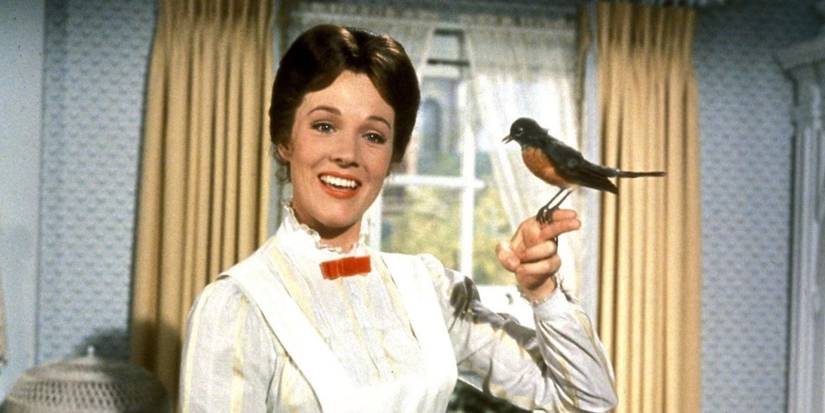
Whimsical isn’t a word you’d associate with many movies, but it’s absolutely apt when describing the 1964 fantasy musical Mary Poppins. From the earworm songs to the technically impressive combination of animation and live action and Julie Andrews‘ Oscar-winning performance, there’s an overload of whimsy. Though it may be a thoroughly Disneyfied adaptation of the character created by P.L. Travers, who had many issues with the film version of her books, there’s no denying the musical magic of it. It is the epitome of the House of Mouse and its old-fashioned sensibilities and everlasting optimism.
As the titular nanny who floats down out of the sky to care for the unruly Banks children, Andrews is more than just a spoonful of sugar in her many song-and-dance numbers with impeccable vocals and elegant footwork. She provides the perfect balance of no-nonsense authority and cheerful exuberance. There is no Mary Poppins without Andrews, but the film around her is immaculately crafted, too. Shot entirely on soundstages, it has a fantastically heightened design, and the use of the sodium vapor process to allow the actors to believably interact with animated elements looks better than some modern iterations of the effect.
9
‘Beauty and the Beast’ (1991)
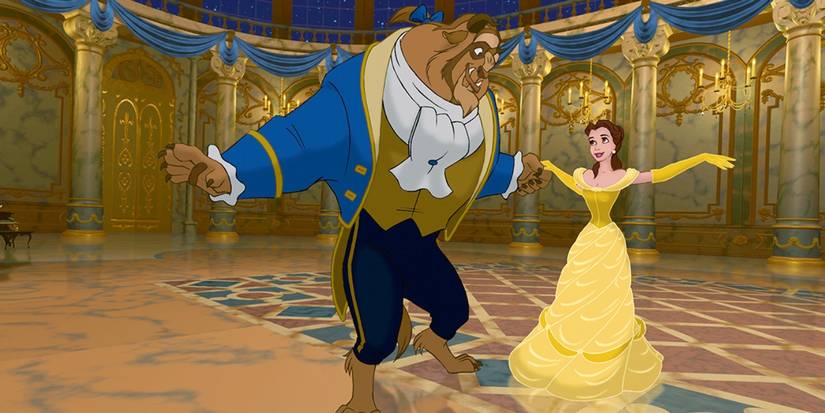
This isn’t just a list designed to glaze Disney, but there’s no denying the impact the company has had on the fantasy genre, and nowhere is that more apparent than in their many classic animated fairytales. From Cinderella and Sleeping Beauty to Frozen and Encanto, the studio has delivered magical movie after magical movie, but their fantasy masterpiece is without a doubt the Renaissance-era classic Beauty and the Beast. It brought back the award-winning musical duo of Howard Ashman and Alan Menken, who delivered more magical numbers alongside the gorgeous animation, the combination of which made the film a modern Disney classic.
Retelling the classic French fairy tale for modern American audiences, the film makes its protagonist, Belle, an independent woman thrust into fantastical circumstances when she’s taken captive by the titular Beast, a prince cursed for his vanity. The Stockholm Syndrome aspects of the plot notwithstanding, the film weaves a wonderfully enchanted tale as old as time. On a technical level, it is still breathtaking to behold, combining hand-drawn animation with CGI for one of the most fluid and lush movies in Disney’s catalog. Beauty and the Beast broke major barriers for animated films, receiving an Academy Award nomination for Best Picture that solidified its artistic merit and cemented it as the most crucial film of the Disney Renaissance.
8
‘Harry Potter and the Prisoner of Azkaban’ (2004)

No matter how much author J.K. Rowling tries to tarnish her reputation or how diluted the franchise becomes with needless prequels or reboots, nothing can diminish the monumental success and impact of the Harry Potter franchise in the late ’90s and through the 2000s. For a generation of fantasy fans, Potter was their definitive franchise, as much as Star Wars was for those who came of age in the ’70s and ’80s. It maintained a remarkable level of quality through its eight films, but if there’s one film that reigns supreme above the rest, it’s Harry Potter and the Prisoner of Azkaban.
The third entry in the franchise, Prisoner of Azkaban, marks a significant maturation for both the characters and the filmmaking. Alfonso Cuarón took over directing duties from Chris Columbus, and the result is a much moodier and atmospheric fantasy film that paints in much darker shades than its predecessors. Harry must confront the pangs of puberty alongside the anger he harbors towards Sirius Black, the man who betrayed his parents. The film set a bold new standard for the franchise, with every subsequent sequel failing to recapture the exact dark magic that made it so special. Prisoner of Azkaban is the only masterpiece in the most consequential fantasy film franchise of the 21st century.
7
‘The Princess Bride’ (1987)

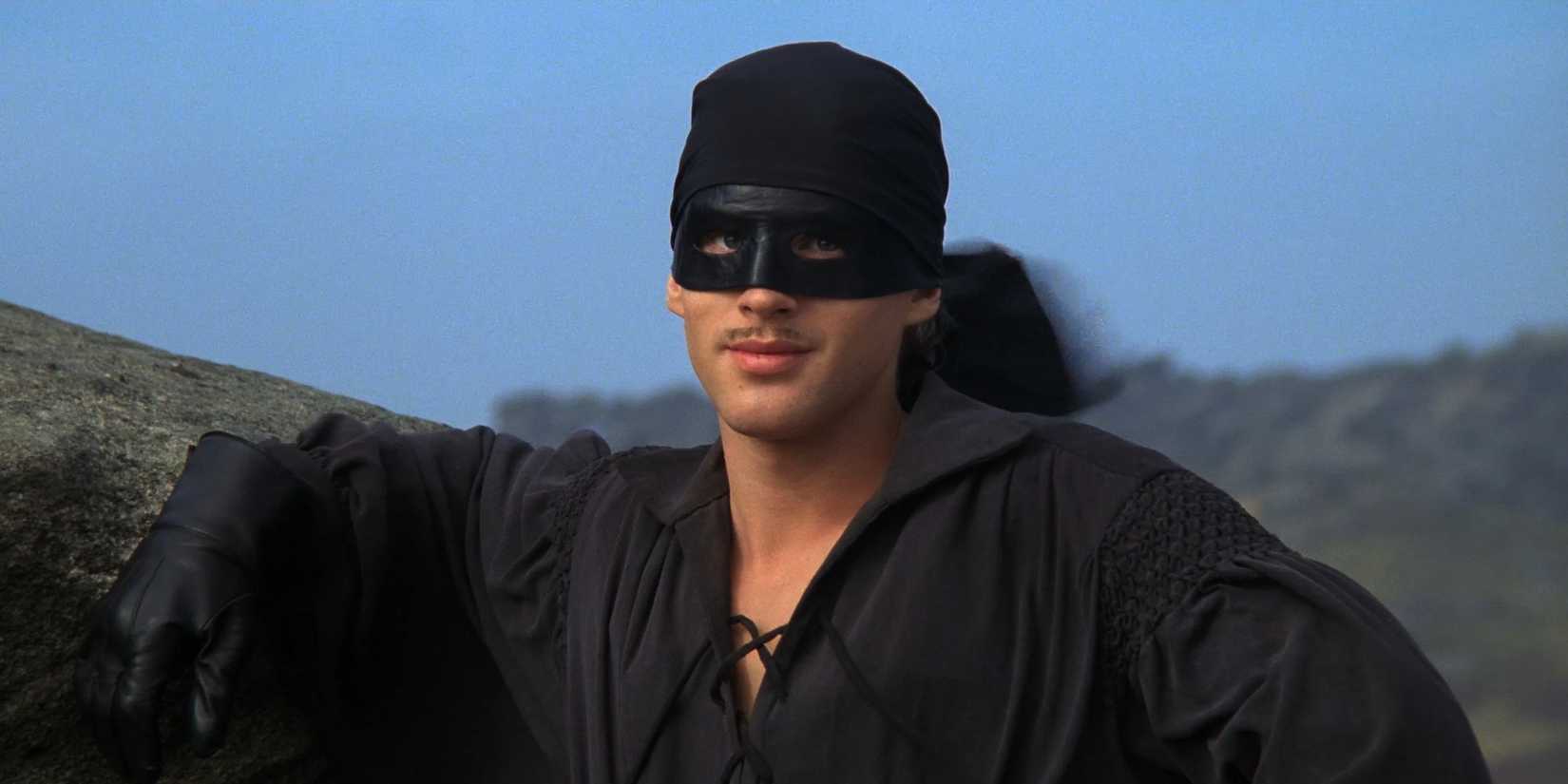
Swashbuckling adventure, sentimental romance, and endless witticisms abound in Rob Reiner’s meta-fantasy masterpiece The Princess Bride. Adapted by William Goldman from his novel, the film has become a quintessential cult classic since its release, thanks to its endlessly quotable dialogue and colorful characters who fill out its story of star-crossed lovers. It walks a tightrope between post-modern satire and traditional themes, which has afforded it a timelessness that not all films of a similar style have maintained.
Through the framing device of Peter Falk telling the story to his grandson, played by Fred Savage, the film has its cake and laughs at it too, subverting genre expectations at every turn. Cary Elwes and Robin Wright lead one of the greatest casts of all time as farmhand turned daring swordsman Westley and his beloved Princess Buttercup, who are kept apart by cruel fate and the machinations of an evil king. Every actor is given a moment to shine, from the wordplay of Wallace Shawn to the swordplay of Mandy Patinkin to the improvised insanity of Billy Crystal. The Princess Bride is possibly the most memorable fantasy film ever made and remains a testament to the talent and warmth of its dear departed director.
6
‘It’s a Wonderful Life’ (1946)
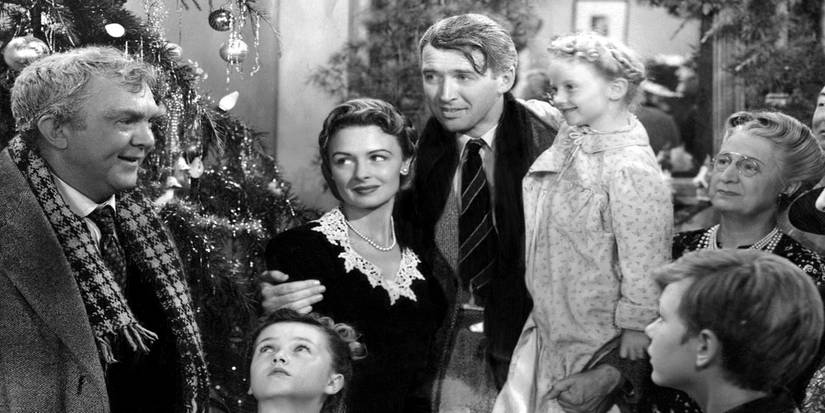
The ultimate Christmas movie, the ultimate feel-good movie, the ultimate Frank Capra movie. All those superlatives and more have been applied to It’s a Wonderful Life, a film that was initially seen as a failure, but has since become a canonical fantasy classic. Though it was nominated for major Academy Awards, including Best Picture, it received a slightly mixed reception compared to Capra’s prior films and was a box office failure. Eventually, it was saved from obscurity by becoming a holiday staple on television decades later.
As the first post-World War II film for James Stewart, the specter of it hangs over both his performance and the film itself, which starts with Stewart, as small-town banker George Bailey, contemplating suicide. It’s a dark contemporary fairy tale that measures the weight of one man’s soul and the effect he can have on an entire community through his trials and tribulations. George is a good Samaritan, but doing good can come with a cost, as the film shows, but it also shows the riches that one gains from doing good. It’s a wonderful film and a wonderful fantasy.
5
‘The Discreet Charm of the Bourgeoisie’ (1972)
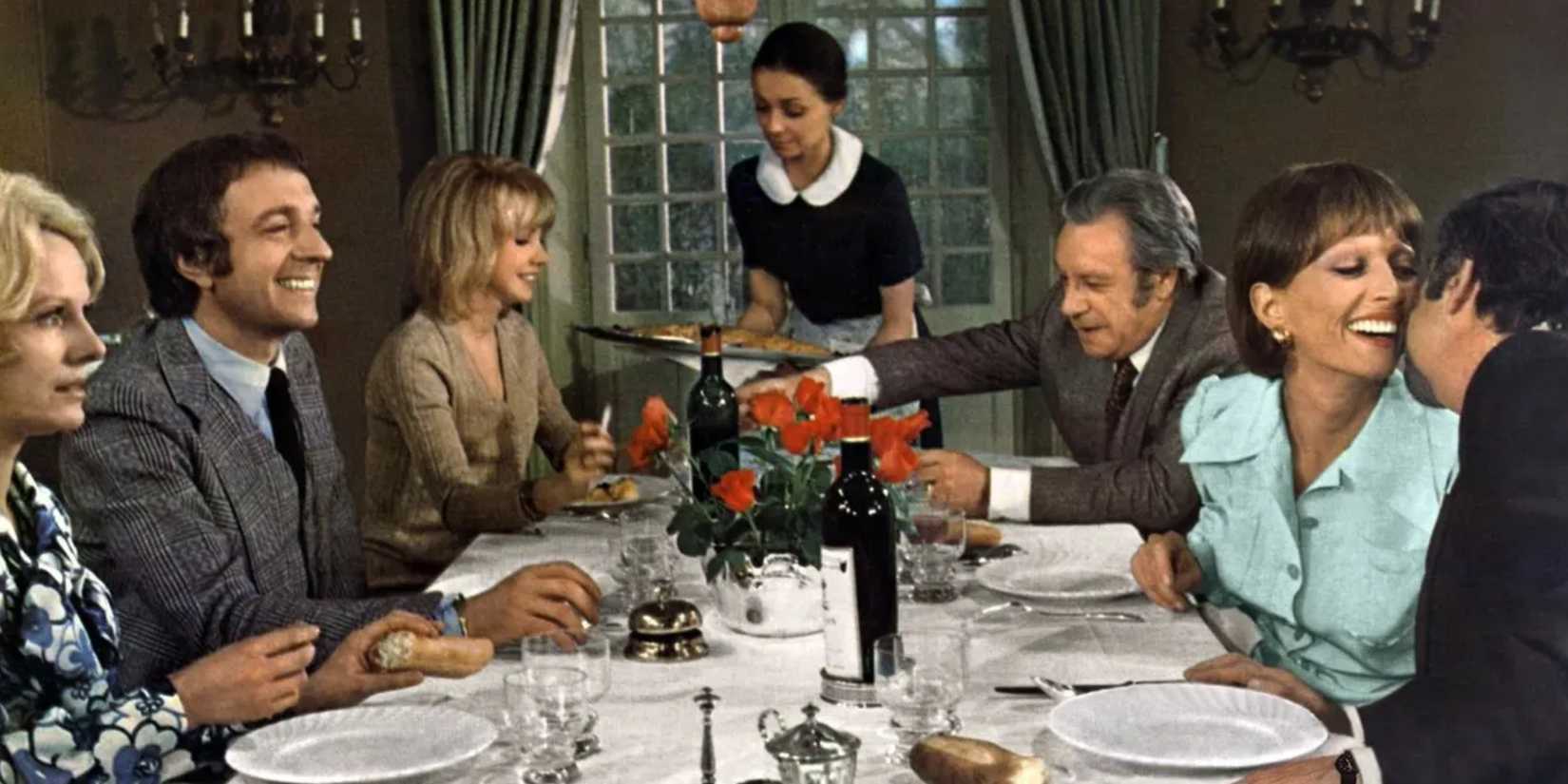
Luis Buñuel‘s surreal tale of six friends’ failed attempts to share a meal is both inexplicable and accessible for those unfamiliar with the director’s work. Buñuel was a master surrealist and political satirist, and his films often rejected narrative coherence. In that way, The Discreet Charm of the Bourgeoisie is conventional in its unconventional approach. It is a masterpiece of absurdity that fluctuates between dreams and reality and a nonsensical comedy of fantastical proportions.
The six bourgeoisie individuals in a constant state of hunger continue to have their meals interrupted by increasingly bizarre and absurd situations, from sexual dalliances to military maneuvers. Everyone will come away with something different to say about the film and its flights of fancy, but there’s no denying Buñuel’s biting, which is plainly stated right in the title. These bougie characters have neither charm nor are they discreet, but they hide behind their societal façade, which masks their hypocrisy and empty identities. It’s a twisted comic fantasy for the quiet anarchist in all of us.
4
‘The Lord of the Rings: The Fellowship of the Ring’ (2001)
Far from the unusual, The Lord of the Rings is the universal standard for fantasy. J.R.R. Tolkien‘s influential trilogy set the foundation for modern fantasy fiction, and the film adaptations directed by Peter Jackson had a similar effect on the cinematic landscape. The films reinvigorated and reinvented the fantasy epic for the 21st century, using cutting-edge visual effects to bring its magical world to life in a way that had never been seen on the big screen before. The entire trilogy is a masterpiece of high fantasy adventure, and it all started with The Fellowship of the Ring.
There’s an elegance and excitement in how Jackson introduced the densely populated Middle-earth to audiences. Condensing the history and deep mythology of the novels through ethereal narration and an epic battle sequence, The Fellowship of the Ring sets a perfect tone that it maintains throughout, bringing us all along for a ride through the Shire toward Mordor. It’s immersive entertainment that satisfies both those who have never read a word of Tolkien’s text and longtime fans of the series. There have been few fantasy films made since the climax of Jackson’s trilogy that have even come close to its epic scope and scale.
3
‘Princess Mononoke’ (1997)
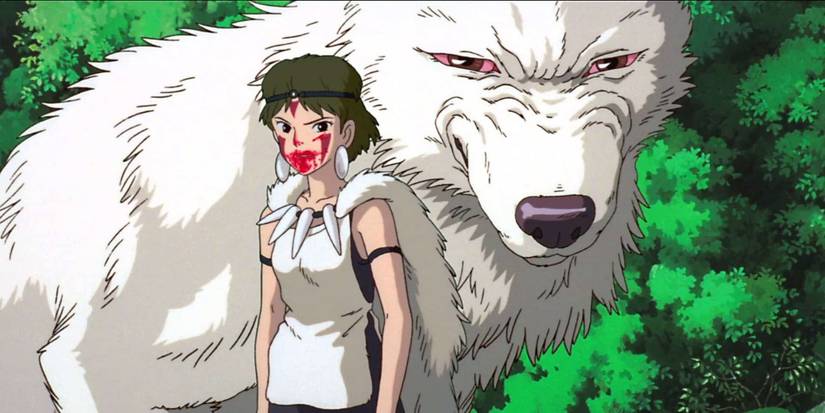
Hayao Miyazaki is one of the most influential filmmakers to have ever worked in the animation medium. His ability to ground fantastic worlds with emotionally resonant themes and dimensional characters has imbued his work with an immersive and ineffable magical quality unlike almost any other animated film. Since co-founding Studio Ghibli in 1985, the director has gifted audiences with some of the greatest animated films of both the 20th and 21st centuries. From the magical realism of My Neighbor Totoro to the gateway fantasy of Spirited Away, you always know when you’re in a Miyazaki world, and there’s none grander than that in his fantasy epic Princess Mononoke.
Following the young prince Ashitaka, who becomes afflicted with a curse and subsequently drawn into a battle between the natural and developed worlds, Princess Mononoke is a breathtaking work of beauty. The central conflict between the forest gods, along with the titular character, an adopted human daughter of the forest, and the humans who occupy Irontown, is never painted in such broad strokes. Many of the environmentally conscious fantasy and sci-fi films influenced by Princess Mononoke, such as Avatar, simplify their conflicts into binary good and evil terms. Miyazaki doesn’t see the friction between man and nature as something so simple and portrays it with nuance, where extremism only furthers the imbalance between the two warring parties.
2
‘Pan’s Labyrinth’ (2006)
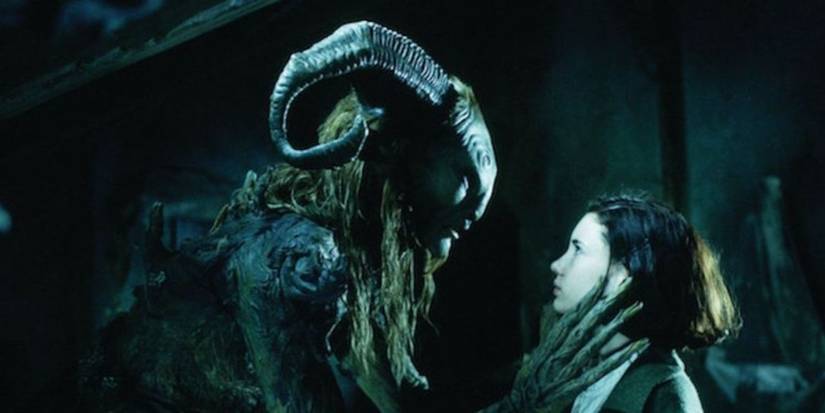
Guillermo del Toro is a singular filmmaker whose unique vision has given us some of the most unique and spectacular genre films of the last several decades. His work in the horror genre has been especially uplifting for fans, but his magnum opus is the dark fantasy Pan’s Labyrinth, which itself can be quite horrifying. The film blends the atrocities of the real world with the mysteries of the fantastical as deftly as it does the use of practical and digital effects, delivering a fully realized fairytale of a grim reality. It’s an astonishingly original work from one of the most original directors still working in cinema.
Set in Francoist Spain in 1944, the film follows young Ofelia, played by Ivana Baquero, who becomes enraptured by the fantasy underworld she is brought into as she escapes the harsh violence perpetrated by her sadistic stepfather, an Armed Police Corps officer who leads a campaign of brutality against the Spanish Maquis. A spiritual sequel to del Toro’s horror film The Devil’s Backbone, Pan’s Labyrinth represents the perfection of the director’s unique obsessions and his empathy for those who are perceived as monsters. His common collaborator Doug Jones breathes life into dual characters as both Ofelia’s guide into the underworld, the Faun, and the terrifying child-eater Pale Man. Pan’s Labyrinth exists at the nexus of beauty and grotesquerie, giving us a fantasy like no other.
1
‘Ugetsu’ (1953)
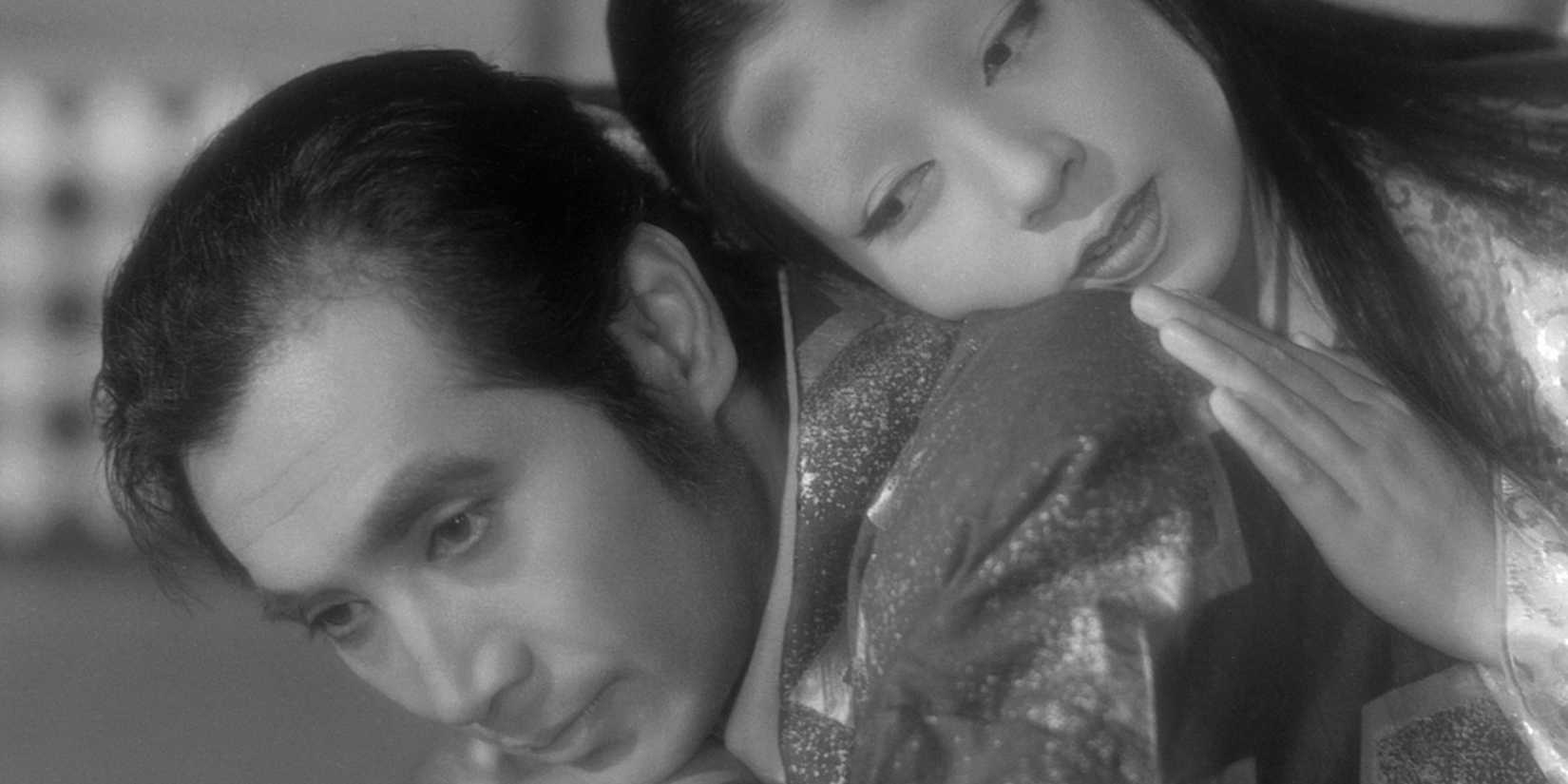
A clear forebearer to Pan’s Labyrinth and the works of so many filmmakers like Guillermo del Toro, Ugetsu is the greatest masterpiece of Japanese filmmaker Kenji Mizoguchi, combining a period drama with a ghost story for a truly haunting experience. Adapted from two stories from the collection Ugetsu Monogatari, the film is often credited alongside Akira Kurosawa‘s Rashomon for helping Japanese cinema break through the barrier to Western audiences. As an anti-war film and a supernatural fantasy film, it is lyrical and lingers long after fading thanks to its ethereal visual qualities and potent human drama.
Masayuki Mori is Genjuro, and Eitaro Ozawa is Tobei, brothers-in-law whose separate lusts for fortune and glory, during a time of conflict and war in 16th century Japan, indirectly cause pain and suffering for their wives, Miyagi (Kinuyo Tanaka) and Ohama (Mitsuko Mito). The film does not initially present itself as a ghost story; it subtly entangles its characters with the supernatural in ways that deepen the themes of the film and heighten the tragedy of its characters. Ugetsu is without equal in the fantasy genre, and it is the genre’s unqualified greatest masterpiece of the last eighty years.


You must be logged in to post a comment Login