Entertainment
10 Greatest Movie Masterpieces That Are Better Than the Book

Oftentimes, loyal readers whine and complain that the adaptations of their favorite novels are never as good as the source material. The truth of the matter is, it’s hard to take such vast material and adapt it into a perfectly crafted single-seated viewing experience. Unless you’re a mammoth franchise, getting a chance to split a book into two parts is rare. That said, every so often, a movie ends up being better than the book it’s based on, leading it to masterpiece status.
Whether faithful adaptations or complete transformations of the product, these ten masterpieces are far superior to their page counterparts. From stories about the ruthless Italian mafia or the mean clique in high school, to tales about taboo love or unlikely friendships, these films are so good, they sometimes live on their own without us remembering where they started from. Though we’re not taking anything away from their source material, we tend to pick the screen over the page.
‘Brokeback Mountain’ (2005)

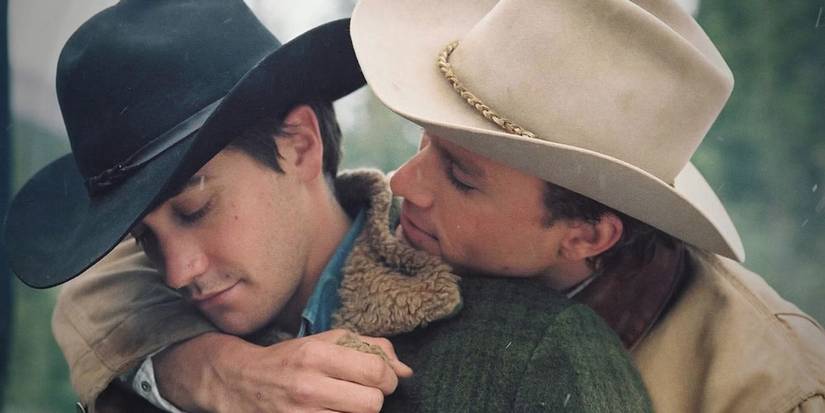
It’s been over two decades, and we still can’t quit Brokeback Mountain. Based on the 1997 short story by Annie Proulx, the Ang Lee-directed romantic drama follows two ranch hands— Ennis Del Mar (Heath Ledger) and Jack Twist (Jake Gyllenhaal)— who fall deeply in love. Set in the American West from 1963 to 1983, Brokeback Mountain explores the agonizing challenges of a secret, decades-long romance amid intense societal homophobia.
Brokeback Mountain is a beautifully agonizing tale that highlights the heavy emotional toll of living a taboo life in a society that champions traditional, rugged masculinity and heteronormative expectations. It transcends the gay cowboy trope by delivering a universal, heartbreaking exploration of regret, repressed desire, and the destructive effects of expectations. What was once just a 14-page story was transformed into a sweeping, breathtaking epic. Proulx’s story is crafted from an emotional distance, but writers Diana Ossana and Larry McMurtry flesh out the characters, providing an intimate glimpse into Ennis and Jack’s story. From there, Ledger and Gyllenhaal breathed life into their counterparts, presenting one of the greatest love stories cinema has seen.
‘Fight Club’ (1999)

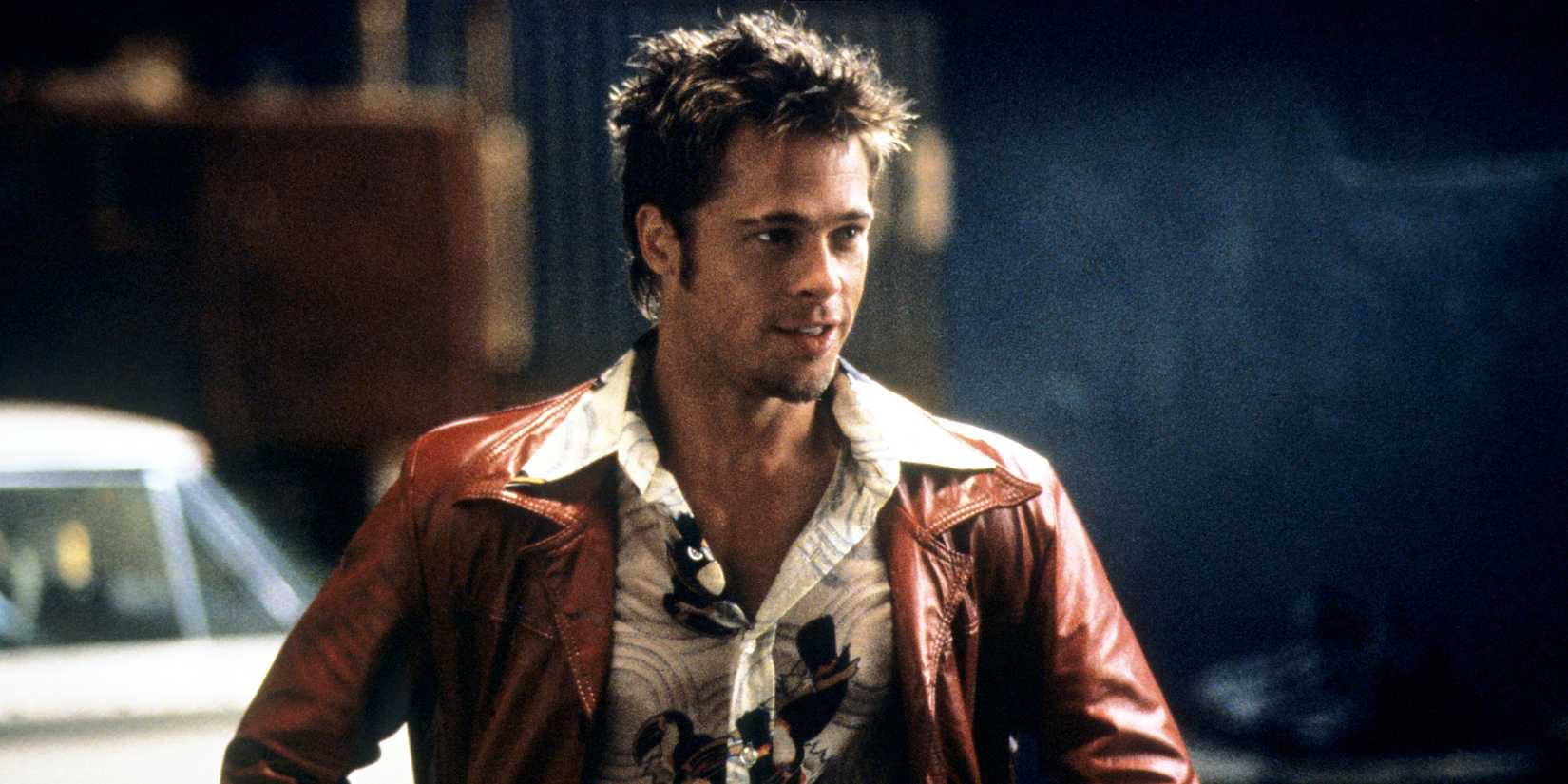
The first rule of Fight Club is don’t talk about Fight Club, unless you’re praising it, and that we are. Director David Fincher had an extraordinarily difficult job adapting Chuck Palahniuk’s novel, and yet, he had a world of potential in realizing it; what resulted was a masterpiece. The story follows a depressed, severely insomniac office worker (Edward Norton) who attempts to cure his existential emptiness by starting a secret, underground fighting ring with a charismatic soap salesman named Tyler Durden (Brad Pitt).
A story that tackles the feeling of being trapped in mundane, soulless jobs and the desire for true human connection through the lens of masculinity, Fight Club is a fearless dissection of material consumerism with gripping psychological twists. Fincher and screenwriter Jim Uhls take Palahniuk’s novel and tighten it up. Perhaps the biggest and most important change comes in the conclusion. In the novel, the narrator shoots himself and ends up in a mental institution. The film provides a more definitive and powerful ending as the narrator successfully severs Tyler’s hold on him but is still unable to stop his plan. Further, the film is more straightforward and less stream-of-consciousness, which worked wonders for the novel but would’ve made the movie far more erratic.
‘Forrest Gump’ (1994)
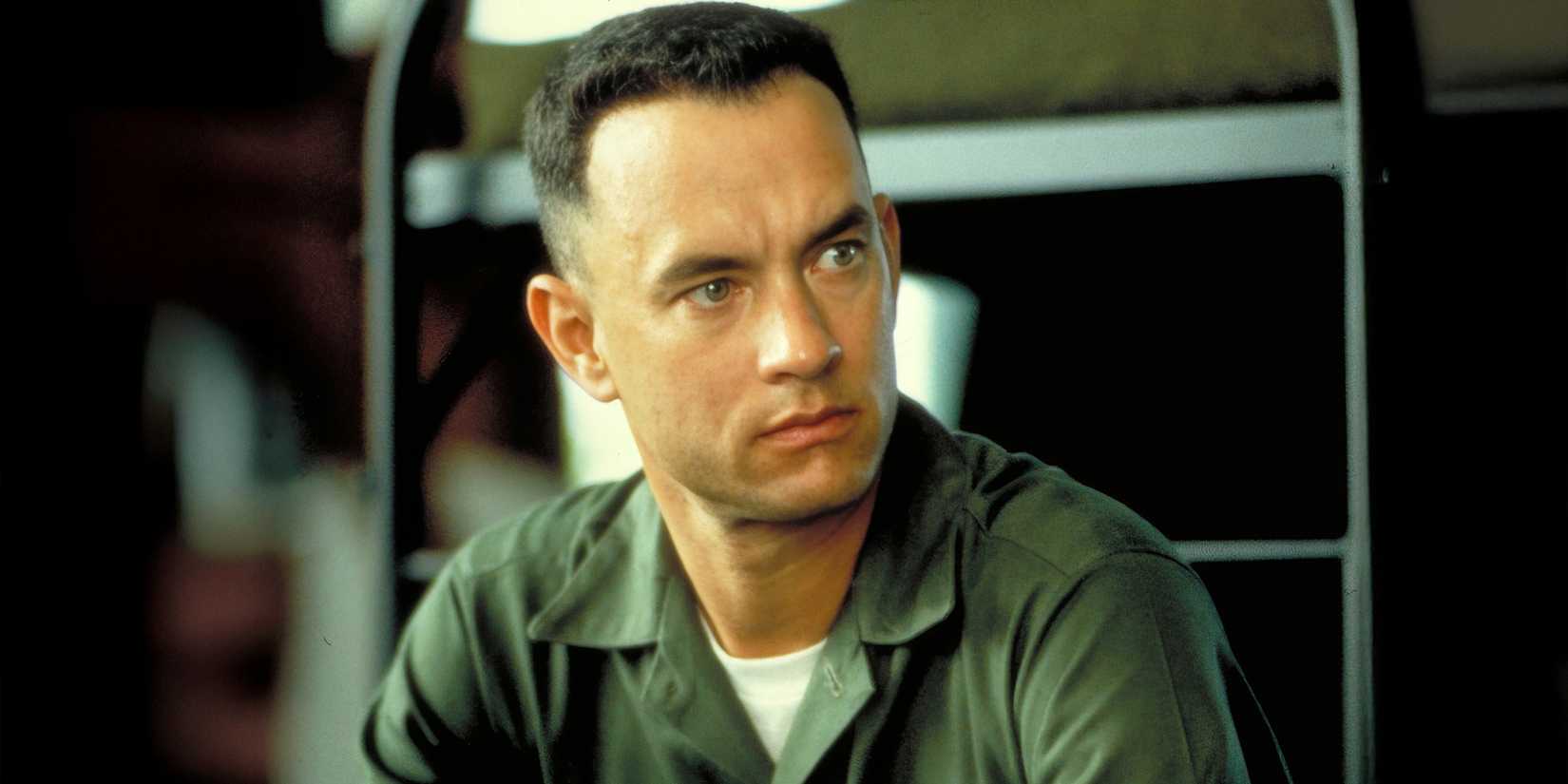
Directed by Robert Zemeckis and based on the 1986 novel by Winston Groom, Forrest Gump follows the life of a kindhearted, intellectually disabled man from Alabama named Forrest (Tom Hanks). Through a series of flashbacks, Forrest narrates his extraordinary life story while sitting on a park bench in Savannah, Georgia, documenting his time in Vietnam, his lifelong, unwavering love for Jenny Curran (Robin Wright), his childhood sweetheart, and his sudden business success.
A tender tale, Forrest Gump is a triumphant underdog story that reaches new heights on screen. The main contrast between the page and the screen is the titular character himself. Seen as a foul-mouthed, cynical savant, Hanks plays him as a lovable innocent man driven by an unwavering heart. While the book does showcase some outlandish plot points, including becoming a professional wrestler, a chess champion, and going to space with a NASA chimp named Sue, screenwriter Eric Roth kept Forrest’s journey as realistic and believable as possible. Thanks to Forrest, we learned that life is like a box of chocolates.
‘Jaws’ (1975)
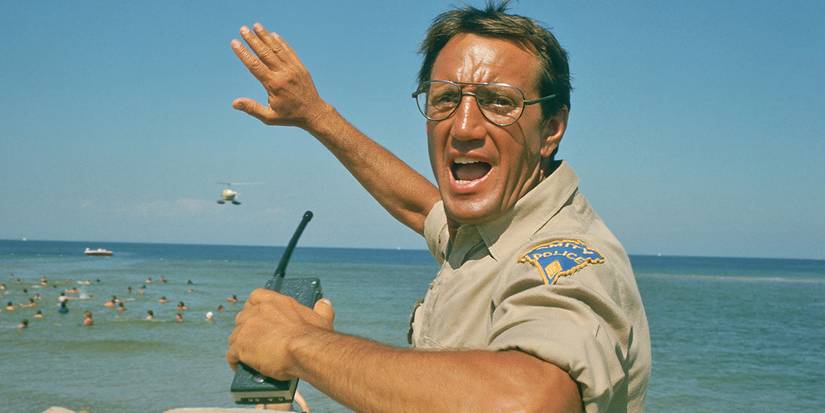
Believe it or not, audiences back in the day were petrified of a mechanical shark named Bruce because Steven Spielberg made Jaws an authentic horror thriller at sea. Based on Peter Benchley‘s novel, the iconic film tells the tale of the terrifying hunt for a massive, man-eating great white shark that terrorizes the beaches of a New England resort town, pitting local police chief Martin Brody (Roy Scheider), marine biologist Matt Hooper (Richard Dreyfuss), and a gruff shark hunter Quint (Robert Shaw) against the beast.
Brilliantly transcending the typical monster movie, Jaws taps into primal fears while offering a deeply human story. Benchley’s original novel was overstuffed with an array of subplots and unlikable characters. Conversely, Spielberg streamlined the narrative to provide a suspenseful thriller through a less-is-more approach that lifted its source material to great heights. In the book, Chief Brody is brash and easily ignitable, and Hooper is an arrogant, wealthy snob who has an affair with Ellen, Brody’s wife. On the screen, Benchley and co-writer Carl Gottlieb chose suspense over realism, which may not be everyone’s cup of tea, but the story moves into thriller territory by keeping the men at sea rather than letting them sleep each night ashore.
‘Mean Girls’ (2004)

On the surface, you may not even realize that Mean Girls is an adaptation because Tina Fey did an extraordinary job with Rosalind Wiseman‘s 2002 self-help book Queen Bees and Wannabes. The sharply written comedy follows Cady Heron (Lindsay Lohan), a naïve, formerly homeschooled teenager who moves to the U.S. after living in Africa. She gets a crash course in high school social hierarchies when she befriends two outcasts and infiltrates “The Plastics,” an elite yet toxic clique of mean girls that includes queen bee Regina George (Rachel McAdams), Karen Smith (Amanda Seyfried), and Gretchen Wieners (Lacey Chabert).
Transcending the typical teen movie, Mean Girls’ everlasting quotes have made it a masterclass in screenwriting. Fey focuses on the psychological warfare between teenage girls, creating a rich, relatable universe. Of course, a major cog in the film’s success was its quotability. The infamous lines came naturally and packed a comedic punch; there’s a reason why we still use them today. Mean Girls has a biting edge that’s given it timeless durability. It formed its own identity while honoring its source material, cementing itself as a new, flawless masterpiece.
‘Psycho’ (1960)

Very few movies are complete game changers quite like Psycho. The Alfred Hitchcock classic thriller is most notorious for killing off its main star, Janet Leigh, in the first act; from there, it was simply icing on the cake. Based on Robert Bloch’s original novel, Psycho tells the story of Marion Crane (Leigh), who seeks refuge at the isolated Bates Motel, where she meets the polite yet deeply disturbed proprietor, Norman Bates (Anthony Perkins), and his controlling, unseen mother. Upon Marion’s sudden disappearance, a desperate search by her lover, Sam Loomis (John Gavin), her sister, Lila (Vera Miles), and a private investigator, Milton Arbogast (Martin Balsam), uncovers a horrifying secret about Norman and his mother.
Hitchcock had extraordinary material to work with, but what he did with Bloch’s novel was unfounded, using the template to find a stronger, more enticing story narrative. The book begins with Norman; the film waits twenty minutes before introducing the sinister soul. By keeping Marion as the first focus, her murder comes as a great shock, with added emotional attachment. This approach helped define the newfound trope that literally no one is safe. Another major change came in Norman himself. In the book, he’s an overweight, middle-aged, balding, and overtly unstable man; Perkins couldn’t be further from that, making him unsuspecting. Here, Hitchcock turned the boy next door into the villain, an inspired choice that paid off.
‘The Devil Wears Prada’ (2006)

By far, one of the most beloved films of the early 21st century is The Devil Wears Prada, directed by David Frankel and based on the 2003 novel by Lauren Weisberger. It follows Andy Sachs (Anne Hathaway), an aspiring, idealistic journalist who lands a dream job as a personal assistant to Miranda Priestly (Meryl Streep), a tyrannical, world-famous fashion magazine editor. As she survives the cutthroat industry, Andy struggles to balance her soaring career with her personal life and morals.
A timeless classic that’s earned itself cult classic status, The Devil Wears Prada got us all questioning whether Weisberger’s experience with the real-life Miranda, Anna Wintour, was exactly like in the movies.Thanks to Aline Brosh McKenna’s screenplay, the original story was heightened and altered for cinematic purposes. The original characters in the novel were a tad one-dimensional: Andy was self-righteous, and Miranda was simply cruel, but the film softened them both a bit, giving them layers to play with. It’s incredibly quotable and timelessly fashionable, and the sequel is actually a worthy follow-up.
‘The Godfather’ (1972)
Ever since Marlon Brando uttered the line, “I’m going to make him an offer he can’t refuse,” cinema has never been the same. The Godfather remains one of the most influential films of all time, all thanks to Francis Ford Coppola’s extraordinary vision. Alongside novelist Mario Puzo, they streamlined Puzo’s novel’s bloated, pulp-heavy narrative into a tight cinematic epic. The mob drama chronicles the Corleone crime family in the 1940s and 1950s in New York, centering on the tragic transformation of Michael (Al Pacino), a decorated war hero and reluctant outsider, who is reluctantly pulled into the mafia’s violent underworld after an attempt on his father’s life.
With an all-star ensemble bringing some of the best performances of all time, The Godfather serves as a dark, tragic reflection of the American Dream. The scope Coppola and Puzo had to draw from was vast, so they cut the fat to hone in on the family drama first and foremost, maintaining the focus on Michael’s corruption. Through the incredible visual storytelling and soundscape, Coppola establishes an essential aura rooted in rich culture. Audiences are granted a chance to witness the authenticity of the Italian-American experience, which simply cannot be replicated on the page.
‘There Will Be Blood’ (2007)
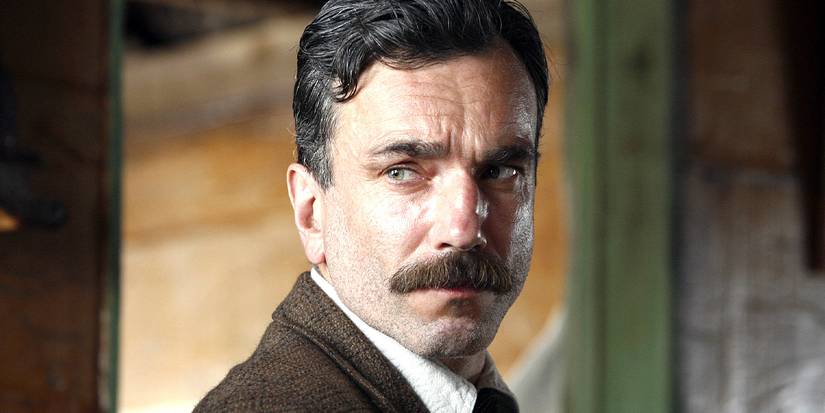
The combination of Paul Thomas Anderson adapting Upton Sinclair is a surefire winning formula. It’s why There Will Be Blood remains one of the greatest films of the century. Based on Sinclair’s classic novel Oil!, the epic period drama chronicles the ruthless rise of Daniel Plainview (Daniel Day-Lewis), a silver miner-turned-oil tycoon, during the California oil boom at the turn of the 20th century. The story tackles Plainview’s single-minded drive to acquire wealth and power, a pursuit that slowly destroys his humanity and isolates him from everyone.
There Will Be Blood explores the dark intersection of greed, capitalism, and religious fanaticism, turning the American Dream into a nightmare, thanks to Day-Lewis’ utter masterclass in acting. Oil! is dense, but Anderson distills a sprawling, politically focused narrative and twists it into a visceral character study, abandoning the novel’s superfluous subplots about labor unions and socialism, and nixes secondary characters for a tight story. By focusing on Plainview, the narrative tightens the novel’s important themes. Most importantly, Anderson uses Sinclair’s vivid text to create an immersive experience where you can literally see and hear the oil fields.
‘The Shawshank Redemption’ (1994)

There have been debates about the execution of nearly every Stephen King adaptation ever made, but there’s one film adaptation that tends to be met with universal acclaim as better than the source material: The Shawshank Redemption. Based on the novella Rita Hayworth and Shawshank Redemption, the Frank Darabont-written and directed drama centers on Andy Dufresne (Tim Robbins), a banker wrongfully convicted of murdering his wife and her lover. Sentenced to Shawshank State Penitentiary, he befriends contraband smuggler Red (Morgan Freeman).
A mesmerizing dissertation on hope, friendship, and perseverance, The Shawshank Redemption celebrates the universal message about how the human spirit can endure even in the most confining situations. King’s story is sensational on the page, but Darabont elevates it by giving it emotional context through the masterful performances by Robbins and Freeman. The book also features a cavalcade of wardens and guards that Andy must deal with; by removing those subplots, more time is devoted to a single corrupt antagonist, Warden Samuel Norton (Bob Gunton), thus enhancing Andy’s ultimate triumph and allowing for a more poignant ending.
You must be logged in to post a comment Login