Entertainment
10 Greatest Movie Performances Where We Never See the Actor’s Face

In an industry built on star power and recognizable faces, it’s interesting how some of the most unforgettable performances come from actors we never fully see. They may be hidden behind masks, suits, or prosthetics, but they still make it work by relying solely on voice, physicality, and sheer presence, proving that acting is much more complex a craft than it often gets credit for. In some cases, those are among the actor’s best works, even.
There are many ways to compile and rank such performances, but all the following performances are by actors playing their characters on set. Granted, in some of them we see the actors’ faces, but it’s always with minimal screen time. In others, parts of their faces will be visible, but not the entirety. So, here are the best performances where we never completely see the actors’ faces.
10
David Prowse as Darth Vader
‘Star Wars: Episode IV — A New Hope’ (1977)


Everyone remembers Darth Vader for his mechanical breathing, dramatic lines, or James Earl Jones‘ voice, but, even without those, he is still terrifying. Inside the armor is David Prowse, the heavyweight weightlifting champion that gives the Sith Lord his towering stature. Prowse makes full use of his size to build Vader’s intimidating stance, balancing cold stillness with deliberate weight.
This makes Vader unreadable beyond his mask, making even the subtlest tilt of his helmet feel both like an approving nod and a warning. If it feels like Vader fills and sucks the light out of every room he’s in in Star Wars, it’s because of Prowse.
9
Gary Oldman as Mason Verger
‘Hannibal’ (2001)

It’s strange to think that Mason Verger (Gary Oldman) is worse than Hannibal Lecter (Anthony Hopkins), but it’s true. In Hannibal, he is the latter’s only surviving victim, a wealthy child molester with a vendetta after he was left disfigured by his encounter with Lecter, bribing and manipulating everyone until he gets what he wants.
Verger is as close to a literal monster as it gets, and the layers of prosthetics worn by Oldman in the movie reinforce this. Oldman himself believed he wouldn’t even be credited for the role, as he was straight-up unrecognizable. Even his voice, modeled after Katharine Hepburn, is unsettling, burying Oldman even deeper into character.
8
John Hurt as John Merrick
‘The Elephant Man’ (1980)

A role like John Merrick in The Elephant Man always risks being defined by prosthetics, unless there’s a capable actor behind it. Thankfully, David Lynch had John Hurt. Born with a skull deformity, Merrick was shunned by pretty much everyone in his life. Alone, he eventually ends up in a circus, until he draws the attention of a doctor who sees in him more than a freak attraction. Hurt’s performance is like an anchor, with his restrained posture and voice conveying Merrick’s vulnerability and surprising intelligence.
7
Tom Hardy as Bane
‘The Dark Knight Rises’ (2012)
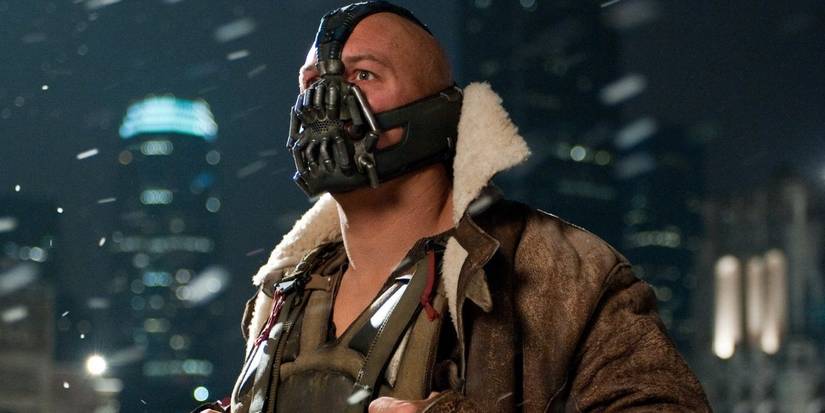
Following Heath Ledger‘s take on the Joker was no easy task, but Tom Hardy pulls it off in The Dark Knight Rises. As a villain, Bane is instantly iconic for his mask and voice, but it’s his physicality that’s impressive. Hardy is almost too strong and bulky, excelling in fight scenes, but also knowing how to use all his presence in his favor. In that sense, his voice and calm eyes are as unsettling as his size.
Bane’s “Do you feel in charge?” line to John Dagget (Ben Mendelsohn), for example, is a perfect counterpoint to when he smashes Glen Powell‘s head against a console in the stock exchange scene. These show how Hardy perfectly balances restraint and excess when it comes to Bane’s strength. The mask itself elevates Hardy’s physical acting, giving Bane a chilling sense of unpredictability.
6
Hugh Keays-Byrne as the Immortan Joe
‘Mad Max: Fury Road’ (2015)

One of the greatest villains of the 2010s, we do see a little of the Immortan Joe’s (Hugh Keays-Byrne) face when it’s ripped off his head along with his mask and breathing apparatus in Mad Max: Fury Road, but it’s so brief, it barely counts. Half warlord, half false prophet, he acts, talks, and walks into any room like he owns everything and everyone inside it, and everything about how he looks helps build his mystique.
His mask works as a respirator, so, like Darth Vader or Bane, he simply cannot take it off. Still, Hugh Keays-Byrne says so much with his eyes and body posture, that Joe doesn’t need the rest of his face to look imposing. His mask having a rodent-like mouth that opens whenever he’s angry helps build an inhuman aura about him, but he has enough of that already by simply being himself.
5
Karl Urban as Judge Dredd
‘Dredd’ (2012)


Judge Dredd (Karl Urban) is another character whose face we can only partially see, but, instead of his eyes, it’s his mouth. His helmet is designed to leave it out, so he can pass out sentences and execute them clearly in his job as judge, jury, and executioner in Dredd. Without his eyes, Karl Urban keeps Dredd’s mouth locked in a permanent scowl that almost works as an extension of the costume itself.
In Dredd, Judges are the only thing keeping the world from falling into chaos, so they must embody discipline, order and ruthlessness. Urban’s performance is all about that, giving Dredd rigidly controlled movements and a determined stance of someone who perfectly understands his job’s importance, and knows that overwhelming discipline and compliance are the only way to carry it out.
4
Jackie Earle Haley as Rorschach
‘Watchmen’ (2009)

Rorschach appears unmasked a few times in Watchmen, and those are striking moments in his and the film’s story, but they only work because of how Jackie Earle Haley builds the character as an essentially faceless individual the rest of the time — the mask is his face, not what’s behind it, and the fact that it’s always changing contradicts how steadfast Rorschach is in his stances.
It’s this steadfastness that Haley builds so well behind the mask, as Rorschach’s movements and voice always feel determined and in control of his own self. All this makes his final scene, when he removes the mask voluntarily, the ultimate display of vulnerability; he might as well have been nude, because everything that made Walter Kovacs Rorschach is now lost, including his face.
3
Michael Fassbender as Frank
‘Frank’ (2014)

A singer in a folk band who is always wearing a cartoon-like papier-mâché head and never allows himself to be seen without it may feel like a weird marketing piece or another eccentric artist who takes themselves too seriously, but, in Frank, it’s actually the premise of one of the most sensible and heartfelt stories of the 2010s. Michael Fassbender plays the title character, who’s exactly as described.
Without access to facial acting, Fassbender builds the character through subtle body language and vocal tone, hinting at a deeper backstory for such a brilliant and likable artist such as Frank. Because of the large head Frank wears, Fassbender’s movements feel slightly unconventional, reflecting Frank’s creative mindset as someone who is a genius struggling to find his footing in the real world.
2
Edward Norton as King Baldwin IV
‘Kingdom of Heaven’ (2005)

King Baldwin IV of Jerusalem (Edward Norton) is one of the few roles where the actor behind it is never seen. Because of his advanced leprosy, he has to completely cover his body and face, wearing a full-body white suit and an adorned silver mask. He can barely stand, but his crown and disease give him experience and wisdom beyond his late-20s, and also earn him the respect of even his adversaries.
Because Baldwin is hidden behind his suit and mask all the time, legend has it that Norton initially refused to be credited for the role, but the truth is that he breathed life into it. His delivery is calm, and his stance is relaxed even in the tensest situations, making Baldwin feel like someone who can deal with any problem and deter any tension, earning him a cult following years after Kingdom of Heaven‘s release.
1
Hugo Weaving as V
‘V for Vendetta’ (2005)

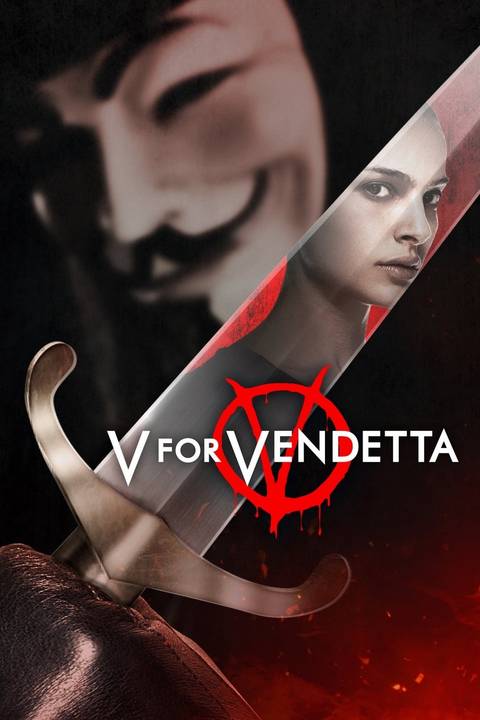
The undisputed champion of faceless acting, Hugo Weaving, is just perfect in V for Vendetta as the protagonist, V. After years of being experimented upon by the fascist regime, he decided to keep his body and face perpetually hidden, using a Guy Fawkes mask and costume. These turn him into more than a man, embodying “an idea” of resistance and rebellion against oppression and tyranny.
V is a delight to watch and hear, be it in a fight scene or lecturing Evey Hammond (Natalie Portman) about his ideals. His resolve and flair for the dramatic makes him feel like a Shakespearean character, and Weaving’s measured physicality and vocal work go a long way in this sense, as if V’s every move and line were a proclamation. More than a man, Weaving had to embody an idea — and ideas are bulletproof.

You must be logged in to post a comment Login