Entertainment
10 Greatest Mystery Books of All Time

Few things beat curling up with a good mystery book. At its core, the genre’s appeal lies in the satisfaction of solving a puzzle. Whether following a brilliant detective, an ordinary amateur sleuth, or even a criminal attempting to cover their tracks, readers become active participants in the story, weighing clues and trying to figure things out.
The very best mysteries reward careful observation while remaining surprising enough to leave even seasoned readers stunned when the truth finally emerges. These books are the focus of this list. They run the gamut from the classic structure of Agatha Christie to the genre hybrids of Umberto Eco and the stranger-than-fiction true-crime of Patrick Radden Keefe.
10
‘The Name of the Rose’ (1980)


“The only truth lies in learning to free ourselves from insane passion for the truth.” Set in a remote Italian monastery during the 14th century, The Name of the Rose follows the brilliant Franciscan friar William of Baskerville and his novice Adso as they investigate a string of mysterious deaths among the monastery’s monks. Every clue points toward an increasingly elaborate conspiracy hidden within one of Europe’s greatest libraries.
This book is a real gem, combining juicy murder mystery elements with genuine philosophy, theology, and well-researched medieval history. William, in particular, is a fascinating variation on the classic detective archetype. His powers of observation and logical deduction evoke Sherlock Holmes (the fact that he’s from Baskerville itself is a sly wink in this direction), yet Umberto Eco places him within an intellectually rich world dominated by religious conflict, political intrigue, and debates about knowledge itself.
9
‘The Girl with the Dragon Tattoo’ (2005)

“Everyone has secrets. It’s just a matter of finding out what they are.” The Girl with the Dragon Tattoo caused a global sensation in the mid-2000s, and for good reason. Stieg Larsson revitalized a lot of classic mystery tropes by combining them with investigative journalism, family drama, and unusually compelling characters. The story centers on journalist Mikael Blomkvist, who is hired to investigate the decades-old disappearance of a young woman who vanished from an isolated island owned by one of Sweden’s wealthiest families.
His search eventually brings him into partnership with the brilliant but enigmatic hacker Lisbeth Salander, one of the most intriguing fictional creations of that era. Her extraordinary intelligence, troubled past, and uncompromising determination quickly made her a fan favorite. Finally, the mystery itself is well-constructed. Although the plotting is dense, it never feels convoluted, contrived, or over-the-top.
8
‘London Falling’ (2026)

“Every city hides the stories it hopes no one will uncover.” London Falling is a work of nonfiction by Say Nothing‘s Patrick Radden Keefe, yet it’s stranger and more compelling than most fictional mysteries. It delves into the bizarre 2019 death of 19-year-old Zac Brettler and, in telling his story, exposes the dark, billionaire-fueled criminal underworld of modern London. The book involves gangsters, cons, secret identities, and repeated failures by the government and police.
While it’s certainly suspenseful, London Falling is also moving, especially when the author interviews Zac’s grieving, confused parents. It touches on important issues in British society today, too, in a way that feels urgent and topical. All in all, it’s a masterpiece of true-crime writing and a genuine page-turner. Not for nothing, the adaptation rights have already been sold, and A24 is reportedly planning on making it into a TV series.
7
‘The Spy Who Came In from the Cold’ (1963)

“The successful spy is the one nobody suspects.” The Spy Who Came In from the Cold is the defining book by espionage master John le Carré. In it, British operative Alec Leamas is preparing to retire after one final failed mission when he is assigned an elaborate undercover operation designed to infiltrate East German intelligence. But as the mission unfolds, Leamas gradually realizes that he may be little more than a pawn in a much larger game.
Like Leamas, readers spend much of the narrative trying to determine which characters can be trusted, what the true objectives of the operation actually are, and who is manipulating whom. Every conversation contains hidden meanings. At the same time, the book was hugely influential in the way it portrayed secret agents not as superheroes, but as morally compromised bureaucrats trapped inside a world of deception.
6
‘The Talented Mr. Ripley’ (1955)
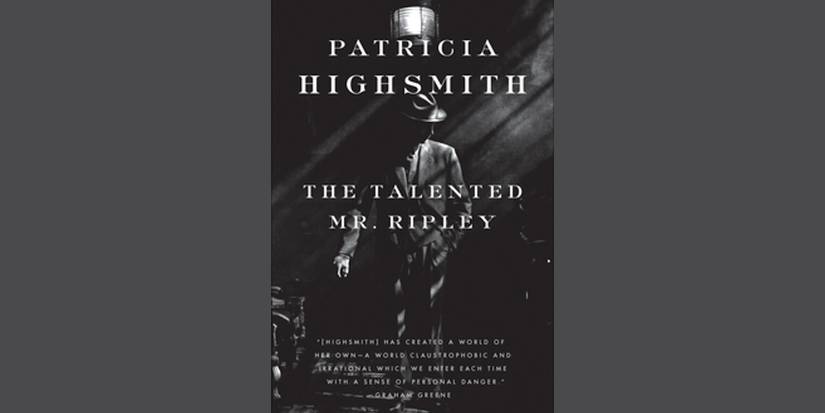
“I always thought it would be better to be a fake somebody than a real nobody.” The Talented Mr. Ripley cleverly inverts the traditional mystery template by placing readers inside the mind of the criminal rather than the detective. Tom Ripley is sent to Italy to persuade wealthy playboy Dickie Greenleaf to return home, but admiration gradually gives way to envy, obsession, and ultimately murder. After assuming Dickie’s identity, Tom must continually outwit investigators, acquaintances, and even his own growing paranoia.
On top of being tense and tightly-wound, the book is a marvel of characterization. Ripley is a fascinating antihero: charming, intelligent, adaptable, and morally vacant, weaving a sprawling web of lies that fools those around him while threatening to ensnare him as well. Despite his increasingly horrifying actions, Tom remains strangely sympathetic because readers experience every close call and desperate improvisation from his perspective.
5
‘The Maltese Falcon’ (1930)

“When you’re slapped, you’ll take it and like it.” The Maltese Falcon by Dashiell Hammett laid the foundation for the hard-boiled detective novel. After his partner is murdered while shadowing a mysterious woman, private investigator Sam Spade finds himself drawn into a dangerous search for an immensely valuable jeweled statuette. Shifting alliances and constant betrayals keep the reader guessing and turning the pages.
The book stood out from most mysteries of its time thanks to its dialogue and its protagonist. Sharp, economical, and filled with subtle power plays, every conversation advances both the investigation and the psychological battle between the characters. Likewise, unlike the gentleman detectives who dominated earlier mystery fiction, Spade is a scrappy figure operating in a morally ambiguous world where nearly everyone is compromised, including himself. This approach would go on to be hugely influential.
4
‘The Long Goodbye’ (1953)

“I never saw any of them again except the cops. No way has yet been invented to say goodbye to them.” The Long Goodbye is regarded by many to be the best Philip Marlowe book. The story begins when Marlowe befriends the troubled war veteran Terry Lennox, only to become entangled in a murder investigation after helping Lennox flee the country. Marlowe digs deeper into the case, uncovering layers of corruption, wealth, alcoholism, and betrayal stretching across Los Angeles society.
Part of what makes the novel great is the way it delves into character and theme. In particular, Chandler uses the investigation to examine friendship, loyalty, and the isolation of a man who consistently tries to do the right thing in a deeply cynical world. The author wrote this book while his wife was dying from a long illness, which is why it has such a melancholy mood.
3
‘The Big Sleep’ (1939)

“I was neat, clean, shaved and sober, and I didn’t care who knew it.” Chandler strikes again. The Big Sleep was the book that introduced readers to Philip Marlowe and forever changed detective fiction. Hired by the wealthy General Sternwood to deal with a blackmailer targeting one of his daughters, Marlowe quickly discovers that the case is connected to gambling rackets, pornography, multiple murders, and a seemingly endless series of double crosses.
The plotting is incredibly intricate, to the point that Chandler himself reportedly admitted that he did not know the solution to one of the murders. Nevertheless, The Big Sleep is beloved by mystery fans the world over thanks to its atmosphere, razor-sharp dialogue, and richly drawn cast of characters. Marlowe himself anchors the chaos through his intelligence, resilience, and dry humor. Many detective heroes since have borrowed from his design.
2
‘The Adventures of Sherlock Holmes’ (1892)

“You know my methods.” The Adventures of Sherlock Holmes remains a classic because it almost single-handedly established the template for detective fiction. This short story collection includes twelve adventures featuring Sherlock Holmes and Dr. John Watson, involving everything from mysterious disappearances to stolen jewels and secret societies. Much of the fun comes from Holmes’ extraordinary powers of observation and deduction.
In this regard, Sherlock Holmes really is the most iconic fictional detective of all time. He’s appeared in more than 200 films, for instance, and has been played by more than 70 actors. Plus, the character of Watson was also influential, because he serves as the surrogate for the reader. He’s intelligent enough to appreciate Holmes’ brilliance but ordinary enough that readers share his amazement. In short, this book’s influence on mystery fiction is impossible to overstate.
1
‘And Then There Were None’ (1939)

“Ten strangers are invited. One by one they die.” Agatha Christie is often ranked as the greatest mystery writer of all time, and And Then There Were None is perhaps her finest book. In it, ten strangers are invited to an isolated island under various pretenses, only to discover that their mysterious host has accused each of them of getting away with murder. When the guests begin dying one by one according to the verses of a nursery rhyme, panic and suspicion quickly consume the group.
This premise was ingenious for its time, creating the ultimate closed-circle mystery. With no possibility of escape and no outside detective arriving to solve the crime, every surviving guest is both a suspect and a potential victim. This structure has practically spawned a mystery subgenre unto itself. Finally, Christie caps the book off in a brilliant twist, one that’s shocking and yet makes total sense in hindsight.
You must be logged in to post a comment Login