Entertainment
10 Greatest Psychological Thrillers of the Last 99 Years

Over the course of the last 99 years, the psychological thriller genre has evolved in ways that are nothing short of fascinating. Contrary to your good ol’ regular thriller, one of the psychological variety prioritizes character-driven tension, moral conflicts, and mind games over external conflict. The result can often be an absolutely enthralling motion picture.
Indeed, from 1927 until the present, there have been several psychological thrillers which have gone down in history as true all-timers and have aged like fine wine. Whether it’s a Golden-Age Hollywood classic like Rear Window or a modern international masterpiece like Parasite, the best psychological thrillers of the last 99 years are among the genre’s definitive masterpieces.
10
‘The Unknown’ (1927)


Originally titled Alonzo the Armless, Tod Browning‘s awfully underappreciated silent horror thriller The Unknown is among the most intense silent movies ever made. Starring Lon Chaney in one of his most memorable yet underrated performances, it’s the tale of a criminal hiding as a circus performer, and the horrific lengths he goes to in order to win over the woman he’s obsessed with.
Gleefully melodramatic and thankfully not restricted by the censorial Hays Code, which wouldn’t be adopted until three years later.
The film holds an impressive 100% approval rating from critics on Rotten Tomatoes, and it’s fully deserved. Gleefully melodramatic and thankfully not restricted by the censorial Hays Code, which wouldn’t be adopted until three years later, the film is as thematically fascinating as it is surprisingly moving. Its horror elements are, like those of pretty much any movie from the 1920s, quite a bit dated; but The Unknown is still a must-see 99 years after its release.
9
‘Perfect Blue’ (1997)

The late Satoshi Kon made several animated masterpieces over the course of his career. It was as soon as he made his debut with the psychological horror thriller Perfect Blue, in fact, that he cemented himself as one of the greatest anime filmmakers of his generation. Hugely influential and utterly timeless, this is one of those classic animated movies that have aged like fine wine.
For one, the animation is stunning, wonderfully supporting the surrealist vision that makes Kon’s oeuvre so fascinating to explore. Aside from being visually striking, Perfect Blue is also deeply atmospheric and at times unexpectedly terrifying, portraying the horrors of artistic obsession with a level of depth that has inspired films as great as Black Swan and The Neon Demon over the years.
8
‘Parasite’ (2019)

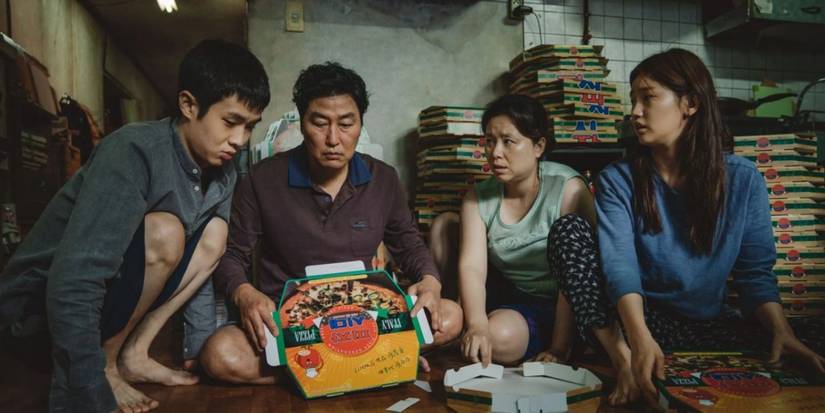
Bong Joon Ho is one of the greatest South Korean filmmakers currently working, and as if his incredible (and at times awfully underrated) pre-2019 output hadn’t been enough proof, he then came out with Parasite. Today, this is perhaps one of the most noteworthy international films of all time, the first movie not in the English language to win the Best Picture Academy Award.
As a satire critiquing socioeconomic disparity and the exploitation of the working class, Parasite isn’t particularly subtle—but it never needs to be. What makes it one of the best thriller movies of the last 25 years is precisely Bong’s willingness to go big and loud with the narrative, juggling several different genres in a film that can be nail-bitingly tense and suspenseful without ever sacrificing its acidic sense of humor.
7
‘The Silence of the Lambs’ (1991)
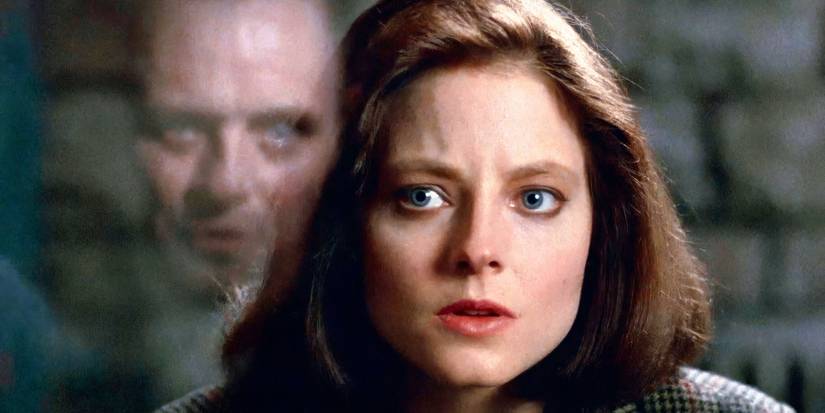
By this point, Jonathan Demme‘s The Silence of the Lambs has become such an indelible cornerstone of modern pop culture that it has become even more famous than the 1988 novel it’s based on. Whether it is or isn’t a horror movie is a hotly debated topic, but one thing is undeniable: It’s a psychological thriller through and through, and one of the most effective that the last four decades have thus far produced.
Being one of those thriller movies where the villain wins, never afraid to approach its story with brutal grimness and shock value, The Silence of the Lambs is not exactly a crowd-pleaser; but it’s a must-see nonetheless. As far as hugely suspenseful stories with tremendous psychological depth go, it doesn’t get much better or much more iconic than Demme’s magnum opus.
6
‘The Wages of Fear’ (1953)

Even back during the days of Hollywood’s Golden Age, it wasn’t only the United States that produced exceptional psychological thrillers. For proof, one needn’t look further than Henri-Georges Clouzot‘s French-Italian co-production The Wages of Fear, one of those great thrillers that marked the end of an era. Fueled by pure cynicism and existential dread, it’s one of the most unique films from the 1950s.
The Wages of Fear is as philosophically complex and thought-provoking as it is irresistibly thrilling, achieving the perfect balance between artfulness and pure entertainment value. Its satirical sense of humor is razor-sharp, its social critique of capitalist exploitation has aged like fine wine, and the cinematic thrills that its whole runtime has to offer are pure movie magic.
5
‘Woman in the Dunes’ (1965)
Written by Kōbō Abe and based on his own novel of the same name, Woman in the Dunes is perhaps the best and most important work of the career of Hiroshi Teshigahara, one of the most foundational voices of the Japanese New Wave film movement. A work of pure arthouse avant-garde, Woman in the Dunes is definitely not made for every cinephilic palate. Those who love their psychological thrillers slow-burning and purely psychological, though, will very likely love it.
Woman in the Dunes is basically a philosophical dissertation in movie form, a Kafkaesque masterpiece about the absurdity of life and the odd yet undeniable power of human connections. It’s one of the most underrated drama movie masterpieces ever made, and though it’s definitely intellectually challenging and more on the “psychological” side than on the “thrilling” side, it’s still essential viewing for all fans of the genre with enough patience for it.
4
‘Oldboy’ (2003)
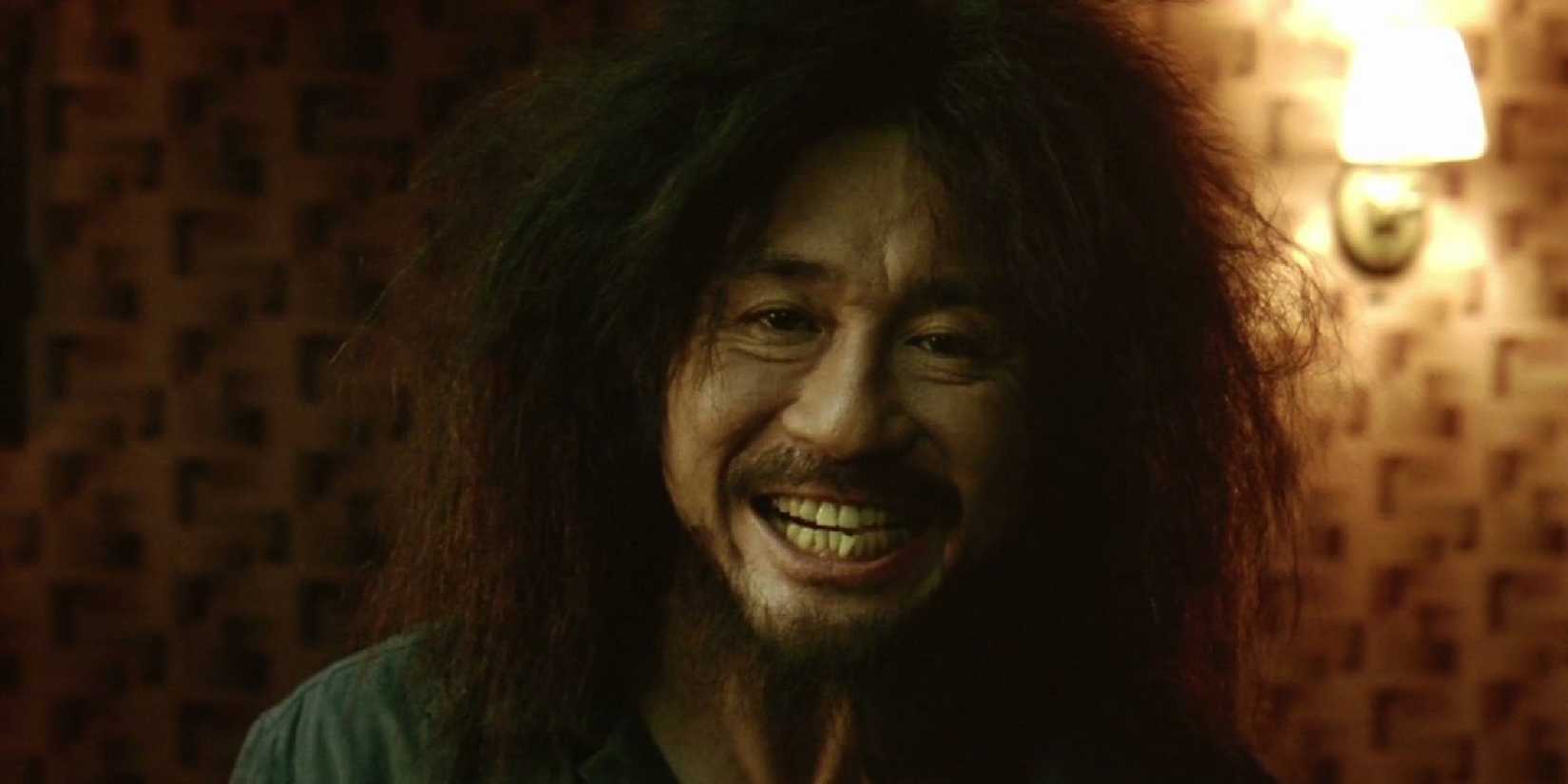
Another South Korean filmmaker who has proven time and time again throughout his career to be a master of thrillers is Park Chan-wook, but no Park thriller is better or more iconic than Oldboy. Based on Garon Tsuchiya and Nobuaki Minegishi‘s Japanese manga Old Boy, it’s one of the heaviest mystery movies of all time, one that’s certainly not for the faint of heart.
But as squirmy as it may be, Oldboy is still one of the greatest action films and psychological thrillers of the 21st century so far. It’s brilliantly intense, perfectly paced and choreographed, and admirably well-acted. As for its third act, it’s one of the most shocking that the genre has ever seen, and more than enough to make this masterpiece a test of endurance for the most seasoned psychological thriller fans.
3
‘Se7en’ (1995)

David Fincher is one of the greatest thriller filmmakers of his generation, and he proved that since very early on in his career. Se7en was his sophomore directing effort (and the first film he had full control over, considering the disaster that was Alien³), and what an introduction to the Fincher the world now knows and loves it was. It’s probably the darkest, most pessimistic, most cynical blockbuster ever to have made over $300 million dollars at the box office.
As grim and unapologetically tragic as it may be, though, Se7en is also so irresistibly entertaining that anyone who claims to love psychological thrillers, yet hasn’t seen it, doesn’t actually love the genre as much as they think they do. Sure, it’s one of the most fatalistic movies of all time, but Se7en is also an undeniable masterpiece bolstered by its incredible cast, its breathtaking third act, and its many jaw-dropping twists.
2
‘Rear Window’ (1954)

There were many directors who came before him and helped define the psychological thriller, but it was Alfred Hitchcock who properly transformed the genre into what we now understand it as. Different people may point to different films as their favorite Hitchcock psychological thriller, from Vertigo to Psycho, but there’s one that may even be the director’s best-ever work: Rear Window.
Rear Window is a complete and utter masterclass in virtually every aspect of filmmaking. It’s a masterclass in how to use blocking and framing to tell a story, in how to get the best performance possible out of thespians of Jimmy Stewart and Grace Kelly‘s stature, and in how to build suspense in a space as tightly confined as an apartment. It’s one of the most universally loved thrillers ever for a reason.
1
‘High and Low’ (1963)

Akira Kurosawa is pretty much universally recognized as the greatest Japanese filmmaker of all time, and there are those who would go so far as to even call him the greatest overall. Watching a masterpiece like High and Low, it’s really not hard at all to understand why. Part riveting crime drama, part intense psychological thriller, part thought-provoking social critique, it genuinely is one of the best motion pictures ever created.
High and Low‘s story is split into three very tonally and stylistically distinct sections, each one of those experimenting with elements from different subgenres and artistic styles. But the tropes of the psychological thriller are a common thread that unites the entire runtime, and Kurosawa understands them so flawlessly that this is easily one of the most perfect crime movies of the 20th century.


High And Low
- Release Date
-
March 1, 1963
- Runtime
-
143 Minutes
- Director
-
Akira Kurosawa
- Writers
-
Ryûzô Kikushima, Hideo Oguni, Eijirô Hisaita, Akira Kurosawa


You must be logged in to post a comment Login