Entertainment
10 Greatest Psychological Torture Movies, Ranked

“Torture porn” is a subgenre of splatter horror that was big in the 2000s, delighting in violence, gore, and sadism. However, the best of these horrors don’t just stick to brutal physical violence but instead delve deeper. Not content to simply maim their characters physically, psychological torture movies force them to confront unbearable moral dilemmas, manipulation, and emotional breakdown.
These psychologically intense and often scarring films are the focus of this list. Whether through sadistic games, cruel experiments, or elaborate revenge schemes, the titles below represent some of the most harrowing examples of horror cinema that go for the jugular and the cerebellum.
10
‘Antichrist’ (2009)

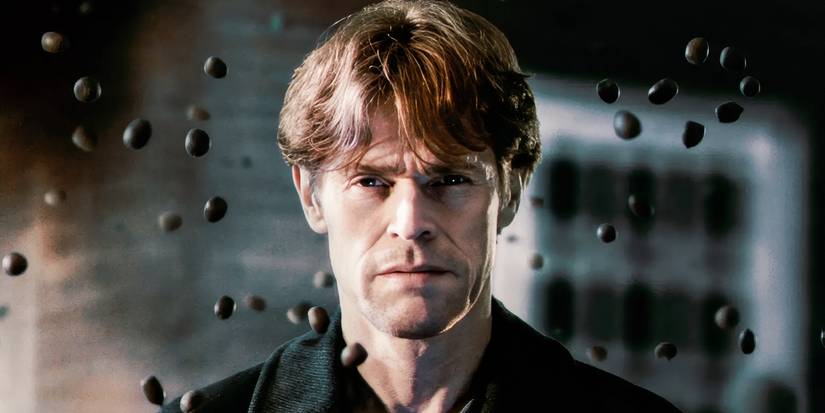
“Chaos reigns.” Antichrist is less a conventional horror movie than a descent into emotional and psychological extremity. In it, a grieving couple (Willem Dafoe and Charlotte Gainsbourg) retreat to a remote cabin in the woods after the accidental death of their child. But their isolation amplifies their anguish, and the natural world around them begins to feel hostile and uncanny. Director Lars von Trier uses dreamlike imagery to blur the line between mental breakdown and supernatural menace. Along the way, the film inflicts truly terrible ordeals on the characters. Their suffering isn’t just violent but spiritually devastating.
Most of all, Antichrist weaponizes grief, portraying it as something that corrodes the mind from the inside. Gainsbourg’s character, in particular, becomes consumed by guilt and self-hatred, believing that she herself is somehow responsible for the death of her child. Her psychological breakdown slowly infects the entire atmosphere of the film. That fusion of emotional trauma, philosophical dread, and visceral horror is what makes Antichrist a grim classic.
9
‘Saw’ (2004)
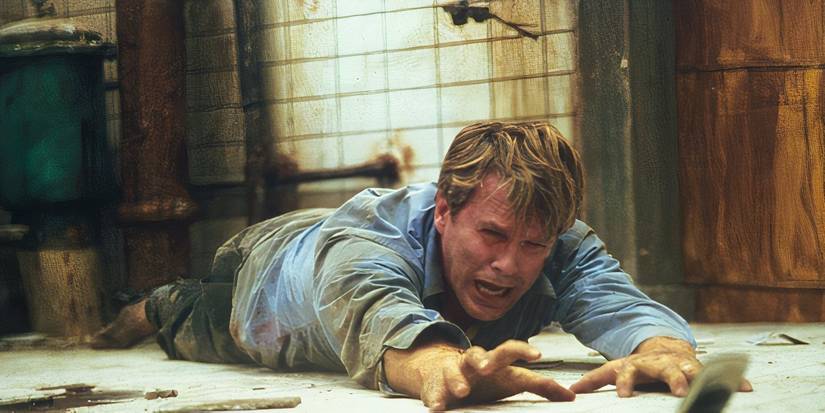
“I want to play a game.” While much of the torture in Saw is very literal and physical, the first movie ultimately stands above most of its torture porn imitators in that the scenarios and dilemmas typically have a powerful moral or psychological component as well. The movie starts with two strangers, Adam (Leigh Whannell) and Dr. Lawrence Gordon (Cary Elwes), who awaken chained in a filthy bathroom with no memory of how they arrived. They soon discover they are pawns in a sadistic game orchestrated by the elusive Jigsaw Killer, who forces his victims into elaborate tests designed to make them appreciate their lives.
Indeed, Jigsaw’s targets are forced into impossible choices: maim themselves, sacrifice others, or confront truths about their moral failures. While the franchise later became synonymous with escalating spectacle, in this movie at least, the scenes are relatively restrained, and the focus is psychological. This approach resonated: Saw was a runaway success, grossing over $100m against a budget of just $1m.
8
‘Martyrs’ (2008)


“Keep doubting.” Martyrs is generally considered one of the key films in the New French Extremity movement, a wave of films in the 2000s that embraced transgressive elements like hardcore violence and explicit sexual imagery (though director Pascal Laugier himself rejected that label). The film begins with Lucie (Mylène Jampanoï), a young woman who escapes captivity and later tracks down the family she believes tortured her. Her quest for revenge draws her friend Anna (Morjana Alaoui) into a hidden world governed by a secret organization obsessed with discovering what lies beyond death.
While the premise is pretty pulpy, Martyrs is a lot more philosophically ambitious than one might expect. It asks terrifying questions about the nature of suffering, faith, and the human desire to understand mortality. The aesthetics reflect this tone: the violence is not presented with style or thrills. Instead, it’s shot with stark realism and long, uncomfortable takes, forcing the audience to sit with the suffering rather than look away from it.
7
‘Audition’ (1999)

“Words create lies. Pain can be trusted.” Takashi Miike’s Audition begins like a gentle romantic drama before revealing its true nature in the last act. Shigeharu Aoyama (Roy Ishibashi), a widower encouraged by his son to remarry, stages a fake film audition to meet potential partners. He becomes enamored with Asami (Eihi Shiina), a quiet and enigmatic young woman. As their relationship develops, subtle warning signs accumulate, hinting at a darkness beneath her composed exterior.
It all finally breaks out at the end, leading to several wincingly brutal scenes of torture, both physical and mental. Retribution is delivered through needles and piano wire. The shift is truly shocking and the single biggest reason why this movie is a cult classic. Audition is a brilliant example of a slow-burn structure being used to chilling effect. These scenes hammer home the themes around loneliness, misogyny, and emotional deception, and they exerted a massive influence over the whole “torture porn” boom.
6
‘The Killing of a Sacred Deer’ (2017)

“If you dig a hole and it’s in the wrong place, digging it deeper isn’t going to help.” This absurdist horror from Yorgos Lanthimos stars Colin Farrell as Steven Murphy, a successful cardiac surgeon who befriends Martin (Barry Keoghan), a teenage boy connected to a patient who died under Steven’s care. Martin insinuates himself into Steven’s family life, and an inexplicable illness begins to afflict the surgeon’s children. Eventually, Martin reveals that Steven must make an unthinkable choice to restore balance.
The movie’s title refers to the Greek myth of Iphigenia, in which a king must sacrifice his daughter to appease the gods. Lanthimos reimagines that myth in a modern setting. Here, the true torture is not physical pain but the unbearable responsibility of choosing who must die. Lanthimos makes this approach all the more unsettling through a clinical tone, where the dialogue is delivered in a flat, almost emotionless style. Conversations about horrific events are spoken with the calm detachment of everyday small talk.
5
‘Misery’ (1990)
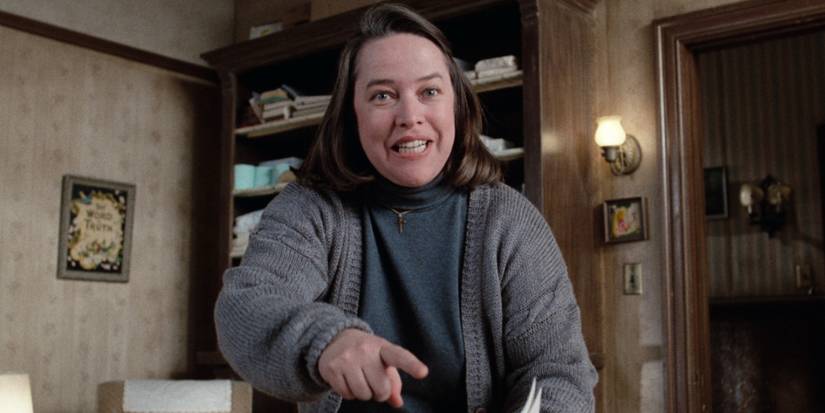
“I’m your number one fan.” Misery is a masterclass in claustrophobic terror. Writer Paul Sheldon (James Caan) survives a car crash only to be rescued by Annie Wilkes (Kathy Bates), a former nurse and his self-proclaimed biggest fan. Annie takes Paul to her isolated home to nurse him back to health, but when she discovers he has killed off her favorite fictional character, her devotion curdles into something far more dangerous. Trapped and injured, Paul is forced to write under Annie’s watchful eye.
The late great Rob Reiner and his stars keep the tension perfectly coiled throughout. What makes Misery so effective is its focus on the shifting power dynamic between captor and captive. Paul is bedridden with shattered legs, completely dependent on Annie for food, medicine, and basic survival. Annie, meanwhile, swings unpredictably between kindness and terrifying violence. That emotional volatility creates a constant state of dread, because Paul never knows whether Annie will comfort him or destroy him.
4
‘Funny Games’ (1997)
“Why don’t we make a bet?” Funny Games is a chilling deconstruction of violence and spectatorship. The story centers on a middle-class family vacationing at their lakeside home when two polite young men (Arno Frisch and Frank Giering) arrive and gradually subject them to a series of cruel “games.” The intruders maintain an eerie calm throughout, treating their actions as casual entertainment. In the process, director Michael Haneke uses the home invasion framework to implicate the audience in the act of watching.
The style complements this message. The film frequently breaks conventional storytelling rules, disrupting expectations and denying catharsis. For instance, the tormentor Paul repeatedly breaks the fourth wall, addressing the audience directly. At one point, when a character seems about to fight back, Paul literally rewinds the film with a remote control to erase the moment. This shocking meta moment removes any illusion that justice or escape might occur.
3
‘Se7en’ (1995)

“Wanting people to listen, you can’t just tap them on the shoulder anymore.” David Fincher‘s grimmest masterpiece follows detectives Somerset (Morgan Freeman) and Mills (Brad Pitt) as they hunt a serial killer (Kevin Spacey) who stages murders inspired by the seven deadly sins. The investigation drags them through a rain-soaked city steeped in decay, where each crime scene is a grim moral tableau. As the case unfolds, the killer’s meticulous planning reveals a philosophy that is as disturbing as his methods.
Indeed, rather than being cartoonishly evil and doing bad for bad’s sake, John Doe believes he is carrying out a moral crusade against human vice. Each crime is painstakingly designed to represent one of the deadly sins, and the targets are carefully chosen. The grotesque detail of these scenes forces the detectives (and the audience) to confront the darker aspects of human nature and the uncertainty of justice, culminating in the harrowing fate Doe inflicts on Mills.
2
‘A Clockwork Orange’ (1971)
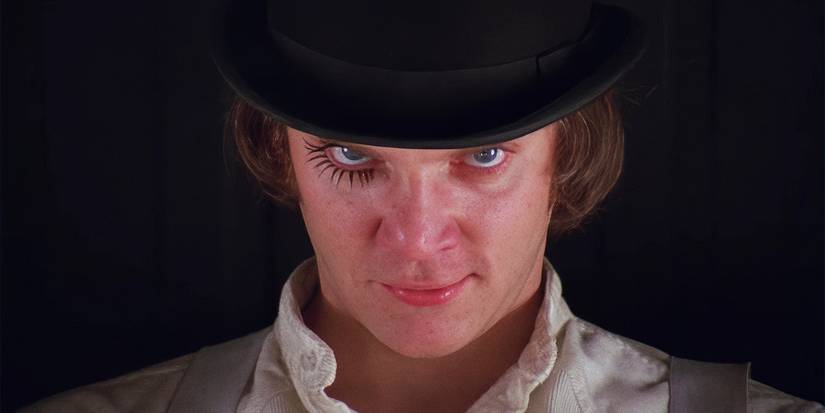
“There was me, that is Alex, and my three droogs.” With this one, Stanley Kubrick adapts Anthony Burgess’ novel into a stylized vision dystopian masterpiece. The story centers on Alex (Malcolm McDowell), a charismatic delinquent who revels in nightly acts of brutality with his gang. After being imprisoned, he volunteers for an experimental treatment designed to condition him against aggression. Alex is strapped into a chair and forced to watch graphic videos of violence and suffering. Drugs are administered to induce extreme nausea, conditioning him to associate aggression with unbearable physical sickness.
The procedure leaves him physically incapable of violence, but it also strips away his agency. Through this setup, Kubrick asks tough questions around criminality, authority, and free will. Chief among them: is a person still human if their choices are engineered? Ultimately, A Clockwork Orange uses satire and striking imagery to examine the ethics of behavioral control, arguing that the suppression of evil can come at the cost of individuality itself.
1
‘Oldboy’ (2003)
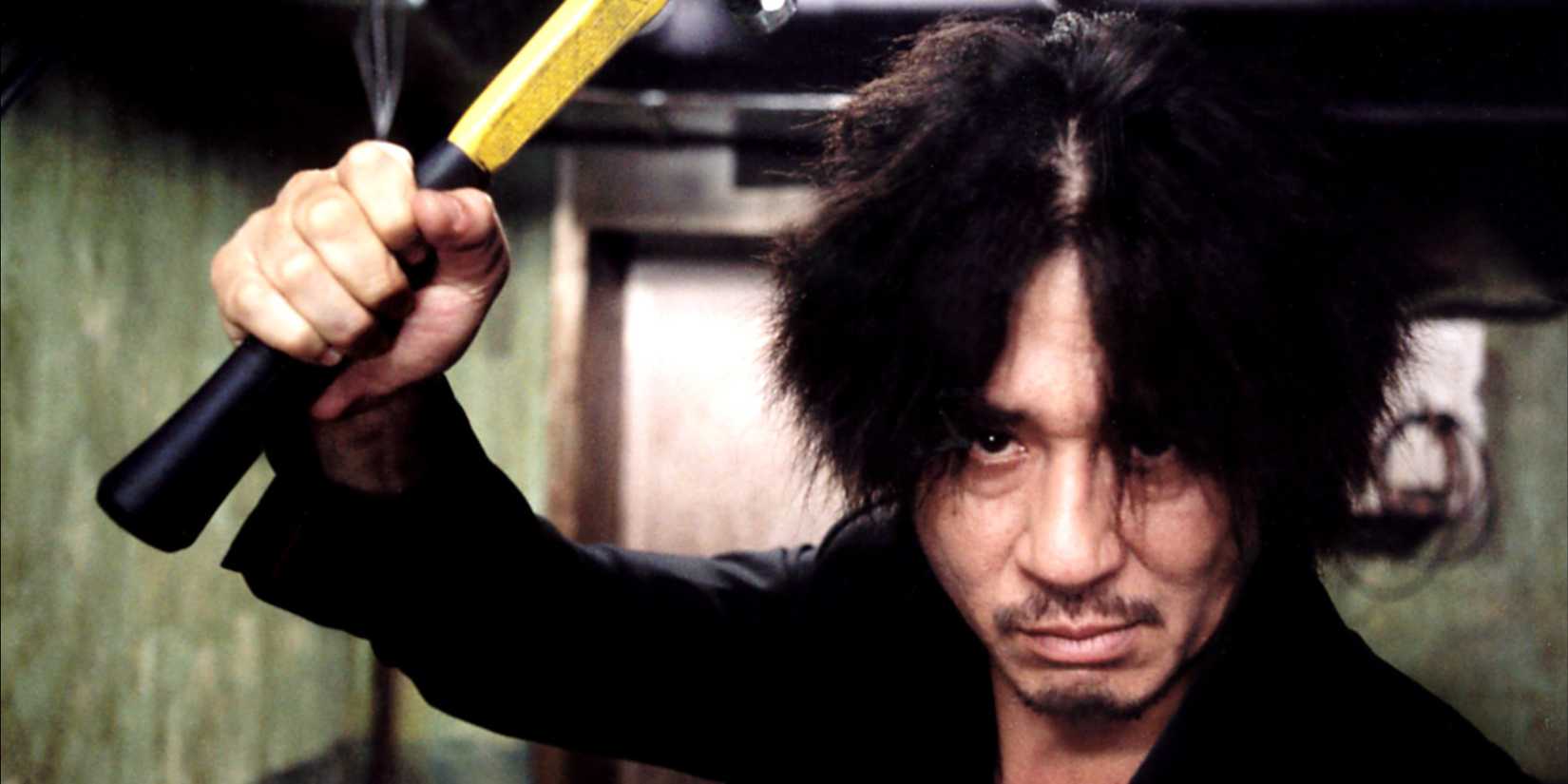
“Laugh, and the world laughs with you. Weep, and you weep alone.” When it comes to psychological torture, no movie can top the sheer existential nightmare of Oldboy. In this legendary revenge thriller, protagonist Oh Dae-su (Choi Min-sik) is inexplicably abducted and imprisoned for fifteen years. Without explanation or human contact, he obsessively trains his body and mind, preparing for the day he might escape. When he is suddenly released, he embarks on a desperate search for the identity and motives of his captor.
However, this set-up is only the start of his torment. His enemy, Lee Woo-jin (Yoo Ji-tae), reveals that the entire ordeal was part of a meticulously planned revenge scheme based on a seemingly minor event from their past. The movie then hits us with one of the most devastating twists in modern cinema, revealing that Dae-su has unknowingly been manipulated into committing an act that destroys him psychologically. The revelation reframes the entire narrative. At that point, only forgetting offers Dae-su a chance of survival.
You must be logged in to post a comment Login