
Entertainment
10 Greatest R-Rated Westerns of the 21st Century, Ranked

While Western cinema has always been defined by themes of violence, justice, and morality as much as it has been by its sweeping visuals and cowboy characters, the mid-20th century heyday of the genre wasn’t exactly renowned for its hard-hitting or confronting realism. As the decades have rolled on, however, that sense of visceral authenticity has become more enticing to viewers who want to see the genre’s air of fabled American values dismantled in taxing and truthful illustrations of what life was like in the Old West.
The Western movies of the 21st century have appealed to this demographic, and the genre has become synonymous with gruelling intensity and shocking violence over the last 25 years. While some modern classics like True Grit and First Cow prove that lower-rated depictions of the genre can still thrive, the vast majority of Western cinema in recent decades has been R-rated. The best of the century so far has consisted of everything from spaghetti Western callbacks to biographical dramas, revenge epics, and even modern-set neo-Western spins on the genre’s rusted-on tropes and ideas.
10
‘Bone Tomahawk’ (2015)
One of the most viscerally violent and disturbing pictures of the century so far, Bone Tomahawk is a confronting, savage, and mentally scarring illustration of the genre. Accentuated with flourishes of extreme horror and brutality, it follows several men from the small town of Bright Hope as they embark on a trek to rescue three people abducted by a cannibalistic, cave-dwelling tribe.
A directorial debut of astonishing conviction and impact from S. Craig Zahler, Bone Tomahawk presents Western cinema at its most unflinching and raw. It takes a somewhat traditional captivity narrative of heroism and rescue, and imbues it with moments of ferocious violence capable of making even the most hardened viewers squirm in their seats. Bolstered by a litany of strong performances, a dread-inducing slow-burn tempo, and the incredible yet harrowing practical and technical execution of its most violent scenes, Bone Tomahawk soars as a bold and daring Western horror.
9
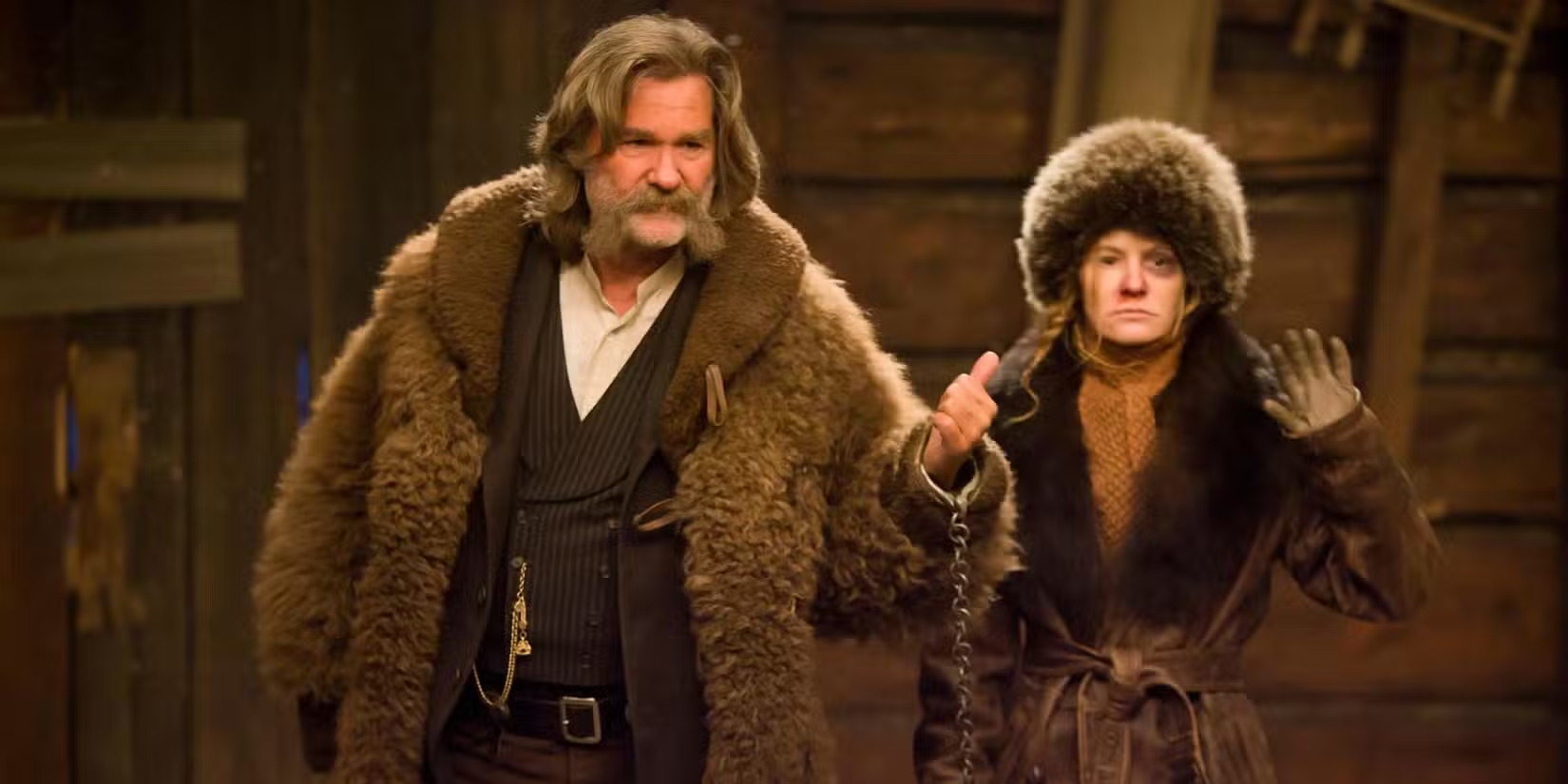
‘The Hateful Eight’ (2015)

From one Kurt Russell-starring Western thriller to another, The Hateful Eight tells a winding story of distrust, violence, and close confines intensity that stands as perhaps Quentin Tarantino’s most underrated movie. It unfolds in a haberdashery amid a snowstorm in Wyoming, with eight strangers taking refuge in the small lodge. With bounty hunter John “The Hangman” Ruth (Russell) escorting fugitive Daisy Domergue (Jennifer Jason Leigh) to be executed, every new face presents as a potential threat waiting to strike and free the criminal from captivity.
With its palpable, chamber-play atmospheric tension absorbing viewers in every sudden twist and violent revelation, The Hateful Eight thrives as an immersive pressure-cooker of rich and volatile characters simmering towards an inevitable eruption of violence. Tarantino’s mastery of gripping dialogue and suspense combines beautifully with Robert Richardson’s enrapturing cinematography and Ennio Morricone’s score to make for a masterful modern epic and a dazzling spectacle of Western cinema.
8
‘Hell or High Water’ (2016)

Hell or High Water is a raging neo-Western masterpiece that questions traditional genre notions of heroism and villainy. With their ranch in debt following the death of their mother and the bank looking to foreclose on the property, brothers Toby (Chris Pine) and Tanner Howard (Ben Foster) start robbing different branches of the Texas Midlands Bank to come up with the money. As their crime spree spreads, two aging Texas Rangers are assigned to the case. The film explores themes of generational poverty, the death of the American dream, the moral ambiguity of crime, and the cataclysmic failing of the nation’s economic structure.
With Taylor Sheridan’s brilliant and piercing screenplay, David Mackenzie’s absorbing direction, and a litany of exceptional performances, Hell or High Water thrives as one of the most engaging Westerns of the past decade. It recreates the atmosphere of the Old West in a contemporary setting, while subverting themes and character archetypes. It aims to illuminate how much America has changed, or at least how far detached it is from the idealized, often celebrated vision of the Old West. Effective, efficient, and exhilarating, it’s one of the essential movies of the 2010s as well as an instant classic of Western cinema.
7
‘The Proposition’ (2005)

Given that the genre is called the “Western” because it explores life on the expanding frontier of the American West, it stands to reason that most Western stories transpire in America, but that isn’t always the case. A powerfully ferocious and philosophical spin on the genre from Australia, The Proposition sees the genre’s essential themes of colonization and civilization, justice, crime, and even morality reapplied to an outback setting. It follows captured fugitive Charlie Burns (Guy Pearce) as he is given an ultimatum: find and kill his sadistic older brother in nine days, or his naive younger brother will be hanged.
Bereft of glory or heroics, The Proposition soars as an uncompromising immersion in the brutality of the time. This relentless illustration of desperation, depravity, and violence is emboldened by a litany of exceptional performances and the majestic yet merciless landscape of the Australian wilderness. Written by Nick Cave (who also provided the film with its intense and haunting score, alongside Warren Ellis), The Proposition isn’t just a tale of Western brutality, but an immersion in the callousness of Australia’s expanding frontier.
6
‘The Assassination of Jesse James by the Coward Robert Ford’ (2007)

A criminally underrated gem that serves as a poetic and piercing Western drama as well as a thematically rich biopic about violence, celebrity, and obsession, The Assassination of Jesse James by the Coward Robert Ford is a highlight of revisionist Western cinema. Using its story to challenge genre norms and deconstruct the myth of heroism, gallantry, and honor in the Old West, it unfolds as a methodical and measured slow-burn. This wafting meditation on one of America’s most polarizing figures is also a gorgeous realization of 1880s America, courtesy of Roger Deakins’ brilliance.
With a 160-minute runtime, the Western biopic follows Robert Ford’s (Casey Affleck) initiation into the gang of his idol, Jesse James (Brad Pitt). Over time, Ford’s adoration of James turns to embittered resentment, leading him to hatch a scheme to kill the outlaw. Even in its striking eruptions of violence, the film maintains an air of composure. Director Andrew Dominik imbues the story with gravitas through his restrained pacing, evocative use of silence and narration, and the lingering sense of the wealth, freedom, and infamy deteriorating into something rotten and corrosive.
5
‘Killers of the Flower Moon’ (2023)

Blending Western ideas with a fiercely important documentation of historical events, Killers of the Flower Moon is one of the greatest movies of the 2020s so far, and an essential Martin Scorsese masterpiece. Set in 1920s Oklahoma, on the land of the Osage Nation, it unfolds as greed, violence, and cut-throat opportunism engulf the community following the discovery of an oil deposit under the land. Amid the murder and carnage, Molly Burkhart (Lily Gladstone) pleads to the U.S. government to investigate, unaware that her husband, Ernest Burkhart (Leonardo DiCaprio), and his family are the driving force behind the deaths.
Epic in scope, runtime, and thematic gravitas, Killers of the Flower Moon is a confronting immersion in a heinous chapter of American history, one that boldly showcases evil not as an enigmatic force of twisted genius or terrible power, but as simple greed combined with opportunity and self-justification. The decision to focus on Molly and Ernest’s marriage, founded on true love and mutual respect, adds another compelling element to the story. The result is an enthralling, albeit disturbing, Western drama that stands among the most commanding pictures the genre has ever seen.
4
‘Django Unchained’ (2012)

Recreating the slashing style and violent vehemence of spaghetti Western cinema with the technical advancements of modern-day filmmaking, Django Unchained is an enjoyable indulgence, a cathartic revenge flick loaded with panache and punch. Jamie Foxx stars as Django, a recently freed slave working with bounty hunter Dr. King Schultz (Christoph Waltz) to track down outlaws. In exchange for his help, Schultz agrees to help Django reunite with his wife, Broomhilda (Kerry Washington), who has been sold to the plantation of the notoriously cruel Calvin Candie (Leonardo DiCaprio).
Django Unchained successfully blends together the adventure and amorality of the spaghetti Westerns of old while incorporating periods of sustained suspense and outbursts of hilarious black comedy into the fold. The result is 165 minutes of outrageous, unadulterated fun. It displays the genre at its most exuberant and excessive, making for one of the most relentlessly entertaining movies of the century so far, and a soaring highlight in Quentin Tarantino’s filmography.
3
‘Brokeback Mountain’ (2005)

Stoic masculinity blanketing any notion of emotional vulnerability has long been a defining characteristic of Western drama. It is an idea that is brilliantly used in 2005’s Brokeback Mountain, an ingenious marriage of neo-Western and queer romance storytelling based on Annie Proulx’s short story of the same name. It follows the forbidden love that blossoms between sheep herders Ennis Del Mar (Heath Ledger) and Jack Twist (Jake Gyllenhaal) over a summer together in 1963. While both men return to their homes and marry their girlfriends, the passion they shared on Brokeback Mountain never leaves them, complicating their lives as their sporadic romance carries on for years.
It may be an unconventional Western, especially as it secures its R-rating through sexual content and coarse language more so than violence, but Brokeback Mountain embodies the defining characteristics of the genre. It presents a picture of sweeping, naturalistic majesty while tackling themes of masculinity, repressed emotions, and isolation. Anchored by two outstanding lead performances and Ang Lee’s deft direction, Brokeback Mountain endures as a piercing romantic drama, and one of the most ambitious, tender, and culturally timeless Westerns of all time.
2
‘There Will Be Blood’ (2007)

Despite there being some great Westerns from abroad, the genre is innately American, with the original Western movies from the ’30s through to the ’60s presenting a mythic version of the nation’s history. There Will Be Blood takes this air of myth and might and turns the genre into a breathtaking dismantling of capitalist greed. Directed by Paul Thomas Anderson, it follows oil magnate Daniel Plainview (Daniel Day-Lewis) as he treks to California to investigate claims of an oil deposit and forms a vicious rivalry with the duplicitous local preacher, Eli Sunday (Paul Dano), in the process.
Through the story of Plainview’s posturing and ambition, There Will Be Blood presents American capitalism at its unfiltered, unfeeling worst, bolstered by Daniel Day-Lewis’s astonishing, transformative performance. The thematic wrath of its message of power and wealth and the technical mastery of its execution are among its greatest strengths. There Will Be Blood must be considered not only a triumphant Western masterpiece of the modern day but a defining highlight of 21st-century cinema at large.
1
‘No Country for Old Men’ (2007)

Marking a striking departure from the typical black comedy of the Coen Brothers, No Country for Old Men is an unfiltered embracement of pure neo-Western suspense. Based on Cormac McCarthy’s novel of the same name, it follows Texan hunter Llewelyn Moss (Josh Brolin) as he is pursued by sadistic cartel hitman, Anton Chigurh (Javier Bardem), after stealing a case of $2 million from the aftermath of a desert shootout. As Moss relies on his wits to keep the money and his life, Sheriff Bell (Tommy Lee Jones) tries to piece it all together, even as he reflects on the many ways the world has changed since he was young.
No Country for Old Men isn’t just the best Western of the 21st century; it is one of the greatest revisionist Westerns in cinematic history. It’s a masterpiece of modernization that takes integral genre themes like morality, justice, and law and order vs. crime, and applies them to the more recognizable world of 1980s Texas. Defined by atmospheric intensity and absorbing, heart-stopping, suspenseful sequences, the 2007 Best Picture Winner is one of the greatest R-rated movies ever made of any genre.

Continue Reading
By Chris Snellgrove
| Updated

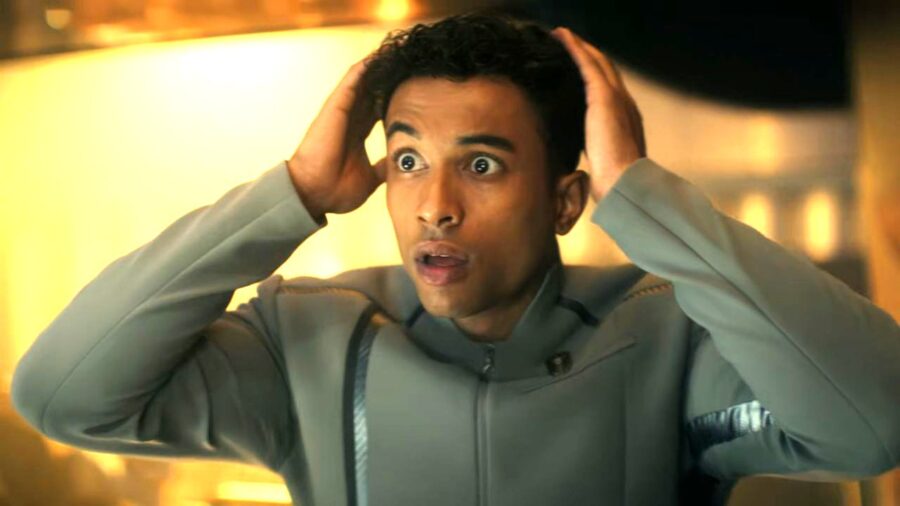
Recently, Paramount made the surprisingly sudden decision to cancel Starfleet Academy shortly after the end of its first season. Starfleet Academy was designed to attract younger audiences, and it failed to do so. Its characters and storytelling drove away older fans while failing to capture that coveted youth demographic.
With any luck, Paramount will learn from this show’s failure and learn the truth behind the biggest lie in Star Trek. Namely, that the franchise must court younger viewers to survive. That’s never been true. In reality, simply following the blueprint for The Original Series is enough for new shows to attract both younger and older audiences, a formula that has worked for nearly four decades.
Fandom: The Next Generation

The most obvious example that the Original Series formula works is, of course, the success of Star Trek: The Next Generation. The show featured a new crew and new adventures, but at its heart, it was about the starship Enterprise and its mission to explore strange new worlds. We also got some entertaining new characters, but more of them are throwbacks to Kirk’s era than you might think.
The android Data was clearly meant as a stand-in for Spock, and like the legendary Vulcan before him, his attempts to understand what makes humans tick served as a reflection of our own humanity. Riker was (as confirmed by the Season 2 Writer’s Guide) modeled after Captain Kirk. Worf was an ongoing reminder of Kirk’s old nemesis, the Klingons. Dr. Pulaski channeled much of Dr. McCoy’s famous crankiness, and even wunderkind Wesley Crusher was an echo of Chekov, whom Gene Roddenberry created to appeal to younger audiences.
Simply put, Star Trek: The Next Generation very explicitly modeled itself after The Original Series. Its success was so (ahem) out of this world that it launched the franchise’s Golden Age. An era that ended only when Paramount finally began deviating from its winning formula.
Playing The Hits

It’s not hard to see how Star Trek: Voyager similarly built off the formula of The Original Series. As with TNG, producers once again focused on an intrepid crew constantly making contact with new and exciting alien life. The premise that our titular starship was stranded on the other side of the galaxy helped this show channel TOS even more explicitly by bringing back the vibe of going where (in a quite literal sense) no man had gone before.
There were, of course, parallels with TOS characters: Tuvok is Spock 3.0 (no, I’m not counting Xon, and you can’t make me!), and the grumpy Doctor is Dr. McCoy 3.0 (albeit a holographic one). Harry Kim was, like Wesley and Chekov before him, an attempt to appeal to younger audiences. Interestingly, Voyager shared significant DNA with the highly successful Next Generation: B’Elanna Torres was a new iteration of K’helyr, TNG’s popular half-human, half-Klingon. Seven of Nine was an ongoing reminder of Captain Picard’s assimilation. Finally, Tom Paris was very explicitly based on TNG’s Nick Locarno character, who was also played by Robert Duncan McNeil.
Even The Exception Followed The Rules

On paper, Deep Space Nine is the anomaly: as a show set on a space station, it is seemingly the antithesis of the Original Series formula. However, the early show still echoed the TOS focus of life on the frontier, and it echoed TNG more than you might think. The entire relationship between Cardassians and Bajorans was set up in TNG. It featured Miles O’Brien from the beginning, and it later added the fan-favorite TNG character, Worf.
Finally, by Season 3, Sisko had his very own starship with which to engage in adventures on either side of the wormhole. The addition of Worf and the Defiant made DS9 more like The Next Generation (itself an iteration of The Original Series) than ever before. Uncoincidentally, these changes also made the show popular enough to earn a dubious honor: it was the last Star Trek show to get seven seasons.
The Pattern Is Clear

Star Trek: Enterprise was infamously canceled after four seasons. Its first two seasons tried to follow The Original Series formula, though audiences didn’t cotton to changes like Vulcans (save for the hottie in the catsuit) being complete jerks. Season 3 tried to modernize the series’ formula by focusing on an ongoing story clearly inspired by 9/11. Season 4 righted the ship with some stellar episodes, but the damage was done, and the show ended with one of the worst finales in TV history.
The same thing happened to Star Trek: Discovery. While that show’s early days had its detractors, most fans agree that the first two seasons were the best. The show channeled TOS in some provocative ways, including illustrating the brutality of Starfleet’s earlier war with the Klingons and the horrors of the Mirror Universe. Audiences also loved the introduction of a young Captain Pike and Spock so much that they headlined Strange New Worlds, the beloved spinoff that is popular explicitly because it’s modeled so heavily after The Original Series.
Conversely, Star Trek: Picard didn’t get good until its final season, and that’s because it finally became one big cast reunion for The Next Generation. This season reunited our favorite TNG characters and even focused on familiar bad guys like the Borg. Fans loved this season so much that they practically begged Paramount to give us a Star Trek: Legacy spinoff series. Meanwhile, Starfleet Academy deviated from the formula entirely, focusing on different characters (young, vulgar cadets) and a different setting (the titular academy). Nobody begged for more; in fact, the show was canceled after one season due to low viewership.
The Blueprint Is There, Will Paramount Actually Use It?
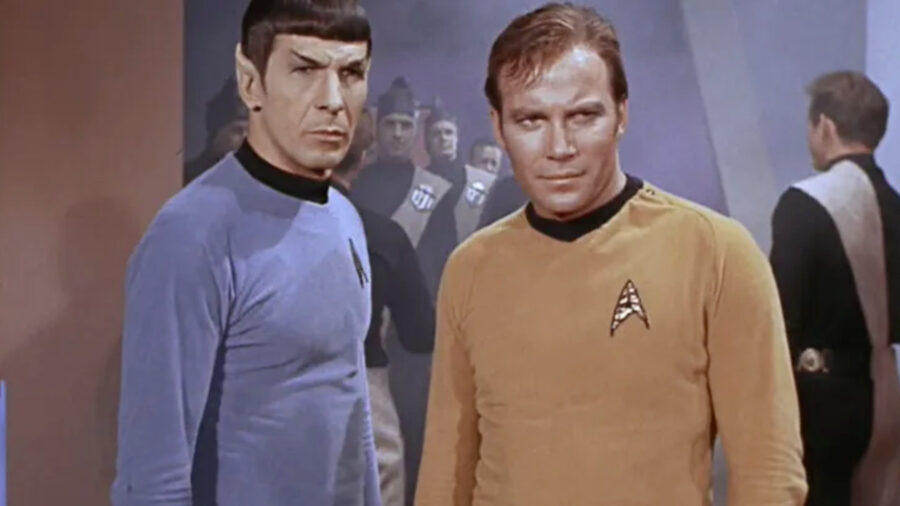
There you have it, folks. While each new Star Trek series gives the franchise a new coat of paint, it’s clear that the most successful shows are the ones that draw heavily from The Original Series or its successor show, The Next Generation. Some worry that sticking to a 60-year-old blueprint means that things will get repetitive and boring, but that’s the brilliance of Gene Roddenberry’s amazing creation: it allows for endless different stories, technologies, alien races, and so on. Fans just want the characters encountering all of this to be in the vein of Kirk and Picard’s iconic Trek through the stars.
Now, Paramount is on the cusp of reinventing this franchise yet again. Doubtlessly, there will be plenty of internal debates about the direction new shows and movies should take. Sadly, NuTrek, with its astonishing failure rate, is a startlingly expensive example of what not to do. From the most hardcore fans to the most casual viewers, nobody wants another slick sci-fi show that is Star Trek in name only.
By sticking to Roddenberry’s successful blueprint, Paramount can reinstate a new golden age for the franchise. Otherwise, they risk destroying their most vital IP and fully driving away the fans they will so desperately need when the dust finally settles on these endless mergers and acquisitions. If that happens, though, the Star Trek fandom has a handy catchphrase they should go ahead and start practicing: “Kurtzman, when the Trek fell!”
:max_bytes(150000):strip_icc():format(jpeg)/justin-beiber-2026-grammys-020126-1-0f51c14a2ba643868b71ab3219c0fdac.jpg)
The singer-songwriter performed a private show with three sets in West Hollywood, saying it was a tease for his first major concert in four years.
:max_bytes(150000):strip_icc():format(jpeg)/Anna-Faris-WWHL-2019-040126-15e907273c2b4386869c7d4fdec5a098.jpg)
There were reports last year that Faris would be joining the voice cast of the beloved Pixar franchise.
:max_bytes(150000):strip_icc():format(jpeg)/Actors-Lost-Roles-040126-3dad4861b36b47138e9b260d815bf0a3.jpg)
Talent doesn’t always guarantee a gig in Tinseltown.
By Jonathan Klotz
| Published

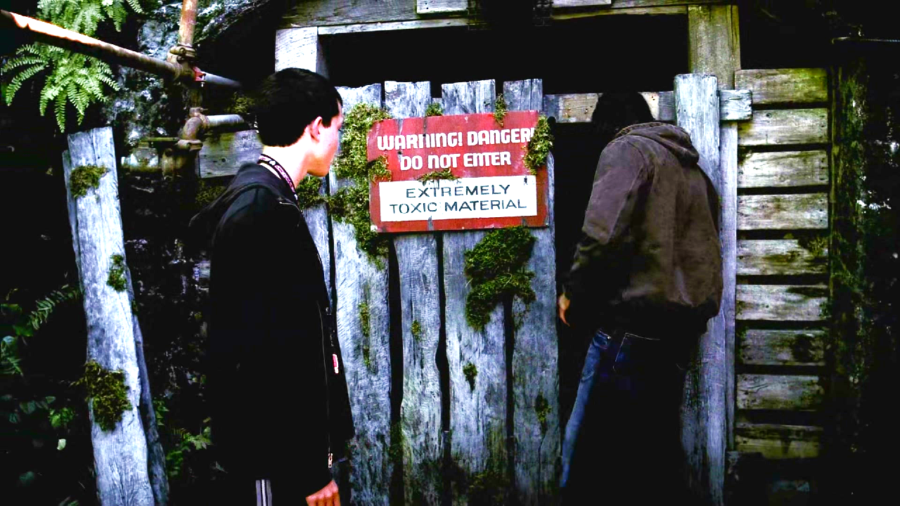
Supernatural felt like it was on the air forever, 15 seasons and 327 episodes is an incredible run, but it’s even more impressive for a genre show. That’s why it’s hard to remember, but way back in the second episode, “Wendigo,” Alden Ehrenreich made his acting debut as the young Ben Collins, and while he’d go on to star in Weapons, Ironheart, and Beautiful Creatures, his most infamous role was no fault of his own. Ehrenreich starred as young Han Solo in Solo, the most unneeded prequel of all time, and a film that destroyed the entire Star Wars side-story project Disney had been pursuing, which is a little ironic, as his very on-screen role was so good, it helped turn Supernatural into the juggernaut it would become.
Sam And Dean Take On One Of Supernatural’s Best Monsters

“Wendigo” is the second episode of Supernatural. which means it had the task of setting the tone and format for the rest of the series. The pilot introduced characters, set up the world, and established stakes, but “Wendigo” was the first real Monster of the Week episode. Back before it was a battle against demons and angels, the show mined folklore and urban legends for its villains, and the Algonquian legend of the Wiindigoo, a ravenous, gigantic, emaciated cannibal, made for the perfect introduction to the Winchesters.
Alden Ehrenreich’s Ben Collins is wandering in the wilderness with his older sister, Hayley, as they try to find their other brother, Tommy, who went missing. Sam (Jared Padalecki) and Dean (Jensen Ackles) find the siblings, and thanks to their dad’s journal, deduce it was a Wendigo that took Tommy. The Wendigo they find isn’t a furry, bestial monster, instead it’s closer to the actual tradition, a strange-looking, gaunt, humanoid that has more in common with Slender Man than Big Foot, but it’s also one of the best-looking monsters of Season 1.

The episode plays out as you’d expect, with Sam and Dean losing horribly to the beast before they outsmart it and snatch victory from its ravenous jaws of defeat. Supernatural eventually got stuck in a rut with subsequent episodes playing out in the same fashion, but given its later seasons’ emphasis on the mythology arc, it’s refreshing to go back and see such a simple Monster of the Week story that lets Sam and Dean be, well, Sam and Dean, going up against a beast from classic folklore.
From All-Time Great To All-Time Flop
Following the success of “Wendigo,” Supernatural became a hit, and Alden Ehrenreich hasn’t had to stop working yet. Supernatural fans should at least check out Beautiful Creatures, based on the young adult novel of the same name, where he plays a teen who falls in love with a young witch. It’s Southern Gothic, giving it a sense of style and charm that what should have been his breakout film, Solo, completely lacks.
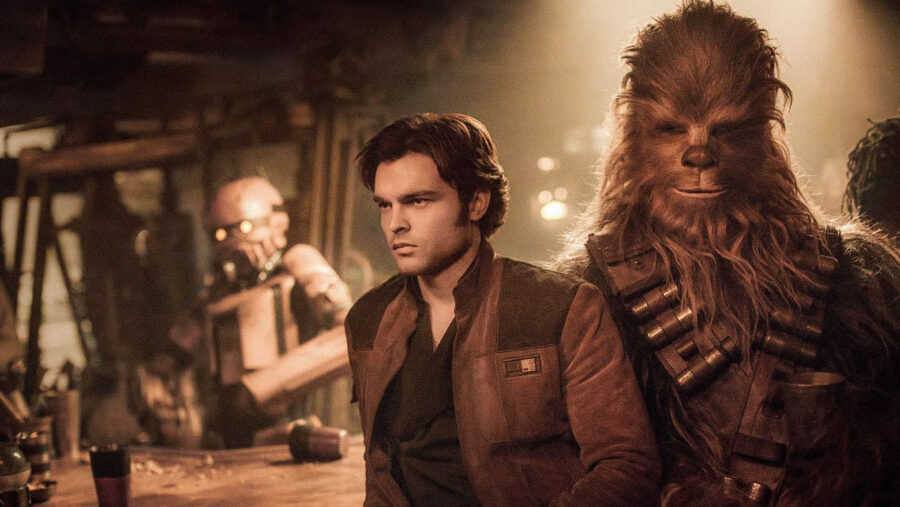
It’s not Ehrenreich’s fault that Solo was a failure. Asking him to play one of the most iconic roles in movie history that made Harrison Ford a movie star was an impossible task. The fact that he does as well as he does is a testament to his acting ability and his own natural charm. Solo was the victim of studio interference.
Supernatural had to overcome its own periods of studio interference, and its spin-off, The Winchesters, also had a rough start to production. Years after it finally came to an end, it’s fun to look back at the saga of Sam and Dean and realize how good we had it. Two brothers, a 1967 Chevy Impala, and a Monster of the Week became one of the greatest genre shows in history.

Jen Shah was indicted for her alleged role in a long-running telemarketing scheme while filming season 2 of The Real Housewives of Salt Lake City.
Bravo viewers met Shah during season 1 of RHOSLC, which filmed in 2019 and aired in 2020. She quickly became a polarizing character on the franchise, with fans questioning her job and need for several assistants.
“People will come to me and I’ll invest in their companies, so we have got a lot of different investments, all different kinds of things,” Shah said of her career on Access Hollywood’s “Housewives Nightcap” in November 2020. “I’ve been able to do it because what I’ve been able to carve out, the niche I’ve been able to carve out in the direct response marketing world.”
Not long after production began on season 2 of RHOSLC — which also starred Meredith Marks, Whitney Rose, Heather Gay, Lisa Barlow and Mary Cosby — news broke on March 30, 2021, that Shah and one of her assistants who appeared on the show, Stuart Smith, were arrested in Utah.


Every defendant in the case has pleaded guilty to their respective charges as of July 2022, when Shah became the final defendant to change her plea. She pleaded guilty to conspiracy to commit wire fraud as part of a plea deal. After Shah was convicted, she was sentenced to 6.5 years in prison. Shah reported to prison in 2023, and was later released in December 2025.
Scroll through for a breakdown of the charges and everything we know about Shah’s legal drama:
This is an ongoing article that was originally published in March 2021 and last updated on April 1, 2026.
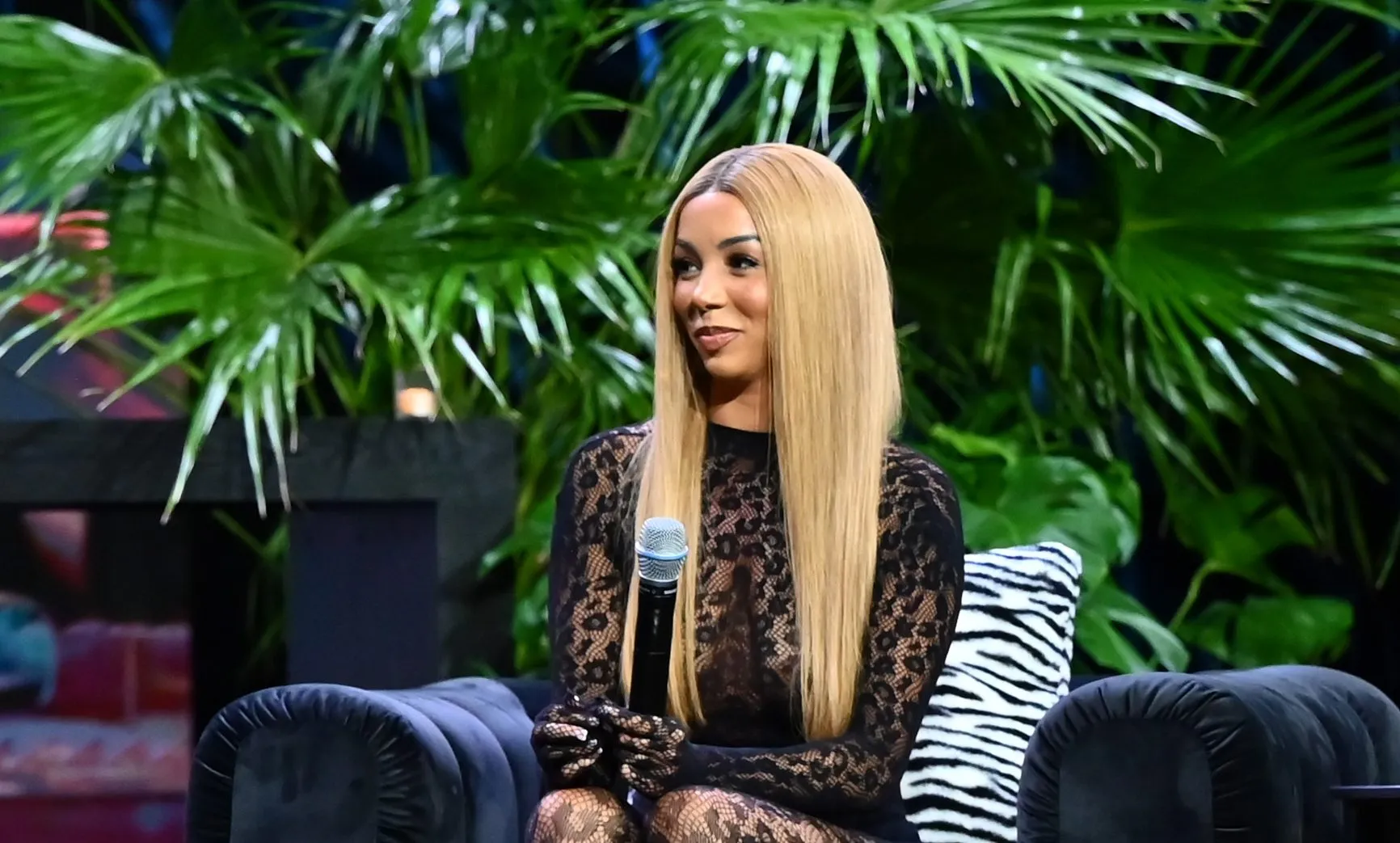
Brittany Renner seemingly wants all the smoke behind Paul Jermaine Washington III, her son with PJ Washington. She went from jokingly defending him a couple of days ago to blasting his parental involvement. Things escalated when PJ seemingly took sides in the internet beef between Renner and his wife, Alisah Chanel. Meanwhile, some internet users found themselves on Rashad Scroggins‘ Instagram page.
After photos of their friends-to-lovers journey disappeared from their IG feeds, the people had questions under his other posts. This time, the internet clocked it. Scroggins told his followers he’s single and “dodged a missile.”
RELATED: Oop! Brittany Renner Drops SPICY Reply To PJ Washington’s Wife Alisah Chanel Over Her Reaction To A Joke
Brittany Reacts To PJ Washington’s Selfie With His Wife Alisah
After Brittany and Alisah’s back and forth on IG Stories and in The Shade Room’s comment section, PJ Washington seemingly stepped in. He reminded the public via his IG Stories that Alisah is the one — the ring is secured! After TSR posted the sweet selfie, Brittany hopped on her IG Stories to clock PJ about not replying to a message about their son, Paul. She had texted him, “What are your plans after the season ends? Did you have dates in mind you wanted to get Paul?” Washington seemingly hadn’t responded and the timestamps suggest Renner texted him a few days prior.
“Despite the dead eyes, I am glad to see your thumbs aren’t broken and you’re alive and well. While we have a moment, can we get back to the question at hand @pjwashington,” Renner wrote in her post.
Social Media Users Flood Brittany Renner’s Recent Boo With Breakup Comments
Brittany’s internet tussle with Alisah and PJ had folks on social media asking about her own love life. She and Rashad Scroggins debuted their relationship earlier this year. Last TSR reported, he had shared a post about their mountain trip in late December. Their sweet, and often joint, posts continued through Valentine’s Day. He was even in the podcast episode where she revealed she had dropped her child-related case in California against PJ Washington.
That podcast page is gone now. Also, sometime this week, their couples’ posts disappeared from their pages. And fans noticed. Two days he shared photos of himself on IG with the caption, “Everything should be cool.” Since then, the comment section has been flooded in with breakup speculation.
@juricafit wrote, “Big bro. She don’t want to be saved. Cole told us.”
“What happened? I liked you 2 together 😢,” @exceptionalerin added.
“Tell the truth, you knew what you were signing up for G 😅,” @earthtola_ commented.
“Why you deleted the pics of yall together?” @reginajackk asked.
@damsel_not_distressed added, “You got out in time! She’s already back to the messiness 🙄.”
“Females don’t understand that men get tired and fed up too! A man with boundaries is a different beast! 💪🏼,” @oohkathylee commented.
@gannicus_kd_wilson wrote, “U can’t call the girl trash now my n*gga the world tried to warn u and tried post how much u was in love naw take that L now @rashadscroggins.”
Rashad Scroggins Confirms He’s “Single,” Says He “Dodged A Missile”
Rashad Scroggins left his comment sections scrambled. Looking for answers. He even kept his cone of silence amid Brittany Renner blasting her ex-boyfriend and his wife. Then, on Tuesday (March 31), he finally spoke out on video and in the comment section.
In videos on IG Stories, Rashad shared a general message about life being “full of surprises and interesting at the same time.” Then, he admitted that he was “really loud before,” and it’s a switch-up to go quiet. To him, though, “some stuff is not worth you going forward it.”
“When you take that step back and there’s still chaos around the corner. When you enter somebody’s life, you hope to change, you hope to grow, you hope to make it better. I want to be better as a person, but some people, they just want to do the same thing over and over and over…they’re stuck in a loop and they can’t figure out that I need to do something different.”
He then told his viewers to never get stuck in life, and to keep moving forward. Up to that point, he hadn’t dropped any names and he kept the same energy in follow-up clips.
“I’m a big believer that idle time is the Devil’s playground. If you want to be a stay-at-home wife or you don’t want to work, you’re going to have issues. You have to do something with your time. I’m not saying stay-at-home wife is out, but you have to do something productive with your time. I pray for everybody, I hope they get happy.”
Rashad also acknowledged that he’s speaking in riddles and refused to get into specifics. He added:
“Mannnn, everybody told me,” before laughing. “My God look out for me man…I dodged a motherfing missile, do you hear me? I dodged all the ruckus…Thank you, thank you.”
RELATED: Issa New Couple? Social Media Reacts As Mystery Man Shares Mountain Trip Memories With Brittany Renner (VIDEOS)
In his follow-up, Scroggins said that people have to pay attention to what they have, including their own skills, rather than trying to eat off of what someone else has.
“Life is still gonna require you to do something or you’re going to feel an internal, deep hole that nobody’s gonna be able to fill. You’re going to think you need money, a jet, Rolls Royce, a chef, whatever you think that you need, it ain’t gonna be it. You need to figure out your purpose,” he said while filming outside. Adding, “To be clear, I’m single. I’m chilling, safe. Peaceful. Listening to birds. Just calm. Yes, that’s the story.”
Rashad said a lot of things transpired in a couple of days, but he didn’t go into details about what. Again, he never name-dropped Brittany Renner, but later made a reference to her. After defending the expression of his feelings, he said he was “kinda scared” to speak out because he wants “no smoke” with “her.” He said, “I just wish the best for her…but two things could be true.”
Rashad Scroggins announces that he’s single. As previously reported, he was linked to Brittany Renner last December as they shared moments from a trip to the mountains. (📸: @gettyimages) ✍🏾: #TSRStaffJW pic.twitter.com/D7a4tjwRle
— TheShadeRoom (@TheShadeRoom) April 1, 2026
RELATED: Brittany Renner Reacts After Alisah Chanel Alleges She’s Pregnant, Refused To Let PJ Washington See His Son And Begged For $150
What Do You Think Roomies?
By Jennifer Asencio
| Published

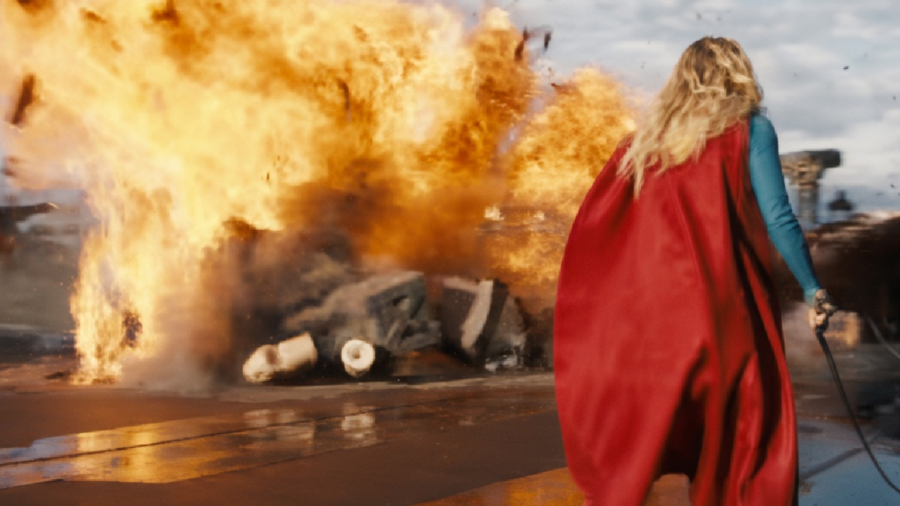
The latest trailer for Supergirl, starring Milly Alcock, Jason Momoa, and Eve Ridley, has been released, and I take back everything I said about the previous teaser trailer. Everything about the old trailer indicated a disrespect for the Superman source material and a rebellious girl-boss operating under the slogan, “Truth. Justice. Whatever.”
Yet the new trailer, released March 31, 2026, reveals a lot more about the plot and the source of Supergirl’s anger. A story that was indicated to be about Kara, aka Supergirl, helping an alien girl named Ruthye avenge the death of her father becomes much more poignant when you know that the murderer has also poisoned Krypto, Supergirl’s faithful canine that she’s had since her days on Krypton.
Supergirl’s John Wick Arc
The dog is all she has left of her former home, since Kal-El is more like a human from living on Earth since infancy. Kara is a young girl grieving and literally the only person she knows who remembers her planet. Under those circumstances, she’d probably tell us to get over any problems we might have with her rebelliousness, and her John Wick reaction is just as forgivable as with the Keanu Reeves hitman.
The girl power theme from the previous trailer can now be forgiven now that we know the director is Craig Gillespie, famous for The Powerpuff Girls. Supergirl seems to ask the question, “What if Buttercup from The Powerpuff Girls grew up, lost everything in Townsville, and is now in a race against time to save her beloved pet?” Ruthye seems to stand in as a demure Blossom, and there’s probably enough of Bubbles to go around for both of them. The style of the movie is signature Gillespie, a live-action rendering of his cartoon universes.
Jason Momoa Brings The Boom

There’s also plenty of room for the boys. Superman makes an actual appearance this time, rather than having his picture peed on by Krypto, and it is clear that he is worried about his cousin. He wants her to embrace the planet as he has, but she isn’t having any of it because she is too bitter about losing Krypton.
However, the objective highlight of the trailer is Jason Momoa as Lobo. If there was any actor born to play this role, it was Momoa, who looks exactly like his comic book counterpart. His perfectly fitting appearance is nothing compared to what we get to see of his performance during this trailer as he rolls in on his skull-adorned chopper to trade barbs with the movie’s heroine. If this trailer is any indication of what his performance is going to be like, it won’t be long before fans are clamoring for a stand-alone spinoff movie centered on Lobo.

Filled with color that hasn’t been dampened by sepia, bright explosions, and really cool outer space scenes, Supergirl looks a lot more promising the second time around than it did the first. Hopefully, it delivers on the promises of its trailer.
By Robert Scucci
| Published

With all the Harry Potter buzz lately, everybody’s writing about the franchise, its future, J.K. Rowling, and so on. I don’t really have anything new to add to the conversation, so this is my warped way of inserting myself into it. I’ve read the books and seen the films. They didn’t define my childhood, but I remember enjoying them. They’re fine, but they were one-and-done for me. I’ve never been big on young adult fantasy, but sometimes it’s nice to feel like you’re part of the zeitgeist, so you play along to understand the references.
This line of thinking led me to Tubi (home of Amityville Death Toilet), where you can stream The Mystical Adventures of Billy Owens. This movie falls into the “mockbuster” category, meaning it was produced to capitalize on the success of the wildly popular Harry Potter franchise, and for no other reason.

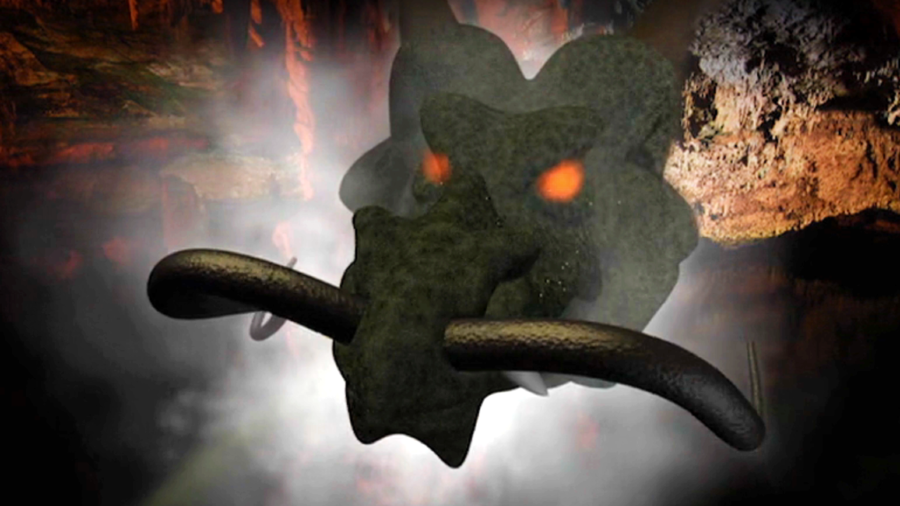
This movie, in so many words, is a blatant Harry Potter knockoff that hasn’t publicly disclosed its finances, but I’ll describe as hilariously low budget. It’s filmed in Canadian strip malls, you can spot crew members reflected in mirrors, and the CGI looks like something anybody could throw together after a day or two button-mashing in Blender. Oh yeah, and Roddy Piper is basically a Hagrid/Dumbledore stand-in, so on all fronts this cinematic experiment is something you need to know about.
Codex! Scriptoria! Please!
The entirety of The Mystical Adventures of Billy Owens is narrated by Mandy Finch (Ciara O’Hanlon), the bookworm of the group, basically functioning as Hermione in this universe (yes, there’s a sequel, Billy Owens and the Secret of the Runes). Mandy recalls the events we’re about to witness, which immediately tells me they all lived to see another day, otherwise somebody else would be narrating.

We’re introduced to our hero, Willard “Billy” Owens (Dalton Mugridge), who, on his eleventh birthday, realizes he’s a wizard after buying a magic wand from Roddy Piper’s William Thurgood for $11.
Billy Owens learns that the magic word is “please.” Roddy Piper uses what looks like Microsoft PowerPoint technology to spell words like “Codex” and “Scriptoria” in his antique shop. There’s another kid named Devon (Christopher Fazio), who’s clearly meant to be a Ron Weasley surrogate, but his presence is so inconsequential that I’m only mentioning it to prove I actually sat through this entire movie to impress you. And I did without bumping it up to 1.5x speed for reasons I’ll never fully understand.

The kids learn that Sumerian prankster god Loki is going to seize their small town of Spirit River if they don’t intervene, so naturally, they go to the library, where they try to hide from a security guard by talking loudly and waving their flashlights around. There’s a CGI fire at William’s shop, and then there’s a dragon.
At one point, because there’s clearly no budget, Billy tries to get out of doing chores by waving the wand at his parents. You think something cool is about to happen, but instead his father just looks the other way and Billy hides under a coat. Everybody saves the day, and we get one of those “To Be Continued” cards, threatening us with a sequel.
You Have To Be A Special Kind Of Person To Subject Yourself To This

The Mystical Adventures of Billy Owens is hardly a movie. Though its runtime is 84 minutes, the last 10 are bloopers and credits. The amount of nothing that happens here is insane, and the little effort that went into it is still disproportionate to the story it’s trying to tell. If you’re wondering who movies like this are made for, the answer is me. It’s so stupid that I can’t help myself.
Actually, now that I think about it, this movie does serve a purpose. If you’re one of the millions of people upset about the new Harry Potter trailer, just fire up The Mystical Adventures of Billy Owens on Tubi to remind yourself that it could be so much worse.


The Valley‘s Zack Wickham teased more might be revealed about Amanda Batula and West Wilson‘s shocking romance.
“Well, I will say that one of our friends’ cousins was on a vacation,” Zack said on the Tuesday, March 31, episode of SiriusXM’s Smith Sisters Live. “And met [Summer House star] Jesse Solomon and he just told her everything and then she told me.”
Zack continued: “So, I’m like, if what he told her is real, then brace yourselves, America. Sorry Jesse, I didn’t mean to throw you under the bus. I’m not saying anything publicly, but oh, my God.”
Rumors swirled that Amanda, 34, and West, 31, were hooking up shortly after she announced her split from husband Kyle Cooke in January. (West, for his part, has had an on-and-off connection with costar Ciara Miller since 2023.)
Earlier this month, Amanda denied having any potential involvement with another costar. “It’s not going to happen. I’m not touching any of my cast members,” she said on the “Trading Secrets” podcast. “Love them dearly, but I’m good.”
West later said he was “just hanging out” with Amanda on an episode of Watch What Happens Live With Andy Cohen.
“She’s single now,” he noted. “That’s [a] very important person to me and I care about her a lot. That’s a friend.”
As the rumors progressed, Amanda and West confirmed on Tuesday that their relationship status changed.
“We’ve seen the growing online speculation, so while this is still very new, we wanted to provide some clarity,” read a joint social media statement. “It was never our intention to purposely hide anything. Given the complicated relationship dynamics involved and the scrutiny that comes with being on a reality show, we needed a little space to process things privately before speaking on it.”

The Summer House cast drama is raising eyebrows with Bravo fans. Amanda Batula and Kyle Cooke announced in January that they decided to separate after four years of marriage. “After much reflection, we have mutually and amicably decided to part ways as a couple,” their joint statement read. “We share this with a heavy heart […]
Amanda and West broke down how their connection evolved from friendship to more.
“We’ve shown up for each other as friends over the years, through all the highs and lows, and what’s developed recently was the last thing either of us expected,” they continued. “Our connection grew out of a genuine, longstanding friendship, which made it especially important for us to approach this with care.”
The statement concluded: “As our feelings evolved, we wanted to take time to understand exactly what we were feeling. We also recognize that this has had an impact beyond just us and never wanted our actions to cause any hurt or be perceived as careless. We truly appreciate the understanding and respect as we navigate this.”
After news of their romance broke, a source exclusively told Us Weekly, that Ciara, 30, is “heartbroken by this,” adding, “Her and Amanda were very close and she feels more betrayed than ever by both of them.”
A second source told Us, “Ciara cut off both Amanda and West after finding out.”

News Videos19 seconds ago
Why Market Cap Won’t Matter For XRP

NewsBeat1 minute ago
Chelsea ‘keeping close eye’ on Barcelona star after joining Liverpool in transfer race | Football
Business2 minutes ago
Black Hawk Acquisition receives Nasdaq notice for market value non-compliance


-

 News Videos7 days ago
Parliament publishes latest register of MPs’ financial interests
-

 Business6 days ago
Instagram, YouTube Found Responsible for Teen’s Mental Health Struggle in Historic Ruling
-
 Tech6 days ago
Intercom’s new post-trained Fin Apex 1.0 beats GPT-5.4 and Claude Sonnet 4.6 at customer service resolutions
-

 NewsBeat5 days ago
The Story hosts event on Durham’s historic registers
-

 Sports5 days ago
Sweet Sixteen Game Thread: Tide vs Michigan
-
Entertainment2 days ago
Fans slam 'heartbreaking' Barbie Dream Fest convention debacle with 'cardboard cutout' experience
-
 Entertainment4 days ago
Lana Del Rey Celebrates Her Husband’s 51st Birthday In New Post
-
Crypto World1 day ago
Dems press CFTC, ethics board on prediction-market insider trades
-

 Sports1 day ago
Tallest college basketball player ever, standing at 7-foot-9, entering transfer portal
-

 Crypto World39 minutes ago
Gold Price Prediction: Worst Month in 17 Years fo Save Haven Rock
-

 Tech3 days ago
The Pixel 10a doesn’t have a camera bump, and it’s great
-

 Entertainment7 days ago
HBO’s Harry Potter Series Will Definitely Fail For One Big Reason, And It’s Not J.K. Rowling Or Snape
-

 Tech2 days ago
EE TV is using AI to help you find something to watch
-

 Crypto World2 days ago
U.S. rule change may open trillions in 401(k) funds to crypto
-

 Tech1 day ago
How to back up your iPhone & iPad to your Mac before something goes wrong
-

 Fashion6 days ago
En Vogue in Brown Leather and Tailored Neutrals by Atelier Savoir, Styled by J Bolin
-

 Tech2 days ago
Apple will hide your email address from apps and websites, but not cops
-

 Politics2 days ago
Should Trump Be Scared Strait?
-

 Tech2 days ago
Flipsnack and the shift toward motion-first business content with living visuals
-

 Fashion6 days ago
What Are Your Favorite T-Shirts for the Weekend?
You must be logged in to post a comment Login