Entertainment
10 Greatest Sci-Fi Books of the Last 25 Years, Ranked

While not necessarily a golden age for the genre, the last quarter-century has still been a pretty solid one for sci-fi writing. On the one hand, it’s given us more than a few crowd-pleasing blockbuster stories like Project Hail Mary and Murderbot. On the other hand, there have been several ambitious, though-provoking projects like The Three-Body Problem and What We Can Know, using their futuristic elements to get deeply philosophical.
With all that in mind, this list attempts to rank some of the finest sci-fi books of the last two and a half decades. Taken together, these literary efforts serve as reminders of what the genre can do at its best. Science fiction is still thriving, and it’s largely because of these works that keep pushing the boundaries of what the genre can be.
10
‘Ancillary Justice’ (2013)


“Justice of Toren once had thousands of bodies.” This space opera focuses on Breq, the last remaining fragment of a once-massive artificial intelligence that controlled an entire starship and its human “ancillaries.” Now confined to a single body, she seeks revenge against the ruler who destroyed her. The novel unfolds across two timelines: Breq’s past as a distributed consciousness and her present journey through a fractured empire.
From here, Ancillary Justice confidently blends older sci-fi traditions with modern sensibilities. You can feel echoes of writers like Ursula K. Le Guin, Iain M. Banks, and Frank Herbert, yet it never feels derivative. The revenge plot reels you in, the political thriller elements raise the stakes, and then, on top of all that, the book throws in some philosophical musing, too. At its core, Ancillary Justice asks what identity even means in a future where consciousness can be fragmented, copied, weaponized, or erased.
9
‘Seveneves’ (2015)


“The moon blew up without warning and for no apparent reason.” Seveneves opens with a juicy setup: the moon shatters, and humanity is given a limited window before the resulting debris renders Earth uninhabitable. The story tracks the desperate efforts to preserve the human species in orbit. The novel is divided into distinct phases, leaping from the immediate crisis to the far future. This is very much a work of hard sci-fi, meaning that science and real-world concepts are front and center.
Author Neal Stephenson obsesses over engineering, physics, genetics, and orbital infrastructure in a way that gives the apocalypse impressive realism. Yet beneath the technical detail lies a bleak but compelling portrait of humanity under pressure. Alliances fracture. Politics sabotages cooperation. Personal rivalries become civilization-shaping events. Even in the face of a galactic catastrophe, our biggest problem is ourselves.
8
‘The Martian’ (2011)
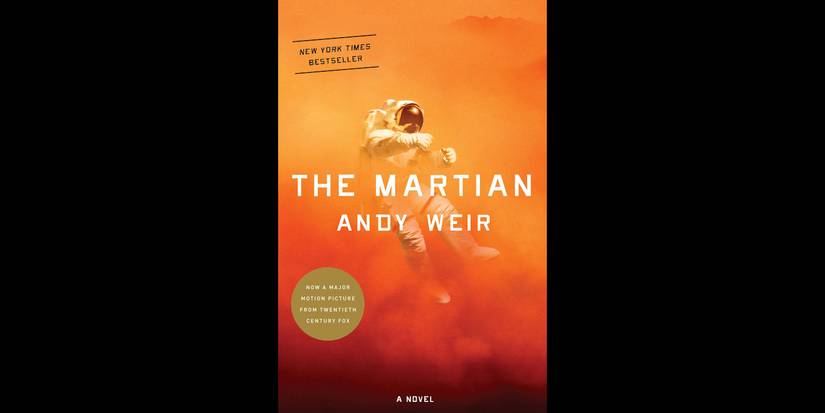
“I’m pretty much f—d.” Writer Andy Weir is back in the conversation again thanks to the success of the Project Hail Mary movie, but his overall strongest novel is his first one. In The Martian, astronaut Mark Watney becomes stranded on Mars after his crew believes him dead. He must find a way to stay alive using limited resources and his own ingenuity. Every chapter introduces new complications, failures, or impossible calculations.
Just when Watney solves one disaster, another emerges. Nevertheless, while his situation is pretty grim, the character himself remains energetic throughout, which is a big part of the book’s appeal. Watney’s log entries are packed with dark humor and exhausted optimism even when he’s facing seemingly imminent death. Plus, it’s fun seeing him MacGyver his way out of problems, drawing on his extensive knowledge of math, botany, engineering, and chemistry.
7
‘Children of Time’ (2015)

“We’re going to make a new world.” Children of Time boasts a very odd but intriguing premise: as humanity searches for a new home, a terraforming experiment goes wrong, leading to the rise of an entirely different intelligent species: evolved spiders. The narrative (spanning thousands of years) alternates between the remnants of humanity and the development of this new arachnid civilization. Impressively, author Adrian Tchaikovsky ensures that the spider society feels comprehensible without losing its strangeness.
A more mediocre sci-fi novel would’ve made the spiders basically just humans with eight legs. Instead, this book depicts their society, religion, communication, gender dynamics, warfare, and scientific development as fundamentally different from our own, rooted in their very different evolutionary starting points. In the process, Children of Time raises interesting questions around what alien intelligences might look like.
6
‘Pattern Recognition’ (2002)

“We have no future because our present is too volatile.” Pattern Recognition is a novel by cyberpunk legend William Gibson, most famous for writing Neuromancer. In contrast to that classic, this book is more rooted in the present, specifically the decade it was written in. In it, Cayce Pollard, a marketing consultant with a unique sensitivity to branding, becomes obsessed with a series of mysterious video fragments appearing online. She seeks to track down their creator, turning this into a postmodern thriller/sci-fi hybrid.
The resulting book is a noirish funhouse mirror reflection of the early 2000s, conjuring up an icy globalized world of airports, fashion labels, internet forums, advertising agencies, corporate paranoia, and post-9/11 anxiety. Gibson writes cities, objects, clothing, and architecture with almost cyberpunk noir intensity, even though the setting is recognizably contemporary. As a result, the novel turns ordinary modernity into something uncanny.
5
‘Exhalation: Stories’ (2019)

“The universe began as a single point… and it will end as one.” Exhalation: Stories is a short story collection by Ted Chiang, who also penned Stories of Your Life and Others, which served as the basis for the movie Arrival. Here, he takes a different concept in each tale, from entropy and artificial intelligence to time travel and free will, and explores it with both intellectual rigor and emotional clarity. Some are framed as scientific reports, others as personal reflections or speculative histories.
These stories become philosophical thought experiments, often with a focus on ethics and morality rather than on the mechanics of the sci-fi elements themselves. For instance, “The Truth of Fact, the Truth of Feeling” examines how externalized memory technologies might alter human relationships. Similarly, “Anxiety Is the Dizziness of Freedom” explores parallel timelines and choice in a way that becomes less about quantum mechanics and more about regret.
4
‘Annihilation’ (2014)

“That’s how the madness of the world tries to colonize you: from the outside in.” Jeff VanderMeer‘s Nebula Award-winning Annihilation book provided the strong foundation for Alex Garland‘s brilliant film adaptation. It follows a team of scientists entering Area X, a mysterious region where the laws of nature seem to have broken down. As the expedition progresses, the environment becomes more disorienting, and the line between external threat and internal perception begins to blur.
That ambiguity is crucial to the story’s power. VanderMeer refuses to provide neat explanations about what Area X is, where it came from, or what it ultimately wants. For some readers, that uncertainty is frustrating; for many others, it’s exactly what makes Annihilation unforgettable. Even fans who’ve already seen the movie may find some more depth to enjoy here.
3
‘Saga Vol. 1’ (2012)

“Once upon a time, each of us was somebody’s kid.” Saga is the first installment in the phenomenal space opera graphic novel series by illustrator Fiona Staples and writer Brian K. Vaughan, who most famously penned Y: The Last Man. The epic, galaxy-spanning story centers on Alana and Marko, soldiers from opposing sides of a galactic war, as they flee with their newborn child. The narrative is framed by that child, Hazel, whose perspective creates an interesting tension.
The first volume hits the ground running, throwing us into the thick of the plot, mixing space-faring adventure and intimate family drama. The illustrations are vibrant, and the dialogue is killer. Overall, Saga draws on myriad inspirations yet still charts its own course, shifting nimbly between comedy, horror, romance, political satire, and tragedy. One page might contain absurd alien humor; the next might hit a crushing emotional gut-punch.
2
‘What We Can Know’ (2025)

“In love, we forgot that we too were things that could get broken or lost.” What We Can Know is the latest novel by Ian McEwan, most well-known for writing Atonement. It’s written from the perspective of an academic living in the year 2119 who is working on a project about a lost poem that was read aloud once in 2014. The character lives in a flooded future wracked by global warming, yet the focus is really on our present.
McEwan uses this premise to get really philosophical, exploring everything from artificial intelligence and social media to political instability, ecological collapse, nuclear war, and cultural breakdown. It’s a sharp commentary on the 2010s and 2020s. However, themes aside, What We Can Know simply works as an engrossing mystery and drama, with a surprisingly juicy plot and cast of well-drawn characters.
1
‘The Three-Body Problem’ (2008)
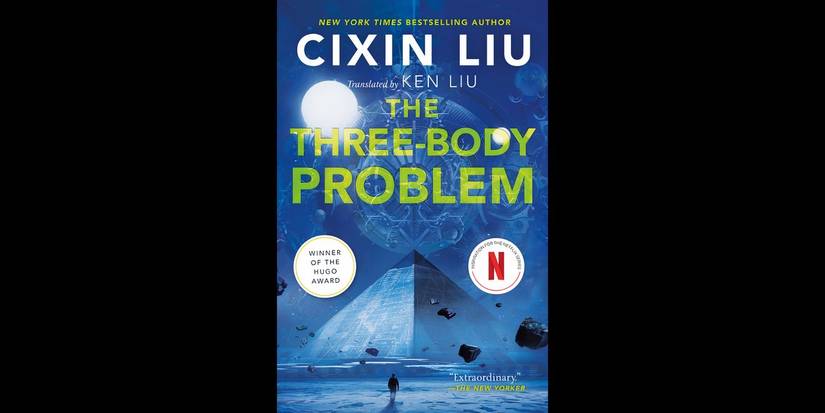
“The universe is a dark forest.” Perhaps the most ambitious sci-fi novel of the 21st century so far, Liu Cixin‘s The Three-Body Problem begins during China’s Cultural Revolution and gradually expands into a story that spans centuries, civilizations, and the fundamental nature of the universe. At its core is the discovery of an alien civilization and the implications of first contact, but the narrative moves beyond, delving deep into physics, philosophy, and the limits of human understanding.
In particular, the book interrogates whether technological advancement necessarily leads to moral progress. Humanity here is fragmented by nationalism, ideological conflict, ego, and fear. Some characters welcome alien intervention because they have become so cynical about humanity’s future; others see survival as justification for authoritarian control. Once again, a speculative idea is used to hold a mirror up to the issues of our own time.
You must be logged in to post a comment Login