Entertainment
10 Greatest Sci-Fi Movie Climaxes, Ranked

There’s a lot that goes into creating a proper and successful climax. It’s where all the hard work of the set-up of the film is supposed to pay off in a narratively satisfying way. They can be happy, sad or exciting, offering catharsis for the characters and the audience. When it comes to science fiction, the best film climaxes have offered everything from epic battles to intimate character revelations. They’re vast and varied, but they all payoff their movies perfectly.
Sci-fi cinema offers up endless possibilities for climaxes, since they, with the proper budget, can realize all kinds of interstellar or futuristic circumstances to properly peak with. The best sci-fi movie climaxes aren’t always the biggest. Some are much smaller, but no less impactful or appropriate than those that bring the noise. From the biggest to smallest, across space and time, these are the best sci-fi movie climaxes, ranked.
10
‘Ghostbusters’ (1984)


Ghostbusters isn’t often identified with the sci-fi genre, even though half of the fun of the film is the scientific mumbo-jumbo explanations of the supernatural that are breathlessly delivered by Dan Aykroyd and deadpanned by Harold Ramis as Bill Murray looks on exasperated. The film is, first and foremost, a comedy, though, and its climax is the most perfect marriage of the two genres. There may be more profound or exhilarating sci-fi climaxes than the one in Ghostbusters, but they don’t have a marshmallow kaiju stomping around New York City.
In a moment that would be repeated to lesser effect in later films in the franchise, the ghostbusters are asked to choose the form of their adversary by the villainous Gozer during their rooftop confrontation. All the busters are able to clear their minds except for Ayroyd’s sweet, innocent Ray, who conjures a ten-story tall Stay Puft Marshmallow Man. It’s an instantly iconic image, one which the first sequel tried to recreate with the Statue of Liberty and the 2016 reboot replaced it with a giant version of the no-ghost logo of the franchise come to life/death. The original is still the best, and the climactic roasting of the monster, and subsequent rain of his gooey marshmallow remains is something every kid who came up with this movie in rotation remembers fondly.
9
‘Logan’ (2017)

The vast majority of superhero movies could be considered sci-fi films, and that goes double for the X-Men franchise. Marvel’s favorite mutants have had some solid climaxes throughout their cinematic run. The original used the Statue of Liberty as the setting for a solid action scene, X2 set the stage for a Phoenix Saga that never properly paid off, and X-Men: Days of Future Past featured a battle across two timelines. Those, and many other superhero climaxes, are effective, but they can’t beat the best from Logan. Even though Jackman came back to play the character for the feature-length fan-service masquerading as a film event, Deadpool and Wolverine, his climactic sacrifice in Logan was the perfect swan song.
As a far more grounded and gritty action film than any of the previous X-Men or solo Wolverine movies, Logan’s neo-Western aesthetic means its final action scene is suitably less explosive. Logan faces off against government mercenaries, protecting a group of mutant children, including his own daughter. He also must confront a clone of himself, stripped entirely of his humanity and reduced to the single emotion of rage. It’s a dynamic sequence that offers the perfect summation of the film’s themes, makes good use of the film’s R-rating, pays off a prophecy set up in the prior film, and gives Jackman a climax deserving of the character he defined on the big screen.
8
‘Akira’ (1988)


An influence on many superhero films and the action and sci-fi genres in general, Akira is Katsuhiro Otomo’s cyberpunk animated masterpiece, adapted from his own manga, and it has an explosive, body-horror-filled climax. Set in the future city Neo-Tokyo, the movie revolves around the central relationship between biker gang leader Kaneda, and his childhood best friend Tetsuo, who discovers he has telekinetic abilities and becomes a superpowered threat to the entire city. That threat, and their relationship, comes to a head in a destructive action sequence set in the Olympic Stadium.
As Kaneda and Tetsuo face off, the latter uses his immense powers to mutate into a massive fleshy monstrosity. It’s a grotesque animation, but one which perfectly illustrates the character’s desire to feel powerful, totally consuming him and turning him into something devoid of humanity. It’s only through the re-emergence of the titular Akira, a missing boy with similarly endless powers, who creates a singularity to draw Tetsuo in, and in doing so gives Kaneda a psychic window into his friend’s memories. It’s an emotionally potent and visually spectacular climax.
7
‘The Prestige’ (2006)

The climax of Christopher Nolan’s stealth sci-fi film The Prestige comes in the form of a twist. Appropriately, for a film about dueling magicians, the climax feels the cinematic equivalent of a magic trick. It’s something that’s been right in front of the audience’s face the entire time, but which Nolan is able to gracefully misdirect from until the final reveal. It’s vastly different from the more haunting, supernatural and horror-focused ending of the novel, but which works perfectly for the film.
In the film, the rivalry between Hugh Jackman’s Robert Angier and Christian Bale’s Alfred Borden leads both men to develop similar tricks of supposed teleportation. Angier’s is accomplished through a machine built by Nikola Tesla that creates a clone of him every time with the original dying in order to maintain the integrity of the trick. The death of one such clone sees Borden framed for murder and put to death, until he returns to confront Angier, revealing that Borden was a set of twins who lived a single life. It’s a mind-bending climax that puts into stark terms the depths of obsession that both men have sunk into, and it’s the best trick Nolan has ever pulled.
6
‘Close Encounters of the Third Kind’ (1977)

Though it’s been subject to a re-edit, and reconsideration for its larger character implications by many viewers, Steven Spielberg’s Close Encounters of the Third Kind remains a wondrous sci-fi fable, and its climactic scene of first contact is visually and aurally spectacular. Set, and partially shot, at the Devil’s Tower in Wyoming, the climax features all the majesty and emotion viewers have been primed for throughout the film’s runtime. The musical call and response between the humans and the aliens as a form of universal communication is one of the most indelible moments in all sci-fi history and, paired with the gorgeous visual effects, make it one of the iconic sci-fi climaxes.
The climax is also an emotional one for the protagonist, Roy, played by Richard Dreyfuss, who has become obsessed with the aliens after having a close encounter with a UFO. Roy has his faith validated when he is invited on board the alien mothership and leaves with the alien. It’s the moment some have taken issue with, given that Roy leaves his wife and child behind, and which Spielberg himself has said he would have written differently if he’d had children at the time. Even if that robs the character of any empathy one might feel toward him, the climax is so overwhelming at that point, visually, aurally and emotionally, that, like Roy, it’s hard to care about anything else.
5
‘Arrival’ (2016)
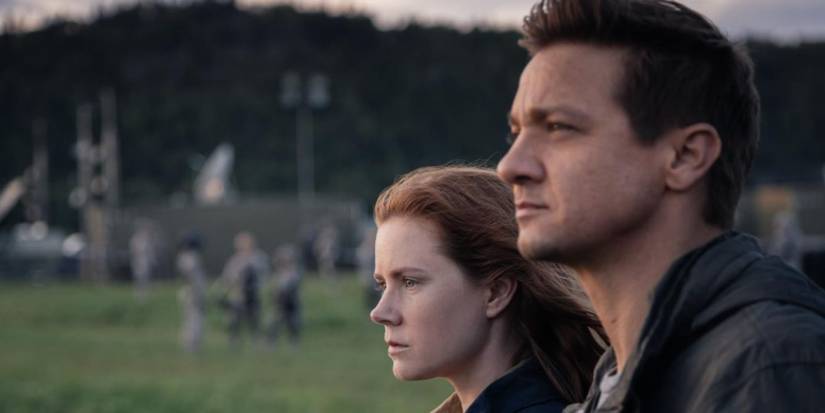
Arrival is similarly driven by the need to communicate with aliens, with the crux of its plot revolving around humanity’s interpretation of their language. That task is given to linguist Louise Banks, played by Amy Adams, who has been haunted throughout the film by apparent memories of her deceased daughter. In the film’s climax, Louise is able to save humanity from itself by solving the alien language, which is also the alien’s greatest weapon. Understanding the alien language allows humans to perceive time non-linearly.
This perception is what gives the film its emotional climax. Louise is able to see her own future, and the daughter she will subsequently have and later lose to disease. It’s a heartbreaking realization that drives the rest of the film until it’s equally emotional ending, where Louise decides not to try and alter her future and face the joy and tragedy it will inevitably deliver her. Arrival is a sci-fi film grounded in human experience, and its climax isn’t one of visual spectacle but emotional.
4
‘Aliens’ (1986)
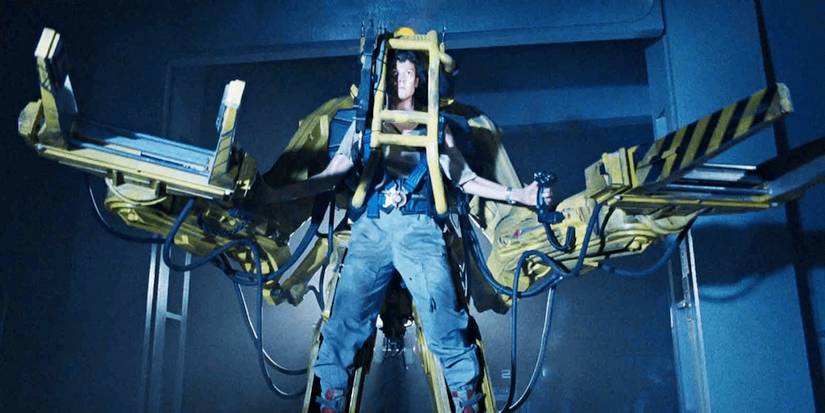
Reconciling the confluence of loss and love is a great climax, but so is a woman using a power loader to bitchslap the mother of all monsters. James Cameron’s Aliens took the claustrophobic horror of Alien and supercharged it with some superior firepower, making an action sci-fi horror sequel that’s been just as influential as its predecessor. The climactic battle between Sigourney Weaver’s Ripley and the Queen Alien is an all-time sci-fi fight, combining a variety of practical effects seamlessly in a way that holds up against most modern sci-fi movies.
Every sci-fi fan loves the iconic moment when Ripley confronts the Queen as she terrorizes the young Newt, played by Carrie Henn, and defiantly delivers her iconic line telling the bitch to get away from her, but what makes that moment, and subsequent fight, so powerful is how it succinctly defines Ripley’s character arc. For all the action and acid-blood spilling, Aliens is a story of motherhood at its core. Ripley has lost everything when she meets young Newt, and their surrogate bond is the heart of the film. It’s cool to watch Ripley kick some alien ass, but it’s even more satisfying because she’s doing it to save her daughter.
3
‘Blade Runner’ (1982)

Blade Runner is one of the most influential sci-fi films ever made, not only for its noirish cyberpunk visuals that determined the measure by which all future cinematic dystopic cities would be judged, but also for its simple exploration of what it means to be human. That theme is best exemplified in the film’s climax, where Harrison Ford’s Rick Deckard faces off against Rutger Hauer’s replicant Roy Batty. It’s a one-sided physical confrontation that ends with a haunting and beautiful monologue from Hauer.
Deckard has been chasing Batty the entire film, intent on retiring him as he does for all rogue replicants. Batty has been driven by his desire for more life, a privilege denied to all replicants who have a built-in limited lifespan. These two antagonists share a final moment in the rain together, as Batty saves Deckard from falling and then delivers his death soliloquy, lamenting that all his memories will be lost. It’s the most emotional moment in a movie that is often more technically impressive than it is emotionally stirring, which makes it an even more affecting climax and solidifies Blade Runner as a sci-fi masterpiece.
2
‘2001: A Space Odyssey’ (1968)


2001: A Space Odyssey is another film often associated as being more cerebral and visually engaging than emotionally, but that has never prevented its surreal Star Gate sequence from being one of the most enthralling in the totality of sci-fi cinema. It’s as dynamic a sequence as director Stanley Kubrick has ever created, and which filmmakers as talented as James Cameron, Christopher Nolan, and Brian De Palma have attempted to recapture the effect of to varying degrees of success, but it has never been bettered. It’s the kind of climax that can only be accomplished in film and science fiction.
The narrative of the film is driven by the discovery of alien monoliths, which have been shown to have some form of influence over human evolution. In the climax of the film, astronaut Dave Bowman, played by Keir Dullea, comes into contact with one of these monoliths orbiting Jupiter. It takes Dave through a Star Gate in a psychedelic sequence of visuals suggesting he has entered into a liminal space and time. The sequence culminates with Dave watching his own body rapidly age, in a setting Kubrick once described as a kind of human zoo, and becoming reborn as the Star Child. It’s a staggering wordless sequence that allows the audience to viscerally experience it rather than try to plainly explain itself.
1
‘The Empire Strikes Back’ (1980)

People have puzzled and pondered over the subjective climax of 2001: A Space Odyssey for decades and how it engaged with them cerebrally, but it still ranks second to one of the most consequential moments in sci-fi film history that comes as an absolute emotional gut punch. The Empire Strikes Back is a superior film to its predecessor in every way, and while the climactic destruction of the Death Star is as crowd-pleasing as film moments get, there’s something far more powerful in the lightsaber duel between Darth Vader and Luke Skywalker and the revelation that ends it.
There have been more elaborate lightsaber fights and better choreographed ones, but few instill the fear that one feels watching Mark Hamill as Luke take on an opponent with abilities far beyond his own. The entire fight feels as though Vader is toying with Luke, for reasons that aren’t readily apparent other than the movie needs a climactic fight. When all pretenses are dropped, and Luke is at his most vulnerable, Vader reveals he is Luke’s father. That single moment sent reverberations through pop culture and fandoms worldwide. The franchise since hasn’t come close to matching that climax and sci-fi films everywhere defer to its supremacy.
You must be logged in to post a comment Login