Entertainment
10 HBO Shows That Are 10/10, No Notes

One really can’t deny that HBO has always been the standard that every other television network and streaming service has tried to live up to. Most platforms chase trends and rely on predictable formulas for viewership numbers, but HBO has practically built its reputation on taking creative risks and telling ambitious stories.
The network is home to shows that have completely redefined what television is capable of achieving, and it is still producing some of the most acclaimed series on the air today. To prove that, here is a list of HBO shows that are genuinely 10/10, no notes.
10
‘The Leftovers’ (2014–2017)

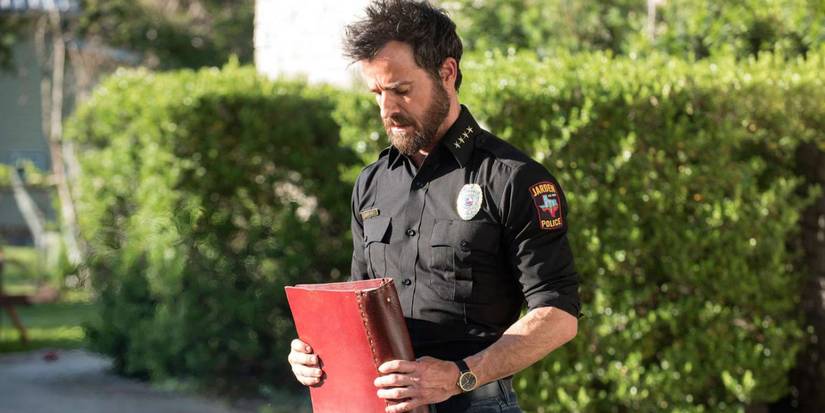
The Leftovers embraces ambiguity in a way that no other show ever has. The HBO drama takes place three years after the Sudden Departure, a mysterious event that caused 2% of the world’s population to vanish without explanation. However, instead of treating this premise like a mystery to be solved, the show is more interested in exploring what happens to the people left behind. The story centers on police chief Kevin Garvey (Justin Theroux), who is desperate to maintain some sense of normalcy as his family and everyone in his town struggle to understand the reality they are faced with. The Leftovers is ambitious with its premise, and it refuses to take the easy route.
The narrative treats this big mystery as the starting point, while actually focusing on the different ways people respond to grief. Kevin finds himself surrounded by cults, religious movements, and conspiracy theories simply because people need something to hold on to. Aside from all that, though, Nora Durst (Carrie Coon) truly emerges as the show’s emotional anchor. Her relationship with Kevin gradually becomes one of the most important parts of the narrative and gives the story its sense of humanity alongside its larger philosophical questions. The Leftovers is heartbreaking, thought-provoking, and funny at the same time. Every season expands the scope of the story while remaining grounded in its compelling characters. The way this series balances substance and spectacle is unlike anything else on TV.
9
‘Chernobyl’ (2019)

HBO’s Chernobyl proves that a story can be gripping even when the audience already knows exactly how it ends. The miniseries dramatizes the events surrounding the 1986 Chernobyl nuclear disaster and begins in the immediate aftermath of the reactor explosion. The show then follows scientists, government officials, engineers, and ordinary citizens as they confront a catastrophe like no other. The story centers on Soviet nuclear physicist Valery Legasov (Jared Harris), who is tasked with uncovering what caused the disaster and preventing an even greater catastrophe from unfolding. However, that isn’t as easy as it sounds.
Legasoc gradually pieces together the chain of failures that led to the explosion, but it also shines a spotlight on the firefighters who unknowingly walked into lethal conditions, the miners who were under pressure to prevent a second disaster, and the countless workers who risked their lives during the cleanup effort. The show constantly shifts between these perspectives and makes this historical event feel incredibly personal. Every decision carries consequences, and the audience sees them coming way before many of the characters do. Chernobyl is as educational as it is emotionally devastating, and it remains one of the most brilliant miniseries HBO has ever produced.
8
‘I May Destroy You’ (2020)

I May Destroy You is best defined as a fearless show. The series follows Arabella Essiedu (Michaela Coel), a successful young writer whose life is turned upside down after she is sexually assaulted during a night out in London. When Arabella begins piecing together fragmented memories of what happened, she sets out to understand the incident and reclaim control over her life. This journey that she embarks on doesn’t play out like a conventional mystery, but an extremely personal journey that explores trauma, consent, and the complicated ways people process life-altering experiences. The series is unpredictable, and that becomes its greatest strength.
Arabella’s healing isn’t linear. In fact, the aftermath of her assault is messy and uncomfortable, but that’s the entire point. Along the way, the narrative expands to explore the lives of her closest friends, Terry (Weruche Opia) and Kwame (Paapa Essiedu), each of whom faces their own struggles involving identity, intimacy, and personal boundaries. These interconnected storylines give the series heart and turn it into a multidimensional, complex story about grief. I May Destroy You tackles difficult subject matter without ever reducing its characters to their trauma. It can be devastating, funny, insightful, and surprisingly hopeful at the same time, just like real life.
7
‘Succession’ (2018–2023)
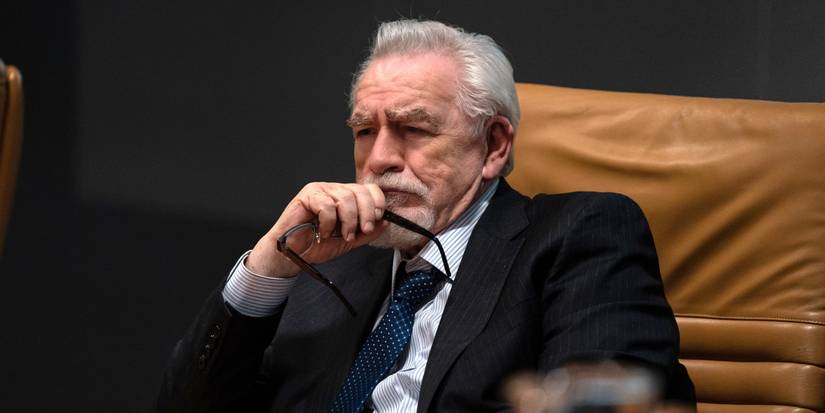
Succession is essentially Shakespeare‘s King Lear reimagined as a corporate drama that one just can’t look away from. The series follows the Roy family, owners of the global media conglomerate Waystar RoyCo, as they battle for control of the company when aging patriarch Logan Roy (Brian Cox) begins contemplating the future of his empire. The corporate power struggle quickly evolves into an all-out war between Logan and his children, Kendall (Jeremy Strong), Shiv (Sarah Snook), Roman (Kieran Culkin), and Connor (Alan Ruck), all of whom believe they are the rightful heirs to the throne. Succession makes board meetings, business acquisitions, shareholder votes, and media scandals feel genuinely thrilling.
The drama lands largely because it’s shaped by the deeply dysfunctional relationships that the central characters share. Every major decision has years of resentment and insecurity driving it, and the line between personal and professional conflict is always blurred. The writing in Succession is its greatest strength, though. The dialogue is razor sharp and the humor is relentless, even in the bleakest of situations. Despite following some of the wealthiest people on the planet, the series remains grounded in universal themes of family, where the audience can’t help but empathize with all these emotionally broken characters. The show that genuinely earns its reputation as one of HBO’s all-time greats, especially with its banger of a final season that brings everything to a fitting close.
6
‘The Wire’ (2002–2008)
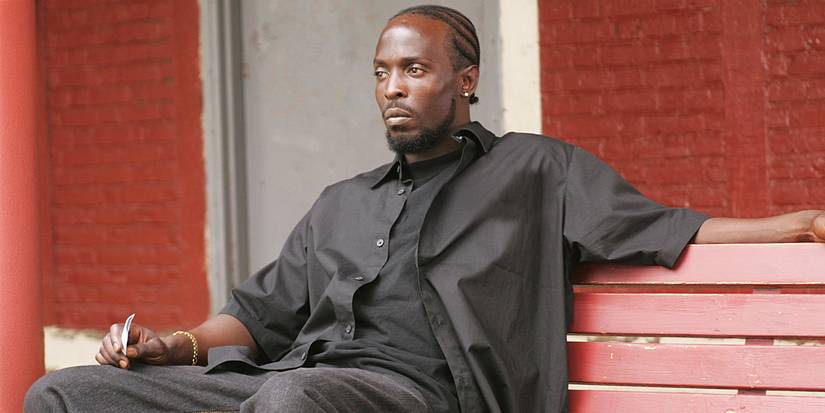
The Wire is widely considered one of the best TV shows ever made, but what makes it truly stand out is how different it is from almost every other crime drama. The series begins with a police investigation into Baltimore’s drug trade and follows detective Jimmy McNulty (Dominic West) along with a special unit tasked with targeting the powerful Barksdale organization. The series begins as a traditional cops-versus-criminals story but quickly abandons that premise to explore something much larger. Each season of The Wire expands its focus to different institutions within Baltimore, including the docks, city politics, the education system, and the media.
Instead of treating these as standalone storylines, the series gradually reveals how all of them are connected. The show uncovers how drug dealers, police officers, politicians, journalists, teachers, and ordinary citizens are all part of the same bureaucratic ecosystem where change is nearly impossible. The show features an impressive ensemble that includes Stringer Bell (Idris Elba), Omar Little (Michael K. Williams), Avon Barksdale (Wood Harris), and Lester Freamon (Clarke Peters), all of whom are presented as grey characters navigating an imperfect world. The Wire has to be one of the most ambitious shows of all time, yet despite its massive scope, it never loses sight of the human stories at the center of the narrative. No other show has managed to match this depth even over two decades later.
5
‘The Pitt’ (2025–Present)

The Pitt is singlehandedly reinventing the medical drama and expanding it beyond shock value and complex love triangles. The HBO series begins with senior attending physician Dr. Michael “Robby” Robinavitch (Noah Wyle), who oversees a chaotic shift in a Pittsburgh emergency room. Each episode in the show covers roughly one hour of a single fifteen-hour shift and follows Robby and his team as they are forced to make life-or-death decisions while dealing with overcrowding, staff shortages, personal struggles, and the emotional toll that comes with all of this. The story unfolds in real time, which means that every decision is immediate, and every mistake has irreversible consequences.
The audience practically experiences the exhaustion, pressure, and unpredictability of an underfunded emergency room alongside the characters. The show does a great job of portraying the challenges of the job and the personal sacrifices that come with it. Wyle is the heart of the series and delivers a nuanced performance that captures both his character’s competence and vulnerability. This kind of layered and engaging storytelling is the reason why The Pitt already feels like an HBO classic in the making.
4
‘The Sopranos’ (1999–2007)
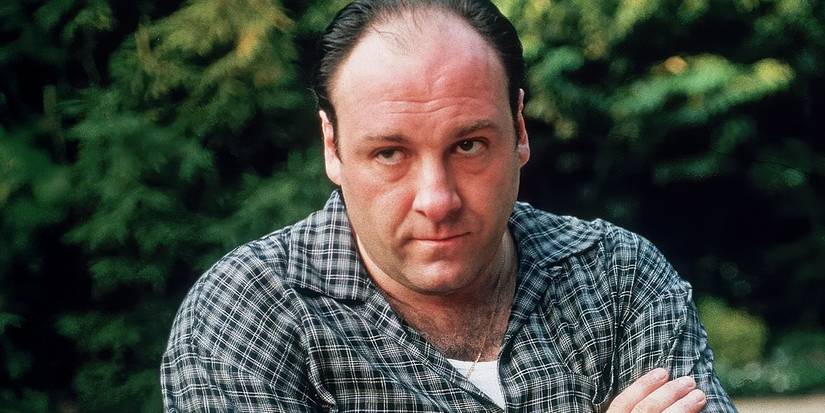
There’s no denying that The Sopranos completely changed the way TV shows were made. The series follows New Jersey mob boss Tony Soprano (James Gandolfini), who begins experiencing panic attacks and reluctantly starts seeing psychiatrist Dr. Jennifer Melfi (Lorraine Bracco). From there, the show balances two very different sides of Tony’s life. On one hand, he is a powerful crime boss managing rival families, internal power struggles, and constant threats to his authority. On the other hand, he is a husband, father, and son trying to navigate the everyday pressures of family life.
The brilliance of the premise is that neither world ever truly stays separate from the other, and that is Tony’s greatest weakness. The Sopranos is committed to exploring Tony as a morally complex character. He is charismatic, funny, terrifying, and flawed all at once, and the same goes for the rest of the people around him. The Sopranos is way more than just a mob drama. The show practically functions as a family saga, a dark comedy, and a psychological character study that examines the American. That’s why even more than two decades after its debut, countless series still draw inspiration from it.
3
‘Generation Kill’ (2008)

Generation Kill is one of the most realistic war dramas ever made. The HBO miniseries is based on the experiences of journalist Evan Wright during the 2003 invasion of Iraq, and follows the U.S. Marines of First Recon Battalion as they push deep into enemy territory during the opening weeks of the war. However, instead of focusing on a single heroic mission or larger-than-life battlefield moments, the series places viewers directly alongside the soldiers as they navigate the confusion and constant unpredictability of combat. Now, Generation Kill doesn’t romanticize war or portray it from the lens of pure action.
The show actually attempts to capture the strange reality of modern warfare, where boredom, frustration, and miscommunication often coexist with genuine danger. The show explores how different soldiers respond to the pressures of combat through characters including Sergeant Brad “Iceman” Colbert (Alexander Skarsgård), Corporal Josh Ray Person (James Ransone), and Lieutenant Nate Fick (Stark Sands). The show’s commitment to authenticity is what makes it a war drama that feels immersive and intelligent yet deeply personal at the same time.
2
‘Angels in America’ (2003)

Angels in America is one of the most ambitious TV projects of all time. The miniseries is based on Tony Kushner‘s acclaimed play and takes place during the AIDS crisis of the 1980s. The story follows several interconnected characters whose lives become entangled as they struggle with illness, identity, politics, religion, and mortality. The narrative centers on Prior Walter (Justin Kirk), a young man diagnosed with AIDS who begins experiencing increasingly strange visions that include encounters with an angel who claims he has been chosen for a greater purpose.
At the same time, the audience also follows influential lawyer Roy Cohn (Al Pacino), closeted Mormon Joe Pitt (Patrick Wilson), his wife Harper (Mary-Louise Parker), and Louis Ironson (Ben Shenkman), all of whom are struggling with personal crises of their own. Angels in America is truly extraordinary in how effortlessly it balances these deeply personal experiences with philosophical themes. Despite dealing with heavy subject matter, the show refuses to define its characters by their struggles alone. The writing is sharp, the performances are exceptional, and the series constantly finds new ways to blend realism with fantasy without losing its emotional grounding. Angels in America feels intimate and epic at the same time in a way that no other show has managed to accomplish to this day.
1
‘Band of Brothers’ (2001)

Band of Brothers is the gold standard, not just for war dramas, but for TV in general. The brilliant miniseries is based on the true story of Easy Company, part of the 101st Airborne Division. The show follows a group of American paratroopers from their training at Camp Toccoa all the way through some of the most significant events of World War II, including D-Day, Operation Market Garden, the Battle of the Bulge, and the eventual capture of Hitler’s Eagle’s Nest. Band of Brothers wants viewers to witness the horrors of combat, but more importantly, it focuses on the bonds that develop between the soldiers fighting alongside one another.
The series introduces a large ensemble cast that includes Major Richard Winters (Damian Lewis), Lewis Nixon (Ron Livingston), Carwood Lipton (Donnie Wahlberg), and many others, but somehow gives each of them a distinct identity and purpose within the narrative. As the war progresses, the audience experiences every little emotion that these men go through because the show does such a great job of reminding one of the human cost of war. The brilliance of Band of Brothers lies in its balance between scale and intimacy. The battle sequences are immersive and technically impressive, but the show’s most powerful moments are often quieter and follow the emotional burden these soldiers carry every day. The fact that the show features interviews of real people only makes the experience even more powerful.

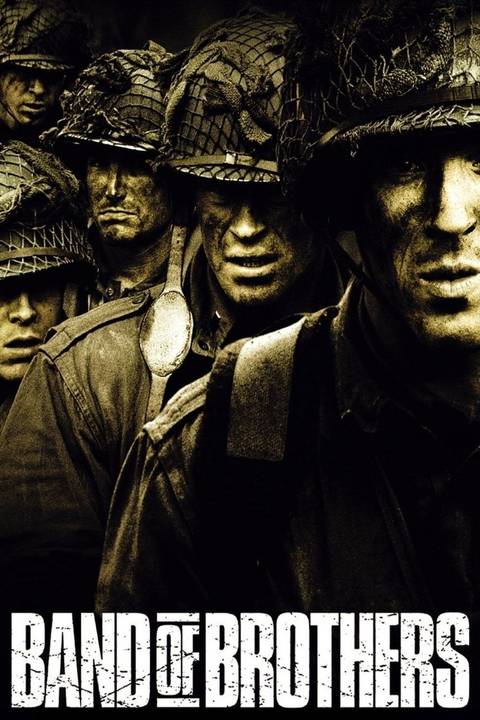
Band of Brothers
- Release Date
-
2001 – 2001
- Network
-
HBO
- Directors
-
David Frankel, David Nutter, Mikael Salomon, Phil Alden Robinson, Richard Loncraine, Tom Hanks
You must be logged in to post a comment Login