Entertainment
10 Heaviest Drama Movies of All Time

There’s going to be at least a little heaviness in just about every drama movie out there, because it’s in the name, really. Dramas deal with difficult things, or personal struggles, and sometimes broader ideas, or, like, groups of people working through something immense. As boring as it might be to be the 500,000,00th person to bring it up, The Shawshank Redemption really is a quintessential drama, and one where there’s a balance of intense moments of hardship and quite a bit by way of moments that are inspiring and hopeful.
With the following films, though, there’s a focus on hardship and sadness. These are the heaviest drama movies of all time, and they’re either devoid of hope, or what little traces by way of silver linings that they might have are incredibly dim. There will also be a focus on dramas over anything else, so even if something notoriously heavy like Come and See might be labeled a drama, it’s primarily – and usually – described as a war movie, or at least a war-drama, so it doesn’t qualify for this particular ranking.
10
‘An Elephant Sitting Still’ (2018)

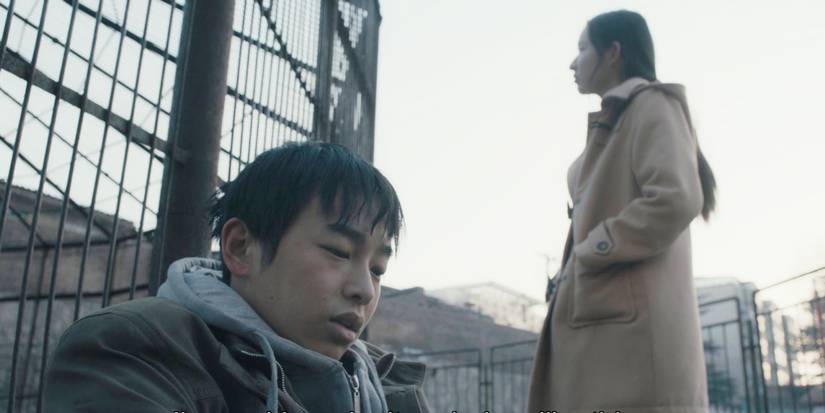
Even if you think you’ve seen it all, movie-wise, there are still almost guaranteed to be parts of An Elephant Sitting Still that’ll rattle you. Part of that has to do with the film being remarkably long, as in almost four hours, so there’s a lot here that is dark when, like, the whole film is about several people trying to get by while living lives defined by various personal struggles.
It is grounded in that way, and the kind of movie where it’s easy to forget you’re watching one. It’s a cliché to call a movie hypnotic, but An Elephant Sitting Still really is, since there’s a unique rhythm here and all the long takes prove immersive, too. The legacy of the film, and the story behind its production and release (if you want to read up on that… it is really bleak, though, as a warning), does also inevitably add to the heaviness of An Elephant Sitting Still, and its ultimate/undeniable haunting quality.
9
‘Scenes from a Marriage’ (1974)


While not as long as An Elephant Sitting Still, the theatrical version of Scenes from a Marriage is still pretty much epic-length, though the scope of the movie (and its premise) definitely aren’t in line with what you’d expect to see in an epic. Basically, it is a bunch of scenes, many of them long and most of them involving some kind of argument between a married couple who are going through a divorce.
When Marriage Story came out, it was pretty easy to compare it to Scenes from a Marriage, though that’s also got a little more by way of hope. And the same can probably be said for Kramer vs. Kramer. Scenes from a Marriage is more intense, and very subversive/bitter if you want to consider it a romance film of sorts. It is primarily a drama, though, and one all about falling out of love rather than falling in love, so it feels like it qualifies for present purposes.
8
‘Bicycle Thieves’ (1948)
Unlike some of the other dramas here, there isn’t any graphic or shocking content in Bicycle Thieves, and it ultimately finds other ways to be incredibly downbeat. It’s about a man trying to provide for his family in Italy, during the post-war years, and eventually finding a job that requires a bicycle, only for everything to be placed in jeopardy once that, you know, bicycle thief strikes.
Much of it’s about this man and his son going around, trying to find the stolen bicycle, and how the desperation inherent to an already desperate situation intensifies. Bicycle Thieves is simultaneously sad and very simple, and one of those films that shows how you can make something cinematically compelling out of pretty much anything. It’s also hard to imagine many people watching this and somehow not feeling at least the slightest bit moved by what they see.
7
‘Sátántangó’ (1994)

One of the biggest endurance tests in cinema history, Sátántangó (based on an also harrowing novel) goes for about 430 minutes, and it feels some level of soul-crushing, dull, and emotionally empty for almost every single one of those minutes. It’s like a slice-of-life movie where life just sucks, and there’s nothing for anyone, and nothing matters. People live in a tiny village, and living in a tiny village sucks. One guy comes through the town and inspires hope, but he also sucks, since he has his own nefarious scheme he’s trying to execute.
It’s like a slice-of-life movie where life just sucks, and there’s nothing for anyone, and nothing matters.
It’s non-stop misery, and then the pacing feels the opposite of non-stop, since Sátántangó is one of the slowest films ever made. It’s glacially paced by design, sure, but still. There also isn’t really any other genre you can argue this one fits into. It’s a straightforward drama, never threatening to be funny like a comedy, or exciting like a thriller, or (traditionally) scary like a horror movie. This is enough, though, for some to consider it one of the best films of its decade… somehow.
6
‘The Conformist’ (1970)

Compared to Sátántangó, The Conformist almost feels like an action movie, or at least a thriller, but it is still pretty methodical and patiently paced in the overall scheme of things, not to mention more of a political drama than anything else. Well, maybe a psychological drama, too. It’s about a man who attempts to carry out the assassination of someone he used to look up to, mostly due to him becoming politically and morally compromised.
It’s a film about fascism, evil, and human nature. It is also incredibly beautiful, at least to look at, so The Conformist can be considered an arthouse film quite comfortably, if that counts as a genre. Still, if that’s not a genre, then it’s a drama, and an oddly hard-hitting one, albeit in ways that aren’t too easy to describe. It gets under your skin and stays there, itching/bothering you a lot, rather than punching you in your gut the way a bunch of the other movies being mentioned here opt to do. And speaking of movies that go right for the gut…
5
‘Requiem for a Dream’ (2000)

This is probably the most nightmarish a non-horror movie can feel. Requiem for a Dream is… well, the hint at the nightmarish is there in the title. It’s the death of a dream, and the dream’s replaced by a nightmare. It’s hard not to feel this way during and after the film, as Requiem for a Dream might well be one of the least subtle movies in cinema history.
It’s blunt with a purpose, though, in trying to showcase the worst-case scenario for a few people who all get addicted to some kind of substance and have it tear their respective lives apart in a variety of ways. The misery here is pretty consistent, and also works well to feel more intense on a pretty much scene-by-scene basis, all crescendoing to inevitable tragedy (and it’s not the fact that it is a tragedy which is the surprising part… more so just how in-your-face that tragedy is and, ultimately, how tragic things get).
4
‘4 Months, 3 Weeks and 2 Days’ (2007)

4 Months, 3 Weeks and 2 Days is entirely uncompromising, but has to be, to get across the message it wants to. It’s a Romanian film about a young pregnant woman who works with her friend to find a way to get a black-market abortion at a time in Romania’s history when doing so was illegal, and then the various risks (health-related and also what might happen if they’re caught) are unpacked in grueling detail.
Everything here is presented in a way that feels uncomfortably grounded, so if anything, you might well wish 4 Months, 3 Weeks and 2 Days was less immersive than it is. Though, again, that does give the film its power, and sure, it’s about a divisive issue, so you might not agree with what it’s trying to say – and where it does fall on the abortion debate – but it’s hard not to acknowledge or even admire just how impactfully this argument/message is presented.
3
‘Mysterious Skin’ (2004)

If there’s anything by way of a silver lining or some kind of inspiring thing to be found in Mysterious Skin, you do have to look very hard, but it says something about finding strength in bonds with others. That’s something, and it stands out when everything else here is so crushing. It is, ultimately, about two young men who find they share some kind of upsetting past, and that sense of having someone to relate to… again, it’s something.
It’s the way the film unpacks that past, though, and what Mysterious Skin deals with thematically that makes it so challenging to watch. What it shows isn’t necessarily overly graphic, but the subject matter is a lot to grapple with. Mysterious Skin is incredible, though, and right up there among the very best films being mentioned here. It’s just also one that you could understand most people not really wanting to watch, simply because of what it deals with (yes, that stuff was skirted around here, but go read up on the movie if you want to know; find some commentary that isn’t required to be essentially PG-rated and stuff).
2
‘Harakiri’ (1962)

Since there’s a focus on samurai culture/morality and, eventually, a little by way of bloody action, you could almost say Harakiri is a martial arts movie… just one that really doesn’t emphasize action at all. It’s much more of a drama, and there are only a few minutes of fighting in a movie that runs for more than two hours, and proves gut-wrenching in some very visceral ways for much of that runtime.
Harakiri is about a man who wants to take his own life in the titular ritual, but he also wants to explain why he’s been driven to that point to a samurai clan, all before taking part in this ritual before them. Much of it’s told in a series of flashbacks that start grim, and then keep getting all the more upsetting. Compared to other films about samurai (even those that don’t spend too much time on action/fight sequences and choose instead to focus on drama and/or tragedy), this is particularly heavy-going stuff.


Harakiri
- Release Date
-
September 15, 1962
- Runtime
-
133 Minutes
- Director
-
Masaki Kobayashi
- Writers
-
Shinobu Hashimoto
-

Tatsuya Nakadai
Hanshiro Tsugumo
-
Akira Ishihama
Motome Chijiiwa
-
Shima Iwashita
Miho Tsugumo
-
Tetsurô Tanba
Hikokuro Omodaka

1
‘The Seventh Continent’ (1989)

Some people might push back against the idea that The Seventh Continent is the most heavy-going Michael Haneke movie, but that could be because it’s not quite as well-known as the likes of The Piano Teacher and Amour. Those are also emotionally intense, of course, but The Seventh Continent has even more by way of dread, building it up for a very long time before, uh, something happens.
That’s the other hard part. If you say what makes this film as devastating as it is, you kind of ruin the whole thing. If you’re in any way familiar with Haneke, you’ll expect something emotionally and psychologically harrowing, yet this really goes the extra mile, when it gets to the point where it’s ready to. The Seventh Continent should be watched the one time, and then probably never again. Good luck finding anyone who’s either seen it twice, or has already seen it and one day wants to watch it for a second time.
You must be logged in to post a comment Login