Entertainment
10 Heaviest Movies of the Last 40 Years, Ranked

Most movies aim to entertain, a few strive for something a little deeper, and a handful go for the emotional jugular, trying to shake the viewer to the core. They pull you into worlds defined by grief, moral collapse, existential dread, or quiet, unresolvable pain.
With that in mind, this list looks at the heaviest films of the last four decades. The titles below refuse easy catharsis. They are not the kinds of movies you casually revisit on a Sunday afternoon. But they are the kind that stay with you.
10
‘All Quiet on the Western Front’ (2022)


“I’m scared… I’m so scared.” The most recent adaptation of the classic anti-war novel is the best and a deeply harrowing watch (even if some deviations from the source material perhaps dilute its power). Felix Kammerer plays the young German soldier who enthusiastically enlists in World War I, only to be confronted with the brutal reality of trench warfare. As the war drags on, his idealism is stripped away, replaced by exhaustion and despair.
The tone is grim, and the atmosphere suffocating. In this movie, there are no glorious charges or last-minute victories. All we get is mud, confusion, and sudden, arbitrary death. The violence is clumsy, prolonged, and deeply uncomfortable to watch. The aesthetics reflect this. The colors are cold, muted, almost decaying, and the sound design is oppressive, dominated by a recurring, almost industrial score.
9
‘Se7en’ (1995)

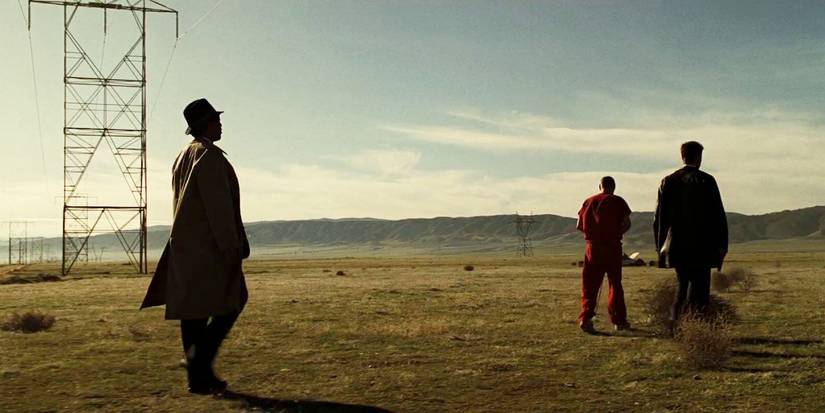
“What’s in the box?” Se7en is a procedural thriller, but also a dark moral study. In it, two detectives (Brad Pitt and Morgan Freeman) track a serial killer (Kevin Spacey) who uses the seven deadly sins as the basis for his murders. The more the cops discover, the more personal and complex the case becomes. The film has a pronounced philosophical edge, as the characters are forced to grapple with questions of justice and the nature of evil.
Somerset represents weary realism. He has seen enough to believe the world is fundamentally broken. Mills, less experienced and more impulsive, still believes in good. However, the movie relentlessly drags the young detective toward Somerset’s bleak perspective. This comes through in the cinematography as well. The film’s world is perpetually dark and rain-soaked, a sense of decay looming over everything. All this culminates in that devastating, iconic ending.
8
‘Blonde’ (2022)

“I’m still her… but I don’t know who that is.” While one can debate the artistic merits and historical accuracy of Blonde, there’s no denying its heaviness. The film reimagines the life of Marilyn Monroe (Ana de Armas) through a fragmented, impressionistic lens, focusing on her experiences of exploitation and emotional trauma. It’s a grueling, often frightening character study and snapshot of a predatory industry.
Here, Monroe is no glamorous, untouchable icon. Rather, she’s someone trapped in cycles of abuse and abandonment. Her childhood wounds, especially her fractured relationship with her mother, actively shape every decision she makes. She’s stuck, replaying the same emotional damage in different forms. Scenes of heartbreak and degradation hit us one after another. Unlike more conventional biopics, Blonde doesn’t aim to celebrate or even fully explain its subject. It just immerses you in her suffering.
7
‘Irréversible’ (2002)

“Time destroys everything.” Gaspar Noé is no stranger to provocative filmmaking, yet even by his standards, Irréversible is a difficult project. In the film, a brutal act of violence sets off a chain of events told in reverse chronological order, revealing the consequences before the causes. The narrative moves backward, and a clearer picture of the characters’ lives slowly emerges. This structure isn’t just a gimmick, but a way of reframing the story, making earlier scenes feel increasingly tragic as their context becomes clear.
The movie’s underlying philosophy is fatalistic. This is a world governed by randomness and cruelty, where ordinary lives can be destroyed in an instant by chance encounters. There’s no moral balance, no justice that meaningfully restores what was lost. Once again, the filmmaking itself complements this. The disorienting camerawork, defined by long takes and spinning movements, creates a sense of nausea and panic.
6
‘American History X’ (1998)
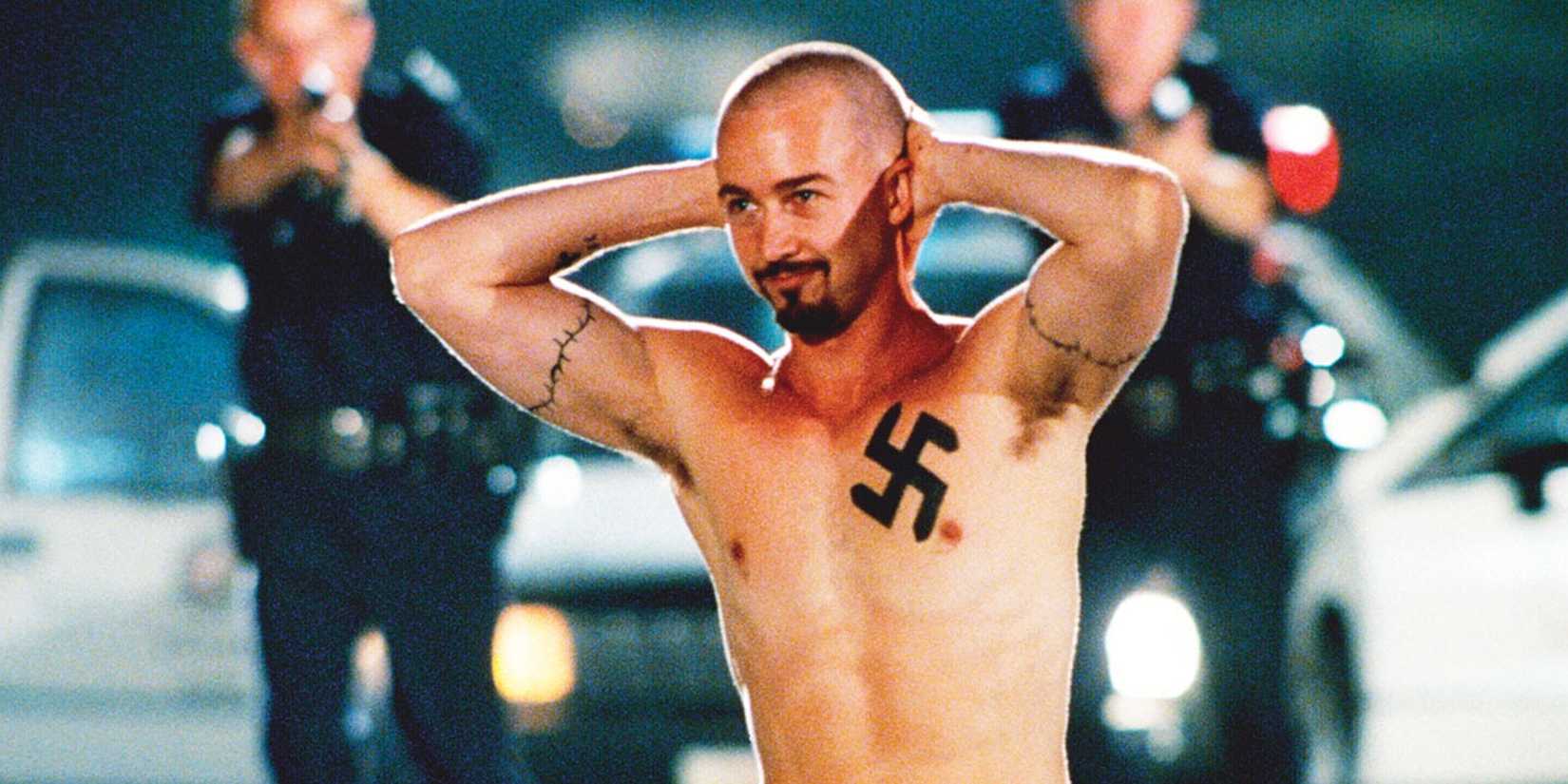
“Hate is baggage… life’s too short to be pissed off all the time.” Edward Norton delivers perhaps his strongest performance here as Derek Vinyard, a former neo-Nazi reflecting on his past while trying to prevent his younger brother (Edward Furlong) from following the same path. The film moves between timelines, exploring the roots and consequences of his beliefs. In the process, it forces you to sit inside the mindset it’s trying to dismantle.
Crucially, American History X refuses easy answers. It acknowledges the possibility of change, but also insists that actions have consequences that can’t simply be erased. There’s a sense of tragedy to even the more positive moments, a painful realization that the harm is already set in motion. Finally, there are the bursts of shocking violence, like the infamous curb stomp scene.
5
‘Manchester by the Sea’ (2016)
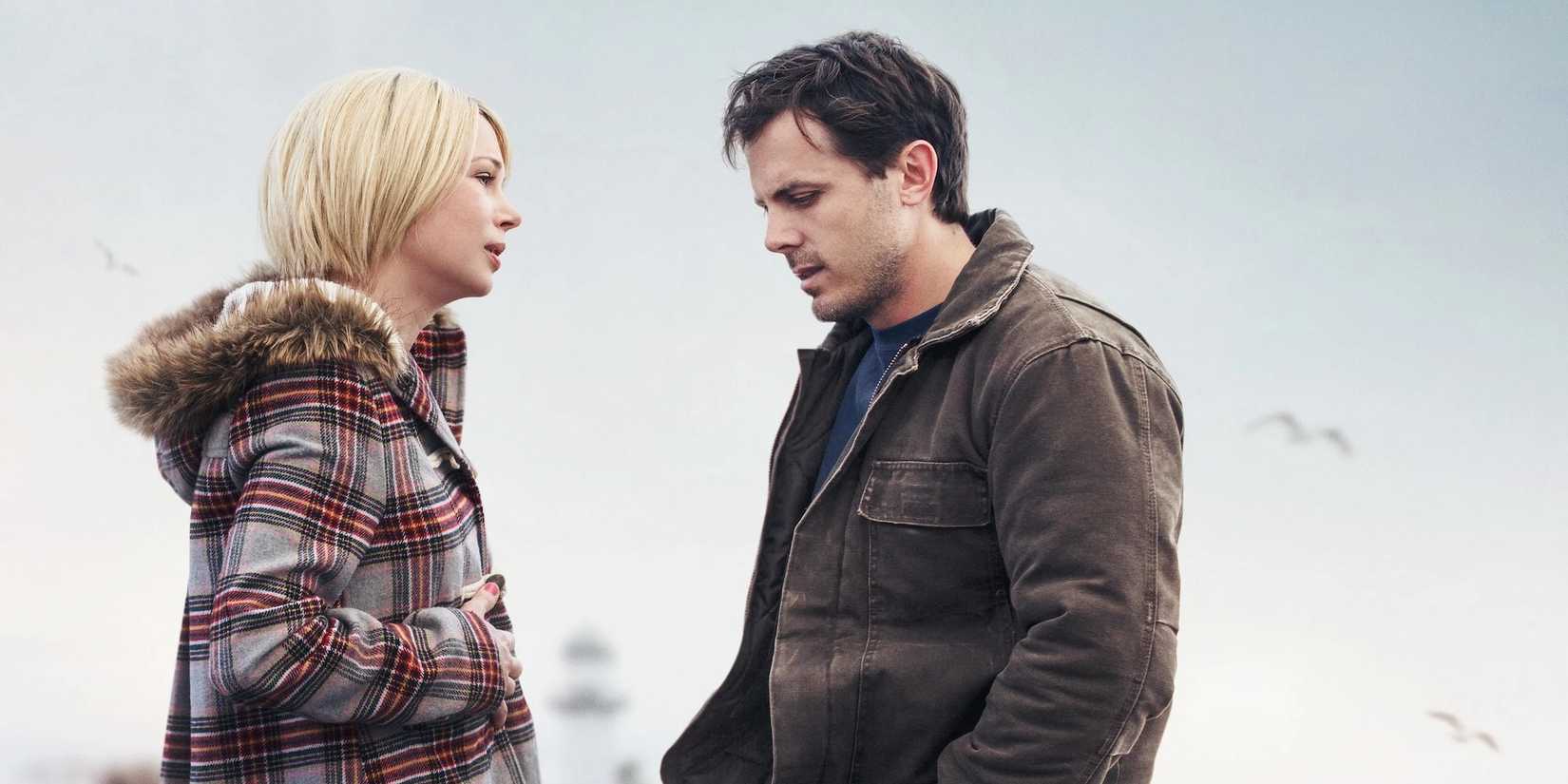
“I can’t beat it… I can’t beat it.” Manchester by the Sea is an unrelentingly sad movie, but a great one nonetheless. Casey Affleck won the Best Actor Oscar for his performance as Lee Chandler, a withdrawn janitor who returns to his hometown after his brother’s death and is unexpectedly named the guardian of his teenage nephew (Lucas Hedges). He tries to navigate this new responsibility, but past traumas continue to exert a hold on him.
Ultimately, Manchester by the Sea is a modern classic because it doesn’t sugarcoat anything or search for silver linings. It treats grief as something permanent. Lee isn’t on a journey to “get over” what happened; he’s trying, in a limited and fragile way, to keep living with it. There are some things in life, the movie tells us, you simply can’t come back from.
4
‘An Elephant Sitting Still’ (2018)

“Everything is just… meaningless.” In An Elephant Sitting Still, multiple characters in a bleak Chinese city contemplate traveling to see a mythical elephant that simply sits, unmoving, indifferent to the world. Over the course of a single day, their lives intersect in subtle and tragic ways. The narrative is less about plot than about accumulation, small moments of despair building into something overwhelming. The result is a film that confronts existential emptiness head-on.
Interestingly, the issues and traumas here are relatively ordinary, even systemic, as opposed to big and “cinematic”. The characters contend with problems like loneliness, guilt, and purposelessness, which are common in the modern world. Fundamentally, the elephant symbolizes escape, but the film remains agnostic as to whether this hope is real or just another illusion people cling to in order to keep going.
3
‘Requiem for a Dream’ (2000)

“I just want to be on television.” In Darren Aronofsky‘s grim masterpiece, four characters (Jared Leto, Jennifer Connelly, Ellen Burstyn, and Marlon Wayans) chase different forms of success and escape, only to find themselves trapped in cycles of addiction and self-destruction. Their lives spiral out of control, and the consequences become increasingly severe, to the point that they’re almost painful to watch.
In Requiem for a Dream, downfall is inevitable, with each storyline following a similar, gut-wrenching trajectory. The final act is unbearable, with everyone hitting a breaking point. These were challenging roles to play, but the performances are fittingly intense and believable across the board, perfectly capturing the characters’ initial hope and the eventual collapse. On the aesthetic side, the rapid editing and recurring visual motifs create a sense of momentum that mirrors the protagonists’ descent.
2
‘Dancer in the Dark’ (2000)
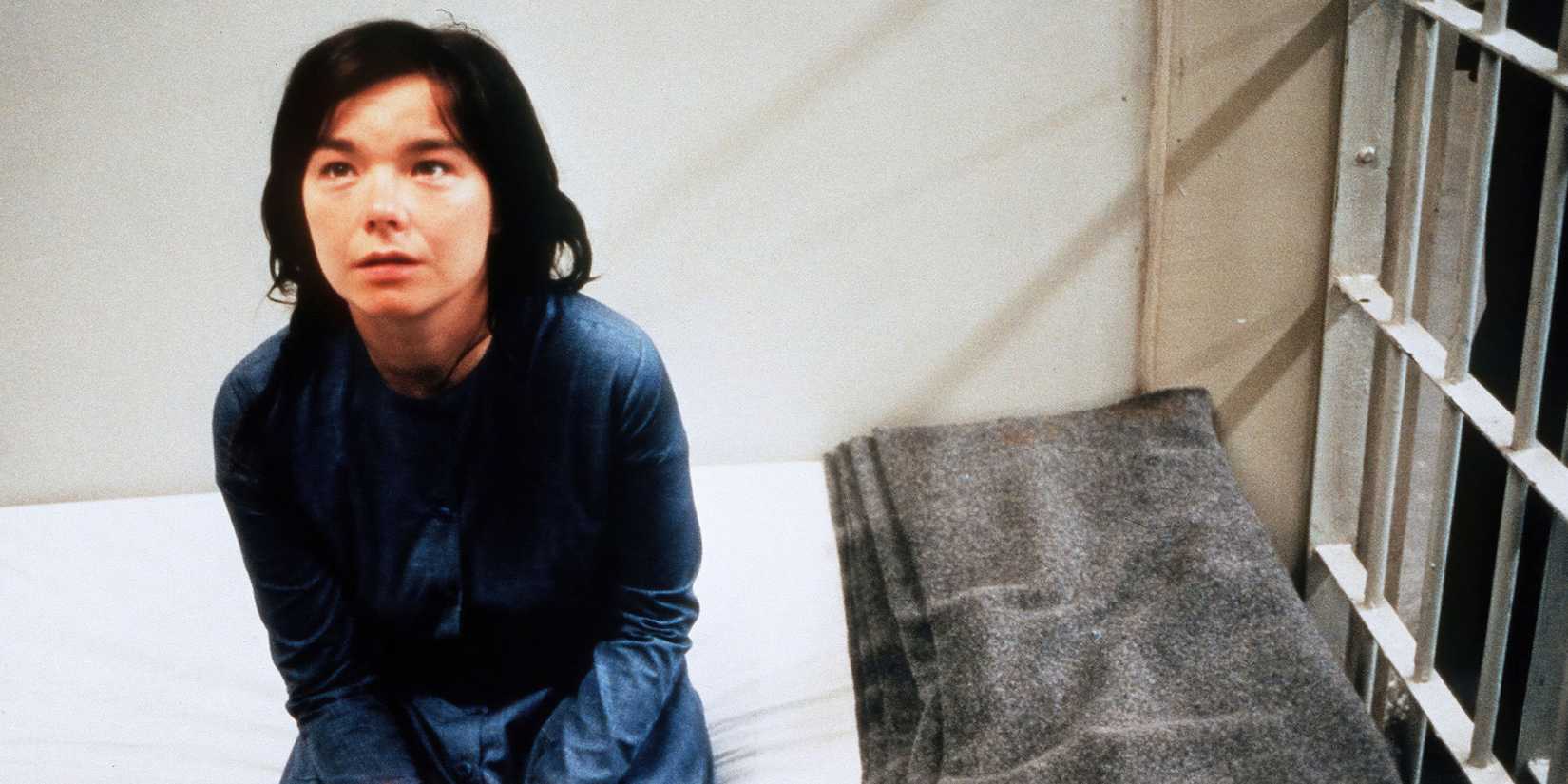
“I see it all… I see it now.” Dancer in the Dark saw Danish provocateur Lars von Trier teaming up with Icelandic musician Björk. She won the Best Actress Award at Cannes for her turn here as Selma, a Czech immigrant working in a factory, struggling to save money for her son’s (Vladica Kostic) eye operation while slowly losing her own vision. Her situation worsens, and she retreats into elaborate musical fantasies.
The director is famous for audacious, challenging work, and this is him at his most emotionally confrontational. Here, he juxtaposes harsh realism with moments of stylized musical escape, creating a hard-hitting tension. At the eye of the storm, Björk’s performance is remarkably raw and vulnerable, anchoring the film’s more experimental elements. Her character is kind, naive, and fundamentally good, but the world around her is indifferent at best and exploitative at worst.
1
‘Grave of the Fireflies’ (1988)
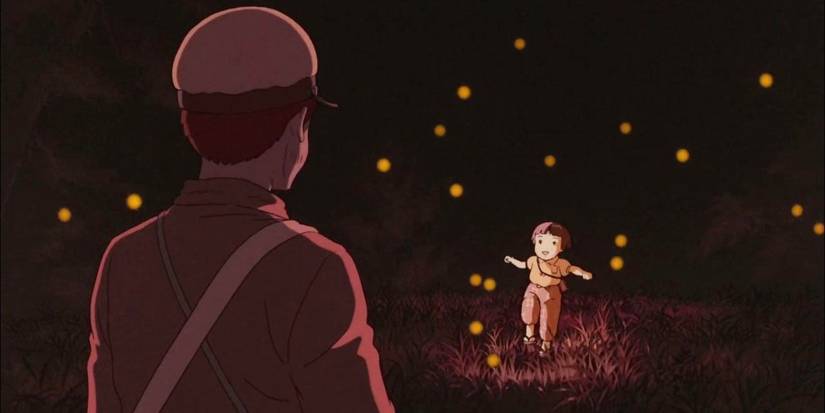
“Why do fireflies have to die so soon?” Grave of the Fireflies is one of the greatest animated movies of all time, as well as one of the most heartbreaking. It tells the story of two siblings (Tsutomu Tatsumi and Ayano Shiraishi) struggling to survive in Japan during the final months of World War II after losing their home and family. Resources are scarce, and their situation grows increasingly desperate. By contrast, the animation is delicate and precise, capturing both the beauty and the fragility of the characters’ world.
This dichotomy brings home how large-scale conflict translates into small, personal losses. The children are front and center, their bond tender and real, which makes their gradual decline feel all the more devastating. Seita tries to take on the role of protector, while Setsuko embodies innocence and trust. The world around them, however, is indifferent.


Grave of the Fireflies
- Release Date
-
April 16, 1988
- Runtime
-
89 Mins
- Director
-
Isao Takahata
- Writers
-
Akiyuki Nosaka, Isao Takahata


You must be logged in to post a comment Login