Entertainment
10 Most Ambitious Fantasy Movies of the Last 25 Years

All movies are hard, and often expensive, to make, involving a lot of hard work and long hours from tremendously talented craftspeople and creative artists. That hard work and long hours are doubled for any movie that needs to create an entire world, whether that be another period or an entirely different realm. When it comes to creating those fictional worlds, it’s most often in service of stories of the fantasy genre, which take a tremendous amount of ambition to bring to life.
Even in the last 25 years, with massive advancements in visual effects technology, mounting a fantasy has become no less ambitious, as the movies have only grown bigger and more lavish. Some films have embraced that technology, while others have strived to avoid using it, and many of the most ambitious films attempt to find a balance between practical and digital. Groundbreaking CGI, lavish costumes, massive sets, grand locations and expansive casts are all part of what makes the following fantasy films the most ambitious of the last 25 years.
10
‘The Polar Express’ (2004)


Robert Zemeckis is known for his technical innovations. Films like Who Framed Roger Rabbit, Death Becomes Her, and Forrest Gump all featured pioneering uses of different visual effects technologies. In the 2000s, Zemeckis became particularly obsessed with motion capture technology, and he and his company, ImageMovers, decided to use it for his adaptation of the Chris Van Allsburg book The Polar Express, which was also the first to pioneer full facial performance capture.
While the results were uneven, with creepy-looking characters that looked like they crawled straight out of the Uncanny Valley, the film, at the very least, showed the potential of the technology. In hindsight, the story would have been better served as a live-action adaptation. There’s still plenty of beauty in some of the digitally rendered locations, and the titular train looks magnificent, but the dead-eyed children are hard to look at. The first guy through the wall always gets bloody, and Zemeckis took on a lot of hits for this film and his animated fantasy follow-ups.
9
‘Wicked’ (2024)


Adapting the smash Broadway musical Wicked into a feature film took over a decade and the turnover of many creatives, but the result was a film that itself became a pop culture sensation. The first Wicked, which adapted the first half of the musical, as directed by Jon M. Chu, utilized both expansive digital effects and large-scale sets to bring its version of the land of Oz to the screen.
The effort is evident on the screen, continuing the grand musical tradition from the original The Wizard of Oz. The musical numbers are lavish, the performers are stellar, and the film manages to keep its energy up for most of its two-hour-plus runtime. Some of its darker themes of systemic oppression and corruption get a little lost under all the glitter and grandeur, but it still packs a punch in its climax. The sequel, Wicked: For Good, unsurprisingly wasn’t able to recapture that same magic, but still managed to become a box office hit and wrap up what was one of the biggest fantasy phenomena in movies in a long time.
8
‘Harry Potter and the Sorcerer’s Stone’ (2001)
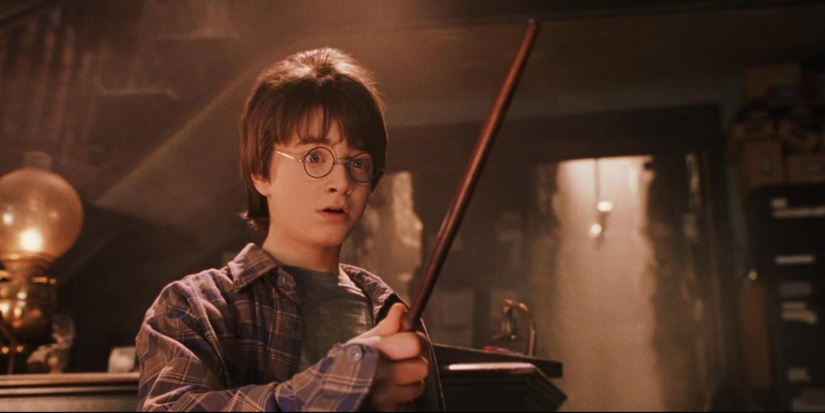
Adapting the beloved Harry Potter books to film was a daunting undertaking. Not only did Harry Potter and the Sorcerer’s Stone have to craft an entire Wizarding World, but it also had to find a cast who could capture the essence of the characters and carry on their roles for multiple sequels. The film did all that and managed to tell a compelling story that had many fans wishing they could be whisked off to Hogwarts themselves.
The importance of the casting of Daniel Radcliffe, Rupert Grint, and Emma Watson cannot be understated, and all three actors will remain synonymous with their roles for the rest of their lives. Director Chris Columbus gets a ton of chemistry out of the trio, despite their collective lack of acting experience, and they anchor the film, even in its silliest moments. The moments that matter most are all handled perfectly, though, from Harry getting his first wand to the introduction of Hogwarts. While later films would improve on and perfect the potion, the first film set the formula.
7
‘Pirates of the Caribbean: The Curse of the Black Pearl’ (2003)
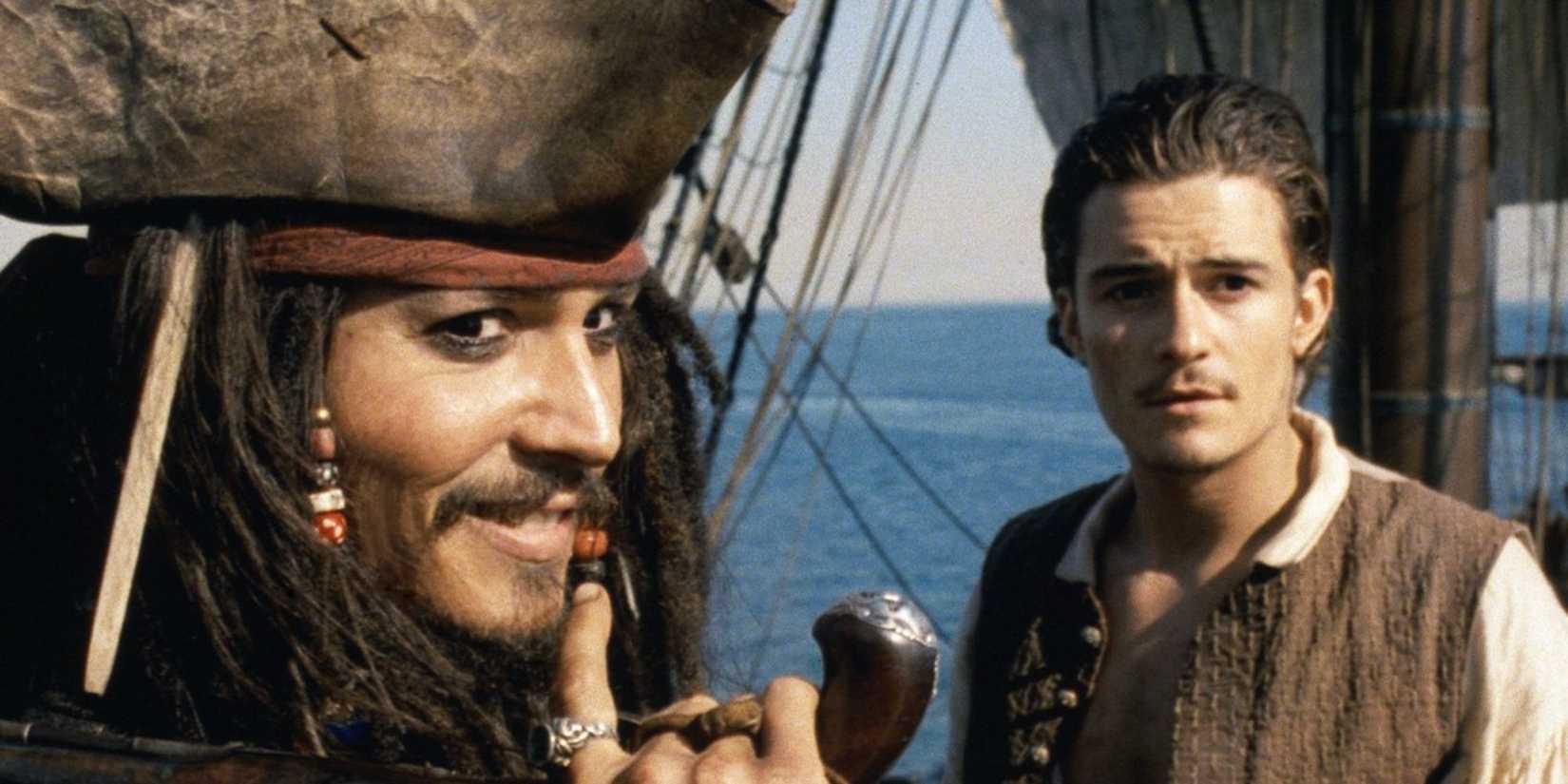
Basing a movie on one of the most popular fantasy novels of all time definitely requires some brave ambition. Basing a movie on a decades-old theme park ride featuring pirates requires near-delusional levels. In the early 2000s, Disney was in another of its transitional periods, trying a lot of different things, but Pirates of the Caribbean: The Curse of the Black Pearl was a definite risk. Theme park ride movies had not been a success for Disney, and modern pirate movies had all universally bombed, including Disney’s own Treasure Planet from the year prior.
Johnny Depp was also not a known box office draw in the 2000s as well. Long before his movie star status and controversies, the actor was known for being a heartthrob who took on strange roles in films that were often unsuccessful at the box office. Director Gore Verbinski had only had one hit film as well, with the horror remake The Ring, but clearly had a creative energy that was ready to be unleashed. The first film in the Pirates franchise is a lot of swashbuckling fun, and has some supernatural tricks up its sleeve. It’s a genuine treasure in comparison to the cursed film it could have been.
6
’The Green Knight’ (2021)
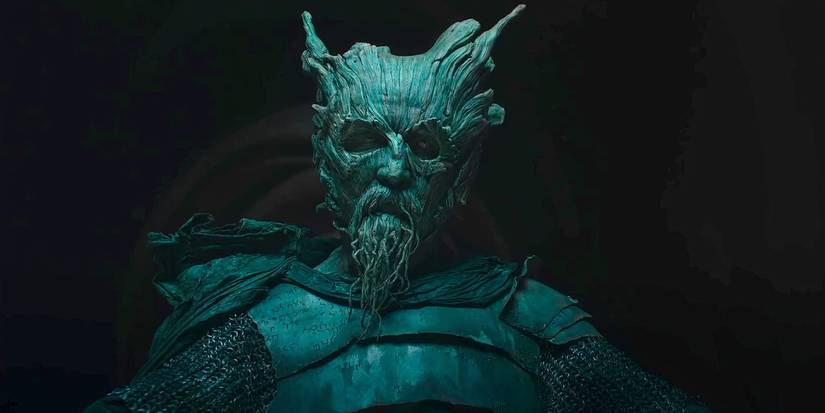
All the previous films on this list had plenty of ambition, but they also had plenty of money. Ambition and skill can only carry a film so far if it doesn’t have resources. It’s why so many modern epic fantasy films come with price tags consistently over $100 million. It’s also why The Green Knight, made for one-tenth of that, is such an impressive fantasy feat. Despite having a fraction of the budget, it still makes its hero’s journey feel suitably epic and fills it with fantastic imagery.
Retelling the legend of Gawain and the Green Knight, David Lowery‘s film examines its hero through a modern lens, but keeps a lot of its effects old-school. The film is a tribute to the practically made fantasy films of the ’80s, like Legend and Excalibur, and it has the same tactile quality. The Green Knight may not have gigantic battle sequences or effects-filled action sequences, but it’s no less imaginative or fully realized than films made on ten times its budget. It’s a minor masterpiece with major ambitions.
5
‘Mad God’ (2021)

Any stop-motion animated film is inherently ambitious. The painstaking medium takes excruciatingly long to properly accomplish and demands incredible patience. Stop-motion animation artists are some of the most underappreciated in Hollywood, and the films they’ve delivered all kinds of wonders and horrors over the decades. In the 21st century, there have been some very ambitious stop-motion fantasy films produced, from Corpse Bride to Kubo and the Two Strings. The upcoming Wildwood looks to be another visual feast of incredible handmade artistry as well, but in terms of sheer audacity and ambition, it’s going to be hard to beat Mad God.
A passion project of visual effects legend Phil Tippett, Mad God took 30 years to complete, with huge gaps in its production as Tippett would collaborate with different volunteer artists on weekends. The result is a dark fantasy nightmare that defies easy classification or description, but is a must-watch for any fan of the art form or the artist. Mad God is completely untethered from any standard narrative structure, unfolding as a true descent into hell. It’s definitely not for everyone, but it is a striking sight to behold and undeniably ambitious.
4
’The Odyssey’ (2026)
The ambition of Christopher Nolan shouldn’t be taken for granted. Whatever failings he may have as a storyteller or filmmaker, being unambitious is not one of them. The director has been mounting epic films on an increasing scale for over a decade, transporting audiences into Gotham City, the dark reaches of outer space, and most recently into Homer‘s The Odyssey. While the discourse around Nolan’s fantasy epic began to overwhelm the film itself, it’s likely to find continued love for its epic scale.
From the production design, to the costumes, to the depiction of mythical beasts, there is a tactile quality to all of it. The film’s location shooting makes it feel practically gargantuan compared to other blockbusters shot on stages with green screens that can feel claustrophobic. The Odyssey features many visual effects, but they are meticulously designed and beautifully integrated. The best thing about a filmmaker like Nolan isn’t just that he’s able to make films on this scale, but that he commands enough power with studios to get the time and money for his crew of collaborators to accomplish them properly.
3
‘The Tale of Princess Kaguya’ (2013)

Trying to compare the ambition and efforts of different animated mediums is a futile gesture. There is ambition in every animated film made, but there’s a special ambition in attempting something different. Movies that utilize the medium to create something that looks different than what mainstream audiences are accustomed to always risk rejection, even when coming from Studio Ghibli. While the storied animation studio is synonymous with director and co-founder Hayao Miyazaki, its creations extend beyond his masterpieces, including its most ambitious film, The Tale of Princess Kaguya.
Based on the Japanese folktale The Tale of the Bamboo Cutter, the film is animated in a style reminiscent of watercolor paintings, with textured brushstrokes and charcoal lines that maintain their minor imperfections. It’s an evocative art style that director Isao Takahata wanted to use to elicit an emotional response, and it does. It doesn’t conform, even to the expected style of its studio, and stands in stark artistic opposition to almost any other animated film of the last 25 years.
2
‘The Fall’ (2006)
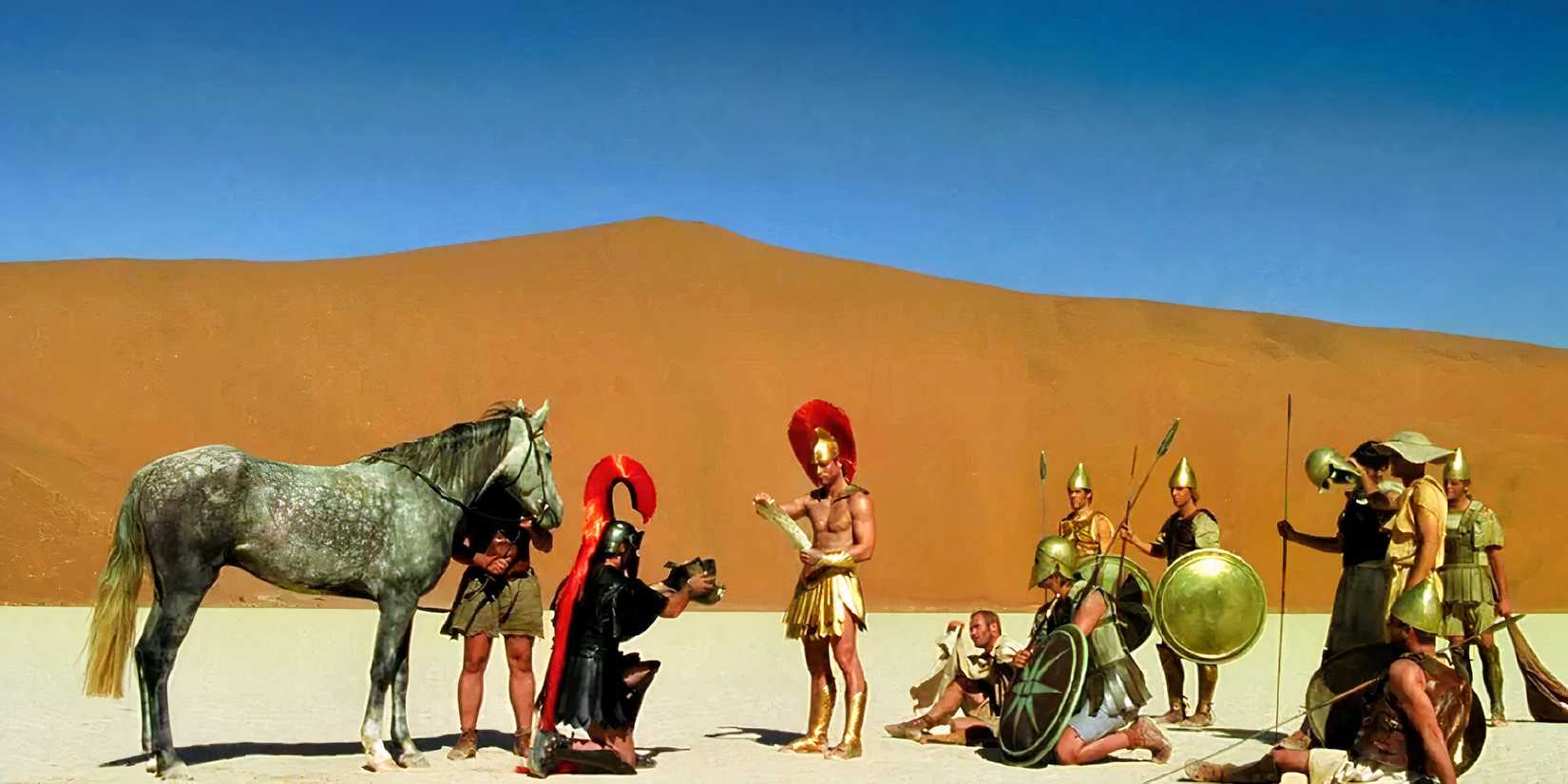
Tarsem Singh‘s The Fall was, for a long time, the most ambitious fantasy that almost no one had seen. The film came and went without much promotion or a widespread release and quickly went out of print on physical media. It’s been brought back thanks to a restoration on streaming, allowing fantasy fans to properly witness its stunning visuals. The film was mostly self-funded by Singh, who shot it over four years in two dozen countries. Its ambition expands well beyond the edges of the frame, and it’s an overwhelming visual experience.
Presenting a fantasy story through the imagination of a child isn’t necessarily novel. Many films have made attempts to create wild fantasies that represent the unbound imagination of children, but often fall short or devolve into chaotic CGI. The Fall is vibrant, unbound to any one style, with a world that shifts as quickly as the mind of a child wanders. There were few films that looked as good as or better than The Fall before it, and there aren’t likely to be many more.
1
‘The Lord of the Rings: The Fellowship of the Ring’ (2001)
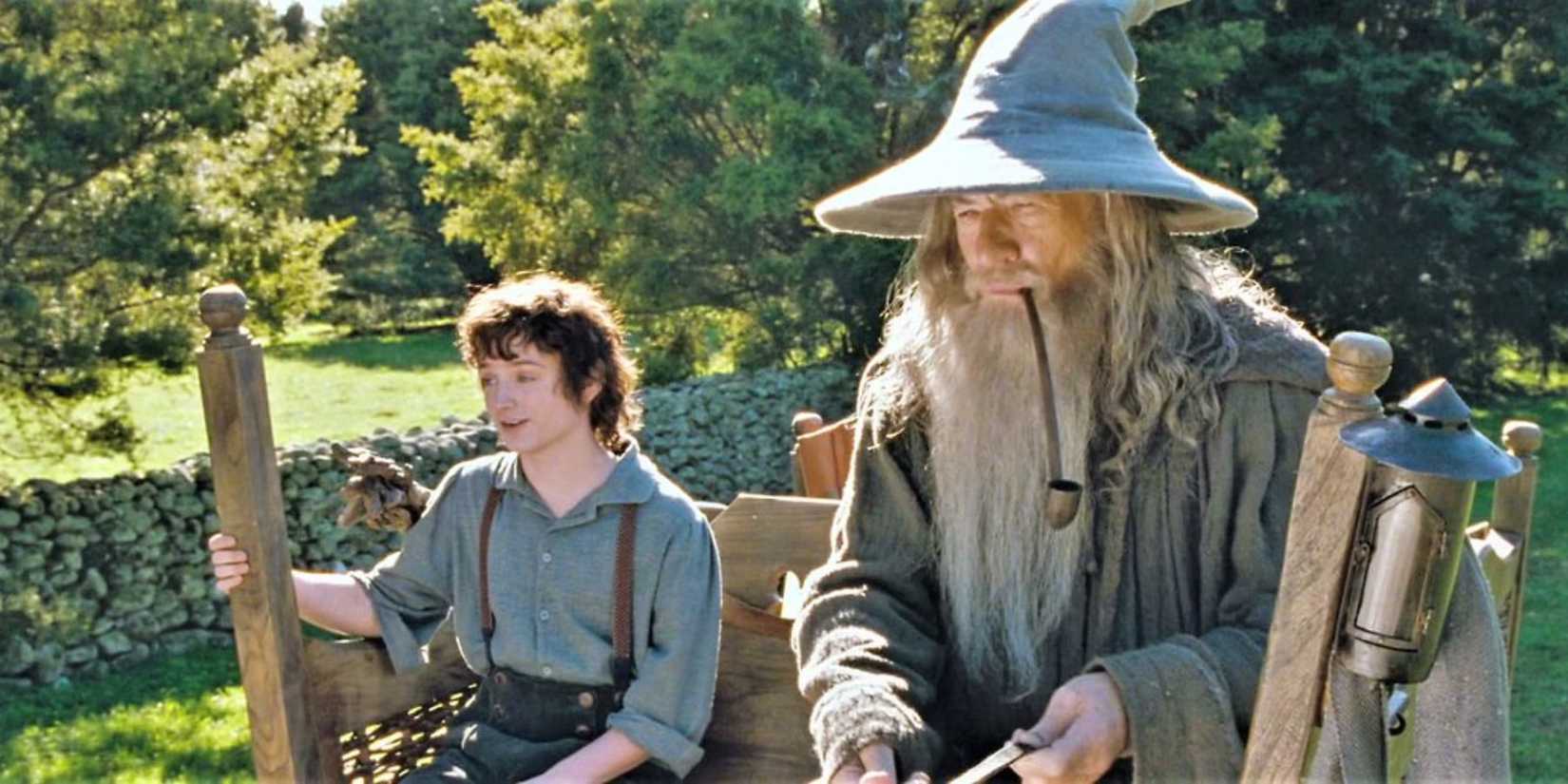
Despite many attempts, no fantasy franchise has been able to capture the same level of epic achievement as The Lord of the Rings. The massive cinematic trilogy, adapted from J.R.R. Tolkien‘s seminal fantasy novels and shot back-to-back, was an incredibly ambitious undertaking. Peter Jackson had never directed a film close to the scale of a fantasy epic, never mind three, and the films became a behemoth production in New Zealand.
There are films that have had larger or longer productions, with just as many complexities as The Lord of the Rings, but none have been able to recapture the success of Jackson’s trilogy. Not even Jackson himself could replicate it with The Hobbit prequel trilogy. Back in 2001, audiences had never seen a fantasy epic as big as The Lord of the Rings: The Fellowship of the Ring, and now we often take them for granted. Regardless of their individual success, the ambition of filmmakers who make fantasy movies should always be celebrated.
You must be logged in to post a comment Login