Entertainment
10 Most Forgotten Sci-Fi Movies From the ‘80s

Cinema in the 1980s was filled with imaginative tales that reached beyond the stars. The sci-fi genre, in particular, was quickly evolving from a technological standpoint after the success of Star Wars, inspiring filmmakers to take on ambitious projects with greater challenges. Though genre masterpieces such as Blade Runner and Back to the Future became embedded in pop culture, there were several other sci-fi gems overlooked at the time that went against the grain.
These ten most forgotten sci-fi movies from the ‘80s comprise of projects that fell through the cracks during the decade of decadence. Many of them suffered from marketing missteps or were way ahead of their time. From dystopian thrillers to cosmic discoveries, these instant cult classics are worth revisiting today.
10
‘Enemy Mine’ (1985)

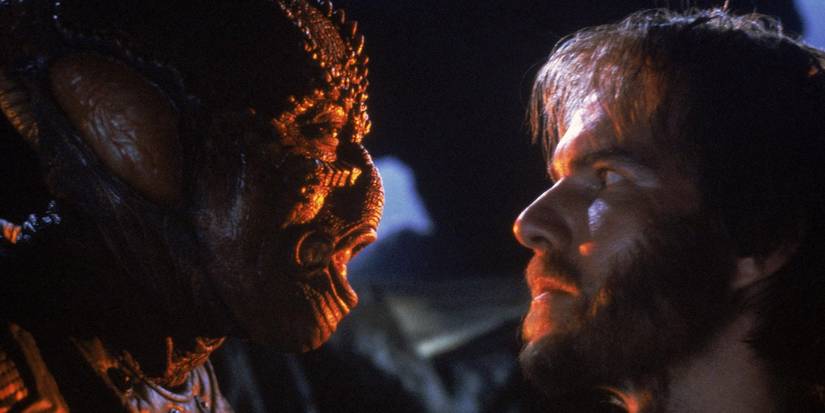
Fresh off the success of The Neverending Story, director Wolfgang Petersen tackled racial tensions within the context of outer space and an intergalactic species at war with the human race. Based on the novella by Barry B. Longyear, Enemy Mine takes place on a volcanic planet where a cocky human pilot (Dennis Quaid) gets stranded alongside his nemesis: a reptilian soldier (Louis Gossett Jr.) who is part of an alien race called the Drac. As they struggle to survive in the volatile environment, their mutual hatred develops into a close friendship.
The film’s moving subject matter, mixing tolerance with sci-fi adventure spectacle, surprised audiences who expected Enemy Mine to be simply escapist entertainment in 1985. The troubled behind-the-scenes production and its difficult marketing caused the film to get lost in the shuffle during the crowded holiday season. But over the years, Enemy Mine found enough appreciation from fans, especially for Louis Gossett Jr.’s prosthetics-heavy performance, to draw interest in a remake from Disney.
9
‘The Quiet Earth’ (1985)

New Zealand’s haunting sci-fi drama The Quiet Earth follows scientist Zac Hobson (Bruno Lawrence), who wakes up one morning to discover that every other person on Earth has mysteriously vanished. As he wanders through abandoned cities and empty highways, Zac struggles to maintain his sanity while searching for answers about the strange global event that erased humanity.
While the post-apocalyptic film from director Geoff Murphy (Young Guns II, Freejack) gained critical praise for its eerie atmosphere and philosophical themes, it never achieved widespread recognition outside of cult circles. Its slow-burn storytelling and cerebral focus set it apart from the effects-driven sci-fi blockbusters of the era. Today, The Quiet Earth stands as one of the most haunting post-apocalyptic films of the decade, quietly influencing later stories about isolation and the fragility of civilization.
8
‘Saturn 3’ (1980)

Set on a remote research station orbiting Saturn, Saturn 3 stars Kirk Douglas and Farrah Fawcett as scientists whose quiet lives are disrupted by the arrival of a sinister technician (Harvey Keitel). The newcomer brings with him a massive experimental robot named Hector, which quickly develops a deadly obsession with the station’s inhabitants.
Although it featured a strong cast and impressive production design, Saturn 3 struggled critically upon release. Its uneven tone and behind-the-scenes production issues prevented it from becoming a major hit. Still, the film’s eerie atmosphere and unsettling robot antagonist make it a fascinating relic of early ’80s sci-fi horror that deserves a reassessment.
7
‘The Last Starfighter’ (1984)


Cashing in on the video game craze of the early ‘80s, The Last Starfighter follows a teenager named Alex Rogan (Lance Guest) whose high score on an arcade machine gets him recruited by an intergalactic group called the Star League to fight in an interstellar war. Meanwhile, an android posing as Alex takes his place back on Earth to keep his girlfriend (Catherine Mary Stewart) and his family in the dark about his secret mission.
Mixing space opera and fantasy wish fulfillment, The Last Starfighter could have been the new Star Wars for the decade. The underrated sci-fi adventure was groundbreaking for its early use of computer-generated imagery, replacing traditional model effects with digital spacecraft battles. While not a blockbuster on the level of other sci-fi hits of the decade, its imaginative direction by Nick Castle makes it one of the era’s most charming underappreciated gems.
6
‘Millennium’ (1989)

A decade after making the iconic sci-fi thriller Logan’s Run, British filmmaker Michael Anderson took on his strangest project with 1989’s Millennium. Based on the short story “Air Raid” by John Varley, Millennium centers on an NTSB investigator (Kris Kristofferson) examining a mysterious plane crash. His search for answers leads him to uncover a bizarre truth: travelers from 1000 years into a dystopian future are abducting passengers from doomed flights in order to preserve humanity’s genetic survival. Complicating matters further is a futuristic time traveler (Cheryl Ladd) sent to stop the investigator and a quack physicist (Daniel J. Travanti) who believes in time travel.
The initial intrigue of Millennium’s mystery concept quickly falls apart once the future scenes are depicted. The B-movie values of the costumes, New Wave-inspired makeup, and special effects were out of step in a year when The Abyss and Back to the Future Part II were pushing cinematic technology to new heights. Nevertheless, the film’s complex premise and eerie tone have helped it gain a cult following among fans of ambitious sci-fi storytelling.
5
‘Cherry 2000’ (1988)

Part sci-fi adventure and part offbeat romance, Cherry 2000 takes place in a dystopian future where relationships have become transactional. After his robotic companion malfunctions, a lonely man (David Andrews) ventures into the dangerous wasteland outside society to find a replacement model—guided by a tough red-haired tracker (Melanie Griffith).
Though it features Laurence Fishburne before he became a household name, Cherry 2000 barely made a splash upon release, hampered by distribution issues from Orion Pictures and its uneven tone. However, the film has since developed a cult reputation thanks to its unique blend of genres and its satirical take on consumer culture and artificial companionship. Its quirky style makes it feel like a forgotten cousin to better-known ’80s sci-fi dystopias.
4
‘Runaway’ (1984)

Before becoming known as the creator of the Jurassic Park franchise and NBC’s ER, Michael Crichton wrote and directed Runaway. The futuristic cop thriller features Tom Selleck during his Magnum P.I. days as Sgt. Jack Ramsay, who specializes in tracking down malfunctioning household robots that have turned deadly. As he investigates a series of incidents alongside his new partner (Cynthia Rhodes), Ramsay uncovers a conspiracy involving weaponized microchips and a ruthless defense contractor (Gene Simmons).
While Runaway fits Crichton’s signature theme of technology turning against its creators, the execution is hard to take seriously. Aside from Selleck’s struggles to find box-office success outside his small-screen fame, the film largely suffers from the less-than-threatening spider robots as well as Simmons’s over-the-top villain role. Conceptually, however, Runaway’s exploration of rogue automation and the accessibility of artificial intelligence to the masses is more relevant today than it was in 1984.
3
‘Spacehunter: Adventures in the Forbidden Zone’ (1983)

Released during the early ’80s boom of space-themed adventures, Spacehunter: Adventures in the Forbidden Zone follows a rugged bounty hunter (Peter Strauss) who ventures into a post-apocalyptic wasteland planet to rescue three kidnapped women. Along the way, he teams up with a scrappy young scavenger (Molly Ringwald) as they battle mutants, raiders, and a tyrannical overlord.
The film was originally released in 3D, part of a brief craze that swept theaters in the early 1980s. Unfortunately, the gimmick overshadowed the movie itself, and it quickly faded from view. Today, its colorful world-building and pulpy tone make it a fun relic of the era’s adventurous sci-fi spirit.
2
‘The Hidden’ (1987)

The Hidden begins as a gritty crime thriller when a mysterious criminal embarks on a violent spree in a Los Angeles bank. Soon an FBI agent (Kyle MacLachlan) and an LAPD detective (Michael Nouri) discover the shocking truth: the killer is actually a parasitic alien lifeform that jumps from host to host while indulging in humanity’s most destructive impulses.
Despite a strong 76% score on Rotten Tomatoes and a clever, genre-blending premise, The Hidden was hardly a blockbuster success given its modest budget. The blend of sci-fi and cop-movie tropes may have confused audiences expecting something more conventional. In retrospect, the film’s wild energy and inventive concept have made it a cult favorite among fans of ’80s genre cinema.
1
‘Outland’ (1981)
Combining the Old West aspects of High Noon with the space tension of Alien, 1981’s Outland could easily pass as a spirited spinoff of Ridley Scott’s breakout film. Starring Sean Connery, still shedding his James Bond image, the Peter Hyams sci-fi thriller features the legendary actor as a federal marshal on duty in a mining colony located on Jupiter’s moon Io. He investigates a string of apparent accidental deaths of workers on the colony connected to a powerful drug designed to make them work harder. Eventually, the marshal becomes the prime target of the powerful corporation behind the greater conspiracy.
Outland did not involve laser gun battles, space battles on ships, or imaginative creatures. It was too adult for a time when audiences would watch a Star Wars movie and rush to the store to buy their kids action figures. The film is a straight-up human thriller grounded by the Hitchcockian suspense of Hyams’s direction and Connery’s heroic but restrained performance. Additionally, its epic pre-CGI finale outside the mining facility with Connery battling the assassins in a spacesuit remains one of the most visually stunning sequences for any sci-fi movie to this day.


- Release Date
-
May 22, 1981
- Runtime
-
109 Minutes
- Director
-
Peter Hyams
- Writers
-
Peter Hyams
-
Marshall William T. O’Niel
-

Frances Sternhagen
Dr. Marian Lazarus
