Entertainment
10 Most Mind-Bending Movies Released Since ‘Memento’

Back in 2000, Memento represented a bold fusion of thriller storytelling and mind-bending plot devices, very much putting Christopher Nolan on the map. Since then, a wave of mind-bending cinema has emerged, movies that fracture time, blur identity, and leave viewers questioning what they’ve seen.
Instead of being straightforward stories, these movies are more like puzzles, dreams, or philosophical experiments. The titles below are all mind-bending in their own way, whether that’s through time travel, unreliable realities, or surreal symbolism.
10
‘Predestination’ (2014)

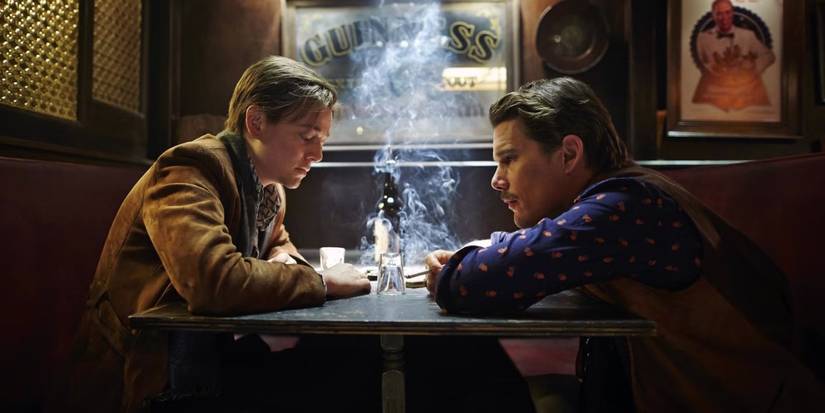
“The man who ruined my life is a ghost, and so is my daughter.” This sci-fi thriller adapts a Robert Heinlein short story into a time-twisting brainteaser. Ethan Hawke leads the cast as Agent Doe, a temporal agent who travels through time to stop a mysterious bomber, while recruiting a young writer (Sarah Snook) into a life of time-travel missions. Time travel movies tend to be trippy, but Predestination pushes it to its absolute limit.
The structure is deceptively simple at first, gradually layering revelation upon revelation until the full implications become clear. Early details become crucial later and subtly visual cues foreshadow impending revelations. Eventually, identities and timelines collapse into one another in increasingly paradoxical ways. Cause and effect melt in closed loops. It’s all pretty ‘high concept’ and convoluted, but the strong performances keep it grounded.
9
‘Mother!’ (2017)


“What hurts me the most is that I wasn’t enough.” Mother! is Darren Aronofsky‘s symbolic, philosophical, psychological horror. In it, a young woman (Jennifer Lawrence) lives in a secluded house with her poet husband (Javier Bardem), only for a series of increasingly intrusive guests to arrive, turning their home into a site of chaos and destruction. What begins as a domestic drama spirals into something far more allegorical and overwhelming.
This is a movie that operates almost entirely on metaphor. Everything is unstable, escalating from subtle discomfort to outright nightmare. The imagery is frequently surreal and striking, loaded with meaning and historical allusions, inviting the viewer to analyze it. In particular, the film leans hard into religious symbolism and references to creation and destruction. Not everybody liked this more arthouse approach, but for those who get on its wavelength, Mother! offers a lot of food for thought.
8
‘Waking Life’ (2001)

“Dream is destiny.” Waking Life feels like a stoned dorm-room conversation with smart philosophy undergrads — in a good way. We follow a young man (Wiley Wiggins) as he drifts through a series of dreamlike encounters, engaging in conversations about free will, consciousness, and the nature of reality. The movie is a loose chain of ideas rather than a traditional narrative. Each conversation introduces a new perspective, creating a mosaic of thought rather than a single argument.
Waking Life was directed by the great Richard Linklater, who is one of the few filmmakers to pull off a concept like this. Rather than being dull or navel-gazing, Waking Life is energetic and intriguing, jam-packed with exciting ideas. Finally, on the aesthetic side, the rotoscope animation gives it a constantly shifting visual texture, reinforcing the sense that nothing is entirely stable.
7
‘Primer’ (2004)

“What if we’re already inside it?” This low-budget gem (it cost $7,000!) is one of the smartest time-travel movies ever made. Primer tells the story of two engineers (David Sullivan and Shane Carruth, who also writes and directs) who accidentally invent a device that allows them to travel back in time. They begin to experiment with it, and the consequences quickly become complex, leading to overlapping timelines and fractured relationships.
This is very much a film that demands active engagement. Carruth refuses to simplify the mechanics of time travel, presenting them in a way that feels almost deliberately opaque. As a result, some fans joke that it’s impossible to fully understand Primer on the first viewing. However, this refusal to explain is part of what makes the film so compelling. Primer trusts the audience to grapple with its complexity.
6
‘Paprika’ (2006)

“Dreams are windows into the psyche.” This masterpiece by Satoshi Kon is frequently cited as a major inspiration for Inception. In some ways, it’s even bolder in its exploration of dreamscapes. In Paprika, a device that allows therapists to enter patients’ dreams is stolen, leading to a series of increasingly chaotic dream invasions that begin to spill into the real world. A detective (Akio Otsuka) and a scientist (Megumi Hayashibara) must navigate this collapsing boundary to stop the perpetrator.
In executing that premise, Paprika embraces the full potential of animation. Kon creates dream sequences that are fluid, imaginative, and often overwhelming, shifting seamlessly from one image to another. The narrative mirrors this fluidity, blurring the distinction between dream and reality until the two become indistinguishable. This comes through most powerfully in the famous dream parade, a carnival of objects, creatures, and cultural symbols.
5
‘Triangle’ (2009)
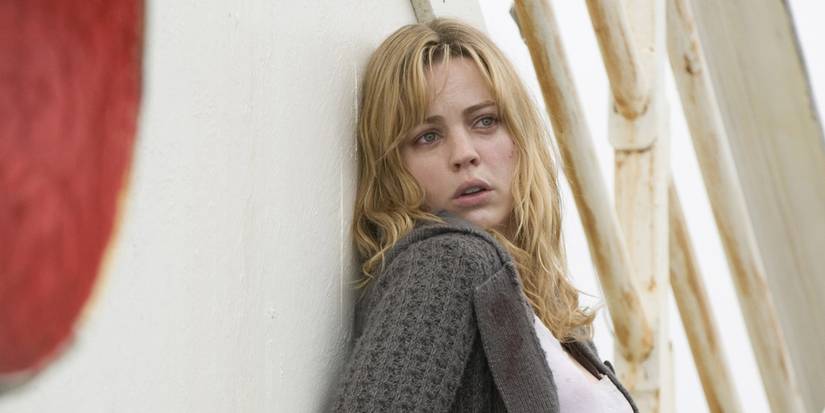
“It’s already happened… It’s going to happen again.” This is another lean, punchy, time-loop horror. In Triangle, a group of friends set sail on a yacht trip that goes disastrously wrong when they encounter a mysterious ocean liner. Once aboard, events begin to repeat in unsettling ways, trapping them in a loop that grows increasingly violent and disorienting. The protagonist’s (Melissa George) journey is both physical and psychological, as she begins to realize her role within the cycle.
The film weaponizes repetition. At first, the structure seems confusing, even chaotic, but gradually a pattern emerges, one that becomes more disturbing the more clearly it’s understood. Each rerun of the same events adds new context, new understanding, and, indeed, new dread. In the process, a time-loop puzzle becomes a survival horror. In this regard, Triangle draws on inspirations like Dead of Night and Jacob’s Ladder.
4
‘Enemy’ (2013)

“Chaos is order yet undeciphered.” Enemy is a provocative, divisive movie, but one that’s incredibly thematically rich. It stars Jake Gyllenhaal in a dual role, playing both a quiet history professor and an actor who looks exactly like him. He becomes obsessed with tracking down his doppelgänger, and his life begins to unravel, leading to a series of increasingly strange and symbolic encounters. This eventually culminates in one of the weirdest, most shocking final shots of the 2010s.
The dual performances create a sense of instability, as identity itself becomes uncertain. The dialogue is similarly cryptic, leaving much of the film’s meaning to be inferred rather than explained. Events can be read literally or metaphorically, and the philosophical undercurrents lend themselves to endless interpretation. Enemy is about the fear of commitment and the fear of losing control of oneself, and the double becomes a manifestation of everything the protagonist is trying to avoid.
3
‘The Fountain’ (2006)

“Together we will live forever.” Another Aronofsky project, one that’s been trippier than Mother! The Fountain interweaves three stories spanning multiple centuries, following a man’s (Hugh Jackman) quest to overcome death, whether through science, faith, or myth. Each timeline reflects a different aspect of his obsession, converging into a single emotional arc. The movie very much prioritizes thematic resonance over clarity, allowing the timelines to echo and overlap.
For this reason, it was controversial and a box office bomb, bringing in just $16.5m against a budget of $35m. Still, The Fountain‘s ambition is commendable, as is its aesthetic boldness. The visual style is lush and often surreal, reinforcing the sense that these stories exist outside conventional time. It serves up powerful recurring symbols, like circles and cycles, water and light, and, of course, the Tree of Life.
2
‘Synecdoche, New York’ (2008)

“I’m thinking maybe this is my life… and it’s already over.” Charlie Kaufman specializes in strange stories, and Synecdoche, New York (his directorial debut) is one of his most intriguing. Philip Seymour Hoffman delivers a phenomenal performance as Caden Cotard, a theater director, who begins creating an ever-expanding stage production that mirrors his own life. Along the way, the line between reality and performance begins blurring as years pass and identities shift.
The film is deeply postmodern and self-reflexive. The narrative folds in on itself, with layers of representation that become increasingly difficult to separate. The dialogue is complex and introspective as well, touching on themes of mortality, regret, and the search for meaning. All in all, Synecdoche, New York is a film that can feel overwhelming, but also profoundly moving. It’s a great, challenging film.
1
‘Mulholland Drive’ (2001)
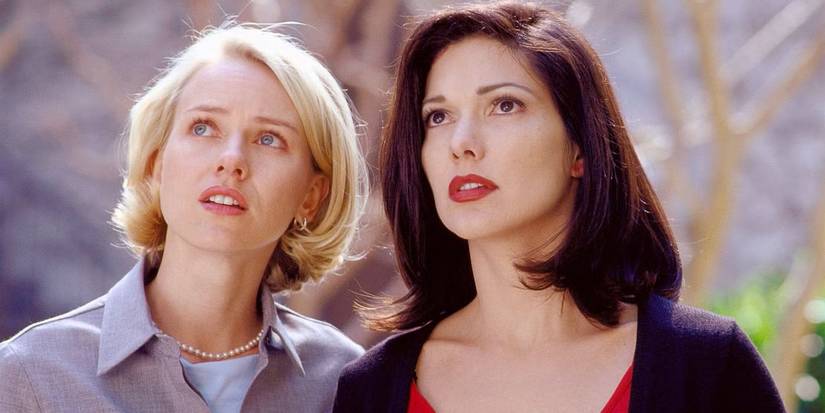
“No hay banda… there is no band.” Speaking of great, challenging films, no movie fits that description better than David Lynch‘s opaque magnum opus. Mulholland Drive features Naomi Watts as a woman suffering from amnesia. The story kicks into gear after she teams up with an aspiring actress to uncover her identity in Los Angeles. But as the mystery unfolds, the narrative fractures, revealing a darker and more ambiguous reality beneath the surface.
Lynch structures the movie like a dream (or nightmare) where logic is fluid and meaning is elusive. The plot is deliberately disjointed, with scenes that seem to contradict or reinterpret one another. Conversations pivot from naturalistic and mundane to surreal and phantasmagoric. In this world, identity is an illusion, Hollywood is a dark fantasy, and two contradictory versions of reality overlap. All of this is either intricate and masterful or frustrating and senseless, depending on your point of view.


Mulholland Drive
- Release Date
-
October 19, 2001
- Runtime
-
147 minutes
- Director
-
David Lynch
- Writers
-
David Lynch


You must be logged in to post a comment Login