Entertainment
10 Most Perfect Romantic Movies of the Last 40 Years, Ranked

Over the course of the last 40 years, filmmakers from all around the world have delivered several of the greatest romantic movies of modern times. This is a genre that has always evolved with the times, and from 1986 until the present, tracking the different ways in which artists have depicted romance on film results in a fascinating new understanding of what the genre as a whole can achieve.
Whether it’s an international indie masterpiece like Past Lives or a mainstream Hollywood production like Eternal Sunshine of the Spotless Mind, these films are the best of what modern romance has to offer. They can be poignant or purely romantic, dramatic or more comedic, down-to-Earth or mixed with some other kind of genre. Whatever the case, they should all be considered essential viewing.
10
‘Past Lives’ (2023)

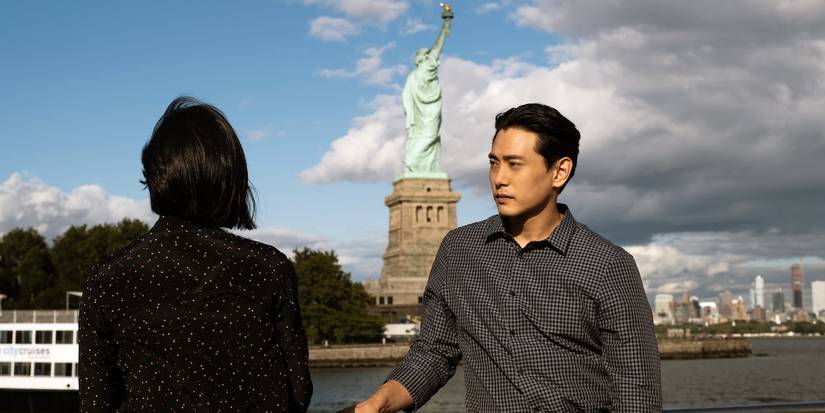
It’s impressive that a film as masterful and truly perfect as the romance drama Past Lives is Celine Song‘s directorial feature debut. It’s one of the most perfect A24 movies ever, with a semi-autobiographical plot inspired by real events from Song’s life. Bolstered by a trifecta of exceptional performances by Greta Lee, Teo Yoo, and John Magaro, it’s one of the greatest dramas of the 2020s so far.
There are no cheap clichés here, no villain, no traditional sense of conflict, no riding off into the sunset in a moment of romantic triumph. Song stays admirably true-to-life in this emotionally stirring study of destiny, romance, and the human condition, which ultimately amounts to one of the most beautifully bittersweet outings that the romance genre has ever seen.
9
‘Brokeback Mountain’ (2005)
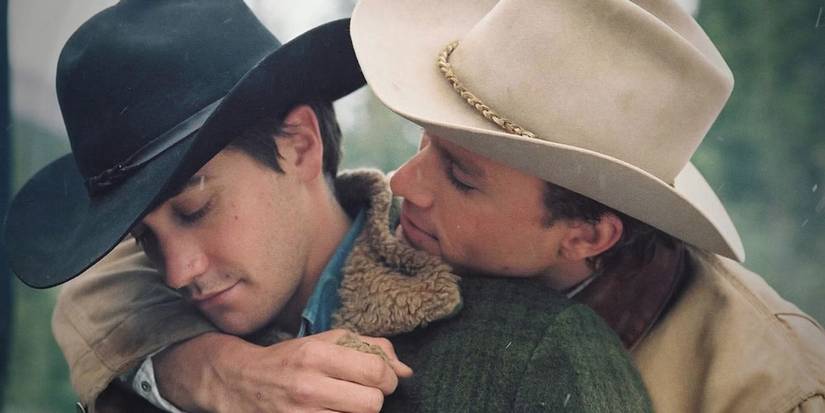
Those who love sad romance dramas ought to check out Brokeback Mountain, which has some of the saddest stuff that the genre has to offer. It’s one of the best R-rated Westerns of the 21st century, anchored by Heath Ledger and Jake Gyllenhaal‘s powerhouse lead performances. Praised by many as the greatest LGBTQ+ film ever produced by a big Hollywood studio, it’s a must-see for anyone who loves this genre.
Brokeback Mountain essentially functions as a sort of anti-Western, subverting the traditional tropes and imagery of the genre in favor of a delectably progressive study of masculinity and love. Thematically layered, impeccably performed, and gorgeously directed by Ang Lee, it stirred some controversy back in 2005, but has aged as one of the most acclaimed romance films of the 2000s.
8
‘Three Colours: Red’ (1994)


Krzysztof Kieślowski is perhaps the greatest and most iconic of all of history’s Polish filmmakers, and his filmography contains an admirable number of cinematic masterpieces. One of them is the final installment of his Three Colours trilogy, Three Colours: Red. Starring Irène Jacob at her very best, it’s the perfect way to close off one of the heaviest movie trilogies of all time.
It’s one of the most beautifully complex films ever made about the nature of human connections, a captivating masterpiece with a well-deserved Tomatometer score of 100% on Rotten Tomatoes. It’s made all the more special by the fact that it almost functions as some kind of anti-romance, diving deeper into the very concept of intimacy and subverting what anyone might expect from a film about romantic love.
7
‘A Brighter Summer Day’ (1991)

The four-hour-long coming-of-age epic A Brighter Summer Day is one of the greatest Taiwanese movies ever made, directed by the greatest of all Taiwanese filmmakers, Edward Yang. It’s one of the most important examples of the New Taiwanese Cinema movement, a fascinating period piece whose engrossing narrative spans several years.
This is another instance of a cinematic masterpiece whose 100% score on Rotten Tomatoes is perfectly deserved. A Brighter Summer Day is essentially faultless, a melancholic and politically-charged portrait of Taiwanese identity that can be enjoyed by any cinephile, regardless of their nationality. It’s grand, complex, and beautifully immersive, making each minute of its daunting runtime entirely worth it.
6
‘Portrait of a Lady on Fire’ (2019)

Paris specifically, and France at large, are often considered the home of love and romance. As such, it’s no surprise that France is where Céline Sciamma‘s Portrait of a Lady on Fire, the most perfect romance film of the 2010s, comes from. It works both as a richly lavish period piece and a soul-stirring romantic drama, as well as one of the movies with the most groundbreaking female representation.
How could a film with lead performances as perfect as those offered here by Noémie Merlant and Adèle Haenel not be perfect itself? Add to that the seductive, absolutely eye-popping female gaze with which Sciamma approaches the story, and you get one of the most gorgeous movies the romance genre has ever delivered. Full of yearning and surreal eroticism, this is some of the best filmmaking that the 2010s ever saw.
5
‘Cinema Paradiso’ (1988)
The Italian-French coming-of-age drama Cinema Paradiso is widely recognized for having helped revitalize Italy’s film industry, and that should hardly be a surprise. It is, after all, one of the most perfect films ever made. Directed by Giuseppe Tornatore and with one of the greatest scores in cinema history by Ennio Morricone and his son Andrea, it’s the peak of what modern Italian cinema has to offer.
Cinema Paradiso covers pretty much the whole spectrum of emotions that a viewer can feel, from the ecstasy of its opening moments, to the poignancy of its sadder bits, to the beauty of its romantic elements, to the life-changing beauty of one of the greatest endings of any movie in history. It’s one of the best crowd-pleasing dramas ever made, and then some.
4
‘Y Tu Mamá También’ (2001)

Y Tu Mamá También is the kind of erotic drama that could have only been made outside Hollywood. Indeed, Alfonso Cuarón returned to his native Mexico to make one of the best NC-17 movies of all time, a movie that’s about the coming-of-age of its three protagonists as it is about the coming-of-age of its setting, Mexico itself. The way Cuarón intertwines his characters’ stories with those of the unseen people of his country is a spectacle to behold.
But aside from being spectacular, Y Tu Mamá También is also irresistibly steamy, the most flawless erotic drama of the last 40 years. With Diego Luna, Gael García Bernal, and Maribel Verdú at their best and Cuarón in full control of his craft, this profoundly thought-provoking and ultimately quite depressing film may not be the happiest of all romantic movies, but it sure is one of the best.
3
‘Eternal Sunshine of the Spotless Mind’ (2004)
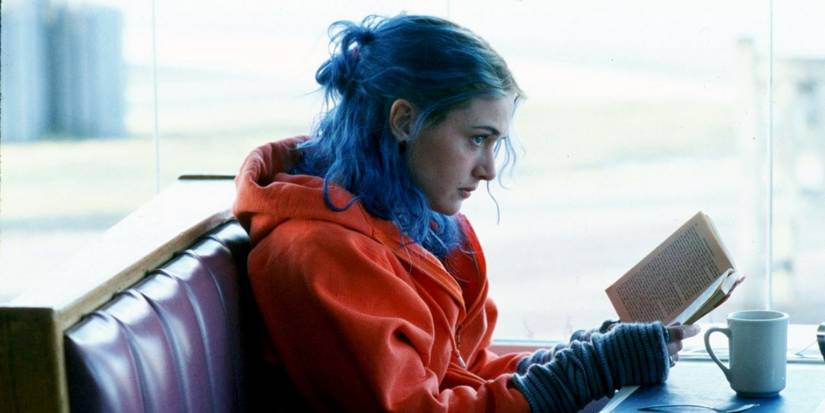
Initially developed as a concept in the late ’90s by director Michel Gondry, who then approached Charlie Kaufman to write the script, Eternal Sunshine of the Spotless Mind eventually materialized in the form of one of the best soft sci-fi masterpieces ever. Kaufman is perhaps the most talented screenwriting currently working in Hollywood, and there’s no example of his work more perfect than this.
Eternal Sunshine explores the concept of memories and how they relate to romance and human connections in ways too complex and thought-provoking to properly put into words. With Jim Carrey and Kate Winslet both delivering some of the strongest work of their careers, Gondry directing with masterful surrealism and poignancy, and Kaufman’s script being as flawless as it is, there’s no doubt that this is the best sci-fi romance movie ever made.
2
‘In the Mood for Love’ (2000)

Right as the 20th century was coming to a close, Hong Kong auteur Wong Kar-wai released what most cinephiles still remember as his best work to date: In the Mood for Love, which one may go so far as to call one of the best romantic movies of the last 100 years. Starring the legendary Maggie Cheung and Tony Leung, this is no traditional sort of romantic film.
Indeed, this is an anti-romance masterpiece built entirely on restraint and unfulfilled desire, its characters choosing dignity and moral duty over the passion that’s so often front-and-center in most romance dramas. This creates a film that’s undeniably sad, but there’s also an irresistible beauty to the way Wong approaches the story that makes it endlessly rewatchable in spite of the poignancy of watching it.
1
‘Before Sunset’ (2004)

Richard Linklater is a filmmaker unlike any other, and his Before trilogy is perhaps his magnum opus. Before Sunrise is a beautiful coming-of-age romance drama that re-defined ’90s indie romance, and Before Midnight is the most perfect way imaginable to bring this refreshingly mature study of love and romance to a close. But it’s easily Before Sunset, one of the best second chapters of any movie trilogy, that stands the test of time the most.
Playing out in real time with some of the most natural-sounding dialogue that the romance genre has ever seen, this masterpiece is held together by Linklater’s airtight direction just as much as it is by Ethan Hawke and Julie Delpy‘s perfect performances. Masterfully paced and without a single dead spot in its admirably simple narrative, this is the most perfect romance movie of the last four decades.


You must be logged in to post a comment Login