Entertainment
10 Most Perfect Sci-Fi Shows of the Last 20 Years

Science fiction television has explored everything from time loops and alternate histories to artificial intelligence and virtual realities. But the genre’s greatest shows understand that no matter how outlandish the premise may be, compelling sci-fi is ultimately rooted in human stories. As technology becomes increasingly intertwined with everyday life, these series use futuristic concepts to examine human choices.
Over the last two decades, television has delivered some of the most ambitious sci-fi stories ever made, pushing the boundaries of imagination while remaining grounded. Whether imagining the pursuit of a perfect utopia or charting humanity’s future among the stars, here are the most perfect sci-fi shows of the last 20 years, ranked.
10
‘Bodies’ (2023)

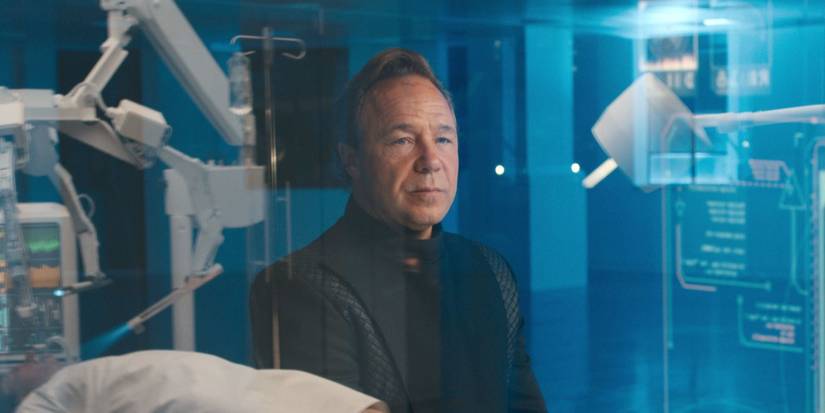
One murder mystery is already complicated enough. But when four English detectives from four different eras find the same dead body in the same alleyway, something’s clearly amiss. Bodies is a trippy take on the bootstrap paradox, a.k.a. an infinite time loop that seems to go on forever. But these detectives each have their own tricks to figure out who is behind the murder and break the loop.
The thrill of Bodies lies in watching how police work is done across these four periods, and the discrimination these detectives face in their respective eras, which only complicates their work. Whether it’s 1941, when Jews were heavily marginalized, or 2023, where being a Muslim in racially charged England is still a reality, Bodies is both a solid sci-fi work and a commentary on societal beliefs.
9
‘Years and Years’ (2019)

Set over 15 years, Years and Years chronicles the lives of the Lyons family. Average though they may be, the world around them is slowly crumbling under authoritarianism and rising anti-immigrant sentiment. With populist leader Vivienne Rook (Emma Thompson) driving the nation through fear and hate, it’s people like the Lyons who are pulled apart during a global crisis.
The genius behind Years and Years is that dystopia doesn’t happen overnight, which gives the show its realism. 15 years ago, people wouldn’t have imagined talking to an AI machine through a phone screen, yet here we are. Like real life, technology in Years and Years slowly blurs the lines between objective truth and subjective truth to fuel political means, no thanks to deepfakes and hoaxes.
8
‘Night Sky’ (2022)

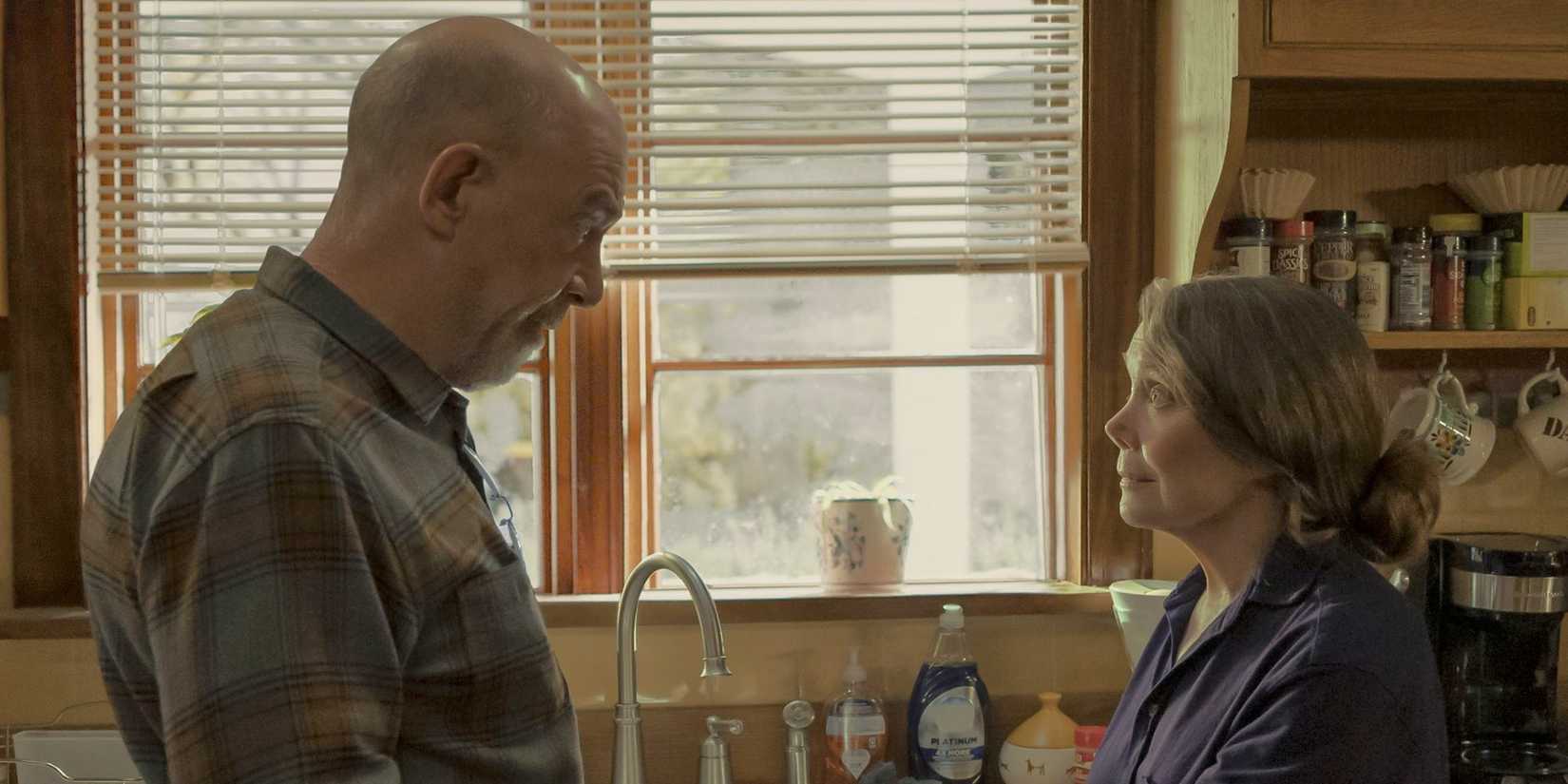
Most sci-fi stories focus on young heroes confronting the unknown, but Night Sky takes a different approach by placing an elderly couple at the center of its mystery. Irene York (Sissy Spacek), a retired teacher struggling with illness, and her husband, Franklin (J. K. Simmons), live a quiet life in rural Illinois. Hidden beneath their shed, however, is a chamber that transports them to a mysterious, deserted planet.
Though it lasted only one season, Night Sky proves that sci-fi belongs to everyone, showing how ordinary people respond to the extraordinary. While younger, more tech-savvy characters might focus on understanding the mechanics of the unknown, Irene and Franklin approach it with empathy, resilience, and a deeply human perspective. In doing so, Night Sky suggests that compassion matters far more than youth or technological expertise.
7
‘Black Mirror’ (2011–Present)
Black Mirror immediately took the world by storm with its infamous pig-intercourse scene in its debut episode. If that’s any indication that the anthology series isn’t afraid to push boundaries, it does its job well. Each episode tells a different story set in a world shaped by emerging technology, from virtual reality to simulated worlds.
But for all of its hard tech, Black Mirror is really a story about how technology exposes the uglier side of human nature rather than making life easier, as it’s supposed to. Whether it’s a memory implant that allows someone to replay every interaction with his wife or a digital afterlife used to overcome mortality, the series repeatedly shows that technology comes with consequences. At its most extreme, those consequences can even lead to death.
6
‘For All Mankind’ (2019–Present)

No other show commits more to the alternate Space Race plot than For All Mankind. Set in a world where the Soviet Union beats the United States to the moon, the series prolongs the space race with even higher stakes. The moon is no longer the objective, and these astronauts have their sights set on building life on Mars.
With each season set in a different decade, For All Mankind shows how changing eras affect not only the technology required to send people into space, but also the emotional toll on its astronauts, engineers, and their families as they grapple with ambition, loss, aging, and the sacrifices required to push humanity forward. And with every breakthrough comes a new set of political and societal consequences that can either empower humanity or expose its darker impulses.
5
‘Pluribus’ (2025–Present)

Pluribus challenges the idea that a perfect society can ever be truly ethical. Carol Sturka (Rhea Seehorn) is one of just 13 people immune to an extraterrestrial virus that has transformed humanity into a hive mind. Unlike most sci-fi dystopias, the infected — known as the Others — have created a peaceful, efficient world dedicated to making everyone happy. Yet it is the immune who suffer, forced to live outside a society that insists happiness is only one infection away.
The show’s central conflict lies in Carol’s refusal to join. Though surrendering would end her isolation, she questions whether happiness imposed by a collective is freedom at all. This philosophical conflict is the momentum that makes Pluribus addictive to watch from start to finish — the show sees Carol repeatedly questioning whether a perfect society is worth having when nobody gets to choose it.
4
‘Severance’ (2022–Present)
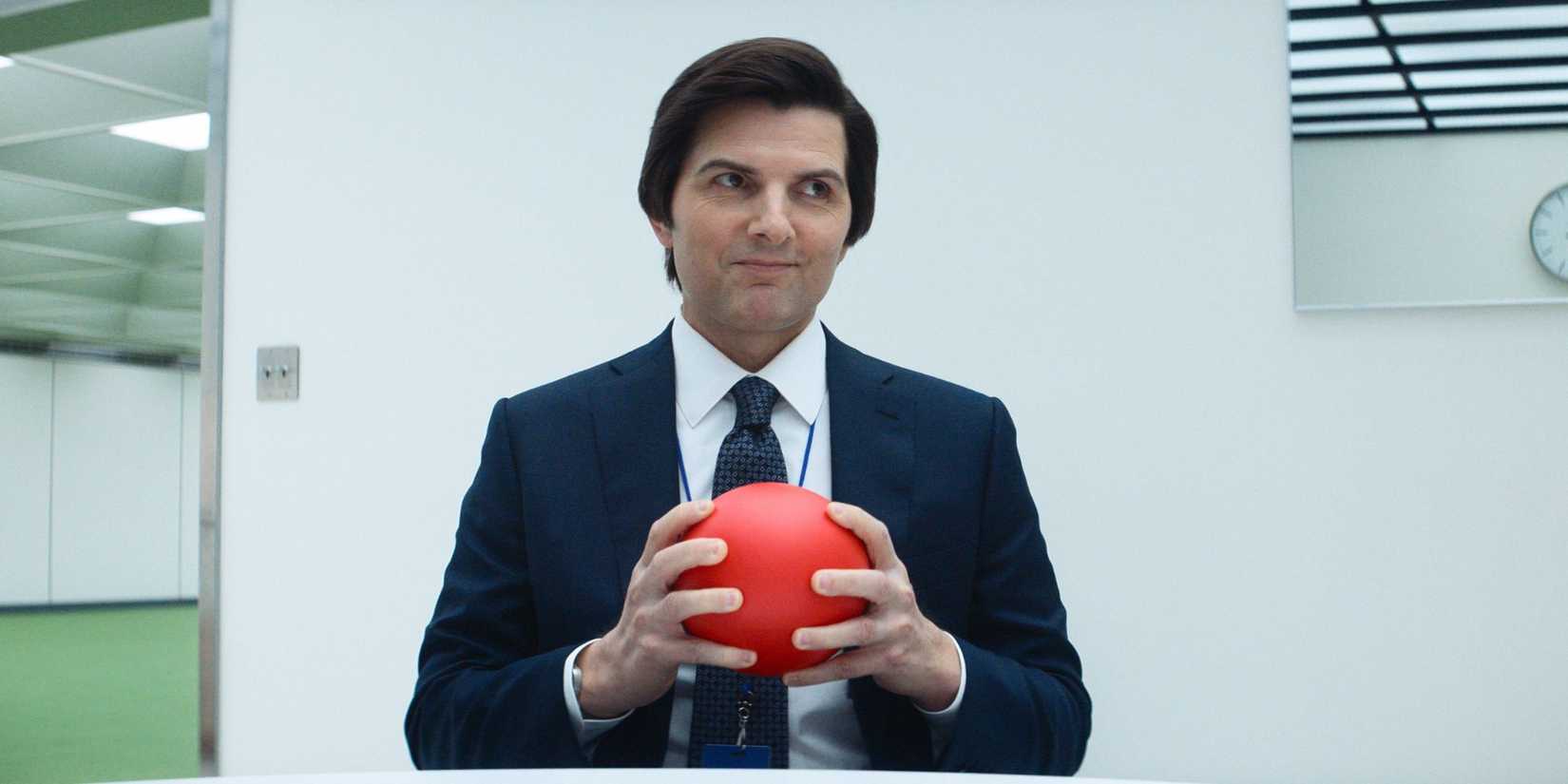
Severance is the ultimate commentary on corporate culture. At Lumon Industries, employees undergo a procedure called severance that surgically splits their consciousness into two identities: an “outie” who exists outside the office and an “innie” who knows nothing beyond work. Designed to create the ultimate work-life balance, the process instead traps employees in a dystopian system that strips away their autonomy.
Severance ups the scares by turning the dream of perfect work-life balance into a nightmare. They never go home, never sleep, never see family, and exist solely to labor for Lumon. More eerily, they’re not allowed to question their superiors. One moment it’s funny because of the absurd office culture; the next it’s disturbing because the characters are trapped in a system they barely understand.
3
‘Andor’ (2022–2025)

Set before Rogue One, Andor follows Cassian Andor’s (Diego Luna) transformation from a cynical survivor into an important asset of the Rebellion. Removed from the Jedi and Sith conflicts, Andor explores the formation of the Rebel Alliance through espionage and resistance. Alongside Mon Mothma (Genevieve O’Reilly) and Luthen Rael (Stellan Skarsgård), Cassian witnesses the Empire’s oppression and the sacrifices required to challenge it.
Rather than focusing on destiny or mythic heroes, Andor examines authoritarianism through a deeply human lens. Real life is no stranger to political violence, corporate corruption, and the moral compromises required to fight tyranny. It’s this mature and grounded approach that sets Andor apart, as the series asks what people are willing to sacrifice for freedom, whether their reputation, relationships, morality, or even their lives.
2
‘The Expanse’ (2015–2022)
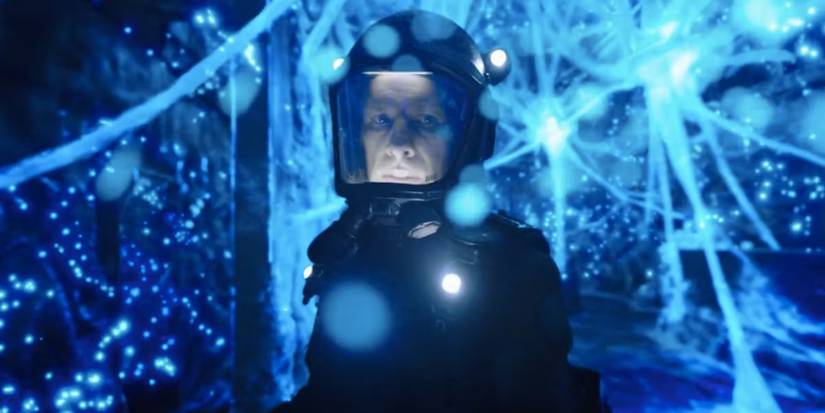
Based on the novel series by James S. A. Corey, The Expanse is set in the 23rd century, when humanity has colonized the Solar System. Earth is governed by the UN, Mars has become an independent military power, and Belters live in harsh conditions while supplying the resources that keep the inner planets running.
Despite technology being light-years more advanced, humankind in The Expanse has not changed one bit. The Solar System exists in a Cold War-like state, with the constant possibility of conflict looming over Earth, Mars, and the Belt. Yet the real victims are the working-class Belters, who are trapped in a system that depends on their labor while denying them access to basic resources. The series also refuses to offer easy heroes, as each character’s good intentions often carry risky consequences.
1
‘Dark’ (2017–2020)

Dark is proof that some of the best sci-fi shows are the ones that reward viewers for the effort they invest. At first, the Netflix series follows a missing-child investigation in the small German town of Winden. However, the mystery soon becomes far more complex when it is linked to a time-traveling wormhole connecting 1953, 1986, and 2019.
Traditionally, the goal of solving a mystery is to identify the perpetrator. Dark, however, challenges viewers to ask not only who is responsible, but also when an event occurred and how it influences events decades earlier or later. The series brilliantly shows how characters’ attempts to change events often become the very cause of them — all made possible thanks to its combination of hard sci-fi concepts and incredible casting.

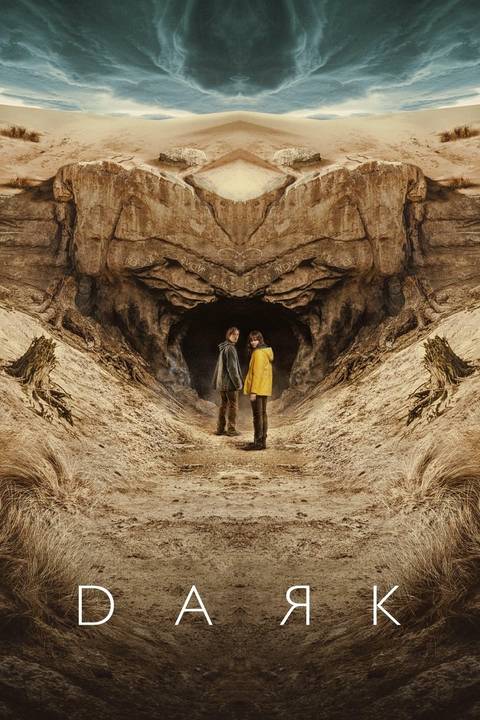
Dark
- Release Date
-
2017 – 2020
- Network
-
Netflix
- Showrunner
-
Jantje Friese
- Directors
-
Baran bo Odar
-

Louis Hofmann
Jonas Kahnwald
-

Lisa Vicari
Martha Nielsen

You must be logged in to post a comment Login