Entertainment
10 Most Subversive Animated Movies of All Time

Most rebellious animated movies are usually the darkest ones. But then you realise that the subversive films simply take ideas that most animated movies treat as unquestionable, for instance, happy endings, good versus evil, perfect families, noble heroes and quietly pull them apart until those ideas look completely different. That is probably why these movies have aged so well.
They trust the audience to connect the dots instead of announcing what they’re trying to say, which makes discovering those ideas far more satisfying. Here are ten animated movies that challenged expectations, questioned familiar stories, and proved that some of the boldest filmmaking has happened in a medium people still underestimate.
10
‘Chicken Run’ (2000)


When people remember Chicken Run, they usually remember the chickens building an airplane or Rocky (Mel Gibson) crashing into the farm pretending he can fly. I always come back to something else. The film is mainly about workers who are trapped inside a system that is designed to profit from them, where every failed escape attempt ends with somebody disappearing forever. That is an incredibly bleak idea for something sold as family entertainment, but it is worth a watch.
Maybe that’s why it has aged so well. Ginger (Julia Sawalha) is not trying to become special or discover who she is. She simply refuses to accept that survival is the best life available to her, while everyone around her slowly starts believing escape is impossible. The jokes are still funny, but they almost distract you from how angry and serious the story actually is. Beneath all the clay animation and visual gags sits a prison-break movie that questions authority, exploitation, and the comfort of accepting the way things have always been.
9
‘The Triplets of Belleville’ (2003)

The first time I watched The Triplets of Belleville, I kept waiting for somebody to explain what was happening. They never did, and that turned out to be the point. Champion’s grandmother, Madame Souza (Monica Viegas), barely speaks as she crosses an ocean searching for her kidnapped grandson. Meanwhile, the famous Triplets help her in ridiculous but very natural ways.
That confidence that the film has in its storyline and cast is exactly what makes it so unusual. Most family films are terrified that children might miss something, so every emotion gets explained and every joke gets underlined. However, you won’t see it with The Triplets of Belleville. It asks you to pay attention, sit with silence, and figure things out for yourself. Even its strange, exaggerated world says something about modern society without ever stopping to make a grand speech.
8
‘The Iron Giant’ (1999)
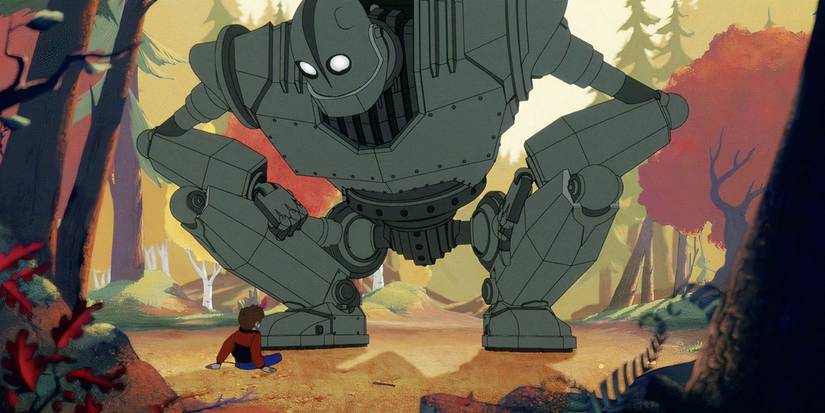
People often describe The Iron Giant as a children’s movie about friendship. I don’t think that’s wrong, but it barely scratches the surface. Hogarth Hughes (Eli Marienthal) finds a machine that everyone else immediately assumes must be a weapon simply because of what it was built to do. The adults never ask whether it has a choice.
That idea feels even more relevant now than it did in 1999. The Giant spends the entire film trying to decide if his purpose has already been chosen for him or he can become someone else. It is a surprisingly mature conversation about fear, identity, and the way societies create enemies before they understand them. I cannot stop but think that the whole film is based on this one question that if the whole world expects you to become a monster, how difficult is it to choose kindness instead?
7
‘Persepolis’ (2007)

Image via Diaphana Distribution
I love that Persepolis refuses to turn Marjane Satrapi (Chiara Mastroianni in the French version) into either a hero or a victim. She is stubborn, funny, immature, angry, hopeful, and selfish depending on the moment. That honesty is the best part of the film because movies about war and revolution often reduce ordinary people to symbols. But Persepolis never does.
The political events are obviously important, but they are not the only story being told. Marjane worries about fitting in, embarrasses herself, argues with her family, falls in love, makes mistakes, and regrets them. Those moments make the larger history feel very real instead of distant. The film in the end reminds you that history happens to people who still have to wake up, go to school, disappoint their parents, and figure out who they want to become.
6
‘Coraline’ (2009)

As a child, I thought the Other Mother was terrifying because of the button eyes. Watching Coraline again as an adult, I realized the buttons are probably the least frightening thing about her. The Other Mother (Teri Hatcher) never forces Coraline (Dakota Fanning) to stay. She simply offers everything a lonely child thinks she wants until leaving starts to feel like the wrong decision.
That is a much darker idea than people usually give the film credit for. Nothing about the Other World looks frightening at first. It is brighter, kinder, more exciting, and filled with adults who seem willing to pay attention. The horror comes from realizing that manipulation does not always begin with threats. It often begins by making someone feel understood. Coraline hides one of animation’s sharpest warnings inside a gothic fairy tale, and that is exactly why it still unsettles audiences years later.
5
‘Anomalisa’ (2015)

Every character in Anomalisa except two shares the exact same face and the exact same voice, played by Tom Noonan, regardless of whether they’re a taxi driver, a hotel clerk, a child, or Michael Stone’s own wife. Michael (voiced by David Thewlis) can’t tell people apart anymore, and Charlie Kaufman doesn’t explain that as a metaphor, he builds it directly into the puppets. You can see the seam lines running across their faces, something stop-motion animation usually spends a fortune hiding.
Then Michael meets Lisa (Jennifer Jason Leigh), the one voice that sounds different from everyone else, and the film gives them a sex scene shot with the same patience and awkward pauses a live-action drama would use, which got the film an NC-17 rating before it was cut down to an R. Animation almost never asks to be taken that seriously as a medium for adult intimacy. Kaguya’s sketch lines fade as her freedom does; here, the puppet seams stay visible on purpose, the whole way through.
4
‘The Tale of the Princess Kaguya’ (2013)

The Tale of the Princess Kaguya looks unfinished on purpose, all loose watercolor lines and bare white space, which is strange for a Studio Ghibli film given how polished the studio’s other movies usually look. Director Isao Takahata spent eight years on it, and the softness of the drawing isn’t a budget shortcut, it tracks with what’s happening to Kaguya (voiced by Aki Asakura). The more her father forces her into noble clothes, blackened teeth, and an arranged marriage, the more the lines around her start to fray and blur, as if the film itself is losing its grip on her the same way she is.
The story ends with Kaguya taken back to the moon against her will, stripped of every memory of the life and people she loved on Earth, and there’s no rescue waiting in the final act. Takahata died five years after finishing it, and this was his last film. It says something that his final statement as a director was about a girl who never got to choose her own ending.
3
‘Princess Mononoke’ (1997)
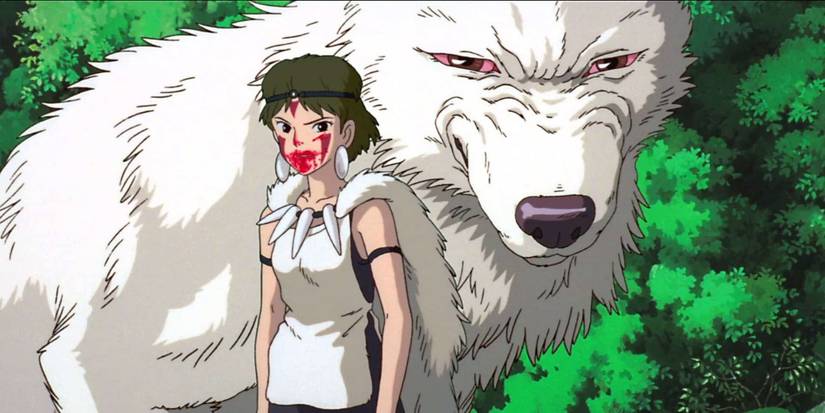
Lady Eboshi (voiced by Minnie Driver) gives lepers and former sex workers real jobs and real dignity inside Irontown, and she’s also the reason the forest is dying and the Forest Spirit is about to lose its head. San (Claire Danes) was raised by wolves and will kill any human who threatens her forest without hesitation. Hayao Miyazaki gives neither of them the villain role, and Ashitaka (Billy Crudup), the character stuck between them, never fully cures the curse eating away at his arm, not even by the film’s final shot.
When Harvey Weinstein’s Miramax wanted to trim the film for its American release, Miyazaki’s producer reportedly mailed Weinstein a real katana with a note attached that just said “no cuts.” The film stayed intact, arms getting severed and all. An animated fantasy that refuses to hand you a clean winner, backed by a director willing to threaten a studio executive with a sword to protect that refusal, is a rare thing.
2
‘Watership Down’ (1978)

British censors rated Watership Down a U, meaning suitable for the whole family, and then the film opens with a rabbit creation myth about a god of death called the Black Rabbit of Inlé before moving into scenes of rabbits drowning, getting gassed inside their own warrens, and tearing each other apart in a fight against General Woundwort. When the BBC aired it in a teatime family slot years later, the switchboard reportedly lit up with parents complaining about what their kids had just watched.
John Hurt voices Hazel, the rabbit leading his warren to safety, and the film never once cuts away from what happens to the rabbits who don’t make it. Bambi’s mother dies offscreen with a gunshot you only hear. Watership Down shows you the blood directly, frame by frame, and dares you to still call it a children’s film afterward.
1
‘Shrek’ (2001)
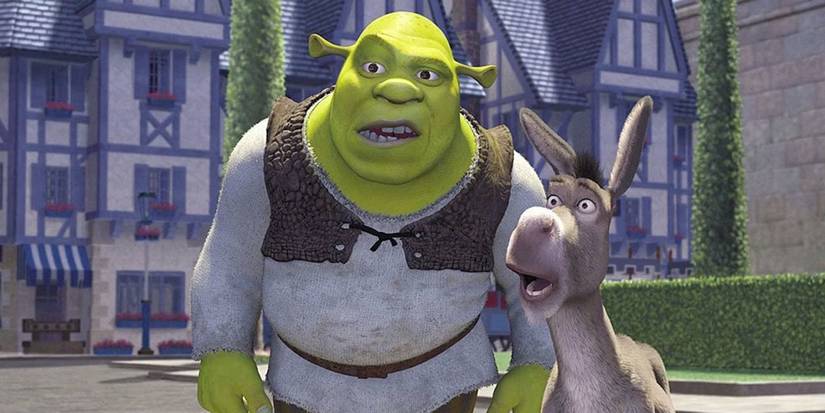
Looking back, it is almost impossible to overstate how much Shrek changed mainstream animation. Shrek (Mike Myers) was never interested in becoming the handsome prince, while Princess Fiona (Cameron Diaz) turned out to be the person the fairy tale was trying to “fix.” Even Lord Farquaad (John Lithgow) exists to mock the perfect kingdoms that older animated classics spent decades celebrating.
The clever jokes are only part of the reason the film became such a phenomenon. What really made Shrek feel fresh was its willingness to question stories that audiences had accepted for generations. It laughs at fairy-tale traditions, but it also asks why those traditions existed in the first place. Beauty, heroism, romance, and happily-ever-afters all get turned upside down without ever feeling cynical. Plenty of animated films have been funny since then. Very few have been bold enough to rewrite the rules of the genre while millions of people were laughing.

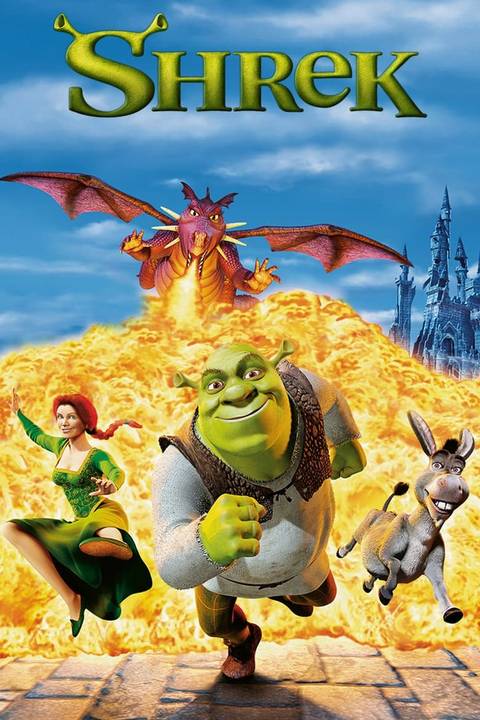
Shrek
- Release Date
-
May 18, 2001
- Runtime
-
90 minutes
- Director
-
Andrew Adamson, Vicky Jenson
- Writers
-
Terry Rossio, Joe Stillman, Roger S.H. Schulman, Ted Elliott, William Steig, J.M. Barrie, Carlo Collodi
-
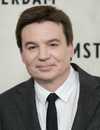
Shrek / Blind Mouse (voice)
-
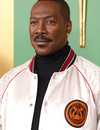
Eddie Murphy
Donkey (voice)

You must be logged in to post a comment Login