Entertainment
10 Most Subversive Thriller Movies of All Time

If you’ve seen enough movies, it becomes surprisingly easy to predict where a story is going to go. MacGuffins become more apparent. You begin to automatically suspect the overly nice side character. And the moment you see a locked drawer or a gun hanging on the wall, you already know it’s coming into play before the credits roll, because that’s how Chekhov’s gun works.
This is precisely why the films on this list stand out. These movies use your own movie literacy against you, carefully setting up the obvious payoff you’re sure is coming before taking the story in a completely different direction. Here are the 10 greatest thrillers ranked by just how subversive they are.
10
‘Knives Out’ (2019)

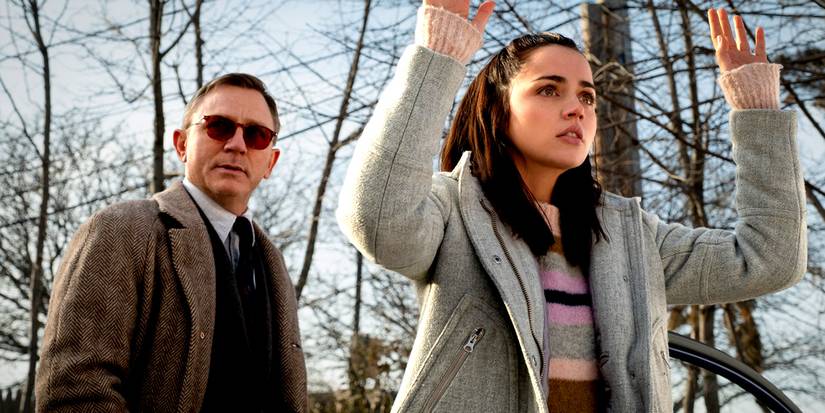
Rian Johnson‘s Knives Out opens like a classic Agatha Christie whodunit. Crime novelist Harlan Thrombey (Christopher Plummer) is found dead the morning after his 85th birthday party. His extended family is full of obvious suspects, and famed detective Benoit Blanc (Daniel Craig) shows up to sort out who did it.
Then, right after the first act, Johnson just tells you exactly what happened and how Harlan died, and the movie goes from a whodunit to a high-stakes crime thriller where you are forced to root for the murderer to evade the detective. And then, right at the end, Johnson once again subverts your expectations with yet another phenomenal plot twist that completely reframes everything you’d seen before.
9
‘Speak No Evil’ (2022)

Christian Tafdrup‘s Speak No Evil follows Bjørn (Morten Burian) and Louise (Sidsel Siem Koch), a couple who meet a Dutch family on vacation and later accept an invitation to spend a weekend at their countryside home. The setup plays like a slow-burning social thriller. The kind where the dread keeps building until the visiting family finally wises up and makes a run for it in the third act.
But Tafdrup subverts the genre’s most basic promise, that the people we’re following will eventually fight back and escape. That escape never comes, and the film ends in tragedy with zero catharsis. Speak No Evil holds a certified fresh 83% critic rating on Rotten Tomatoes, and it’s a much bleaker watch than its 2024 Hollywood remake.
8
‘No Country for Old Men’ (2007)
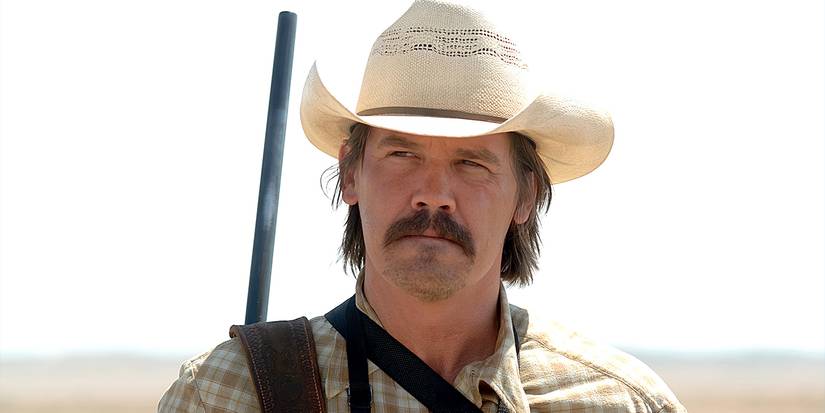
The Coen Brothers‘ adaptation of Cormac McCarthy‘s novel follows Llewelyn Moss (Josh Brolin), a welder who stumbles onto a satchel of drug money and instantly becomes the target of Anton Chigurh (Javier Bardem), a psychopathic hitman who begins tracking him across West Texas. This is a movie that throws almost every screenwriting rule out of the window. Moss is set up as the protagonist, but the expected cat-and-mouse climax between the hero and the villain never happens. Instead, Moss is killed unceremoniously off-screen by minor characters.
The film also operates entirely without a background soundtrack. Woody Harrelson shows up as a bounty hunter in a sharp white suit and hat, looking every bit like the competent hero who’s about to save the day, only to get shot dead a few scenes later. And Sheriff Ed Tom Bell (Tommy Lee Jones) simply retires in defeat, confused by a modern, senseless world. Chigurh never gets caught, and evil just gets to walk away.
7
‘The Nice Guys’ (2016)

Shane Black‘s buddy comedy thriller pairs private eye Holland March (Ryan Gosling) with enforcer Jackson Healy (Russell Crowe) as they dig into a missing girl case tangled up with a porn star’s death in 1970s Los Angeles. Black masterfully subverts Hollywood cliches for comedic effect throughout the movie. At one point, March is chasing a lead and runs into a locked door, so he wraps his hand in a cloth to punch through the window the way every movie detective before him has done it. But he ends up slicing his hand open and lands in the hospital, and we never find out what was behind that door.
The entire film also appears to be building toward Gosling finally overcoming his alcoholism, only to end with Crowe’s character taking up drinking again in the end. It pulls a similar trick with an ankle holster introduced early in the story. Audiences naturally expect it to contain a gun that will become crucial later on, but when it’s finally needed, it’s empty. It works like an anti-Chekhov’s Gun and ends up being one of the film’s funniest scenes.
6
‘Inglourious Basterds’ (2009)

Quentin Tarantino‘s epic war movie follows two plots running side by side. The Basterds are a group of Jewish American soldiers led by Lt. Aldo Raine (Brad Pitt), hunting Nazis behind enemy lines. Meanwhile, Shosanna (Mélanie Laurent) is a Jewish theater owner hiding her identity and planning her own revenge against the Nazi high command at a film premiere. Both plans eventually converge on the same night, with Hitler himself in attendance.
Anyone watching with even a basic grasp of history knows this assassination attempt should fail, because Hitler obviously didn’t die in a Paris cinema in 1944. So, you’re watching, just waiting for something to go wrong at the last possible second. Maybe a gun jams. Maybe a bomb doesn’t go off. But… nothing happens. Tarantino just lets the plan work, gleefully rewriting history and burning the entire Nazi leadership alive in a movie theater.
5
‘Parasite’ (2019)
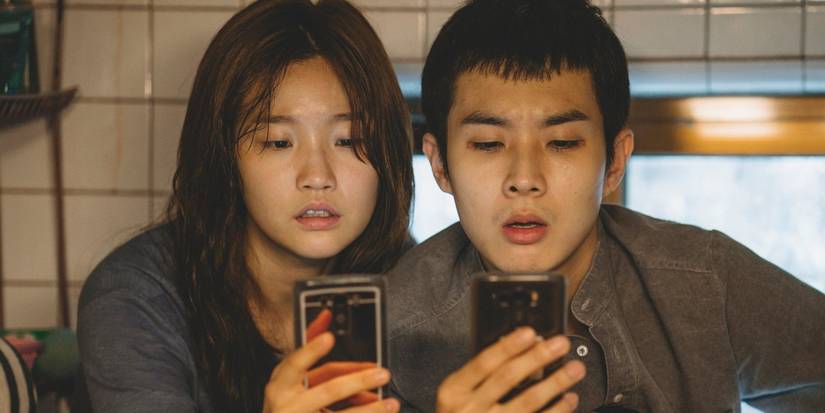
Bong Joon-ho’s South Korean masterpiece Parasite made history as the first non-English film to win the Oscar for Best Picture, and it definitely earned it. The movie opens as a dark comedy heist thriller, with the broke Kim family sneaking their way into the wealthy Park household by posing as unrelated workers. Then, about two-thirds of the way in, Bong pulls the rug out and delivers one of the greatest plot twists in modern cinema.
In one single scene, it goes from dark comedy to a full-blown horror movie. And it’s the kind of twist that completely changes the way you view everything that came before it. Throwaway lines take on new meaning. Ordinary background details suddenly become extremely unsettling. From that point on, the film just keeps getting darker and darker, building toward a crescendo until everything finally snaps in a gut-wrenching finale.
4
‘Get Out’ (2017)
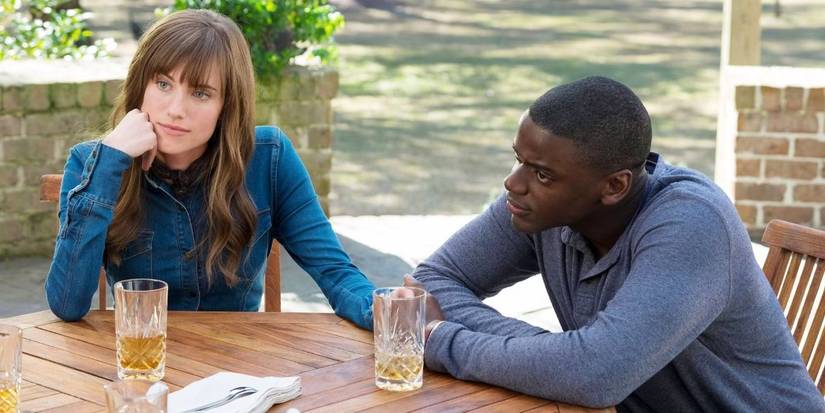
Jordan Peele‘s Get Out follows an African American photographer named Chris (Daniel Kaluuya), who is meeting his white girlfriend’s family for the first time at their secluded estate. The setup plays with familiar horror imagery: the isolated house, the unsettling staff, the creeping sense that something is deeply wrong. But Peele swaps out the genre’s usual creepy house full of backwards racists for a far more nuanced kind of danger. The family is actually full of educated white liberals who see themselves as progressive and constantly insist they aren’t racist.
But perhaps the biggest subversion comes in the final few minutes. Chris finally escapes the house, and he’s choking his girlfriend on the street, only for police lights to appear behind him. Naturally, you think he’s about to be arrested or worse, which would also drive home everything the movie had been saying about race in America. But it ends up being his friend instead of a cop, and Chris gets to walk away.
3
‘Gone Girl’ (2014)
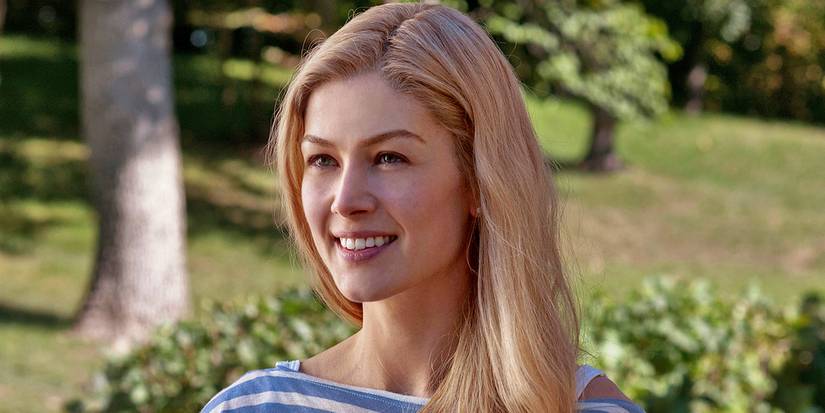
Gone Girl opens like a straightforward missing persons thriller. Nick Dunne (Ben Affleck) reports his wife Amy (Rosamund Pike) missing on their fifth wedding anniversary, and as the investigation goes on, Amy’s diary entries paint a picture of a marriage curdling into fear and even violence. And Nick ends up looking more and more like the obvious suspect.
Then, around the 1-hour mark, Amy is revealed to be alive. The diary was a meticulously staged fabrication, and she framed her own husband as part of an elaborate revenge plot. From that point on, Gone Girl stops being a missing persons mystery and becomes a psychological chess match between two people who are both far more cunning and dangerous than they let on, and the film never lets you fully root for either one of them again.
2
‘Barbarian’ (2022)

Barbarian follows a woman who rents out an Airbnb, but when she gets there, another guy is already staying on the property. With nowhere else to go, she reluctantly agrees to share the place with him for the night. From the start, Zach Cregger leans into all the usual horror tropes and makes you feel like you know exactly what kind of movie this is going to be. Then, just when you think you’ve figured it out, the film takes a hard left turn and turns into a very different kind of horror movie.
Right after that plot twist, the movie cuts to black, sits there for a moment, and then picks up with a whole new character in a completely different part of the story. If you feel like all the recent movies feel predictable and blend together, watch Barbarian. It is one of the most inventive, most unpredictable horror thrillers in recent years, and it is what turned Cregger into an overnight success story.
1
‘Psycho’ (1960)
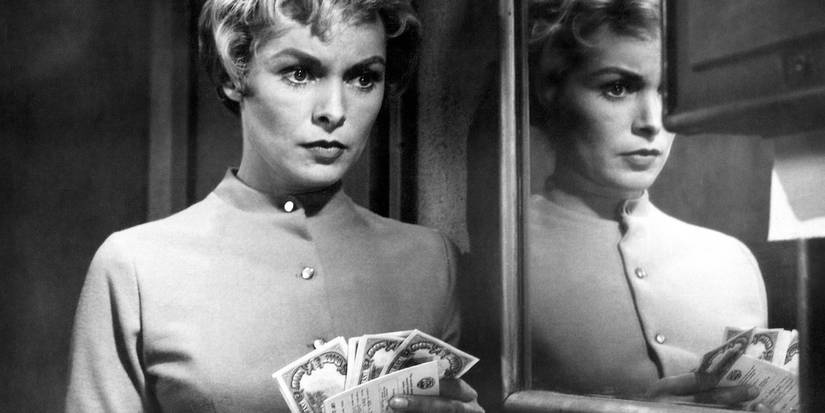
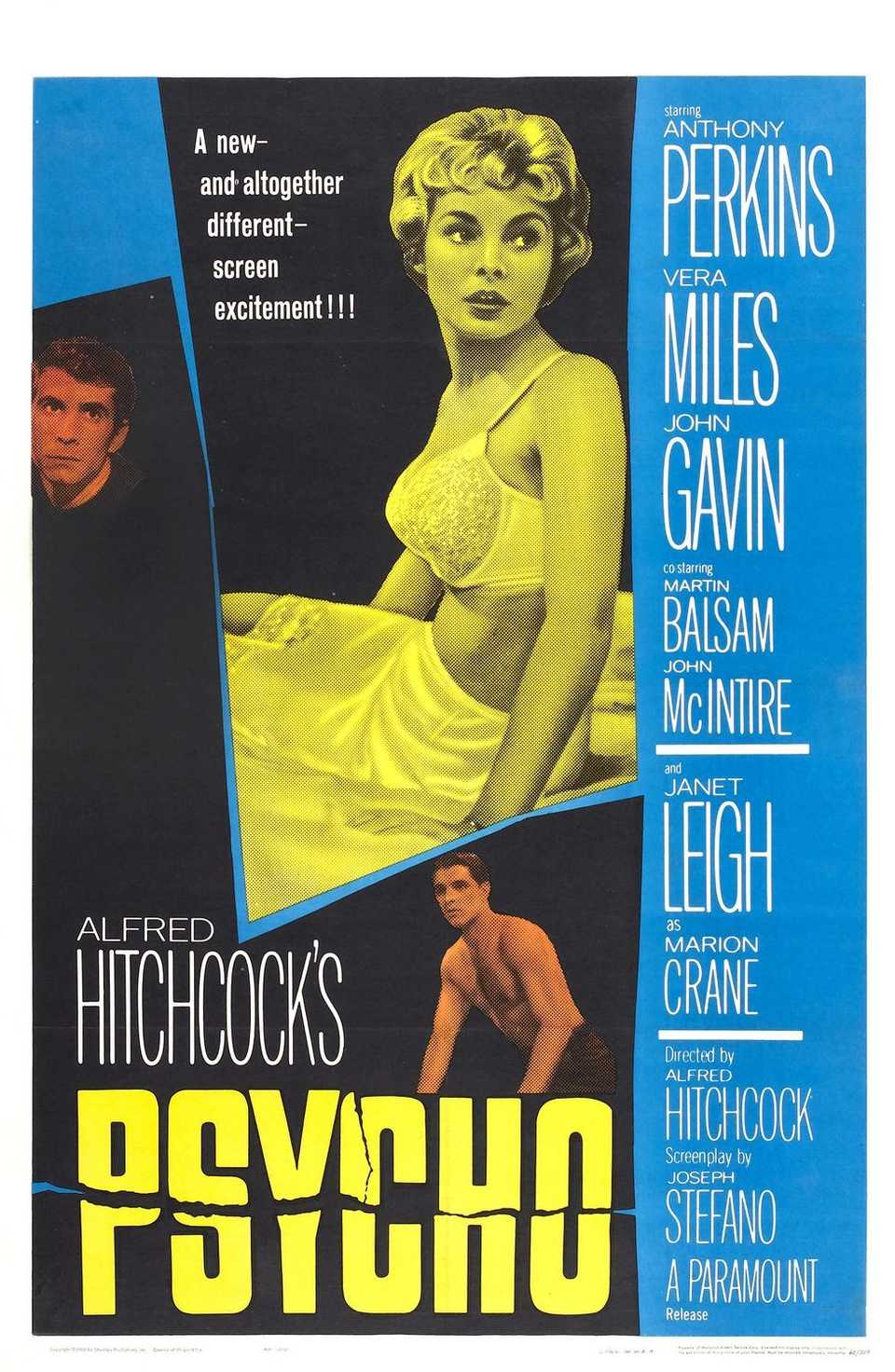
Alfred Hitchcock‘s Psycho starts with Marion Crane (Janet Leigh) stealing $40,000 from her employer and checking into the secluded Bates Motel to avoid the authorities. Then, about 40 minutes into the movie, Marion is stabbed to death in the shower, and the movie’s focus shifts entirely to her killer, Norman Bates (Anthony Perkins). Hitchcock broke nearly every rule a thriller was supposed to follow. Leigh was the biggest star in the cast, and audiences expected the lead actress to survive to the end of the movie. Killing her off less than halfway through was unthinkable at the time.
The film also pushed past what was considered acceptable under the Hays Code. The now-iconic shower scene left audiences stunned because mainstream Hollywood movies simply didn’t depict violence with that level of intensity. Viewers weren’t prepared for it. Reports from the time described moviegoers screaming, covering their eyes, and even fainting in theaters.

You must be logged in to post a comment Login