Entertainment
10 Most Universally Beloved Epic Movies of All Time, Ranked

Epic films survive for a different reason than most classics. While scale gets them in the door, it’s never alone enough to keep them alive. And therefore, the ones people keep carrying with them are the ones that take all that size, war, history, landscape, spectacle, and then pin something painfully intimate inside it: grief, vanity, sacrifice, obsession, revenge, survival, the terrible cost of wanting to become larger than an ordinary life.
That is the real thrill of the best epics. They let private emotions detonate across giant canvases. A man loses a family and topples an empire. A woman clings to love while history keeps burning down the room around her. A visionary crosses a desert and slowly starts believing the myth of himself. These ten films make the human heart look tiny against history, then somehow turn it into the biggest thing on the screen.
10
‘Braveheart’ (1995)

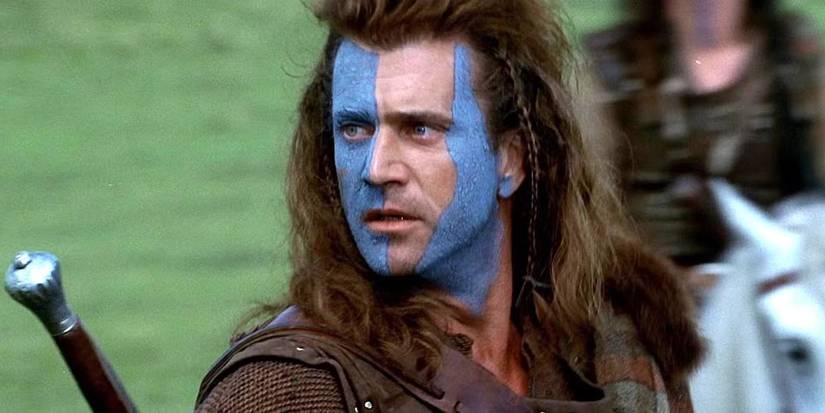
Braveheart grabs people so fast since it does not begin with strategy or nationhood in some abstract sense. It begins with theft. Wallace (Mel Gibson) loses his father as a boy, grows up under occupation, finds a sliver of peace with Murron (Catherine McCormack), and then watches that peace get ripped from him with public cruelty meant to humiliate the entire village into obedience. That is the emotional lock. The rebellion does not rise from rhetoric first. It rises from grief curdling into rage after the one private life Wallace wanted gets crushed under a system built to make ordinary tenderness impossible.
That is why the big speeches land. They come after the film has already shown what English rule looks like on the ground: fear, violation, the stripping away of dignity. Wallace turns personal devastation into a national cause, and the movie understands how intoxicating that can feel. Each victory feeds the fantasy that courage and moral clarity might actually outmuscle corruption. Then the betrayals arrive, and the film gets even stronger. Wallace becomes larger in death than he ever was alive, which is exactly the fantasy epic audiences love to hand over to when a story earns it. It lets one wounded man stand in for a people refusing to kneel.
9
‘Doctor Zhivago’ (1965)

Doctor Zhivago devastates people since it traps a delicate emotional life inside a historical earthquake that has no patience for delicacy. The film follows Yuri (Omar Sharif) as a poet, a doctor, a man drawn toward feeling and beauty even while Russia is turning into a landscape of ideology, deprivation, shifting allegiances, and brute survival. That alone gives the film its ache. He is the wrong kind of soul for the century he is living through, and the movie never stops punishing him for that mismatch.
Then Lara (Julie Christie) enters, and the story locks into something even more painful. Their connection never gets the luxury of a clean beginning or a stable middle. It keeps forming in fragments while marriages, war, class upheaval, and political terror keep cutting across it. The scenes between them hurt precisely since they are so restrained. The film does not rush toward romantic release and keeps showing how history can force two people to live in the shadow of a life they can glimpse and never properly claim. By the final stretch, with Yuri reduced, exhausted, and spiritually hollowed out, the entire movie feels like one long argument with loss. People stay haunted by it. Doctor Zhivago understands a particularly cruel form of heartbreak: not losing love quickly, but watching the world slowly make it impossible and that’s why it’s so loved.
8
‘Titanic’ (1997)

Titanic stayed lodged in people’s nervous systems since James Cameron built the first half like a seduction and the second half like a nightmare you cannot stop trying to outrun. Rose (Kate Winslet) is introduced in a gilded cage, dressed in wealth, moving through first-class spaces like a possession being prepared for permanent display. Jack (Leonardo DiCaprio) crashes into that arrangement with the exact energy the story needs, not polished, not strategic, simply alive in a way nobody around her is allowed to be. Their early scenes matter so much since the film makes freedom feel tactile: running through steerage parties, standing at the bow, drawing, laughing, choosing feeling over decorum one reckless moment at a time.
Then the iceberg hits, and the romance changes function. It stops being fantasy and becomes the emotional mechanism that carries Rose through terror. The ship’s sinking works so brutally since the movie has spent so much time mapping its spaces. When the tilt grows steeper, when corridors flood, when families separate, when musicians keep playing and the wealthy keep bargaining for a little more privilege against the cold, the disaster gets personal in every direction. Jack dying, with that final transfer of life, drags her into a version of herself that survives him. That is why the ending has wrecked people since forever. Although the film’s themes of cheating are controversial, Titanic is one of the most widely loved epics.
7
‘Ben-Hur’ (1959)

Ben-Hur follows Judah (Charlton Heston) and Messala (Stephen Boyd) as boyhood friends, which is the detail that makes everything afterward feel poisoned in a richer way. Messala returns to Jerusalem carrying Rome inside him, all appetite for order, loyalty, and domination. Judah still believes some part of their former bond might survive the uniform. Then one act of political suspicion, one refusal to betray his own people, and the film starts crushing him piece by piece. His mother and sister are taken. He is sent to the galleys. Friendship becomes state violence in the space of a few scenes.
That emotional break powers the whole film. The sea battle, the adoption by Quintus Arrius (Jack Hawkins), the chariot race, all the spectacle lands with force since it is tied to a very specific wound: Judah wants to confront the man who converted intimacy into punishment. The chariot race is legendary on its own terms, though it lasts in the mind since it is not just action. It is years of humiliation, survival, hatred, and memory slamming into the arena at full speed. Then the film does something even more enduring. It refuses to let vengeance be the final spiritual answer. By the time suffering circles back through his family and into contact with Christ’s crucifixion, the movie starts pulling Judah out of rage toward something more difficult, the release of carrying it.
6
‘The Bridge on the River Kwai’ (1957)
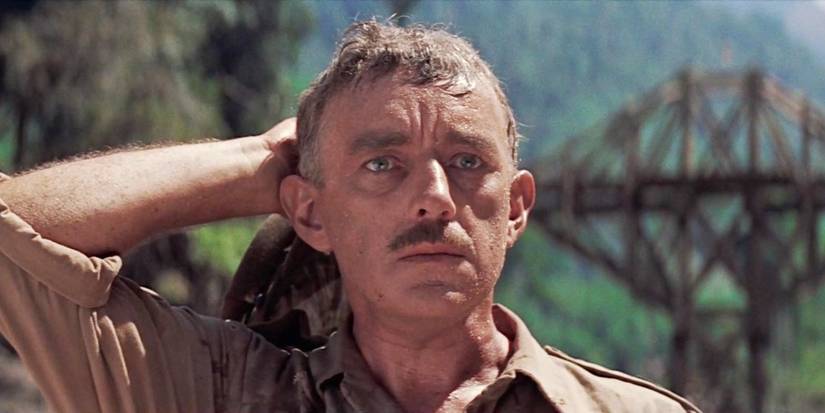
The Bridge on the River Kwai gets under the skin since it turns discipline into a form of madness so gradually that the viewer can feel it happening and still get trapped in its logic. Colonel Nicholson (Alec Guinness) begins as a prisoner of war determined to protect the dignity of his men against Saito (Sessue Hayakawa)’s abuse. On that level, he is admirable. He refuses humiliation, invokes military rules, takes punishment rather than surrender authority.
Then once Nicholson gains control over the bridge project, pride begins feeding on itself. Building the bridge well starts to feel, in his mind, like proof that British order and competence cannot be broken even in captivity. That rationale is insane, though terrifyingly understandable in the moment. He needs purpose, superiority, and the illusion that his suffering has shape. Meanwhile, Shears (William Holden) and the commandos move through a completely different war movie, one grounded in survival, exhaustion, and practical sabotage. The collision between those plotlines is why the film hits so hard. Few epics cut this deep into the human need to find meaning inside captivity, even when that meaning starts eating your judgment alive.
5
‘Gladiator’ (2000)

Gladiator 2 was good. Gladiator remains catnip for audiences since its revenge engine is so clean and its emotional wound is so raw. Maximus (Russell Crowe) is introduced as a man tired of war and ready to return home. That matters. He is not craving conquest. He wants his wife, his son, his farm, the ordinary life battle delayed. Then Marcus Aurelius (Richard Harris) names him protector of Rome’s future, Commodus (Joaquin Phoenix) murders his father, and Maximus rides home only to find his family butchered and hanging where his future used to be. The movie earns every ounce of his fury before it ever asks the audience to cheer for blood.
From there, it keeps layering power into the obvious revenge structure. Slavery strips him down. The arena rebuilds him. Each fight becomes more than survival since it lets Maximus weaponize spectacle against the empire that destroyed him. Commodus is a perfect epic villain for one reason above all: he is starving for love he cannot command, so he keeps reaching for domination instead. That makes every confrontation between them feel personal and political at once. It’s the OG story of a grieving man who keeps moving through degradation without surrendering the part of himself that loved home more than power.
4
‘Gone with the Wind’ (1939)

Gone with the Wind endures in part since Scarlett O’Hara (Vivien Leigh) is such a thrillingly difficult person to sit with for this long. She is vain, selfish, manipulative, resourceful, terrified, magnetic, and almost impossible to reduce to one moral note. The movie’s emotional grip starts with her refusal to accept that the world she knows is about to disappear. At Twelve Oaks, desire still feels flirtatious and petty, Ashley (Leslie Howard) still feels like the prize she can organize her life around, and the whole Southern social order still imagines itself permanent. Then war arrives and starts tearing the fabric apart faster than she can emotionally process it.
The Atlanta sections are where the film really hooks people. Scarlett claws through it. She survives childbirth, hunger, ruin, and the burning city with her fear exposed and her will hardening in the same motion. “I’ll never be hungry again” lands so hard. Then romance becomes tangled with appetite, status, and the refusal to be powerless again. Her relationship with Rhett (Clark Gable) works so explosively. This film is a grounding tragedy about mistaking obsession for destiny while history remakes the ground under your feet.
3
‘Schindler’s List’ (1993)
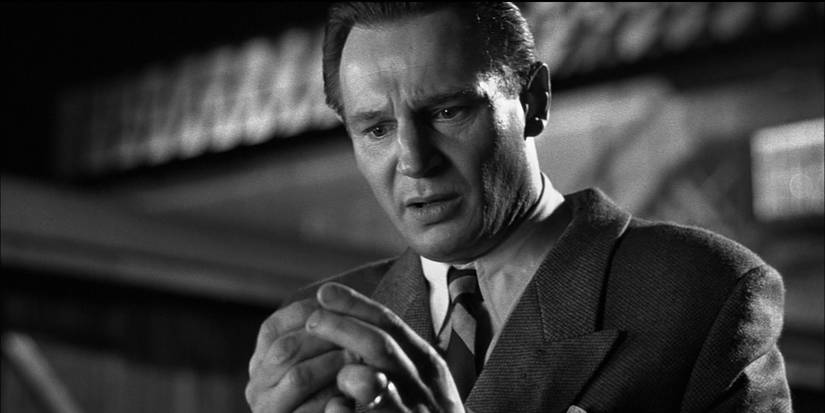
Schindler’s List does not belong to the same emotional category as crowd-pleasing epics, and that is exactly why its place this high feels right. The film starts in moral grayness. Oskar Schindler (Liam Neeson) here is opportunistic, stylish, socially agile, a businessman reading war as a ladder. He sees occupied Poland, sees cheap Jewish labor, sees profit.
That beginning is crucial since the film’s power depends on watching human conscience form under pressure rather than arrive prepackaged. Schindler changes scene by scene as the machinery around him gets more impossible to look away from. The liquidation of the Kraków ghetto, though, is where the movie sears itself into people. Chaos floods every corner, families are split in seconds, hiding places fail, old people are shot where they sit, and the whole apparatus of extermination stops being a distant fact and becomes a series of immediate violations. From there, Schindler’s relationship to his workers deepens from utility into responsibility, then into desperate protection. Then Steven Spielberg lands the knife with Schindler’s breakdown at the end. It’s an epic epic.
2
‘The Lord of the Rings: The Return of the King’ (2003)
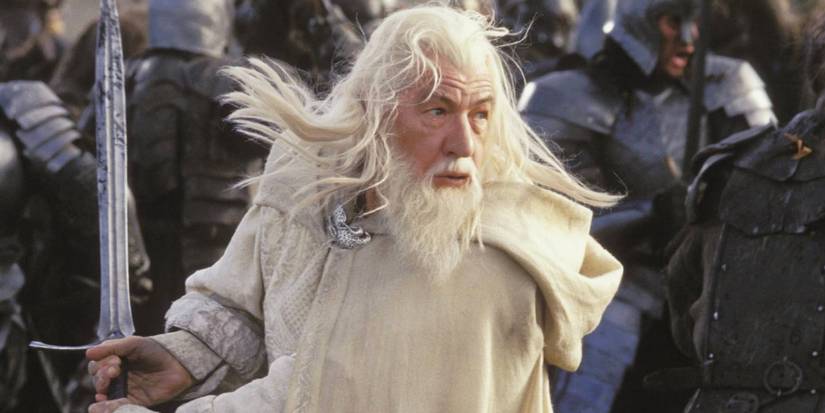
The perfect film to circle around after The Hunt for the Gollum got announced. The Return of the King works on the soul in a way very few blockbusters even attempt. Now in LOTR’s journey, by this point, the story has earned every ounce of scale. Frodo (Elijah Wood) is no longer an eager hobbit on an adventure. He is spiritually worn down, suspicious, physically failing, and carrying the Ring like a wound that keeps deepening inside him. Sam (Sean Astin) has become the emotional backbone of the whole trilogy, not through grand speeches alone but through action after action that proves love can remain practical under impossible conditions.
He cooks, carries, defends, pleads, refuses to leave. That matters. The film’s biggest emotional triumph is that amidst armies, kings, and collapsing cities, its deepest bond is still the friendship crawling one step at a time toward Mount Doom. Then everything around that central journey starts cresting. Aragorn (Viggo Mortensen) accepts the kingship he once hesitated to claim. Théoden (Bernard Hill) rides toward almost certain death with the dignity of a man choosing courage over survival. Éowyn (Miranda Otto)’s confrontation with the Witch-king lands with such force since the whole film has kept showing her caged by the dismissals of men who cannot read her hunger to matter. And then the ending keeps going, wisely and at the end, what hits me the most is that victory often does not ensure a ditto restoration as old times.
1
‘Lawrence of Arabia’ (1962)
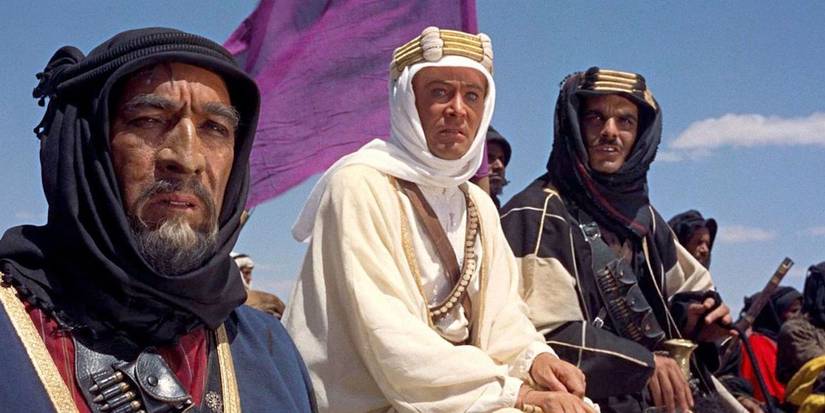
Lawrence of Arabia sits at the top since almost no other epic understands greatness as a seduction this dangerous. T.E. Lawrence (Peter O’Toole) enters the film already restless inside conventional military life, brilliant, insolent, impossible to fully contain. The desert first offers him scale, freedom, and self-invention. Crossing the Nefud, rescuing Gasim (I. S. Johar), winning over Sherif Ali (Omar Sharif), orchestrating Aqaba, all of it feels like a man discovering the version of himself ordinary structures could never hold. The film lets that transformation feel exhilarating. That is crucial. You have to understand why Lawrence falls in love with the myth of Lawrence before you can feel the horror of what that myth starts doing to him.
And it does start doing something terrible. Violence changes flavor. Public triumph makes him bolder, stranger, more detached from ordinary limits. He moves between British interests and Arab hopes, between genuine idealism and narcissistic intoxication, until the two become inseparable. The scene in Deraa cracks him open. The massacre at Tafas finishes exposing how badly the role has corroded him. By the end, Lawrence is still legendary and already spiritually ruined, a man who touched the sublime and came back unable to live inside ordinary humanity again. That is epic cinema at its highest level: not just vast, not just beautiful, but deeply alarmed by the human craving to become bigger than the self can safely survive.

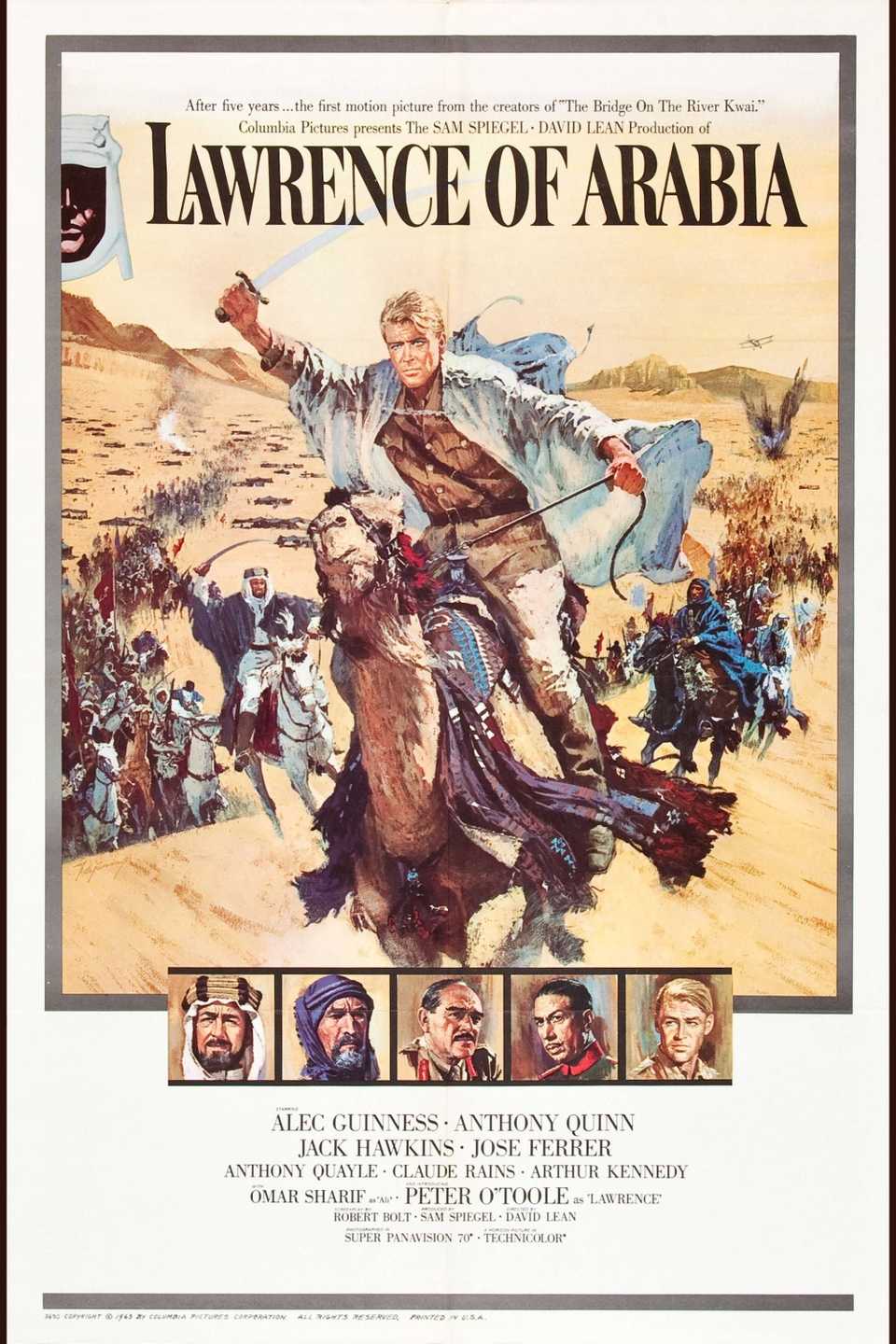
Lawrence of Arabia
- Release Date
-
December 11, 1962
- Runtime
-
228 minutes
- Director
-
David Lean
- Writers
-
Robert Bolt, Michael Wilson
You must be logged in to post a comment Login