Entertainment
10 Movies From 1992 That Are Now Considered Classics

1992 was one of those deceptively stacked years that didn’t announce its greatness all at once. It represented a moment where Hollywood spectacle, literary adaptations, political biography, genre reinvention, and abrasive indie cinema were all colliding in productive ways. Most important of all, a new generation of filmmakers was ripping up all the old rules.
The result was an interesting collection of bangers. Several of these films were commercially successful on release, but many were controversial, divisive, or misunderstood. With time, however, their ambition has become unmistakable. The titles below represent the best of the best of 1992.
10
‘Candyman’ (1992)

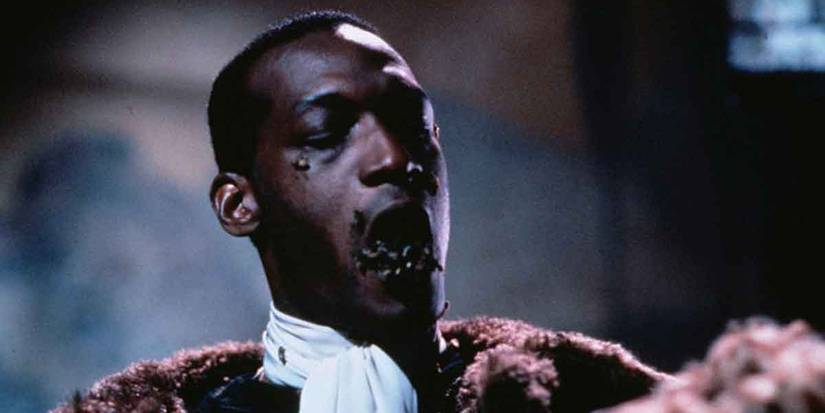
“Be my victim.” While occasionally a little rough around the edges, Candyman‘s sheer density of frights earns it a place in the horror pantheon. Story-wise, it focuses on a graduate student (Virginia Madsen) researching urban legends who becomes entangled with the myth of a supernatural killer said to appear when his name is spoken five times into a mirror. That sounds like fairly standard genre stuff, but what initially plays like a conventional slasher gradually reveals itself as something far more ambitious.
The movie’s themes are just as important as the scares, grounding the supernatural in real social divisions. In particular, Candyman uses horror to explore race, class, and the way violence is mythologized and erased within American cities. The killer (Tony Todd) is not just a monster, but a symbol shaped by collective fear and historical injustice. Todd’s fantastic performance does most of the heavy lifting. (That scene with the bees! Talk about being committed to the role.)
9
‘Unforgiven’ (1992)

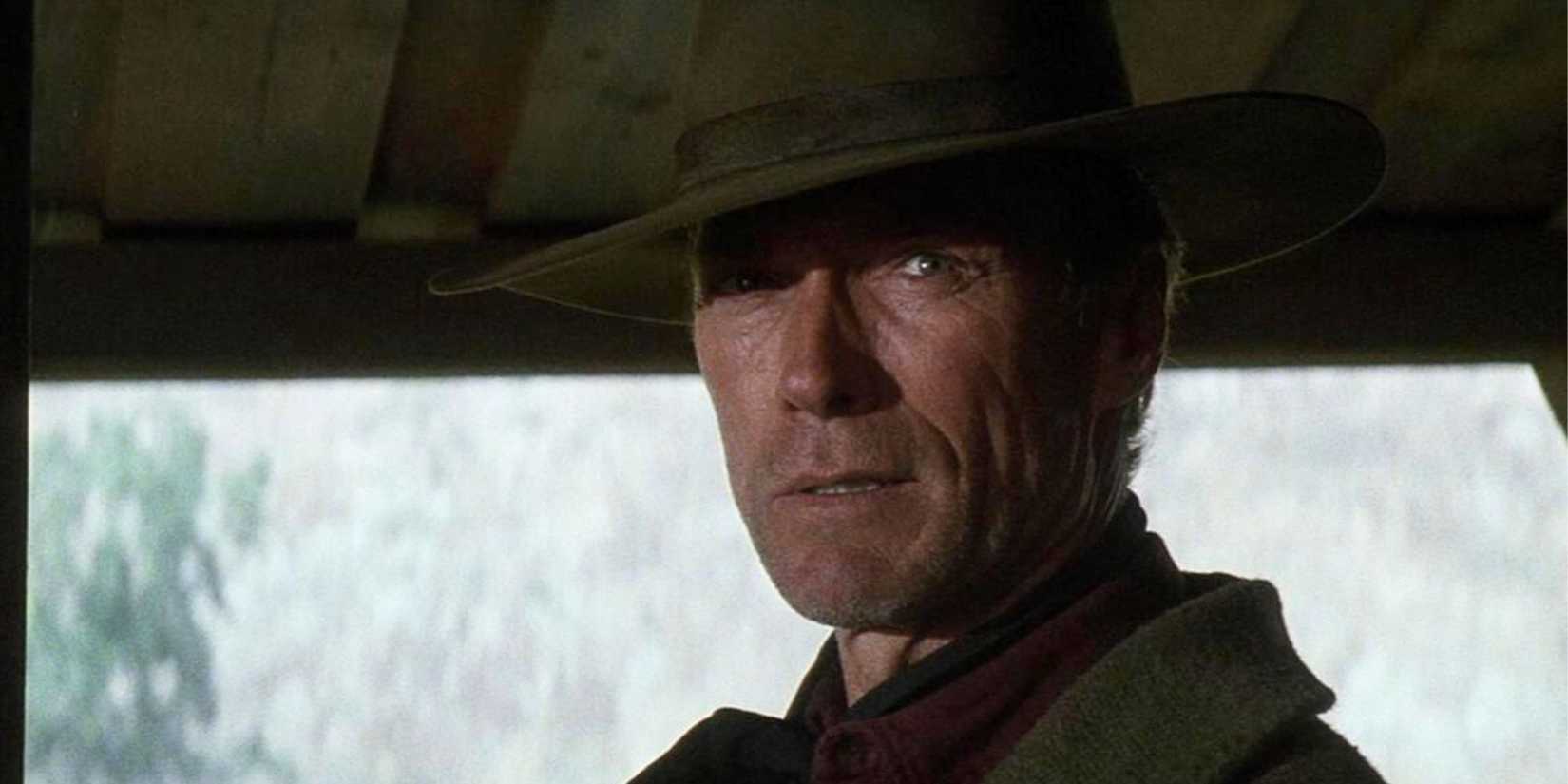
“Deserve’s got nothing to do with it.” Clint Eastwood consciously conceived of Unforgiven as his final Western, his closing statement on the genre that made him a star. Here, he plays an aging former outlaw pulled back into violence for one last job, using the character to pretty much dismantle the mythology of the American Western. While the plot centers on a bounty offered for the men who disfigured a prostitute, the story quickly becomes an interrogation of legend, reputation, and moral consequence.
Eastwood was in a unique position to tell this story. His direction treats the genre with both familiarity and skepticism, acknowledging its power while stripping away its lies. Most strikingly, Unforgiven refuses to glamorize killing. The violence in it is clumsy, terrifying, and permanent, leaving emotional wreckage in its wake. The result is a moving farewell to heroic fantasy and a reckoning with what those stories concealed.
8
‘The Crying Game’ (1992)

“I know who you are.” The Crying Game is simultaneously a political thriller involving an IRA kidnapping and an intimate drama about identity, guilt, and desire. The plot follows a British soldier (Forest Whitaker) captured during a conflict in Northern Ireland and the unexpected emotional bond that forms between captor and captive. After the soldier’s death, the story shifts to London, where loyalty and memory blur into obsession. The narrative twists are hard-hitting, yet what really sets the movie apart from others in the genre is its empathy.
The Crying Game takes an intelligent, sensitive approach to its material. It treats identity as fragile and deeply personal, resisting sensationalism even when dealing with taboo subject matter (The Troubles in Ireland were still underway when it was released, making it somewhat controversial). Over time, however, the movie’s reputation has matured beyond shock value, recognized instead as a thoughtful exploration of how political violence spills into private lives.
7
‘The Last of the Mohicans’ (1992)

“I will find you.” By 1992, Daniel Day-Lewis had proven himself in dramas like The Unbearable Lightness of Being and My Left Foot, but he was still a surprising pick to headline a sweeping frontier romance set during the French and Indian War. Nevertheless, he did a fantastic job in the part. He plays Nathaniel “Hawkeye” Poe, a colonial-raised frontiersman caught between cultures as imperial powers clash. He finds himself caught in a storm of warfare, survival, and doomed love.
On the directing side, Michael Mann strips away pageantry in favor of physical immediacy, treating landscapes as living forces rather than scenic backdrops. In the process, he achieves an impressive balance between epic scale and human emotion. The action scenes are visceral, the romanticism unguarded, and the sense of loss profound. Fundamentally, the film is a kind of blockbuster fantasy, but one with much more heart than most.
6
‘Glengarry Glen Ross’ (1992)

“Always be closing.” Glengarry Glen Ross takes place almost entirely in offices and restaurants, yet it feels as brutal as any battlefield. The plot revolves around desperate real estate salesmen pushed to compete for their jobs through manipulation, humiliation, and moral compromise. Based on David Mamet’s play, the film is driven by language: profane, rhythmic, and razor-sharp. The stars, including Al Pacino, Jack Lemmon, Alec Baldwin, and Alan Arkin, deliver the barbed dialogue with clear relish. The “Always be closing” monologue, in particular, has become iconic for a reason.
Most of these characters posture at power, but every one of them is trapped in a system that rewards cruelty and punishes hesitation. Indeed, this movie is an unsparing portrait of the worst of capitalism. The anxieties it captures (precarious work, hollow motivation, performative masculinity) feel even more relevant today. Despite (because of?) all this, the movie was a box office disappointment, yet has since become a cult classic.
5
‘Batman Returns’ (1992)

“I’m Catwoman. Hear me roar.” Batman Returns is a studio blockbuster that feels profoundly personal and strangely melancholy. The plot pits Batman (Michael Keaton) against two grotesque figures: a vengeful outcast (Danny DeVito) raised in the sewers and a woman (Michelle Pfeiffer) reborn through trauma. The visuals reflect this bleak mood. Gotham itself becomes a warped reflection of repression and spectacle. Building on the foundation laid by the 1989 movie, Tim Burton transforms the superhero genre into a gothic fairy tale about alienation and desire.
Indeed, heroes and villains alike are driven by loneliness and obsession to the point that good and evil are not always so easy to separate. This approach was bold and innovative for the time, paving the way for countless dark superhero films to follow (not least Christopher Nolan‘s Batman trilogy). Over time, the film has been reappraised as one of the most idiosyncratic big-budget movies ever released by a major studio. Its darkness, once controversial, now feels daring.
4
‘Bram Stoker’s Dracula’ (1992)

“I have crossed oceans of time to find you.” With this movie, Francis Ford Coppola reimagined Dracula as a baroque tragedy, an ambitious undertaking that he (mostly) pulls off. The story follows Dracula’s (Gary Oldman) arrival in Victorian England, setting the stage for a battle between ancient desire and modern rationality. While some aspects, like Keanu Reeves‘ accent, caught a lot of flak, the film’s atmosphere and visual grandeur are worthy of praise. The whole thing is unapologetically excessive.
Coppola embraces theatricality, practical effects, and operatic emotion, rejecting realism in favor of sensation. The film knows exactly what it is and commits fully, swinging for the fences with a big, gothic spectacle. Some viewers will find that simply too over the top and overwrought, but others will appreciate the craft and commitment. The movie also deserves props for deviating from Dracula tropes, particularly with the count’s look and clothing.
3
‘Malcolm X’ (1992)
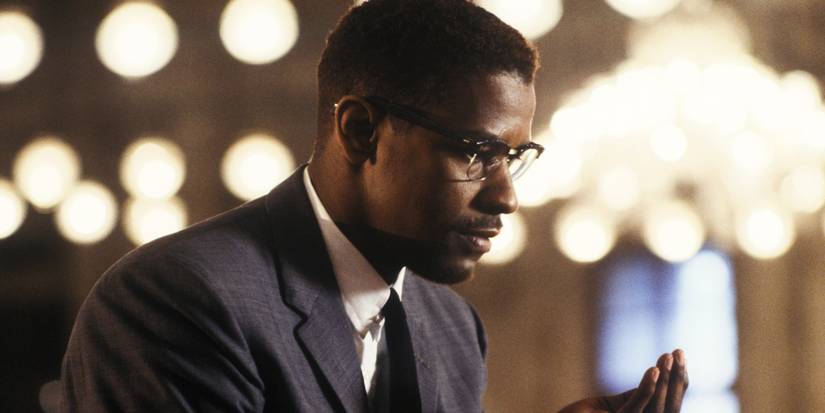
“By any means necessary.” Denzel Washington received an Oscar nomination for his towering performance in this biopic from Spike Lee. He plays the civil rights leader from troubled youth to global revolutionary figure, convincingly portraying his transformation through crime, faith, activism, and political awakening. At the time, Washington was most well-known for playing calm heroes, so it was striking for audiences to see him getting fiery and full of anger.
The result is a complex, challenging epic, clocking in at well over three hours long. Crucially, Lee refuses simplification, presenting Malcolm as evolving rather than fixed. He treats history as contested, shaped by ideology, betrayal, and reinvention. Simply put, this is one of the most ambitious American biographies ever made. By leaning into the messiness and contradiction of its subject, Malcolm X also becomes a fascinating study of the era and society that the man both grappled with and shaped.
2
‘A Few Good Men’ (1992)

“You can’t handle the truth!” A Few Good Men capped off Rob Reiner‘s remarkable run of movies from the late ’80s into the early ’90s, a streak that gave us classics like Stand By Me and The Princess Bride. This one is a legal drama built around a military trial investigating the death of a Marine (Michael DeLorenzo) following an unofficial disciplinary order. While the movie runs on legal thriller mechanics, its real interest lies in institutional loyalty and moral evasion. The courtroom becomes a stage where authority is performed rather than questioned.
In particular, the movie understands how systems protect themselves by outsourcing blame. The dialogue is sharp, the conflicts legible, and the ethical stakes unmistakable. The legal drama has been around for so long and has been explored so well that it’s difficult to find something new and interesting to say in it, but A Few Good Men managed to put its own distinctive stamp on the genre, one that still holds up today.
1
‘Reservoir Dogs’ (1992)

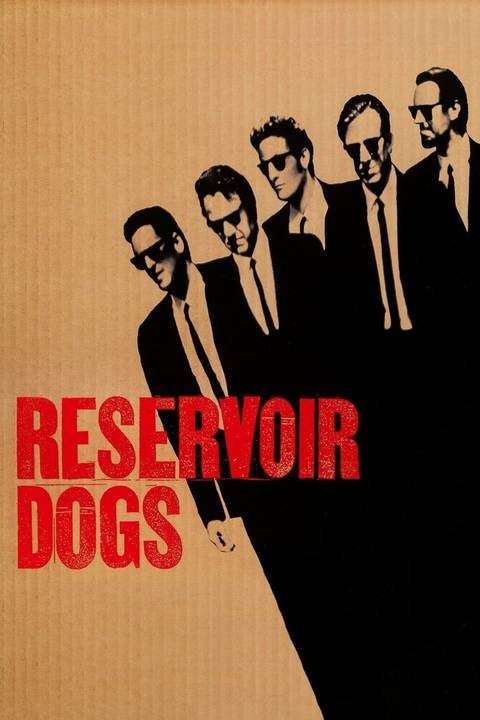
“I’m gonna torture you anyway, regardless.” Reservoir Dogs detonated into cinema like a challenge. The premise is deceptively simple: a robbery goes wrong and trust unravels among the criminals involved. However, that seemingly straightforward setup is elevated by bold, energetic storytelling, firing on multiple cylinders at once. Quentin Tarantino fractures time, foregrounds dialogue, and treats genre as language rather than formula, weaving in film references and allusions with total confidence. This is one of the most assured directorial debuts of all time.
In 1992, Reservoir Dogs announced a new sensibility, one where pop culture, brutality, and wit coexist without hierarchy. Every scene is calibrated for maximum tension, every line is memorable, and the use of music is ironic yet still deeply entertaining. In other words, all of QT’s hallmarks were here in microcosm, hinting at the more complex masterpieces he would deliver in the decades to follow.

- Release Date
-
September 2, 1992
- Runtime
-
99 minutes
-

Mr. White / Larry Dimmick
-

Mr. Orange / Freddy Newandyke
-

Michael Madsen
Mr. Blonde / Vic Vega
-
Chris Penn
“Nice Guy” Eddie Cabot

You must be logged in to post a comment Login