Entertainment
10 Must-See Classics Under 90 Minutes Long

Classic films are understandably among the most memorable and iconic in film history, whether for their sweeping sets and timeless narratives or the characters that feel like old friends, still resonating with us all these decades later. For the truly nostalgic, revisiting them or discovering hidden gems is almost inevitable (think comfort food, but for cinephile souls and minds).
What’s especially delightful about these films is that you can watch them in under, or just around, one and a half hours. Compared to today’s marathon-length blockbusters, that’s a breeze. Not that long films are bad — far from it — but sometimes you just want to enjoy great cinema without committing to a whole afternoon. These classic movies under 90 minutes are definitely worth their runtime, delivering a satisfying story in one sitting and no intermission required.
10
‘Laura’ (1944)


If you’re in the mood to watch a stylish noir but don’t have much time on your hands, Laura might be your best bet. Directed by Otto Preminger, the 1944 film follows police detective Mark McPherson (Dana Andrews) as he investigates the murder of the beautiful and highly successful advertising executive Laura Hunt (Gene Tierney).
With a haunting David Raksin score, great performances, and a compelling narrative, Laura delivers a great time in front of the screen with a runtime of 88 minutes. The essential noir has influenced plenty of contemporary works — think of David Lynch‘s Twin Peaks, which not only shares the character’s name but also plot and thematic similarities — and cemented its place among the most iconic and innovative films in its genre. In the meantime, it also offers a compelling critique of male obsession and possessiveness.
9
‘Cléo from 5 to 7’ (1962)

Anchored by Agnès Varda‘s intimate gaze, Cléo from 5 to 7 is possibly one of the most elegant film picks one could choose under 90 minutes. Drenched in stunning black-and-white visuals, the film transports audiences to the streets of 1960s Paris as it follows the day in the life of beautiful singer Cleo (Corinne Marchand) as she waits to learn whether she has cancer.
Cléo from 5 to 7 fascinates us with its primary, purely internal conflict, observing Cléo’s fear of mortality through a refreshing, empathetic, modern lens. At the heart of the film, Varda contemplates time and the meaning of life, especially when confronted with uncertainty and potentially overwhelming odds. Without being overly preachy, the 90-minute gem has become a French New Wave classic essential that invites viewers to pause, reflect, and find the beauty in their own lives and blessings.
8
‘Breathless’ (1960)

Speaking of the French New Wave, Jean-Luc Godard — who even makes a cameo in Varda’s film alongside his partner, Anna Karina— is another filmmaker worth exploring. His iconic, cool and detached Breathless follows a reckless young criminal and small-time thief (Jean-Paul Belmondo) as he steals a car and impulsively murders the motorcycle policeman who pursues him.
Clocking in at just 90 minutes, Breathless deserves the many flowers it has gotten over the years thanks to its innovative filmmaking and its groundbreaking editing. With sheer audacity, the film essentially rejected what cinema had known so far, defying the conventions of post-war French films and American cinema, and cementing its place among the most memorable classics of its time. Another notable Godard classic under 90 minutes is A Woman is a Woman, an upbeat, quirky musical particularly fitting for those who crave a feel-good watch.
7
‘Brief Encounter’ (1945)

Fans of slow-burn romance and classic cinema are likely familiar with Brief Encounter, a heart-wrenching David Lean picture that is a masterful meditation on duty and self-sacrifice. The plot follows two strangers, both married to others, who meet in a railroad station and find themselves in a brief but nonetheless intense affair.
Based on Noël Coward‘s one-act play Still Life, this timeless black-and-white romance continues to conquer hearts 80 years following its release — it was voted #2 on the BFI’s 100 best British films of the century — and understandably so. Lean’s film is compelling in its simplicity, with two powerful acting efforts from Celia Johnson and Trevor Howard and a story of missed chances that lingers. What’s even better, the runtime is around 87 minutes.
6
‘Rope’ (1948)

Hitchcock enthusiasts who have not yet explored the filmmaker’s entire filmography may be pleased to know that Rope is just around 80 minutes — perfect for whenever you’re short on time but want to indulge in something suspenseful and intriguing. The film essentially follows two college students — arrogant Brandon (John Dall) and his friend Philip (Farley Granger), who murder an old college mate and then host a dinner party to prove their intellectual superiority.
Hitchcock’s first color film may not be his finest, but it’s certainly one of the director’s boldest and most memorable, and perhaps his most theatrical. Rope is particularly notable for taking place in real time and being edited to appear as one long shot. With its technical mastery and great performances (James Stewart also stars as the dangerously perceptive Rupert Cadell), the must-see classic movie remains a thrilling, engaging cinematic experience despite its compactness.
5
‘Paths of Glory’ (1957)

As far as iconic war pictures go, Paths of Glory ranks among the most impactful, and it’s not hard to see why. With a short 88-minute runtime, the Stanley Kubrick classic follows a member of the French General Staff who asks his subordinate, the ambitious General Mireau (George Macready), to send his division on a suicide mission to take a well-defended German position.
At its core, Paths of Glory is a fiery indictment of injustice and war. It is widely considered one of Kubrick’s many masterpieces (directed at 29), fascinating not merely through its impressive technicalities — like the long tracking shots that fully immerse audiences — but also through a powerful critique of military arrogance and the dehumanization of humans at war. It’s no wonder that the anti-war powerhouse is preserved in the U.S. National Film Registry for its cultural impact.
4
‘Rashomon’ (1950)

From the visionary mind of acclaimed filmmaker Akira Kurosawa, Rashomon helped revolutionize cinema with its nonlinear storytelling. The film follows a priest (Minoru Chiaki), a woodcutter (Takashi Shumura), and another man (Kichijirō Ueda) as they take refuge from a rainstorm in the shell of a former gatehouse.
Rashomon is now celebrated as one of the greatest and most influential films of the 20th century. Part of its appeal lies in its groundbreaking plot device, which involves the various characters’ subjective, alternative, and contradictory versions of the same incident, and also in its meditation on moral ambiguity and subjectivity. All these years later, it remains a revolutionary film in its technicalities and narrative, cementing its place as a timeless cinematic landmark — and at just 88 minutes, it’s a masterpiece worth checking even when one is short on time.
3
‘Bicycle Thieves’ (1948)

This Italian neorealism masterwork by Vittorio De Sica is a cinephile fan-favorite. With a powerful portrayal of human suffering and poverty at its center, the story, set in post-war Italy, centers on a working-class man named Antonio (Lamberto Maggiorani) whose bicycle is stolen, ultimately endangering his efforts to find work. Along with his son Bruno (Enzo Staiola), he sets out to find it.
Beyond its moving depiction of poverty, Bicycle Thieves is influential because it revolutionized cinema while capturing the raw grit of everyday life in such a poignant setting. With its stripped-down style and wonderful performances by nonprofessional actors, De Sica’s movie cemented a wave that remains highly relevant these days, enduring as an immediate favorite that feels immersive and heartbreaking at once.
2
‘The Passion of Joan of Arc’ (1928)

Among French cinema’s most renowned entries is The Passion of Joan of Arc, which remains a truly moving depiction of the final days, interrogation, and execution of the titular heroine. With a powerful lead performance by Renée Jeanne Falconetti — and Carl Theodor Dreyer‘s direction that emphasizes Joan’s deep suffering with heartbreaking close-ups — the silent epic continues to shatter hearts all over the globe.
There are two different versions of The Passion of Joan of Arc: one runs at 110 minutes and a shorter one is approximately 81 to 82 minutes, which is the commonly available restored version presented by The Criterion Collection. Whether it’s the unparalleled acting performance that many have claimed is the best of all time, the pioneering cinematography and atmosphere, or the narrative’s authenticity to history (the screenplay is based directly on the actual trial records) with crushing emotion, Dreyer’s movie endures as essential viewing for anyone who both wants to dive deep into cinema and understand Joan.
1
‘City Lights’ (1931)
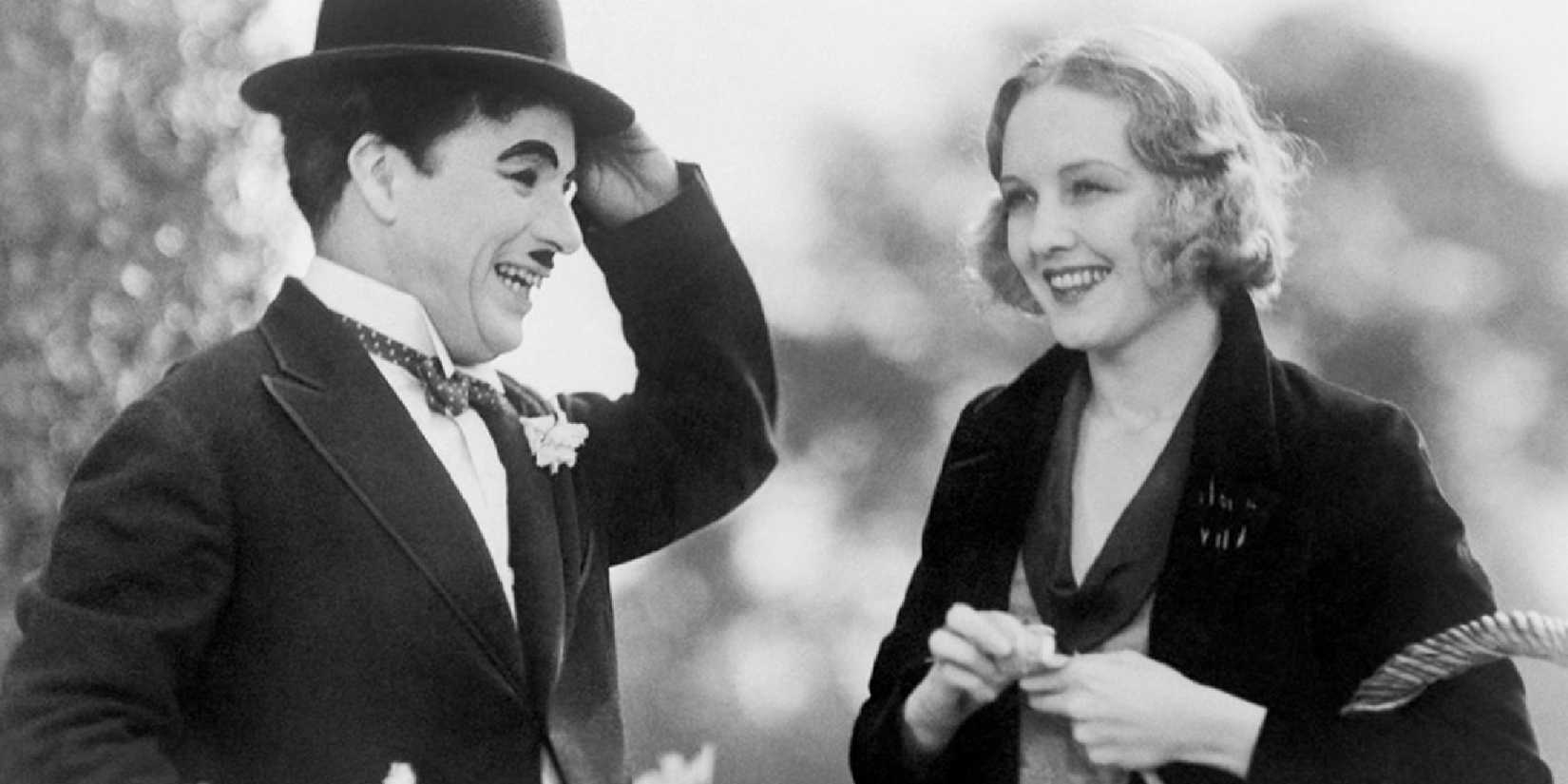
When the topic is classic movies under 90 minutes, City Lights — along with other Chaplin essentials like The Kid or Modern Times — immediately comes to mind. The film follows a dewy-eyed Tramp who falls in love with a sight-impaired girl (Virginia Cherrill) who mistakes him for a wealthy man. As he attempts to win her heart, he raises money to pay for an operation to restore her sight.
At 87 minutes, City Lights perfects the romantic comedy genre by mixing fast-paced physical comedy with slower and deeply emotional moments; it is precisely its length that allows for a fully developed silent narrative that sticks with audiences and, for such a reason, remains a must-see cinematic experience, especially for hopeless romantics who don’t mind sitting silently and absorbing its poignant story that culminated in arguably one of the most touching final scenes of all time.


You must be logged in to post a comment Login