Entertainment
10 Must-Watch Horror Cult Classics, Ranked

The concept of a cult film is often a highly ambiguous one. After all, just about any kind of film can attain a following so passionate, niche, and hugely dedicated that it can be deemed cult-like. Cult cinema is all about how audiences consume and interact with movies, and one genre that lends itself particularly well to cult receptions is horror. With the transgression, taboo, and midnight movie vibe that often characterizes horror cinema, it’s no wonder why several of the greatest cult classics in history are horror movies.
This list isn’t necessarily about the best horror cult classics, however, but rather about the ones that have had the biggest impact and influence on the cult film movement over the years. From exceptional Hollywood classics like The Blair Witch Project to so-bad-they’re-good gems like Plan 9 from Outer Space, these horror classics illuminate what cult cinema is all about, making them essential viewing for all those interested in the topic.
10
‘Suspiria’ (1977)


The 1970s were perhaps the greatest decade for cinema in history, producing several of the greatest horror movies the world has ever seen. Many of these movies came from outside Hollywood, including Dario Argento‘s Italian masterpiece Suspiria. It’s definitely the kind of film that favors style over substance, but it’s also a perfect example of a movie where the style is the substance.
A surrealist, visually hypnotic, viscerally violent artistic triumph through and through.
What follows one of the best opening scenes of any supernatural thriller is a surrealist, visually hypnotic, viscerally violent artistic triumph through and through. An obsession with unconventional aesthetics is one of the main driving forces of cult cinema as a whole, and few horror films demonstrate that better than Suspiria. Another factor that tends to contribute to a movie becoming a cult classic is scarcity, and with Argento’s masterpiece having been notoriously hard to track down on home video for many years, it’s no wonder why this became one of the biggest international cult films of the ’70s.
9
‘The Blair Witch Project’ (1999)

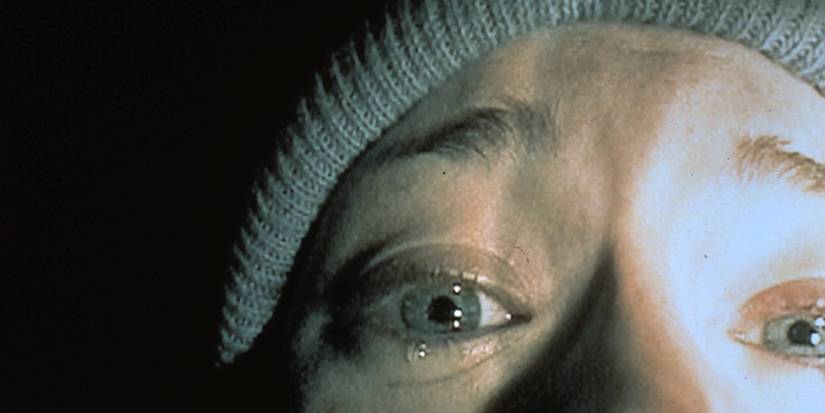
The Blair Witch Project is a phenomenal horror film, a pioneer of the found footage subgenre complete with one of the scariest final shots of any movie. But what really allowed it to become as much of a cult classic as it did, and what allowed it to become one of the most profitable independent movies in history, was its revolutionary Internet-based marketing strategy.
Using groundbreaking tactics that blurred the line between fact and fiction, the team behind The Blair Witch Project pretty much guaranteed its cult reception. With that viral marketing campaign, the appeal of the found footage format, and the massively effective air of psychological terror that surrounds the whole movie, it’s no wonder why it became the very first cult classic of the Internet era.
8
‘Ichi the Killer’ (2001)

Takashi Miike is one of the most important voices in the history of Japanese cult cinema. His 1999 psychological horror film Audition is not only the film that made him internationally famous, but also one of the most groundbreaking horror cult classics of the ’90s; but as far as “essential” viewing goes, it doesn’t get much more notorious than Ichi the Killer, the defining outing of the “Asia Extreme” movement.
Saying that it’s one of the most intense movies of the 2000s would be the understatement of the century. More accurately, Ichi the Killer is a piece of splatter horror so uncompromisingly hyper-violent that it almost feels surreal. The 21st century has allowed cult auteurs to make far more transgressive and taboo-defying horror films than they ever could have during the 20th century, and Ichi the Killer is crucial to understanding that slow transition.
7
‘The Texas Chain Saw Massacre’ (1974)

With its shoestring indie budget, its on-location shoot, and its reliance on mostly unknown actors, Tobe Hooper‘s The Texas Chain Saw Massacre completely re-defined Hollywood horror during the ’70s. One of the biggest badges of honor that a cult film can possibly hold is being banned around the world, and even though its depiction of on-screen gore is shockingly limited, Texas Chain Saw did indeed get banned in several countries.
Those bans, combined with the tremendous moral panic that the film caused around the world, contributed to the “forbidden” and “underground” aura that still permeates it to this day—and that kind of aura pretty much guarantees a film’s cult status. Combine that with the film’s gritty, almost documentary-like sense of realism and its direct commentary on the countercultural values of the era, and you get one of the most unsurprising (yet most essential) horror cult masterpieces in history.
6
‘Plan 9 from Outer Space’ (1959)
It’s not just great movies that become cult classic, and there’s no better proof of that than the entire filmography of Ed Wood. A filmmaker so often regarded as the worst filmmaker in history that he even made himself worthy of a biopic directed by Tim Burton, Wood made several of the best so-bad-they’re-good classics of all time, the most iconic of which is undoubtedly Plan 9 from Outer Space.
Part alien invasion sci-fi, part horror, Plan 9 spent years in relative B-movie obscurity, until authors Harry and Michael Medved labeled it “the worst film ever made” in their book The Golden Turkey Awards in 1980. This began the movie’s cult reception journey, pioneering the so-bad-it’s-good niche of the cult cinema space. With its cult status further cemented by Mystery Science Theater 3000 and the mere presence of Bela Lugosi, Plan 9 is the most essential cult classic that also happens to be a bafflingly incompetent piece of filmmaking.
5
‘Bride of Frankenstein’ (1935)

Queerness is a huge element of the cult cinema space, and it’s one of the big reasons why James Whale, one of Hollywood’s first openly gay filmmakers, is remembered as a cult figure himself. His work was a master of pre-Code subversive themes and Gothic camp, and nowhere are those qualities better illustrated than in Bride of Frankenstein, one of the best Frankenstein adaptations of all time.
The film is loaded with so much queer subtext and theatrical camp that it’s no wonder why the movie became one of the very first true horror cult classics ever, starting when it began airing on television between the 1950s and 1960s. It’s a groundbreaking monster film unlike any other, and all those interested in both queer cult cinema and cult auteurship ought to check it out at least once.
4
‘Night of the Living Dead’ (1968)
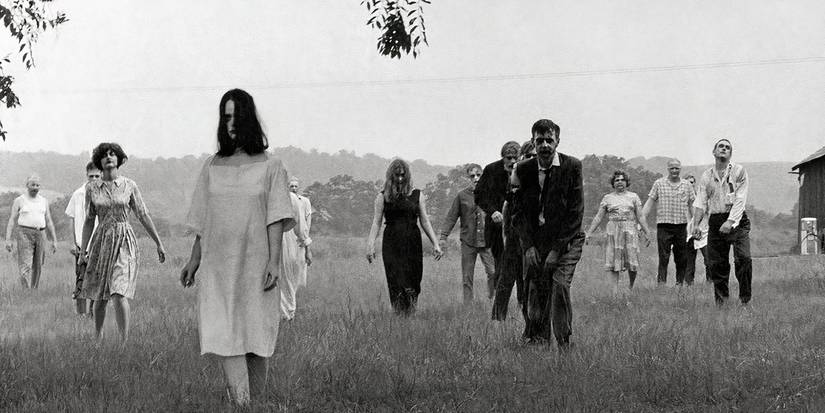
If there were a Mount Rushmore of zombie movie directors, George A. Romero would have to be right up there, seeing as he’s the mind behind some of the best zombie movie masterpieces of all time. Chief among them is almost undebatably Night of the Living Dead, because even though the monsters in the film are referred to as ghouls, cinephiles and film historians tend to agree that this is the first mainstream depiction of what we now understand as zombies.
The film was revolutionary for having a heroic Black lead (Duane Jones) and some of the sharpest sociopolitical commentary of any horror film from the ’60s. But what really allowed it to explode as a foundational horror cult classic was actually a copyright oversight, wherein the original distributor failed to include a copyright notice on the prints before releasing them. As a result, the movie was immediately thrust into the public domain, leading TV stations and local indie theaters to turn it into one of the very first midnight movie cult classics ever.
3
‘The Rocky Horror Picture Show’ (1975)

As important as Night of the Living Dead was to the midnight film niche of the cult cinema space, conversation on midnight movies can never possibly end without an in-depth conversation about The Rocky Horror Picture Show. It’s the quintessential midnight cult classic, a musical comedy that originally flopped when it released. But of course, as any fan of cult cinema knows full-well, commercial failure is rarely the death of a motion picture, particularly one as fit for a cult reception as this.
Loaded with camp, queerness, catchy tunes, and eccentric production values, Rocky Horror is one of the best horror masterpieces of the ’70s. It was after the film tanked in its initial theatrical run that a 20th Century Studios exec pushed for a late-night-only, no-advertising run of screenings in New York City, and that kickstarted the cult reception of the biggest participatory cult classic in history. Organic fan traditions began to form over the lines, and now, watching a midnight screening of Rocky Horror in a packed theater has become something that every cinephile should try at least once.
2
‘Freaks’ (1932)

There’s a reason why the cult cinema movement is so eager to pick up movies that have failed, been rejected, and/or been forgotten. It’s a cultural movement that’s all about embracing taboos, outcasts, and everything “odd,” which is precisely why Tod Browning‘s Freaks is one of the most essential cult classics in history. It is, without a doubt, one of those horror movie flops that are actually misunderstood masterpieces.
Many of the movie’s characters are played by real sideshow performers who had real disabilities, something that caused 1932 audiences to deem the film “too grotesque” and lead to its commercial and critical failure. After the film was screened for its 30th anniversary at the Venice Film Festival in 1962, however, a cult reappraisal began to form. Audiences became fascinated by Browning’s deeply sympathetic, never-exploitaitive approach to these characters, turning this into one of the biggest cult gems of pre-Code Hollywood.
1
‘The Cabinet of Dr. Caligari’ (1920)

Film historians and cult cinema experts will often point to different movies as pioneers of the cult film movement, but there’s a strong sense of agreement that the original cult film is Robert Wiene‘s silent horror masterpiece The Cabinet of Dr. Caligari. It’s one of the best horror thrillers of the 20th century and one of the most defining works of the German Expressionist film movement, and there are even many film historians who refer to it as the very first true horror feature.
For as historic as it is, however, it’s astonishing just how creepy and wildly entertaining The Cabinet of Dr. Caligari still is over a century later. It was in the years following World War II that a re-evaluation of German Expressionism as a whole, and Cabinet of Dr. Caligari in particular, started to occur. With many film theorists beginning to evaluate the movie not just as a horror classic, but also as an avant-garde masterpiece and a sociological mirror of Germany’s post-WWI national mood, the cult film movement started to take shape. As a result, there is no horror cult classic that’s a bigger must-see than the original, The Cabinet of Dr. Caligari.


The Cabinet of Dr. Caligari
- Release Date
-
February 27, 1920
- Runtime
-
67 Minutes
- Director
-
Robert Wiene
- Writers
-
Carl Mayer, Hans Janowitz
-

Werner Krauss
Dr. Caligari
-
-
-

You must be logged in to post a comment Login