Entertainment
10 Near-Perfect Sci-Fi Movies You’ll Want to Rewatch Immediately

Science fiction has always been at its best when it does more than depict the fantastical. The genre can use its rich elements, from aliens to parallel universes, to explore ideas that are close and relatable to us. The best sci-fi movies make those concepts feel exciting on the first viewing while leaving enough unanswered questions, visual details, and thematic depth to make you immediately want to experience them again.
Here, we take a look at sci-fi movies that you may have seen before but are still prime for immediate rewatches because of their intriguing themes and stellar filmmaking. These movies have influenced modern classics and will continue to do so. Their ambitious ideas are matched with memorable characters, distinctive worlds, and exceptional filmmaking. They may be very different in tone and style, but once the credits roll, you will probably want to start them all over again.
‘RoboCop’ (1987)


RoboCop follows police officer Alex Murphy (Peter Weller), who is brutally murdered during an encounter with criminals. Megacorporation OCP decides to use his body to create the RoboCop program, transforming what remains of Murphy into a heavily armored cyborg designed to enforce the law. At first, RoboCop appears to be the ultimate law enforcer, but then Murphy’s old memories begin to resurface, leading him to question his identity and find the people responsible for his death.
Part of RoboCop‘s enduring quality is Paul Verhoeven‘s sensibilities: he understands how to make it simultaneously ridiculous, violent, funny, and intelligent. Beneath the spectacular action and unforgettable practical effects is a potent satire of privatization, corporate greed, sensationalist media, and consumer culture. The violence is exaggerated enough to be entertaining, and Peter Weller also gives an unexpected emotional dimension to the character’s rigid movements and mechanical voice. It stands as one of the best films of the 1980s, and a new reboot series starring Dan Stevens is currently in the works.
‘Soylent Green’ (1973)
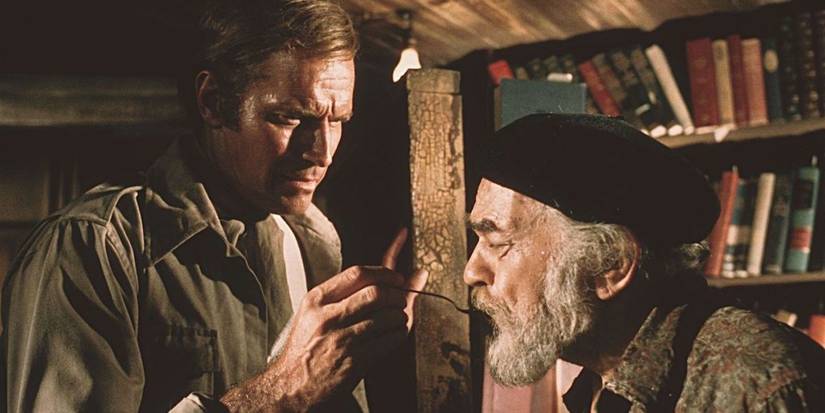
Soylent Green follows police detective Frank Thorn (Charlton Heston) as he investigates the murder of a wealthy businessman in dystopian New York. In this future, most people survive on processed food products manufactured by the powerful Soylent Corporation as climate problems, food shortages, and overpopulation diminish real food. As he goes further, Thorn’s investigation exposes a much larger corporate conspiracy.
Soylent Green may be soft sci-fi, but it doesn’t diminish its effectiveness at all. Made in 1973, the issues that become the catalyst for the conflict were so far ahead of their time that they are still relevant today. Part of its enduring appeal is thanks to the future setting that feels grim and recognizable. The real horror comes from what economic and environmental desperation has done to ordinary human life. Even though you may have been spoiled of the film’s famous final twist, Soylent Green is still worth revisiting.


Based on Carl Sagan‘s novel, Contact follows Dr. Ellie Arroway (Jodie Foster), a brilliant radio astronomer who has devoted her life to searching the universe for signs of intelligent life. When scientists detect a mysterious signal from the star Vega, Ellie is chosen for the mission to respond to the extraterrestrial beings.
If you’re into sci-fi films, you may have religiously watched Interstellar or Arrival, which Robert Zemeckis‘ Contact feels like a spiritual predecessor to. It packs enormous scientific ideas into something deeply personal, the emotional center remaining in Ellie herself and her determination to understand something that may be fundamentally beyond human comprehension. The movie’s most memorable quality is its balance between science and faith, two elements that remain orbiting each other. It is also exceptionally rewatchable because its questions become richer once you know where the story goes.
‘Silent Running’ (1972)

Silent Running follows botanist Freeman Lowell (Bruce Dern), who is stationed aboard the Valley Forge, one of several enormous greenhouse ships carrying forests and ecosystems that humanity hopes to preserve for a future generation. Lowell becomes deeply attached to the plants and to the maintenance robots that assist him. When orders arrive that the botanical missions are too expensive and the remaining forests must be destroyed, Lowell refuses to accept it.
Silent Running may be the least recognizable title on this list to some, but it is one of the best sci-fi films of its era that resonates today. Douglas Trumbull, best known for his groundbreaking visual-effects work in movies like 2001: A Space Odyssey and Close Encounters of the Third Kind, creates a believable sense of scale with the greenhouse spacecraft while keeping the story intimate and character-driven. Dern’s performance captures Lowell’s passion, stubbornness, loneliness, and increasing desperation, and the glacial pace puts the audience in his headspace.
‘Dark City’ (1998)

Dark City follows John Murdoch (Rufus Sewell), who wakes up in a strange hotel room with no memory of how he got there. He then discovers that he is being hunted for murders he does not remember committing. As he flees, Murdoch encounters the mysterious Strangers, pale beings with extraordinary powers who appear to manipulate the entire city.
If you like The Matrix, you might like Dark City too; you may have even caught it on TV. The film has cerebral, thought-provoking ideas and great production design that depicts the titular city as noir, gothic, futuristic, and nightmarish all at once. Its ideas about identity and free will are similar to The Matrix, but it predates The Wachowskis‘ masterpiece by a whole year. Sewell’s understated performance is supported by a strong cast that includes William Hurt, Jennifer Connelly, and Kiefer Sutherland. It is the rare sci-fi film where the world itself is the mystery, making us want to return to it immediately after watching it.
‘The Thing’ (1982)
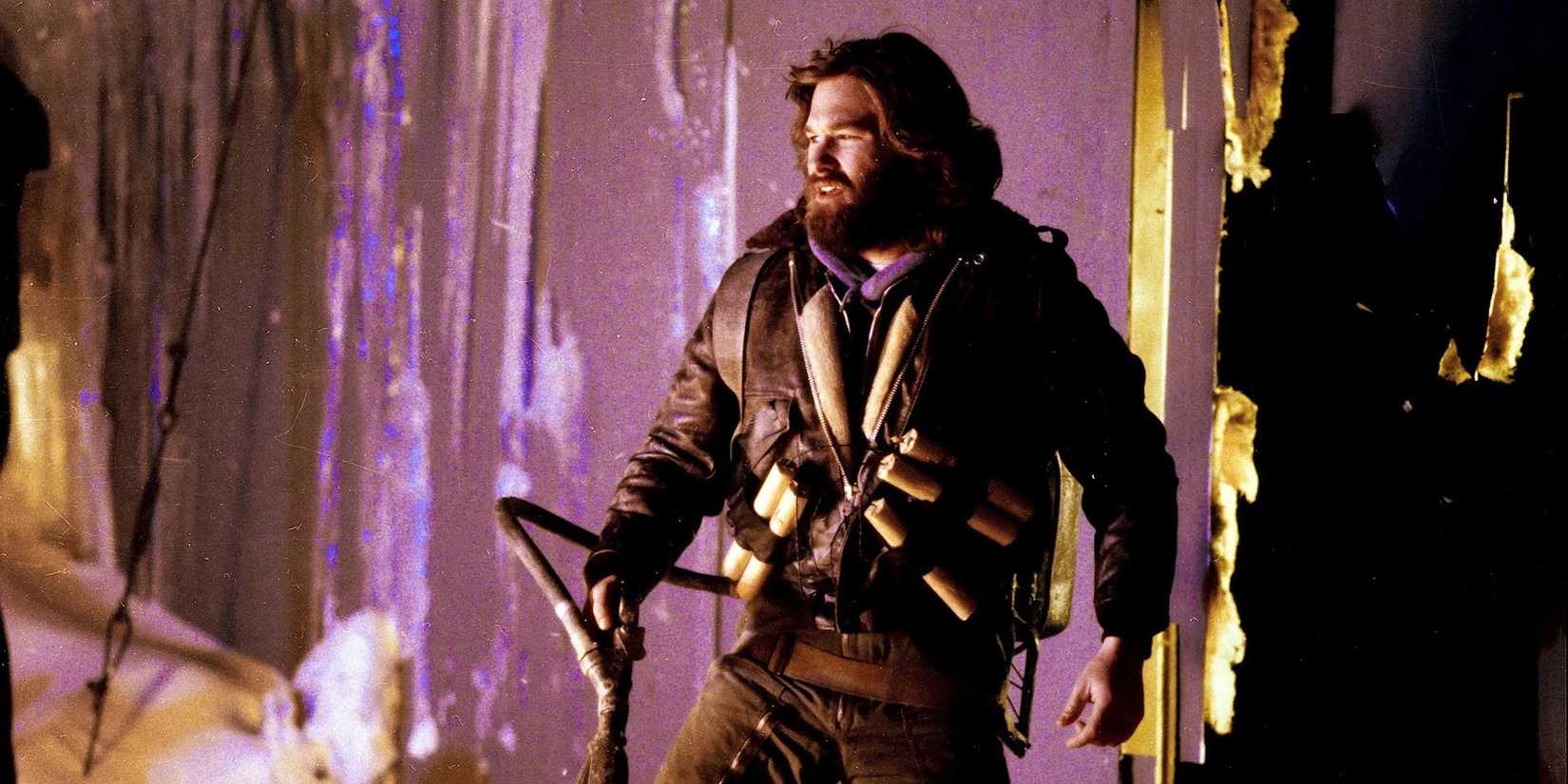
The Thing starts when a group of American researchers encounters a mysterious Norwegian crew pursuing a sled dog. After bringing the animal back to their station, they soon discover that the creature is actually an extraterrestrial organism capable of perfectly imitating other living beings. The crew on the isolated base is immediately consumed by paranoia as they do not know who to trust.
Initially dismissed by critics, John Carpenter‘s The Thing has become a must-see in the sci-fi genre. Its simple, claustrophobic premise is executed brilliantly and effectively, with Carpenter showing remarkable restraint in showing and explaining the creature, putting the audience in the dark just like the characters. When the creature’s on screen, the practical effects are extraordinary, and the grotesque transformations are still disturbing today because they have a tactile, physical quality that digital effects often struggle to reproduce. During the first watch, audiences are transformed into detectives, trying to figure out who the creature is; upon rewatching, they can instead focus on smaller details.
‘Sunshine’ (2007)

In Sunshine, the Sun is dying, and it brings humanity on Earth closer to extinction. A crew of astronauts, which includes physicist Robert Capa (Cillian Murphy), is sent aboard the spacecraft Icarus II to deliver a massive nuclear payload into the Sun in the hope of reigniting it. Their already desperate situation becomes more complicated when they discover an active distress signal from the abandoned Icarus I.
Directed by Danny Boyle, Sunshine is an underrated, near-perfect sci-fi film with an insanely talented ensemble including Murphy, Michelle Yeoh, Rose Byrne, Hiroyuki Sanada, Benedict Wong and Chris Evans—that cast alone warrants a rewatch. Despite the modest budget, the production design is incredible and intricate, further elevated by Boyle’s kinetic and unpredictable style. The characters’ competing ideas about duty, survival, sacrifice, and humanity’s future give the increasingly frantic second half real emotional weight, and the infamous third act will completely catch audiences by surprise
‘Nausicaä of the Valley of the Wind’ (1984)
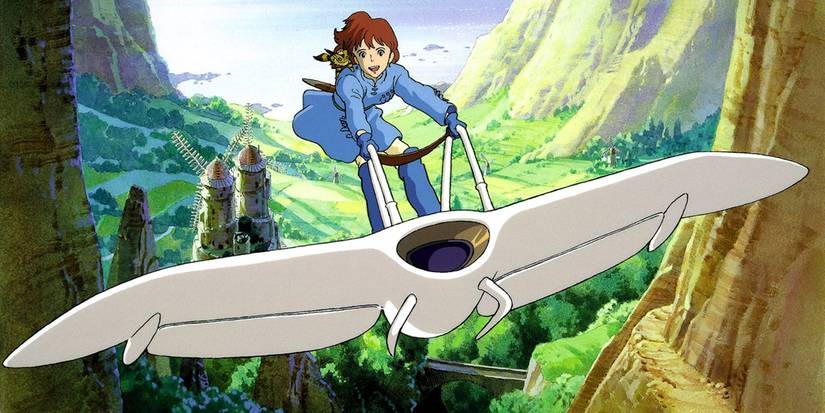
Nausicaä of the Valley of the Wind follows Princess Nausicaä, the young leader of a small kingdom surrounded by a vast toxic jungle. When the militaristic kingdom of Tolmekia invades Nausicaä’s valley and attempts to resurrect an ancient weapon, she becomes caught between opposing sides that see the natural world either as an enemy to destroy or a resource to control. Nausicaä has to find a way to prevent civilization from repeating the destructive mistakes that nearly destroyed the planet in the first place.
In Studio Ghibli’s great filmography, Nausicaä is often overlooked because it’s one of Hayao Miyazaki‘s earliest works. He makes the environmental themes inseparable from the characters, worldbuilding, and adventure. The titular character is extraordinary because her compassion allows her to understand a world that everyone else fails to comprehend. Moreover, the animation remains breathtaking decades later. It is also incredibly rewatchable, especially if you have seen Miyazaki’s other, more popular movies like Princess Mononoke or The Boy and the Heron.
‘Brazil’ (1985)
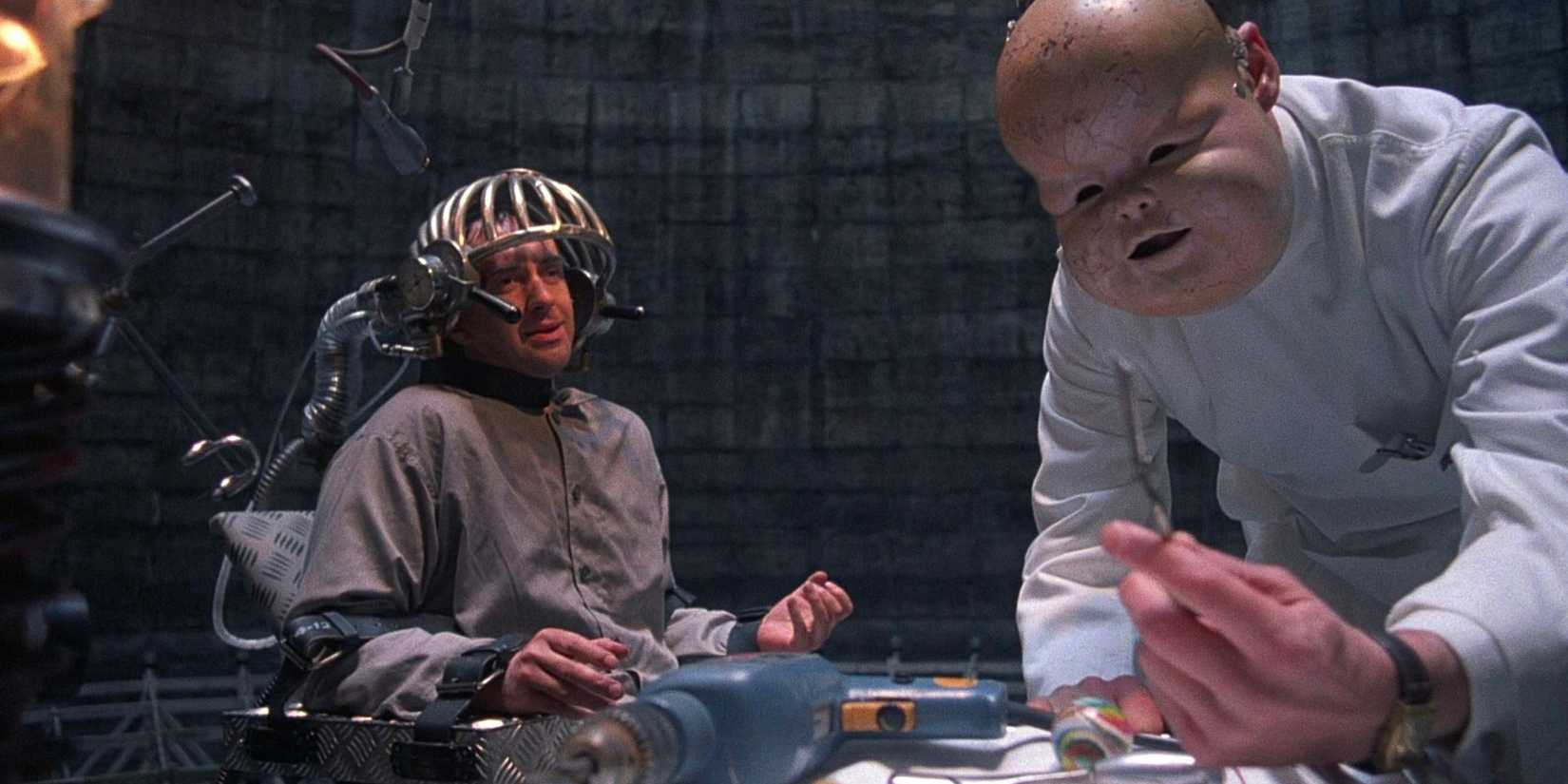
In a dystopian society where bureaucracy is king despite poor systems, Brazil follows Sam Lowry (Jonathan Pryce), a low-level government employee who dreams of escaping his routine by imagining himself as a hero who rescues a mysterious woman. His fantasies begin to blur with reality when he meets a woman who resembles the one he sees in his dreams. After a bureaucratic error leads to the wrongful arrest and death of an innocent man, Sam becomes increasingly suspicious of the system he works for.
Bureaucracy is always the bane of every citizen’s existence. Terry Gilliam criticizes and satirizes it through a funny, imaginative, and visually spectacular sci-fi film. The surreal, often disturbing imagery in this neo-noir sci-fi perfectly reflects the plot, where everything is complicated and out of proportion. The result is an absurd and unique experience unlike any other. Pryce brings a vulnerable and engaging energy, supported by household names like Ian Holm and a particularly memorable Robert De Niro. With its endless details, satirical ideas, and relevance, Brazil is deserving of a rewatch.
‘District 9’ (2009)
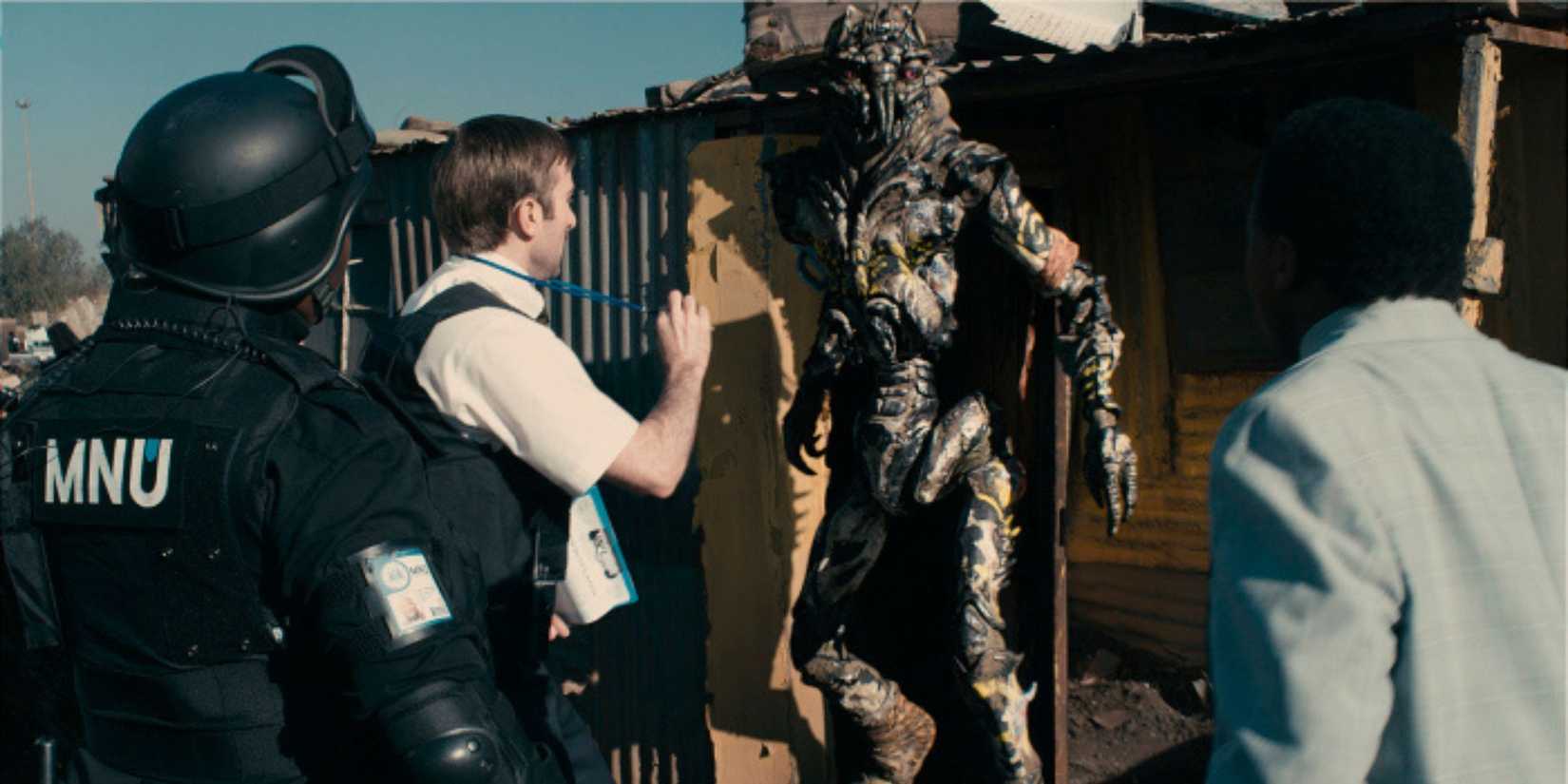
In Johannesburg, after an alien spacecraft has appeared above the city, thousands of extraterrestrial refugees are relocated to a slum known as District 9. The film follows Wikus (Sharlto Copley), an overly enthusiastic employee sent into District 9 to oversee the aliens’ relocation. However, he is exposed to an alien substance that transforms his body into something more like the aliens.
District 9feels nearly perfect because it seamlessly combines its sci-fi premise with social commentary. The documentary-like style heightens the realism and makes it feel grounded. In his first feature film, Neill Blomkamp balances political allegory with entertainment value, complete with fantastic creature design and great visual effects. Copley’s Wikus is also an effective protagonist because he begins as someone the audience has little reason to admire, and his transformation forces both him and us to reconsider the way he treats the aliens. Released almost two decades ago, the film is still eerily relevant to the political and social climate of today.
You must be logged in to post a comment Login