Entertainment
10 Near-Perfect Space Opera TV Shows No One Remembers Today

The appeal of science fiction is the vast worlds that the stories we watch can take us to. A time machine can take us to the past, while a spaceship can take us to, well, space! The latter have served as places where the narratives familiar on our surface become even more extraordinary in the galaxy. Within the larger sci-fi space genre is the space opera, stories that emphasize grand, sweeping adventures, high-stakes drama, and epic conflicts over scientific accuracy; they’re battles of good and evil that only imagination could think up.
The most familiar space opera in pop culture is Star Wars, and since its massive success, the subgenre has found its place on the small screen. Here, we discuss ten near-perfect space operas no one remembers today. The series on this list are set in vast galactic empires, feature interstellar warfare, and chronicle larger-than-life characters, prioritizing epic storytelling, which is why the devoted fans adore them.
‘Buck Rogers in the 25th Century’ (1979-1981)


Back in 1928, Philip Francis Nowlan created an iconic character known as Buck Rogers. Since then, he has appeared in an assortment of media, including comic strips, radio, and novellas. Nearly 50 years later, the character returned to the small screen in the two-season space opera Buck Rogers in the 25th Century, following the adventures of Captain William “Buck” Rogers (Gil Gerard), a 20th-century astronaut accidentally frozen in space for 500 years. Revived in 2491, he discovers Earth rebuilding from nuclear war and uses his piloting skills to defend the planet against alien empires and galactic villains.
Buck Rogers in the 25th Century struck a balance between high-stakes cosmic adventure and unapologetic pulp charm. From evil galactic empires with seductive space princesses to dogfights in sleek, futuristic starfighters, there was a cinematic quality to the television budget. Buck Rogers in the 25th Century chose kitsch over a philosophical sci-fi thriller. By never taking itself too seriously, the series rarely did, relying on clever humor and dazzling visual design that was bright and optimistic. Certainly a product of its time, this gem was meant to entertain first and foremost.
‘Dark Matter’ (2015-2017)

Even though a second season is around the corner, there is a faction of TV-watchers who either forgot about or have never even realized Dark Matter existed. Created by Blake Crouch, based on his 2016 novel, it follows Jason Dessen (Joel Edgerton), a Chicago physicist who is abducted and thrust into the multiverse. He wakes up in alternate realities where his life choices went differently, and he must fight his way back home through a labyrinth of parallel worlds to save his true family from the most dangerous foe imaginable: himself.
A deeply character-driven love story set within a high-stakes multiverse thriller, Dark Matter explores the roads not taken, challenging viewers with a core question: Are you happy in your life? Blending epic space-opera ambition with deeply intimate family drama, Dark Matter uses “space” in terms of the infinite multiverse. It’s the ultimate “what if” story, taking a protagonist and introducing twisted reflections of his life and career, leading to a masterful, multidimensional war fought on a personal level. It may not use the stars as its backdrop, but its space opera sensibility makes it a near-perfect option.
‘Farscape’ (1999-2003)

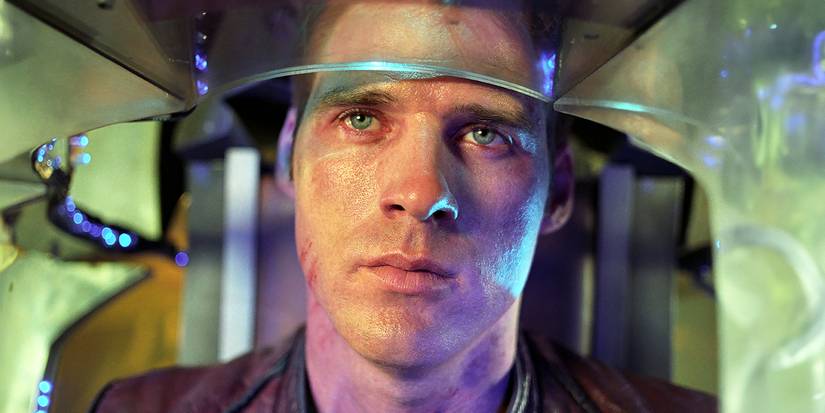
Farscape chronicles the adventures of Earth astronaut John Crichton (Ben Browder), who is accidentally sucked through a wormhole into a distant, hostile part of the universe. He ends up aboard Moya, a living spaceship, alongside a crew of escaped alien fugitives while being relentlessly hunted by a merciless military empire. The antithesis of Star Trek, Farscape blends space-opera adventure and dark emotional arcs with innovative, groundbreaking puppetry.
The massive allure of the series was the incredible work by The Jim Henson Company and the creatures they created. The series uses a stranger-in-a-strange-land premise, with Crichton using modern science and pop-culture references to survive, often clashing with and enlightening his alien crewmates. It flipped the good-guy tropes on its head, as the merry band of convicts operated in moral shades of grey. If you’re looking for romance, look no further than Crichton and Peacekeeper warrior Aeryn Sun (Claudia Black). Prefer slapstick, bizarre humor, or gut-wrenching psychological horror? Farscape has you covered. It’s a time capsule series that truly delivered on all cylinders.
‘Killjoys’ (2015-2019)

Coming out of Canada was one of the more underrated space adventure series, Killjoys. A thrilling space Western, Killjoys follows three interplanetary bounty hunters who work as a neutral police force. Dutch (Hannah John-Kamen) is a highly skilled, top-tier bounty hunter with a mysterious, dark past. John Jaqobis (Aaron Ashmore) is a kind-hearted, tech-savvy peacemaker who acts as the glue of the group. D’avin Jaqobis (Luke Macfarlane) is John’s older brother and an elite former soldier with combat skills and deep-seated military trauma.
The high-octane series blends the “monster-of-the-week” bounty-hunter format with a surprisingly deep, serialized sci-fi conspiracy, featuring unique worldbuilding and the ability to balance lighthearted humor with serious stakes. The heart comes from the found family dynamic built by the primary trio: each character is distinct enough that you may have a favorite, but together they create the perfect team. Killjoys was a show that let you dip in and out, but for those who journeyed through, it wove a massive, satisfying overarching narrative.
‘Lexx’ (1996-2002)

Another space thriller from Canada with a ‘90s aesthetic is Lexx. Created by Lex Gigeroff and brothers Paul and Michael Donovan, Lexx was a bizarre and darkly satirical sci-fi series about a ragtag group of reluctant misfits who accidentally steal the “Lexx,” an enormous, sentient, dragonfly-shaped spaceship that doubles as the most destructive weapon in two universes. They wander through hostile and chaotic universes, avoiding the clutches of a tyrannical empire.
Leaning heavily into irony, parody, and adult-oriented humor rather than traditional space heroism, its subversion of every space opera trope allowed it to stand out uniquely on its own. Lexx lives and breathes via its band of anti-heroes and pokes fun at the genre within its worldbuilding. Each of the show’s four seasons has a distinct essence. The first two seasons are wild, raunchy space operas; the third season is a darker, slow-burn psychological journey on a literal hell-planet, and the fourth season is a satirical send-up set on modern-day Earth. And yet, they all thrive together as one complete series.
‘Space: 1999’ (1975-1977)

If there might have been a rival to Doctor Who, it was Space: 1999. The classic space drama set in 1999 follows the 311 inhabitants of Moonbase Alpha, a scientific research station on the Moon. When a catastrophic nuclear waste explosion blasts the Moon out of Earth’s orbit, the crew is sent hurtling uncontrollably into deep space. The runaway moon serves as the crew’s unlikely spacecraft as they drift across the universe, encountering strange alien civilizations and cosmic phenomena, and battling for survival.
Across two epic seasons, Space: 1999 combines cinematic hard-sci-fi aesthetics with surreal, philosophical storytelling through breathtaking practical effects, an existential focus, and an adventurous premise. Space: 1999 is revered for its special effects design by Academy Award winner Brian Johnson, who went on to work on Alien and The Empire Strikes Back. With realistic and cinematic weight on the small screen, Johnson helped craft some of the most believable and iconic spacecraft in genre history. By believing in the universe in which the characters occupied, the story of survival resonated.
‘Spaceballs: The Animated Series’ (2008-2009)

There will most certainly be a faction of individuals reading this who will shake their heads at the inclusion of Spaceballs: The Animated Series. For those of us who have great reverence for the Mel Brooks film, the 13 episodes were the perfect way to scratch the itch of our beloved comedy classic. Created by Brooks and Thomas Meehan, the show follows the galactic misadventures of a ragtag space hero named Lone Starr (Rino Romano), a half-man/half-dog Barf (Tino Insana), and Princess Vespa (Daphne Zuniga) as they continually outwit the evil, power-hungry President Skroob (Brooks) and his bumbling henchman, Dark Helmet (Dee Bradley Baker).
Each episode targeted a different blockbuster franchise or pop culture element, such as the Star Wars prequel trilogy, The Lord of the Rings, and video games like Grand Theft Auto. If you admire the Brooks brand of humor, Spaceballs: The Animated Series is exactly what you expect. The series is gloriously nostalgic, and animation allowed the parodies to have fewer budgetary constraints, exaggerating the spectacle. The space oddities are bigger and better than ever, and the animation style was distinct, but the viewing accessibility was, well, not universal. Still, if you were counting down to Spaceballs: The New One, you absolutely tuned in to this short-lived space series.
‘The Expanse’ (2015-2022)
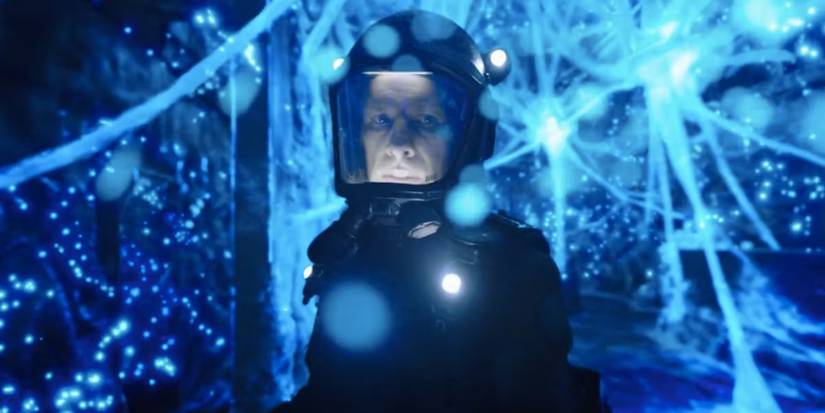
A major reason some of these shows have been forgotten might be the place where they aired. Nothing against Syfy, but the weight of the network was outmatched by the big-name streamers. Nevertheless, Syfy delivered one of the best space shows of the 21st century: The Expanse, set in a future where humanity has colonized the solar system. Now, there are political tensions and military conflicts among three factions: Earth, a militarized Mars, and the working-class citizens of the Asteroid Belt, all while a mysterious alien technology threatens to destroy them.
To some, The Expanse played out like Game of Thrones in space. The series excelled at geopolitics, weaving together the converging interests and deeply flawed perspectives of three major factions through a story of survival, power, and exploitation rather than the classic good-versus-evil. The worldbuilding was some of the strongest in the genre. Leading the ensemble were Thomas Jane as Joe Miller, a gritty, cynical detective, and Shohreh Aghdashloo as Chrisjen Avasarala, alongside an ensemble that served as the heart of the show. The Expanse was an epic and ambitious series that felt cinematic in scale.
‘The Orville’ (2017-Present)

There are very few things that Seth MacFarlane can’t do, and we’re here to celebrate another of his masterpieces, The Orville. The narrative centers on Captain Ed Mercer (MacFarlane), who gets command of the U.S.S. Orville to get his career back on track after a difficult divorce. In a twist of workplace awkwardness, Captain Mercer’s ex-wife, Commander Kelly Grayson (Adrianne Palicki), is assigned to his ship as his First Officer. Joining them are an eclectic mix of humans and aliens.
Inspired by classic Star Trek, The Orville quickly moved away from parody to earn its own identity, positioning itself more as a touching love letter to science fiction space operas. The blend of heart and humor may be different than other MacFarlane projects, yet his stamp is very present. The characters truly drive the action, with each member of the crew grounded in real-world themes. From a visual perspective, The Orville made great use of its big budget: the visual effects, space battles, and alien designs are at a popcorn-blockbuster level. The Orville’s embrace of optimism and hope made it a comforting show, which space operas tend not to be.
‘Vagrant Queen’ (2020)

Sometimes a legacy is born by being canceled too soon — for Vagrant Queen, the Jem Garrard-created series’ single season was near-perfect. Airing on Syfy for ten triumphant episodes, it is a snarky space opera that follows Elida (Adriyan Rae), an overthrown child queen who becomes an outlaw scavenger. When she learns her mother is still alive, she and her crew — Isaac (Tim Rozon), a charming rogue “frenemy,” and Amae (Alex McGregor), an optimistic, tech-savvy mechanic — embark on a dangerous galaxy-wide rescue mission, all while being hunted by an unhinged military leader obsessed with wiping out her bloodline.
Based on the Vault Comics series by Magdalene Visaggio and Jason Smith, Vagrant Queen rejects the typical, gritty doom-and-gloom of modern sci-fi in exchange for colorful and campy adventures. Many hero stories focus on the chosen one arc; here, that’s tossed out the window. Elida is a deposed child queen-turned-scavenger who has absolutely zero interest in returning to her throne. In doing so, her journey explores the nuances of the burden of royal expectations, making her a highly relatable, reluctant hero. The story is fun and funky, leaning into sharp, witty banter and confrontational buddy relationships, featuring an all-female writing and directing team, elevating diverse voices and representation.
You must be logged in to post a comment Login