Entertainment
10 Nearly Perfect Action Shows, Ranked

Action shows get praised for the wrong things all the time. People talk about body counts, cool shots, big fights, shock deaths, and who looked the toughest walking away from an explosion. None of that means much on its own. Great action television is about sustained pressure.
It is about whether the violence changes the story, whether the fights expose character, whether escalation feels earned, and whether the show can keep making danger feel immediate instead of routine. That is where the nearly perfect ones separate themselves. The ten shows here all get that. They do not all work the same way, but every one of them knows how to make action feel like a story instead of decoration.
10
‘Warrior’ (2019–2023)


Warrior hits so hard and it never treats action as a side attraction. The fights are the language of the world. Territory, respect, class tension, family resentment, political opportunism, racial violence, personal shame, all of it keeps finding its way into physical confrontation. That is why the show stays alive even when nobody is punching anybody. You always feel like somebody is about to test somebody else’s claim to space.
Ah Sahm (Andrew Koji) gives the show an aura, but the real strength is that Warrior never traps itself inside one kind of cool. Ah Sahm can fight like a demon, yes, but the show also has to deal with Mai Ling (Dianne Doan)’s ambition, Young Jun (Jason Tobin)’s instability, Ah Toy (Olivia Cheng)’s cold-blooded precision, and the way the city itself keeps pressurizing every faction inside it. The result is a series where the action scenes matter because the grudges underneath them are always active. When the show really gets rolling, it feels less like a string of fights and more like a city-wide chain reaction.
9
‘Reacher’ (2022– )

What Reacher understands better than a lot of prestige-minded action series is the pleasure of directness. This is a show built around a giant human problem walking into corrupt systems and deciding he is not going to tolerate any of it. That sounds simple because it is simple, and the show is smarter for not apologizing about that. Reacher’s whole appeal is that he reads a room fast, clocks the lie inside it, and turns physical force into moral clarity.
But the reason it works beyond the basic premise is that Alan Ritchson does not play Jack Reacher like a robot. Reacher is blunt, observant, dryly funny, and weirdly patient right up until the moment patience is no longer useful. He’s stoic and unapologetic. That’s a weird combo these days. That makes the bursts of violence land better. And the show knows how to build around him: small-town conspiracies, military baggage, bad men who mistake size for invulnerability, allies who are useful without becoming dead weight. A lot of action shows waste time trying to convince you they are deeper than they are. Reacher does not. It just keeps delivering satisfying escalation with enough intelligence in the mechanics to keep you fully locked in.
8
‘Banshee’ (2013–2016)

Banshee is what happens when a show looks at the idea of too much and decides that is exactly the right amount. The violence is savage, the sex is reckless, the grudges are old, the criminal energy is everywhere, and every major character seems about one bad decision away from detonating the whole town. That could have turned into nonsense. Instead, the show commits so hard that its madness becomes structured.
The genius of Banshee is that Lucas Hood (Antony Starr) being an impostor is not just a hook. It poisons every interaction he has. He is constantly improvising authority he does not really own while dealing with Carrie Hopewell (Ivana Miličević)’s history, Rabbit (Ben Cross)’s shadow, Kai Proctor (Ulrich Thomsen)’s local dominance, and a town full of people who all seem to have private reasons for snapping. The fights are famous for good reason. They do not feel neat. They feel exhausting, painful, ugly, and personal. That is what gives the show its bite.
7
’24’ (2001–2010)
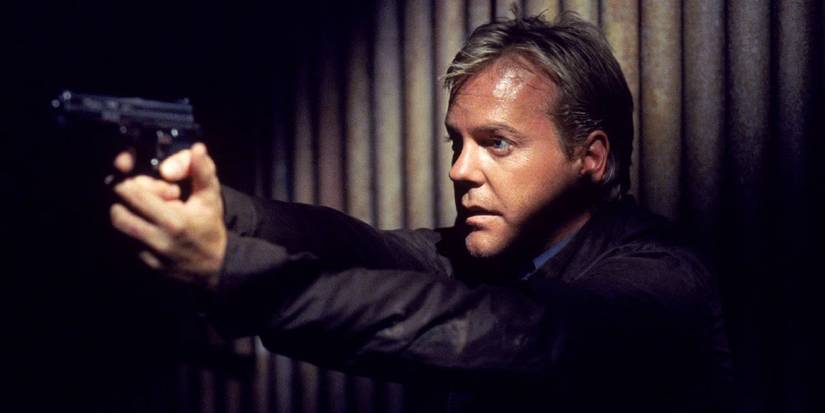
There are action shows with better individual fight scenes than 24. There are action shows with prettier filmmaking. There are action shows less absurd from season to season. But if we are talking about pure compulsion, pure “I need the next episode now,” 24 still belongs near the top because it understands velocity on a level most television never touches. Every hour ends with a fresh emergency, a betrayal, a clock problem, a political complication, or a new layer of catastrophe.
Jack Bauer (Kiefer Sutherland) is the engine, obviously, and Sutherland plays him with exactly the right approach. Jack is not cool in a relaxed way. He is desperate, half-broken, relentless, and always one second away from doing something extreme because the alternative looks even worse. That is what makes the show work. It does not present action as controlled mastery. It presents it as triage under impossible pressure. Even when the plotting strains credibility, the show’s sense of pace keeps dragging you forward.
6
‘Daredevil’ (2015–2018)
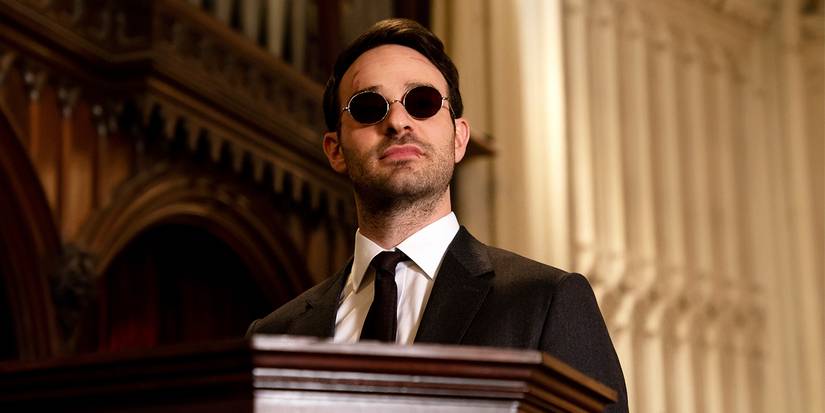
What separates Daredevil from most superhero action shows is that it actually understands what a beating costs. Matt Murdock (Charlie Cox) gets battered, staggered, slammed into walls, thrown down hallways, and pushed into the kind of exhaustion that changes how a scene feels. That physical vulnerability gives the action real dramatic value. And then there is the mood.
Hell’s Kitchen feels claustrophobic, wounded, and morally cornered. Fisk (Vincent D’Onofrio) reshapes the entire show’s sense of threat because his presence makes every criminal and civic layer feel connected. Charlie Cox brings the right tension to Matt: intelligence, restraint, guilt, anger, and a self-destructive need to carry too much himself. The famous hallway fights embody what the show is about. Matt wins, but never cleanly. Every victory leaves damage behind. That is why the action means something.
5
‘The Punisher’ (2017–2019)

A lot of adaptations get seduced by the iconography of the character and stop there. This one is strongest when it remembers that Frank (Jon Bernthal) is not just efficient. He is torn open and functioning anyway. The Punisher follows a man whose grief has hardened into method without ever fully losing the raw wound underneath it.
When the show is in full form, it is ruthless.The action is tied to Frank’s psychology and the damage done to everyone around him. His scenes with Micro (Ebon Moss-Bachrach) help because they create contrast without softening him into something he is not. Billy Russo (Ben Barnes) matters because their history turns conflict into betrayal instead of generic opposition. And when Frank goes to work, it is ugly, efficient, punishing force carried out by a man who has stopped pretending he belongs to ordinary life. That clarity is what keeps the series from feeling like empty punishment porn.
4
‘Strike Back’ (2010–2020)

Strike Back might be one of the purest action-delivery systems television has ever produced, and that is meant as praise. The show knows exactly what it is built to do: throw damaged, hyper-capable operators into one hot zone after another, keep the missions nasty and unstable, and make every operation feel like it can spiral in six different directions before anybody gets out. There is no bloat in the appeal. It is precision, momentum, and constant tactical pressure.
What makes it better than lesser military action shows is that it does not go soft in the connective tissue. The banter matters. The exhaustion matters. The improvisation matters. Scott (Sullivan Stapleton) and Stonebridge (Philip Winchester), in particular, work because their chemistry gives the show something to lean on between firefights. One is chaos with a pulse, the other is discipline holding itself together, and that friction keeps scenes from going flat. Then the set pieces hit, and the show delivers with frightening consistency. Raids, ambushes, extractions, reversals, close-quarters scrambles, Strike Back understands that action television can be artfully simple if the execution is sharp enough. Here, it usually is.
3
‘Spartacus’ (2010–2013)
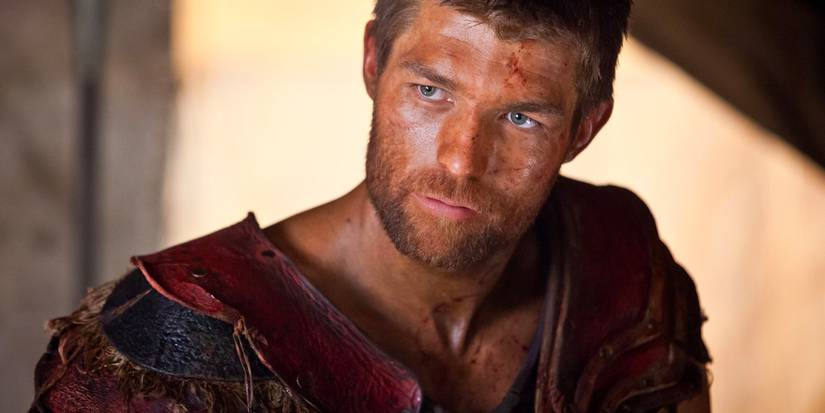
Very few shows understand escalation the way Spartacus does. It starts hot and then keeps finding ways to become hotter without losing narrative shape. That is the trick. Plenty of series can go loud. Very few can go loud while still making every new betrayal, revolt, alliance, humiliation, and revenge beat feel like it belongs exactly where it lands. Spartacus is operating at full emotional volume almost all the time, and somehow that becomes a strength rather than a weakness.
The show’s action is nearly perfect because it is fused to suffering, pride, spectacle, and payback. Spartacus (Andy Whitfield) is fighting and clawing his way through systems that stripped him of home, wife, name, and control. Batiatus (John Hannah) is one of the great chaos engines in TV because he can make a room dangerous without drawing a blade. Crixus (Manu Bennett), Gannicus (Dustin Clare), Lucretia (Lucy Lawless), Ashur (Nick E. Tarabay), Oenomaus (Peter Mensah), these are not decorative figures orbiting the hero. They all sharpen the stakes in different ways. And when the series goes into battle mode, you feel the accumulated insult behind every strike. That emotional backlog is why the action in Spartacus lands so hard.
2
‘Gangs of London’ (2020– )

Gangs of London feels like a show made by people who took it personally when television action got lazy. The fight scenes are not just good. They are viciously imagined, spatially clear, physically punishing, and committed to consequences in a way that makes a lot of expensive action TV look fake and timid. The series understands that the audience should not just admire violence. They should wince at it, dread it, and still be unable to look away from it.
But the reason it rises this high is that the show is not only a collection of astonishing beatdowns and shootouts. It is a power struggle full of unstable loyalties, family fractures, strategic misreads, and men convincing themselves they are in control right before somebody tears that illusion apart. Elliot Carter (Ṣọpẹ́ Dìrísù) works because he is never allowed to settle into simple hero mode. Sean Wallace (Joe Cole) is compelling because grief, entitlement, rage, and insecurity are all fighting inside him at once. And when the show decides to explode, it really explodes. Safe houses become slaughterhouses. Negotiations collapse into carnage. Whole alliances get rewritten in minutes. It is some of the most ferocious action television ever made.
1
‘Shōgun’ (2024– )
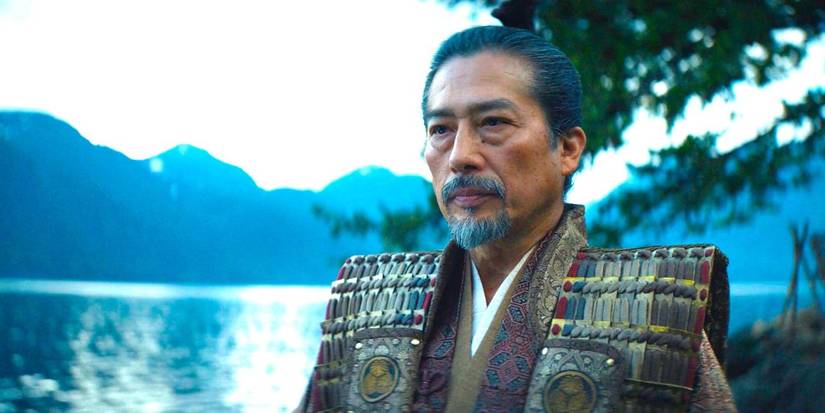
Putting Shōgun at number one on an action list is exactly the kind of choice people only question if they think action begins when swords come out. That is far too small a definition. Shōgun is nearly perfect action television because it understands that action starts much earlier than impact. It starts with positioning. It starts with reading a room correctly. It starts with knowing who is cornered, who is bluffing, who is buying time, who is sacrificing a piece to save the board, and who is quietly steering everybody else toward a confrontation they will not survive.
That is why the show is so overwhelming. When violence happens, it matters because the tension feeding into it has been built with terrifying patience. Toranaga (Hiroyuki Sanada) does not dominate the series by constantly raising his voice or swinging his authority around. He dominates it by turning thought into motion and motion into inevitability. Mariko (Anna Sawai) gives the story its deepest force because her restraint, duty, faith, intelligence, and pain make every scene around her denser. Blackthorne (Cosmo Jarvis) is useful not as an action avatar for the audience, but as a destabilizing presence inside a system already trembling with calculation and mistrust. And when Shōgun does unleash kinetic force, it lands with unusual weight because the show has already done the harder work.


Shogun
- Release Date
-
2024 – 2026-00-00
- Directors
-
Fred Toye, Jonathan van Tulleken, Charlotte Brändström, Takeshi Fukunaga, Hiromi Kamata
- Writers
-
Rachel Kondo
You must be logged in to post a comment Login