Entertainment
10 Netflix Drama Shows That Are 10/10 but Nobody Remembers Today

It’s only been a little over a decade since Netflix began soaring as one of the dominant streaming services. While first playing host to many classic films and series, once they began getting into the original content universe, Netflix soon shocked network and cable with its binge-style viewing.
With an abundance of original titles over the years, we’ve been given the gift of sensational shows, but with seemingly a new show a week, have we forgotten some of the greats? Absolutely. The titles on this list are 10/10, but no one seems to remember them like we once did. From shows gone too soon to shows ahead of their time, we celebrate them once again.
‘GLOW’ (2017–2019)


It’s safe to say that female-led series were all the rage on Netflix, and they tended to be quite good. Following in the footsteps of Orange is the New Black came GLOW. Created by Liz Flahive and Carly Mensch, the period dramady put the characters and gimmicks of the 1980s syndicated women’s professional wrestling circuit, Gorgeous Ladies of Wrestling, into the limelight. The series followed Ruth Wilder (Alison Brie), a struggling 1980s actress who finds an unlikely career in GLOW alongside her former best friend, Debbie Egan (Betty Gilpin). Directed by Sam Sylvia (Marc Maron), he assembles a motley crew of misfits as they train together and develop wrestling personas, while building lasting friendships. Exploring the power dynamics between women in a male-dominated industry, GLOW was an instant classic. And then it just ended.
With an incredible female-led ensemble cast, the show was renewed for a fourth season. However, when the COVID-19 pandemic shut down production, the streamer ultimately cancelled the series, and thus, the final season never came to fruition. To end on a cliffhanger— one that would have jump-started a sensational new chapter— was a complete disservice to the 10/10 masterpiece. GLOW is fondly remembered by its die-hard fans, but because it was shuttered before its natural end, it seems no one else remembers it because of how and when it faced its send-off. A smartly written and brilliantly performed series, GLOW was the definition of a character-centric show. You had your favorites but also appreciated the rest of the ensemble. It was light-hearted enough to give you a much-needed escape from reality, yet empowering and triumphant in story. Visually transporting you back to the ’80s, GLOW was a sleek, fully realized series, even if it never got to complete its journey.
‘Sense8’ (2015–2018)

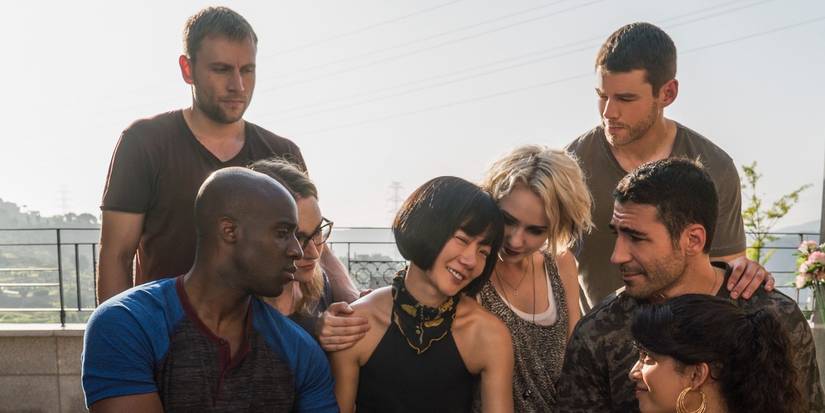
A series truly ahead of its time was the Wachowskis and J. Michael Straczynski masterpiece Sense8. The daring science fiction series followed the psychic connection between eight strangers from various walks of life, born into the same cluster of sensates, across different parts of the planet. Mentally and emotionally linked human beings, the eight — Capheus (Aml Ameen in Season 1, Toby Onwumere in Season 2), Sun (Bae Doona), Nomi (Jamie Clayton), Kala (Tina Desai), Riley (Tuppence Middleton), Wolfgang (Max Riemelt), Lito (Miguel Ángel Silvestre), and Will (Brian J. Smith) — attempt to live their everyday lives while navigating the sinister Biologic Preservation Organization (BPO) and Whispers (Terrence Mann) trying to hunt them down.
A truly globetrotting sensation, Sense8 explored rich themes of identity, sexuality, gender, and politics through an atypical superhero lens. There was no need for capes or leotards; Sense8 presented a different hero-and-villain narrative in a novel way. A visually triumphant series brought to life through pristine storytelling and intricate direction, Sense8 was built around its individual characters. The characters were the reason to enter this universe because they were expertly crafted. Whether they were forging their own paths in their individual stories or blending worlds through their connections, Sense8 was the little show that could. Highly regarded for its LGBTQ+ visibility, the series weaved in important conversations without compromising its integrity. Sadly, the show was cancelled before it was meant to end, though its final movie did its best to wrap up the story in a fan service kind of way.
‘Russian Doll’ (2019–2022)
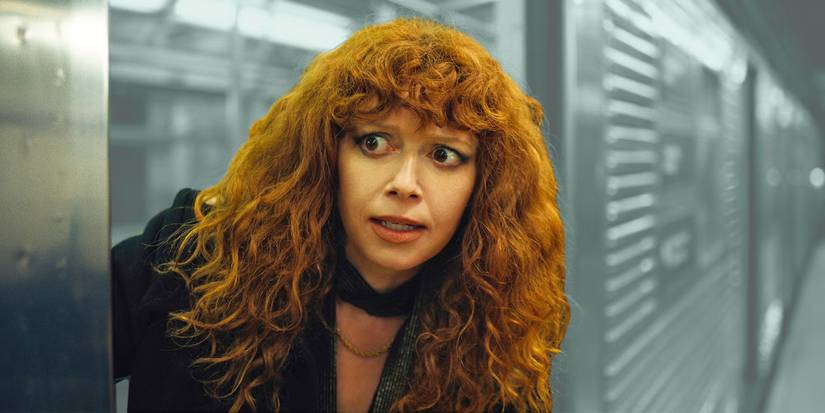
One of the most ambitious science fiction dark comedies to come to the streamer was the two-season series, Russian Doll. Created by Natasha Lyonne, Leslye Headland, and Amy Poehler, the intricate labyrinth of a show follows Nadia Vulvokov (Lyonne), a sarcastic software engineer stuck in a time loop, dying and reviving, at her 36th birthday party in NYC. Alongside a stranger named Alan (Charlie Barnett), who shares the same loop, they uncover the cause through traversing trauma and finding connection. By Season 2, it’s all about time travel as Nadia soon begins to experience life inside the body of her mother, Nora (Chloë Sevigny), thanks to a supernatural 6 train. Slightly morbid in premise yet uplifting when the cheery “Gotta Get Up” began to blare, Russian Doll explored trauma, mental health, and the need to confront one’s past through a sci-fi lens.
Russian Doll was a heavily layered piece. At under a half hour per episode, the series managed to blend classic science fiction with emotional and philosophical conversations. Mortality was front and center, yet it wasn’t overwhelmingly difficult to undertake. Russian Doll dove into Nadia’s psyche rather than just focusing on the mechanics of dying. To say the show was profound is an understatement. Lyonne played a simultaneously selfish and deeply damaged individual, breaking away from the character she had been previously known for on Orange Is the New Black. While we may never forget Nicky, we did forget Nadia. Perhaps we forgot about Russian Doll because Lyonne followed up the series with an even stronger vehicle, Poker Face.
‘Godless’ (2017)

Before the Taylor Sheridan Western boom came an epic Netflix series that’s been lost to time, Godless. In Scott Frank‘s series, Roy Goode (Jack O’Connell), a young outlaw on the run from his vengeful mentor, Frank Griffin (Jeff Daniels), seeks revenge for betraying him. He winds up in La Belle, a small New Mexico mining town populated almost entirely by women after a mining disaster killed most of the men, who band together to defend their home against a murderous gang. A show about morality in the face of survival, Godless explores the strength of community and the tension between freedom and order.
Though the series maintained classic Western tropes, it was wonderfully contemporary thanks to the female-forward ensemble. If you’re looking for strong female characters, Godless has you covered with Michelle Dockery as Alice Fletcher, an unflinching widow, and Merritt Wever as Mary-Agnes, the widow of the mayor and lover of another woman, Callie Dunne (Tess Frazer). The seven-part Western is a wonderfully constructed and plotted story that blends gritty drama with emotionally-tinged emotional arcs. Helped by a stunning New Mexico landscape, Godless checked all the boxes a few years before audiences were ready for the full resurgence of the genre.
‘Narcos’ (2015–2017)
When Narcos first premiered, it came out guns blazing. Chronicling the rise and fall of Colombian drug lord Pablo Escobar (Wagner Moura) in the late 1970s and 80s, from a smuggler to the leader of the Medellín Cartel, Narcos is partially told through the eyes of the DEA agents on the hunt for the powerful leader. By Season 3, Escobar has fallen as the Cali Cartel swiftly rises. Highlighting the violent, high-stakes battle between traffickers, local police, and U.S. law enforcement, Narcos mixes real-life archival footage with dramatized scenes to portray the brutality of the era, including corruption, politics, and “narcoterrorism.” As there had always been an inch for crime dramas, Narcos stood out as a sensationally daring series. But over time, as new crime thrillers arrived, Narcos fell to the back burner.
The first two seasons thrived thanks to Wagner’s career-making performance as Escobar. His balance between being a terrifying tyrant and a devoted family man made his performance so extraordinary. Further, the dynamic between Pedro Pascal and Boyd Holbrook as Javier Peña and Steve Murphy added an extra layer to the treacherous, dangerous atmosphere. Even as a show on a steamer, the series had a true cinematic feel. Narcos could easily have been a movie, but allowing it to evolve over ten episodes per season proved brilliant for storytelling. If Rotten Tomatoes scores mean anything, Narcos got better season after season. Narcos did see a spin-off, Narcos: Mexico, arrive with some familiar faces returning, but it didn’t quite extend the series’ legacy.
‘Bodyguard’ (2018)
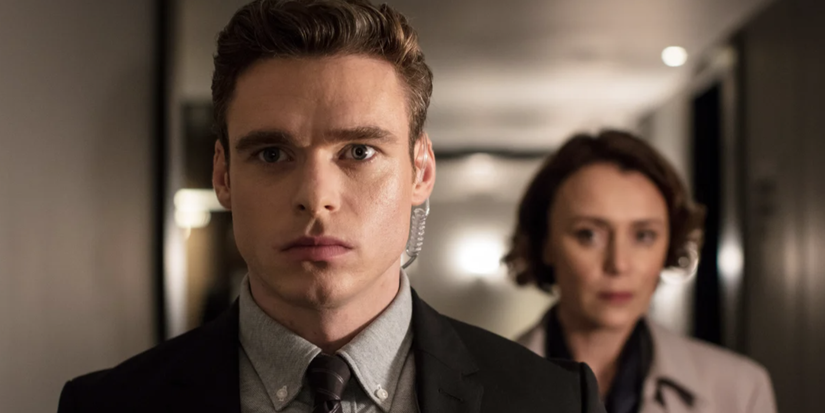
From the BBC to Netflix, Bodyguard proved that thrillers are what viewers seek. Created and written by Jed Mercurio, Bodyguard is a fast-paced political thriller that follows David Budd (Richard Madden), a traumatized war veteran working as a Specialist Protection Officer for the London Metropolitan Police. Tasked with protecting Home Secretary Julia Montague (Keeley Hawes)—whose politics he despises—Budd becomes caught in a conspiracy involving terrorism, government corruption, and organized crime. As Budd grapples with duty and trauma, he discovers that he might be the biggest threat. A series with twists and turns around every corner, through complex explorations of PTSD and government conspiracy, Bodyguard was a sensational six-episode, one-season binge.
Though the series resolved itself with its single season, there was a desire for more. With a beloved Game of Thrones star in the lead, the hype surrounding it could have brought more stories to the screen, especially with lingering loose ends that needed to be tied up. Yet, it was a one-and-done situation. Madden was in demand, and the lack of Season 2 left him open for other opportunities. Could a second season eventually come to fruition? “Maybe.” For now, other political thrillers on the streaming service continue to steal the spotlight, leaving Bodyguard to be forgotten as time goes by.
‘The OA’ (2016–2019)

A brilliant show, but decisive at that, The OA was Netflix’s original cult classic. The risky series, created and executive-produced by Brit Marling and Zal Batmanglij, with Marling in the lead, told the story of a young woman named Prairie Johnson, who had resurfaced after being missing for seven years. Prairie now calls herself “the OA” and can see, despite having been blind before her disappearance. She recruits five locals to teach them a series of movements she claims can open portals to other dimensions, revealing her traumatic past, near-death experiences with otherworldly beings, and a mission to rescue others. A truly mesmerizing science fiction fantasy thriller, The OA had a devoted following that helped push it to great heights.
At a time when difficult, risky series were intriguing, The OA was uniquely so. A highly intellectual and heady piece, it was also very much a personal project for Marling. You had to be willing to go on that journey with her and Prairie. And if you did, it was truly sensational. The story went to difficult places, including the trauma of emotional abuse and a school shooting. It was unabashedly unafraid to push to those lengths to start a conversation. Even with Marling at the center of the story, The OA was celebrated for its diverse ensemble. With the likes of Emory Cohen, Phyllis Smith, Jason Isaacs, Kingsley Ben-Adir, and others coming and going across its two seasons, the acting was crucial for the plot-driven thriller. A truly remarkable moment in television history, The OA is uniquely its own work of art. The OA‘s initial fan base helped earn it a second season, falling away soon thereafter before a third season could commence. Though if a special choreographed dance happened, perhaps Season 3 could come to life.
‘Maniac’ (2018)

Emma Stone and Jonah Hill have had extraordinary careers, so it is logical to have forgotten a project or two along the way. Unfortunately, that seems to be the case for the single-season run of Maniac. The unofficial Superbad reunion series, loosely based on the Norwegian series, the Patrick Somerville-created show followed two struggling strangers, Anna and Owen, who connect during a mind-bending pharmaceutical trial involving Dr. James K. Mantleray (Justin Theroux), a doctor with mother issues and an emotionally complex computer, set in a retro-future New York City. Through surreal, genre-bending dreamscapes, Annie and Owen confront trauma, loneliness, and their inner demons, ultimately exploring themes of connection, reality, and what it means to be “normal” in a technologically advanced, emotionally disconnected world. A sci-fi premise with a black-comedy undertone, Maniac forced a discussion about how true healing comes not from a pill but from understanding and connection with others and ourselves.
Alongside Stone and Hill, Maniac boasted an excellent ensemble including Sally Field, Gabriel Byrne, Billy Magnussen, and Julia Garner. With those names attached, it’s shocking that we still don’t toss the title into the discussion alongside other Netflix greats. With director Cary Joji Fukunaga at the helm, Maniac set itself apart through its dazzlingly distinct visual styles during its dreamscapes. The retro-futuristic aesthetic, which united 80s technology with futuristic concepts, highlighted the bizarro New York the characters navigated. A rich dissertation on mental health and grief, Maniac deserves a second chance.
‘Marco Polo’ (2014–2016)

Audiences love a historical epic. Whether it’s a medieval drama or sweeping war-set masterpiece, these multi-episode shows enhance what you might see on the big screen, as there is more time to explore. As Game of Thrones was taking over the world, Netflix explored an extraordinary epic by retelling the Marco Polo story. Inspired by his early years, Lorenzo Richelmy starred as Marco Polo, the famed explorer, as he joins the Mongol court of Kublai Khan (Benedict Wong). Marco must navigate intense political intrigue, espionage, martial arts training, the war against the Song Dynasty, and the culture clash of the Silk Road. A name well known but a story forgotten, Marco Polo was a sweeping series that was 10/10, but showed up too soon.
A high-budget, lavish production, Marco Polo brought audiences to a world they likely knew very little about. Even though some embellishment had been sprinkled in, viewers learned as they were entertained. Richelmy’s Marco Polo was the central character by name, but it was a pre-MCU Wong that stole the show. The power that he brought to the legendary leader was quite remarkable. A truly ambitious project, Maco Polo remains a hidden gem.
‘The Get Down’ (2016–2017)

A period drama musical from the minds of Baz Luhrmann and Stephen Adly Guirgis should have been the recipe for success, but The Get Down was only granted a single season. A masterpiece series that didn’t net the audience Netflix needed, the massive-budget series set in the South Bronx in the 1970s told the story of hip-hop’s birth amid the city’s bankruptcy and urban decay. It follows a group of teenagers, including aspiring poet Ezekiel “Books” Figuero (Justice Smith) and DJ Shaolin Fantastic (Shameik Moore), as they navigate love, violence, and artistic ambition. Depicting the cultural shift from disco to hip-hop, where MCing, DJing, and breakdancing ruled supreme, The Get Down was a worthy story about a crucial period in the evolution of music.
The brilliance of The Get Down was how sensationally well the authentic atmosphere was built. It featured the theatricality for which Luhrmann is known while integrating the raw history of the time. Through brilliant musical curation, The Get Down felt like an immersive experience. With the likes of Nas and Grandmaster Flash lending their credibility to the project, the genre’s origins are highlighted seamlessly. The series lovingly showcased how the “Get Down” acted as a form of liberation and escape for individuals in underserved communities. That’s truly where the heart of the show lay. In a sense, The Get Down is a romanticized coming-of-age story for entertainment purposes, but its core was rooted in reality.
You must be logged in to post a comment Login