Entertainment
10 Network TV Storylines That Would Never Air Today

TV shows have changed through the decades, and what was once considered acceptable in some cases would never fly today. Whether it’s the handling of women, LGBTQ+ characters, racism, domestic violence, or other themes, some shows approached topics in a way that would be handled very differently today or not covered at all.
Some of the shows are sitcoms that presented troubling storylines in a humorous way, and in some cases, it fit for the times. In others, they were controversial even back then. In hindsight, all of them maybe went a little too far. The shows remain beloved, and the storylines are accepted for what they were intended to accomplish at the time. But if any of these shows were written today, there would probably be a lot of red pen, changing certain aspects of the scripts and even characters.
1
Barney Relentlessly Preying on Women
‘How I Met Your Mother’ (2005–2014)


Barney’s (Neil Patrick Harris) relentless preying on women throughout the entirety of How I Met Your Mother (until he fell in love with and married Robin, played by Cobie Smulders) only managed to pass because of Harris’ over-the-top performance and the way his actions were woven into the plot. But it likely wouldn’t happen today, especially not as it did in some episodes.
Barney lied to and took advantage of women over and over again, painting them as gullible and dispensable. In one very questionable episode, it’s even revealed that he had a hidden scale at his door where he weighed women before they entered and denied entry if they exceeded a threshold. It bordered on disgusting at times, yet went overlooked because the character’s charm overshadowed the awful things he did and said. The exaggerated level of absurdity helped, too.
2
Jack Lying About Being Gay
‘Three’s Company’ (1977–1984)
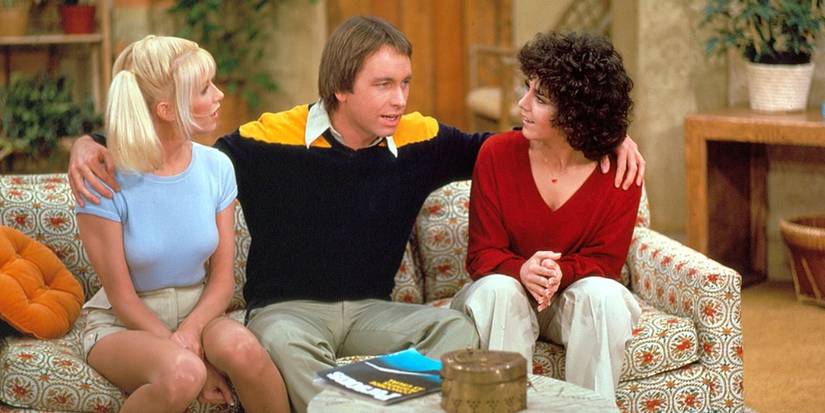
The entire premise of Three’s Company would never fly today. Jack Tripper (John Ritter) is a single playboy who lies about being gay to score an apartment with two women. Knowing the landlord would never allow a man to live with two single women if he were straight, Jack keeps up this ruse so he won’t be kicked out.
Aside from a landlord being able to deny such a living situation, Jack pretending to be someone he’s not and “playing up” being gay so he isn’t caught is not a storyline that would work today. Back in the ’70s, however, it was fitting of the time. And while the sitcom is still beloved and never considered offensive, it wouldn’t be remade in today’s climate.
3
Two Guys Dressing in Drag for an Apartment
‘Bosom Buddies’ (1980–1982)

Bosom Buddies helped put Tom Hanks on the map long before his thriving film career began. It remains his most memorable small-screen experience, but fans today can’t help but question the angling of the show. It’s about Kip Wilson (Hanks) and his friend Henry Desmond (Peter Scolari), who dress in drag so they can get into an all-female building because the rent is dirt cheap.
The pair pretend to be women while befriending other residents and trying to keep up the act. Some find it insulting to the trans community; others believe it’s predatory, as these two men infiltrate a building meant to be only for women. It’s all in fun, of course, but Bosom Buddies isn’t a concept that would air today without pushback, the classic show having aged poorly.
4
Sam Propositioning Female Staff
‘Cheers’ (1982–1993)
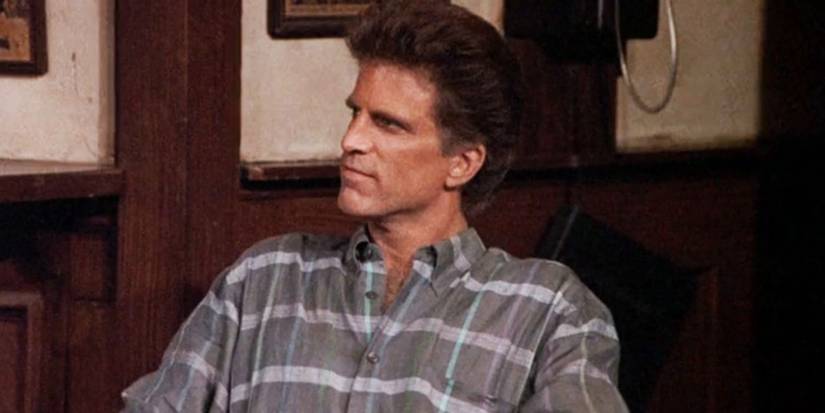
Sam Malone’s (Ted Danson) womanizing ways aren’t in question in Cheers. There’s nothing wrong with a single man looking to date women and dating around if he so chooses and the women are willing participants, but his constant propositioning of female staff who work for him at the bar is wildly inappropriate.
One of the most notable relationships is when he constantly hits on Diane (Shelley Long) when she’s a waitress, and he’s her boss. He later pursues the bar’s new manager, Rebecca (Kirstie Alley). Sam is never portrayed as being predatory but rather sex-addicted, smooth, and charming, which is why his actions often slide unnoticed. But the idea of a male boss so casually and constantly hitting on his female subordinates probably would not see the light of day today in a comedic show unless it was part of a darker storyline.
5
Jerry Drugging a Woman
‘Seinfeld’ (1989–1998)

There’s one particular storyline in Seinfeld that doesn’t sit well. In Season 9, Jerry (Jerry Seinfeld) is dating a woman who has a rare, vintage toy collection. But she is very particular about it and doesn’t want anyone touching the items. From the original G.I. Joe to the classic Mattel football game, it reminds Jerry so fondly of his childhood that he can’t help himself. So, he gets around her rules by offering her aspirin when she has a headache, knowing it will make her drowsy. She passes out, and he proceeds to play with the toys. When she awakens, he purposely introduces a heavy turkey dinner and boxed wine in hopes she’ll fall asleep again so he can continue.
It’s crystal-clear why this storyline in one of Seinfeld‘s most awkward episodes is so wrong. Even though Jerry didn’t do any physical harm to the woman through his actions, he still purposely put this woman in a vulnerable state so he could take advantage of her in a different way. The storyline is funny when you look at it through the absurd humor lens from which it was intended, but it’s widely considered to be one of the darkest things Jerry did throughout the show’s entire run.
6
Archie Bunker’s Racism
‘All in the Family’ (1971–1979)
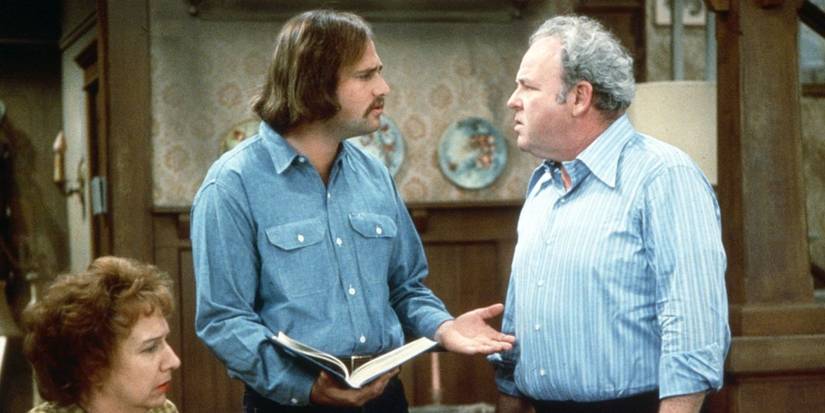
All in the Family was a sitcom true to its time, with Archie Bunker (Carroll O’Connor) a character true to his fictional backstory. He was a World War II veteran who held onto his bigoted beliefs, even though he was presented as a lovable character. His family members, especially his daughter Gloria (Sally Struthers) and son-in-law Michael (Rob Reiner), are members of the counterculture, being the voice of reason when Archie would say or do things that were questionable.
Still, a character like him, especially often given the mistreatment of his wife (though he clearly loved her dearly), would be frowned upon today. While the show did shed light on racism and presented characters to help soften Archie’s views, including the Jefferson family that went on to star in their own spin-off, it would still be considered too much today.
7
Al’s Insults to Overweight Women
‘Married…With Children’ (1987–1997)

Alongside his constant ribbing of neighbor Marcy (Amanda Bearse), there was a running gag on Married…With Children that involved Al Bundy (Ed O’Neill) constantly poking fun at overweight women. They were often customers in the shoe store where he worked, desperately trying to fit their large feet into shoes that were clearly a few sizes too small.
Al would whisper an insult under his breath, say it straight to their face, and even hurl another clever one as they angrily stormed out the door. It’s a wonder he was still employed! That aside, the concept of someone being ridiculed for their weight in such a biting way for the sake of laughs, especially without someone else advocating for them, wouldn’t cut it now.
8
Ralph Joking About Hitting Alice
‘The Honeymooners’ (1955–1956)

The Honeymooners is one of the funniest, most iconic sitcoms of all time, but one of its running jokes wouldn’t sit well with people today. Ralph (Jackie Gleason) and his wife Alice (Pert Kelton, Audrey Meadows, Sheila MacRae) had a typical marital relationship. But when they had arguments or Ralph was upset about something, he would often joke about hitting her. He never followed through with such an action, but the mere threat, even in jest, would never be seen in a comedy like that today unless it was meant to be part of a storyline specifically to address it.
“One of these days,” Ralph would declare, “Pow! Right in the kisser!” referencing punching his wife in the face. He would also say things like “Bang, zoom, straight to the moon!” These phrases were taken as they were meant to be at the time, a man saying words he didn’t actually mean and expressing his anger in a joking manner. But today’s culture would not find this funny in a modern sitcom.
9
The Fat Jokes About Carol
‘Growing Pains’ (1985–1992)

This one is especially powerful because the constant weight-related jokes about Carol Seaver (Tracey Gold) in Growing Pains, especially when she was nowhere near being overweight, reportedly led to Gold developing an eating disorder. Gold told late actor Shannen Doherty on her Let’s Be Clear with Shannen Doherty podcast back in 2025 that, while she had great memories from working on the show — one of the best sitcoms of the ’80s — her struggles with anorexia were fueled in part by some of her experiences there.
As she gained weight, the jokes written into the show became meaner, Gold recalls. Though the writers reportedly claimed the intention was to reflect the realities of a typical brother-sister relationship and wasn’t a jab at her figure at all, this didn’t make it right. Considering Gold’s honest words about how this made her feel, it’s a given that such lines would not be written into shows nowadays.
10
Pacey Sleeping With His Teacher
‘Dawson’s Creek’ (1998–2003)

Dawson’s Creek was a teen drama that wasn’t afraid to get dark and gritty, but there’s one storyline that was a step too far. In Season 1, Pacey (Joshua Jackson) sleeps with his English teacher in a storyline that even caused controversy back then. He not only sleeps with her, but he loses his virginity to her while just a teenager. When the school and community find out about it, she leaves town.
The storyline is further disturbing because the teacher isn’t even seriously reprimanded for her actions. Pacey was groomed and taken advantage of by this grown woman, behavior that would absolutely be considered predatory, yet was presented as a romantic storyline. Unless it’s a dark and dramatic show like Euphoria meant to highlight how wrong such behavior is, this storyline was too much for a show like Dawson’s Creek. It wouldn’t be handled the same way if it were replicated in a similar show today.


You must be logged in to post a comment Login