Entertainment
10 Perfect Books That I Knew Would Be Masterpieces From the First 10 Pages

For a bookworm, there’s nothing quite like a truly great book that gets great right as things kick off. Some of the greatest pieces of literature take a while to really get going, but throughout history, ten particular masterpieces have shown that it’s possible to offer a first ten pages that make it abundantly clear that what one is about to read is an absolute masterpiece.
Whether it’s a foundational classic like Jane Austen‘s Pride and Prejudice or a modern piece of speculative fiction like The Name of the Wind, these are the sorts of books that I knew for a fact would be masterpieces from the moment I hit page 10. Unsurprisingly, I wasn’t wrong. These should all be considered essential reading for anyone and everyone who loves genuinely great literature, novels that show just how close books can really come to perfection.
‘Pride and Prejudice’ (1813)


Jane Austen was one of the most important and massively influential authors in the history of English-language literature, a complete master of her craft credited with helping invent the modern realistic novel. She did that with timeless masterpieces of the caliber of Pride and Prejudice, perhaps the single most legendary romance novel in history. It completely redefined the romance genre and the “enemies to lovers” trope, serving as one of the most influential books in the history of the English language.
It’s one of those romance books that are perfect from the first page to the last, and you can tell just how great it’s going to be from just reading its opening 10 pages. What follows one of the most legendary opening lines in all of 19th-century literature is equally perfect in every way, full of masterful dialogue, biting satire, and perfect worldbuilding that makes it clear right off the bat that this is a reality that runs on reputation, not romantic love.
‘Beloved’ (1987)

Winner of the Pulitzer Prize for Fiction and generally regarded as one of the greatest and most important pieces of American fiction of the 20th century, Toni Morrison‘s Beloved is Southern Gothic literature at its very best. One of the best Gothic book masterpieces ever, it fundamentally reshaped how the legacy of slavery in the United States was discussed in literature going forward. Even aside from its Pulitzer victory, the novel’s cultural and artistic impact cannot be overstated.
In that same vein, Morrison is wise enough to not open with the first 10 pages that feel didactic or “educational” in the slightest. Instead of explaining slavery’s legacy after the American Civil War, this wonder of magical realism literature immediately immerses the reader in the physical, emotional, and psychological reality of slavery’s almost supernaturally haunting aftermath. Morrison’s prose in this opening flows like a deeply recollection of memories, and that’s why it packs such a punch.
‘The Secret History’ (1992)

Far more than just the greatest and most important campus novel in the genre’s history, Donna Tartt‘s The Secret History is perhaps one of the greatest books of the 1990s as a whole, a real page-turner from cover to cover. It almost single-handedly created the dark academia aesthetic, offering a completely different kind of detective story whose idiosyncratic uniqueness has allowed it to age like fine wine.
Incredibly well-paced and wonderfully written in every way, The Secret History shows off its creativity right off the bat by functioning as an inverted detective mystery. In the first 10 pages, you find out who was murdered. Though that would be a disastrous way to open any other kind of murder mystery, Tartt leverages the premise to shift the mystery from the question of who committed the murder to the question of why and how they committed it. Thanks to its first 10 pages, The Secret History feels less like a whodunnit and more like some kind of whydunnit.
‘The Name of the Wind’ (2007)
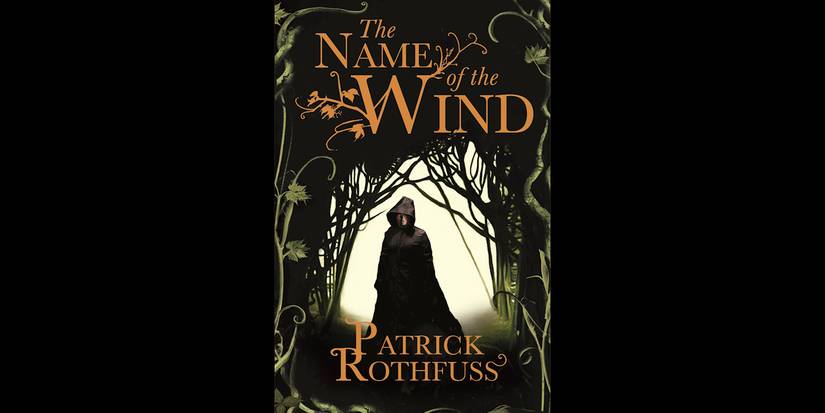
Even though Patrick Rothfuss has kept fans waiting a whopping 15 years by this point for the third installment in his exceptional Kingkiller Chronicle series, the first installment, The Name of the Wind, is undeniably one of the greatest fantasy novels of the last two decades. It’s one of those fantasy books you know will be a masterpiece from the first 10 pages, a riveting character study with some of the strongest world-building the genre has seen in years.
Rothfuss’ prose is beautifully poetic and rhythmic, and you get a feel for how it elevates the story of Kvothe right from the first few pages of the book. Rothfuss is concerned about establishing tone and atmosphere well before he even delves into exposition, allowing the first 10 pages of The Name of the Wind to quietly build toward the mystery of its fascinating protagonist. Rothfuss opens the book by spending a surprising amount of time describing silence, and there could be no better encapsulation of what makes this book so uniquely memorable.
‘The Hobbit’ (1937)


J. R. R. Tolkien‘s The Lord of the Rings is generally recognized as the greatest and most influential fantasy book of the entire 20th century, and for good reason. But all of history’s best book series gems have to start somewhere, and in the case of Tolkien’s Middle-earth, that was the children’s novel The Hobbit. One fateful day, Tolkien thought of the words “In a hole in the ground there lived a hobbit.” From that flash of inspiration came one of the most groundbreaking children’s books in history.
The Hobbit is one of those fantasy books whose every chapter is a masterpiece. The first 10 pages of “An Unexpected Party,” one of the most iconic opening chapters in the history of speculative fiction, are certainly no exception. Tolkien builds an instant sense of curiosity about the ins-and-outs of this enrapturing magical world while also perfectly establishing what makes hobbits like Bilbo Baggins tick. It’s charming, kid-friendly worldbuilding without any fluff or unnecessary lore dumps, the perfect way to kick off one of the most wonderful fantasy books ever written for younger readers.
‘The Stranger’ (1942)

At the age of 44 in 1957, French philosopher, writer, and political activist Albert Camus became the second-youngest recipient of the Nobel Prize in Literature in history. Some call him one of the most important existentialists ever, though he himself firmly rejected the label. The fact of the matter is that he wrote some incredible books and plays throughout his life, including the masterful The Stranger, which is one of the best novellas of all time.
One of the greatest, most irresistibly fascinating and gripping ways of opening a book that the world has ever seen.
“Mother died today. Or maybe yesterday, I don’t know.” One of the greatest, most irresistibly fascinating and gripping ways of opening a book that the world has ever seen. The novella’s first 10 pages instantly and perfectly establish the core philosophical concept that drove pretty much all of Camus’ work: the Absurd, the theory that the universe is irrational and meaningless by nature. We’re probably talking about some of the most stylistically bold and philosophically charged opening 10 pages in the history of literature.
‘The Picture of Dorian Gray’ (1890)

Seeing as he was one of the leading voices of the late Victorian era, saying that Oscar Wilde was one of the most important and influential authors of the 19th century would be an understatement. What’s his magnum opus? Most people would point to his best-known work, the only novel Wilde ever wrote: the Gothic masterpiece The Picture of Dorian Gray. It’s philosophical fiction at its most timeless and fascinating, and even though it was controversial upon release, it has only gotten better and more interesting with age.
Dorian Gray is one of the most perfect horror book masterpieces in history, even though it wouldn’t be until around the 1980s that it would start being pushed into the Gothic mainstream. For one, the book’s first ten pages include some of the most stunning use of language that English literature saw at any point during the Victorian era. The novel’s whole philosophical, thematic, and aesthetic framework is flawlessly established in just these first few pages, instantly captivating the reader with wit, high sensorial descriptiveness, deep character work, and masterful foreshadowing.
‘1984’ (1949)

By this point, George Orwell‘s 1984 and its cautionary messages against totalitarianism, mass surveillance, and the destruction of objective truth have become so well-known that it may be easy to forget just how important, timely, and eternally relevant that messaging is. Indeed, the only reason why 1984, one of the most intense books of all time, became so iconic in the first place is that it completely revolutionized dystopian literature.
The first 10 pages of 1984 instantly hook the reader with worldbuilding that doesn’t take any longer to feel irreparably oppressive and anxiety-inducing. Disorienting, immersive, creatively written, and incredibly potent in how they set the stakes sky-high early on, the first few pages of 1984 should be able to capture anyone’s attention. By the time you hit page 10, the world established by Orwell already feels remarkably well-rounded, and it’s hard to put the book down after that.
‘One Hundred Years of Solitude’ (1967)
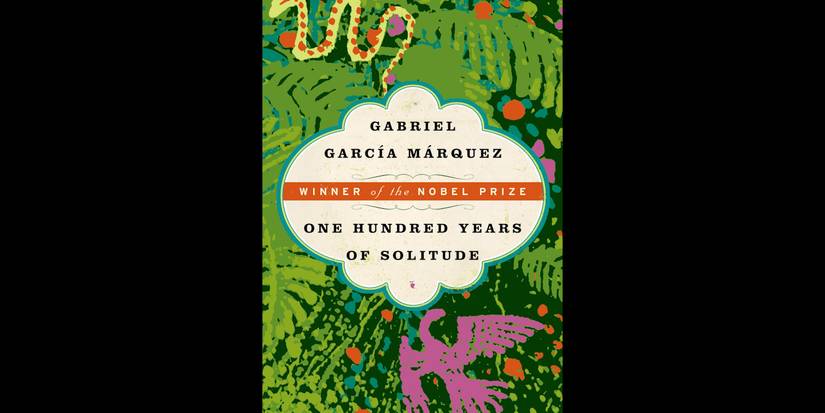
Gabriel García Márquez‘s One Hundred Years of Solitude is arguably the most important and colossally influential piece of Spanish-language literature of the 20th century, a work whose mastery of magical realism elements has ensured that it remains one of the most timeless books the genre has ever seen. No matter where they’re from, what languages they speak, or what they typically like to read, everyone should consider this classic a must-read.
From reading One Hundred Years of Solitude‘s first pages, you can know beyond a shadow of a doubt that you’re in for one of the best magical realism books of all time. The 10 pages that follow one of the greatest opening lines ever written for any novel are all equally perfect, with prose that keeps expanding and a world that seems to keep growing more creatively elastic and powerfully surrealistic. It’s impossible to start One Hundred Years of Solitude and not want to finish reading it as soon as humanly possible.
‘Blood Meridian’ (1985)
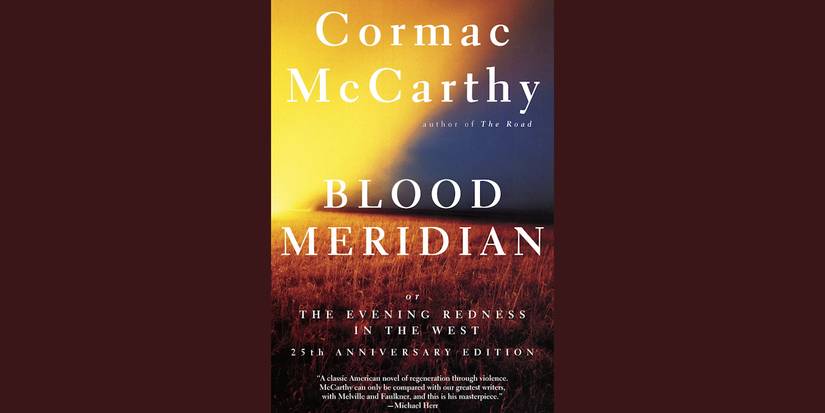
Few American authors have ever been better or more important than Cormac McCarthy, who—among many other things—wrote one of the best Western books of all time. Indeed, the epic anti-Western Blood Meridian is nowadays widely regarded as McCarthy’s magnum opus, even though critical reception was lukewarm upon its publication. The debate on what The Great American Novel could be is a never-ending one, but many tend to propose that it’s probably Blood Meridian.
But setting those superlatives aside, there’s no denying that the book’s first 10 pages are about as close as literature can come to true flawlessness. We’re talking about an introductory 10 pages that feel quasi-Biblical, perfectly establishing the enrapturing tone and narrative philosophy. Before the plot actually kicks in, McCarthy encapsulates the trajectory of his protagonist’s life in a fascinating microcosm that makes it immediately clear that what we’re reading is one of the English language’s greatest classics.
You must be logged in to post a comment Login