Entertainment
10 Perfect Movies That Are Over 2 Hours

We live in a society that loves instant gratification. We love a quick fix, we need the satisfaction of having completed something so we can move on to the next adventure. It’s why on television, miniseries and smaller episode orders are the new frontier. But when it comes to movies, audiences don’t necessarily want to be in and out; rather, they want to experience the joy of the cinema for as long as they can.
Though there are certainly some great films that run around ninety minutes, some of the greatest films of all time are longer than two hours, and we’re here to honor them. In 180 minutes or more, a complete story is brought to life through cinematic magic. These films are so perfect that time fades away as we are completely immersed in the action, and by the time the credits roll, we forget how long we’ve been happily glued to our screens. From modern thrillers to beloved classics, these ten titles are over two hours and well worth the time.
‘Oppenheimer’ (2023) – 3 Hours and 1 Minute


Trying to condense an entire biography into a single film can often be a struggle, but with someone like Christopher Nolan at the helm, the task was handled with ease. Told across multiple timelines, Oppenheimer traces the life of J. Robert Oppenheimer (Cillian Murphy), from his university days studying quantum physics through the Trinity test, the world’s first successful nuclear explosion, to his moral and emotional turmoil as he sat for his 1954 security clearance hearing during the Red Scare.
Just over three hours long, Oppenheimer is more than just a fascinating true story; it’s a masterclass in performance and direction. The film flies through at a restless pace that pulls you straight into the chaotic world of Los Alamos. By flipping back and forth between color and black-and-white, there are no dull moments, as every scene is informative of Oppenheimer’s psyche. Murphy gives a haunting transformation as Oppenheimer, carrying the weight of the world. Alongside a stellar ensemble, this dialogue-heavy film is like watching the greatest stars do what they do best.
‘Pulp Fiction’ (1994) – 2 Hours and 34 Minutes

If you keep the action moving at a relentless pace, a multi-perspective thriller will move along at a perfect pace. In Quentin Tarantino’s ’90s-defining Pulp Fiction, four interconnected stories are brought to life as it tells the tale of criminals, hitmen, and boxers in Los Angeles. Jumping back and forth in time through a bookend of a young couple, Pumpkin (Tim Roth) and Honey Bunny (Amanda Plummer), who plan to rob a restaurant, Pulp Fiction uses dark, humorous dialogue, philosophical chats, and random bursts of violence to force the individuals to question their dangerous lives.
Pulp Fiction’s unconventional structure, razor-sharp dialogue, and deeply developed characters make it function as an intricately woven tapestry. Audiences spend their time eagerly waiting to see who or what might pop up next and how it affects future events. With an unpredictable nature to the story, Pulp Fiction keeps you on your toes, as you never know when an incidental overdose or accidental car shooting can disrupt the conversations. By the time the film ends, you’re left highly satisfied thanks to its ultimate character collision, an iconic soundtrack, and high-voltage thrills.
‘Schindler’s List’ (1993) – 3 Hours and 15 Minutes

Sitting through a story about a harrowing period of world history may not sound like a fun time, but when it’s a masterpiece like Schindler’s List, it’s worth the length. Steven Spielberg’s historical drama recounts the true story of Oskar Schindler (Liam Neeson), a German businessman who saved over 1,000 Jewish lives during the Holocaust. With the aid of his accountant, Itzhak Stern (Ben Kingsley), Schindler spends his entire fortune bribing Nazi officials and producing fake military goods to keep his workers alive until the war ends.
Despite the topic, the three-hour-plus runtime is crucial for the director. Spielberg carefully plots the story as he builds Schindler’s arc from a greedy, opportunistic war profiteer into a fervent savior. Spielberg provides an immersive feeling inside the grueling suffocation of the Kraków Ghetto and Plaszów concentration camp. Through mesmerizing visual storytelling, Spielberg and cinematographer Janusz Kamiński opt for black-and-white, only to introduce profound flashes of red that evoke a haunting, effective feeling.
‘The Dark Knight’ (2008) – 2 Hours and 32 Minutes

The superhero genre was forever redefined thanks to Christopher Nolan’s The Dark Knight. In the second film in the trilogy, Batman (Christian Bale), Lieutenant Jim Gordon (Gary Oldman), and DA Harvey Dent (Aaron Eckhart) work together to stop organized crime in Gotham City as the city is plunged into pure chaos by the Joker (Heath Ledger), whose mission is simple: prove that regular people and heroes can be corrupted and turned to violent chaos.
A wonderfully refreshing take on the classic hero-and-villain dynamic, The Dark Knight is a full-tilt thriller that wastes no time in its 152-minute run. The narrative moves swiftly, leaving audiences on edge as Batman and his allies are always a step behind the criminal mastermind. While it is still an action film, most of the time is spent enriching its psychological depth, allowing both Bruce Wayne and Harvey Dent to undergo parallel, tragic transformations from heroes into symbols of a broken Gotham. The Dark Knight is also a showcase of the late Ledger at his very finest.
‘The Lord of the Rings: The Return of the King’ (2003) – 3 Hours and 21 Minutes
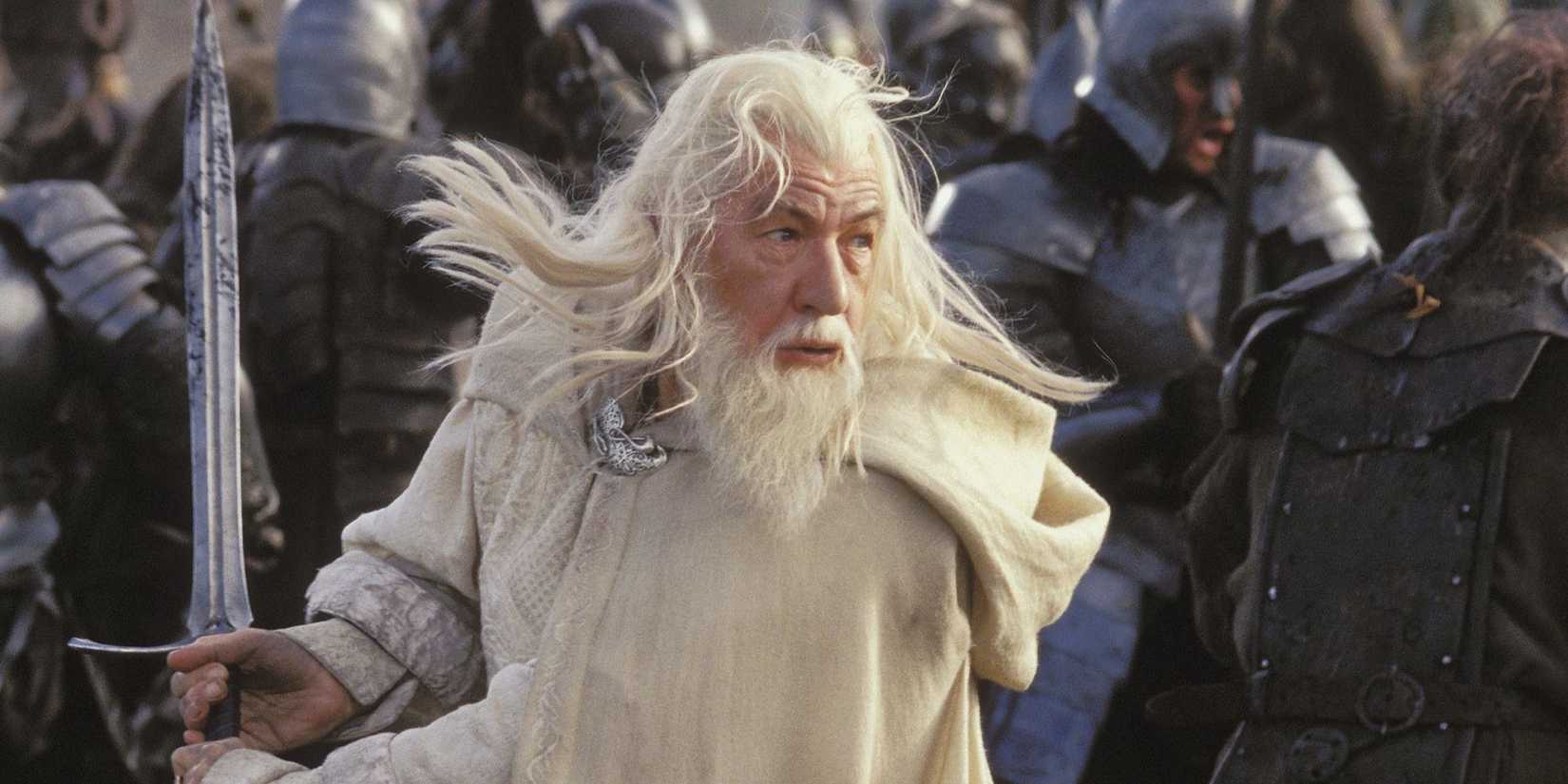
Whether you choose to watch the original theatrical release or the four-hour director’s cut, The Lord of the Rings: The Return of the King is a true fantasy epic. The third part of the trilogychronicles the final confrontation in Middle-earth as Frodo Baggins (Elijah Wood) and Samwise Gamgee (Sean Astin) approach Mount Doom to destroy the One Ring, while Aragorn (Viggo Mortensen) leads the free peoples against Sauron’s armies.
Though it might be difficult to call it a standalone film, in the larger scope of the trilogy, The Return of the King does a phenomenal job of resolving multiple massive storylines. The extended wrap-ups provide crucial closure following long years of war, alongside some much-needed moments of levity and reflection. Like its predecessors, the film is a viscerally extraordinary visual and narrative masterpiece. Earning 11 Academy Awards, The Return of the King earned its status as a landmark cinematic achievement.
‘The Shawshank Redemption’ (1994) – 2 Hours and 22 Minutes

One of the great adaptations of a Stephen King work, The Shawshank Redemption features one of the most satisfying conclusions in cinema history. The story follows a banker named Andy Dufresne (Tim Robbins) who spends nearly two decades in a harsh prison after a wrongful murder conviction. Inside the prison walls, he befriends Ellis Boyd “Red” Redding (Morgan Freeman), uses his banking skills to help the corrupt warden (Bob Gunton) and guards launder money and handle finances, and carefully plots his escape.
Every minute of the 142-minute drama is utilized precisely. With a deliberately paced story, writer and director Frank Darabont ensures that an enduring bond between Andy and Red develops, so that the climax is well-earned. The long-spanning story requires a longer run so as not to rush the important beats and erosion of emotional moments. The film depicts the tragic psychological impact of long-term imprisonment, giving the audience the chance to feel life behind the walls. By the end of the film, Andy’s journey becomes warranted and truly triumphant.
‘The Sound of Music’ (1965) – 2 Hours and 54 Minutes

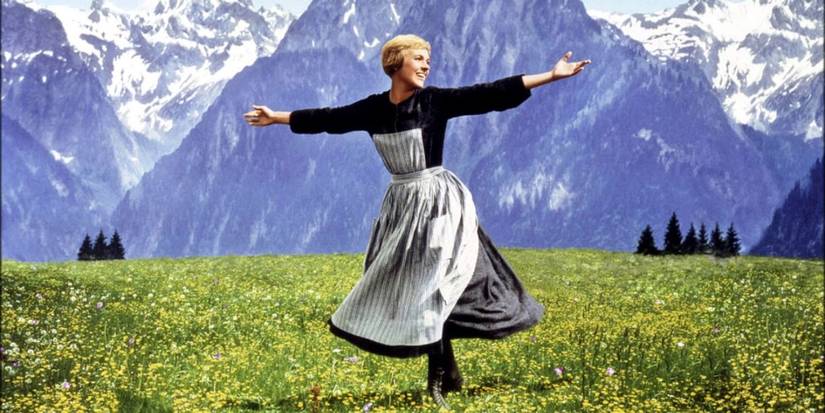
The hills are truly alive with The Sound of Music. Based on the Broadway musical, Robert Wise directs the film about a young nun, Maria (Julie Andrews), who becomes a governess for seven children of the stern Captain von Trapp (Christopher Plummer), bringing music into their lives as they escape Nazi-occupied Austria.
Without a wasted minute, The Sound of Music fulfills the necessary beats from the stage show while profoundly crafting its own identity, largely due to the astonishing performance of its star. Andrews is simply divine, carrying the story through song, heart, and emotional resonance. The extended runtime furthers the secondary stories, which are necessary for the historical background and the looming threat the protagonists are fighting against. The Richard Rodgers and Oscar Hammerstein II score is vividly brought to life, and pairing it with the vast Austrian Alps and Salzburg architecture provides a truly remarkable viewing experience.
‘Titanic’ (1997) – 3 Hours and 14 Minutes

The James Cameron epic film operates in two parts, beginning with a forbidden romance between an upper-class young woman, Rose DeWitt Bukater (Kate Winslet), who feels trapped by her wealthy, abusive fiancé. She meets Jack Dawson (Leonardo DiCaprio), a poor, free-spirited artist, in third class. As they fall in love, the ship of dreams strikes an iceberg during its transatlantic voyage, leading to a heartbreaking conclusion.
If you’re a child who grew up in the ‘90s, you most certainly are aware of the Titanic 2-VHS box set. You may have even made jokes at its expense for its runtime. Now, looking back, we savor those three-plus hours for giving us a beautiful romance before tragedy strikes. Cameron uses the first act to establish the vessel’s luxury, class divides, and grand scale before making the Titanic the main character. Without its bold framing device, Titanic wouldn’t be as incredible as it is.
‘Wicked’ (2024) – 2 Hours and 40 Minutes
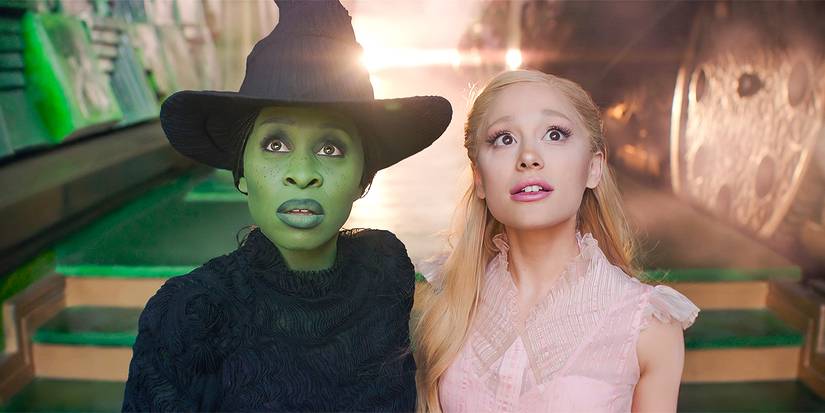
Theater lovers finally had their wish fulfilled when Wicked was adapted for the big screen. Director Jon M. Chu split the musical into two parts to allow the full story to take shape. The first part of the story, acting as a prequel to The Wizard of Oz, depicts how Elphaba (Cynthia Erivo) became the Wicked Witch of the West and Galinda (Ariana Grande) became Glinda the Good.
Through themes of government corruption, discrimination, and the ways propaganda shapes public perception, the film explores what it means to truly be “wicked.” Based on Gregory Maguire‘s novel, Wicked has the freedom to dive deeper into the relationships that the stage show has thanks to the expanded runtime. Further, it gives Chu the chance to do extensive visual worldbuilding through beautiful landscape shots and extravagant musical numbers. Fans were enthralled that no song from Wicked‘s first act was cut, ensuring the musical vision remained intact.
‘Zodiac’ (2007) – 2 Hours and 37 Minutes

Capitalizing on the public’s obsession with true-crime thrillers, David Fincher did the unthinkable in the haunting thriller Zodiac. The film follows the grueling manhunt for the real-life Zodiac Killer in Northern California. As the killer begins to send the San Francisco Chronicle cryptic letters and blood-stained items, demanding they be printed to prevent further murders, San Francisco Police Inspectors Dave Toschi (Mark Ruffalo) and Bill Armstrong (Anthony Edwards) hit endless dead ends as crime reporter Paul Avery (Robert Downey Jr.) and political cartoonist Robert Graysmith (Jake Gyllenhaal) begin independently connecting the clues.
Running just over two and a half hours, Zodiac‘s long pacing masterfully reflects the exhaustion of the endless investigation. Each moment is filled with crucial evidence, false leads, and rich character building. Rather than heading fully into the murders, Fincher showcases how the obsession with resolution destroyed careers, relationships, and the sanity of those involved, forcing the audience to sit through the trauma of the unsolved case and providing a realistically chilling experience.
You must be logged in to post a comment Login