Entertainment
10 Psychological Thrillers That Will Keep You Hooked From Start to Finish

The current news cycle seems to be doing its level best to break all of us psychologically, but many of us still enjoy watching movies about characters losing their ever-loving minds. Psychological thrillers are one of the most popular kinds of thrillers, and they’ve been a genre staple for decades. Maybe it’s because some of us like a little schadenfreude in our films, so we watch the ones that put their protagonists through the most pain and punishment. Maybe we feel safer watching someone on a screen go crazy, confident that it could never be us. Maybe we’re all just a little more sick in the head than we’re all willing to admit. Who knows, but let’s look at some psychological thrillers.
The category of crazy today is psychological thrillers that will keep you hooked from start to finish — movies that dig deep into your psyche and don’t let go. They reel you in with intrigue and maybe even some mystery, and then they capture you in a big butterfly net and refuse to let you go. We’ve got classics from the ’30s, ’40s and ’50s, surreal trips from the ’60s and ’70s, a slasher’s return in the ’80s, a master filmmaker’s ’90s remake, and three singular sociopaths in the 21st century. These are the psychological thrillers that hook you from the start and don’t let go until they’re finished.
‘M’ (1931)


Step into the mind of a murderous madman in Fritz Lang‘s serial killer thriller M. Starring Peter Lorre as a child killer and following a procedural plot where both the police and the criminals of Berlin try to entrap him, the film is totemic within the crime genre. It’s a bleak view of violence and the nature of villainy that strikes a harrowing chord thanks to Lang’s striking use of visuals and Lorre’s intense lead performance. While he’d become Hollywood’s favorite creep for years after this breakthrough, nothing quite approaches the unsettling nature of Hans Beckert.
All of Berlin is on high alert thanks to a series of child killings. The police are desperate to catch the killer, which also puts pressure on the city’s criminal underworld. These organized criminals decide to take matters into their own hands and capture Hans, which leads to a mock trial where the madman laments his compulsion in a monologue that is deeply discomforting. Lorre lets you into the psyche of his “psycho,” and Lang lays out a landscape where a mind like his can prey on the innocent. M may be almost 100 years old, but it still knows how to grip you tight.
‘Gaslight’ (1944)
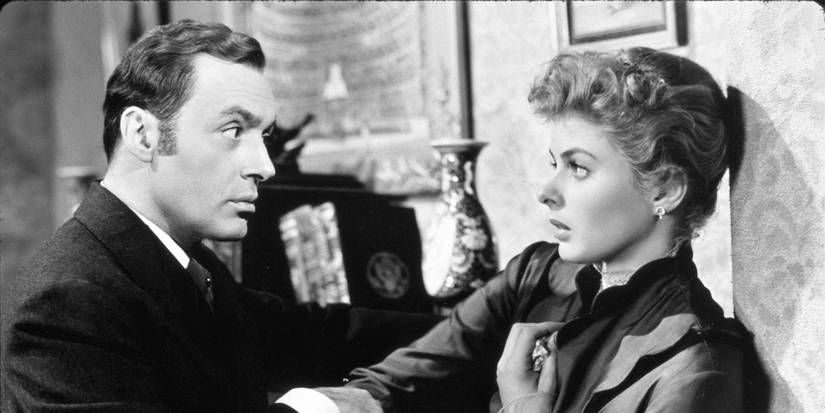
The term “gaslight” has proliferated far and wide across our cultural consciousness. It’s not unusual to hear it used by a Boomer, Millennial, or Gen X and Z. It’s become cemented into our vernacular, but many people don’t know it originated in a movie. George Cukor‘s classic psychological thriller Gaslight from 1944 was based on a play by Patrick Hamilton, which had previously been adapted in 1940 as a British film. Cukor’s take is the far superior and more iconic version, following a husband who goes to extraordinary lengths to convince his wife she’s losing her mind.
Paula (Ingrid Bergman) is an opera singer married to Gregory (Charles Boyer). After Paula finds a letter addressed to her murdered aunt, her world begins to crumble: she can’t seem to remember doing things her husband says she did, and she’s apparently hallucinating about the dimming gaslights in their home. Of course, all of this is the work of her husband Gregory, who has some secrets of his own that he can’t let Paula find out about, so he’s been systematically undermining her, making her question her own sanity. Gaslight is a classic psychological thriller draped in gothic and noir stylings. It was nominated for multiple Academy Awards, winning for Bergman’s performance and the art direction, but its legacy has lived on well beyond its celluloid origins.
‘Les Diaboliques’ (1955)
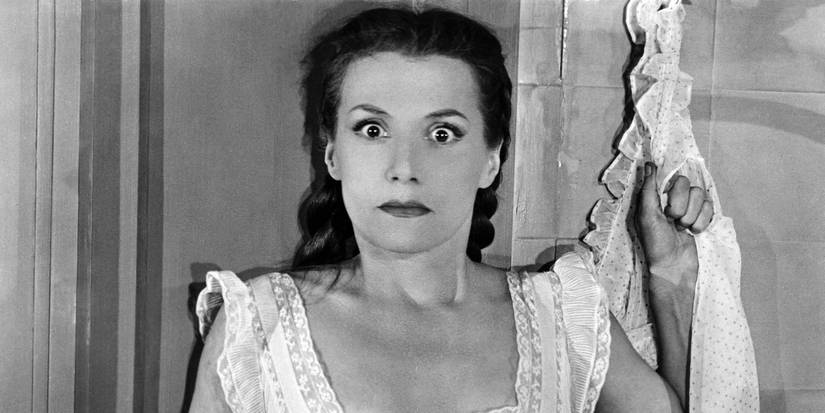
It’s one thing to make someone think they’re going crazy, but what about literally scaring them to death? That’s part of one of the most iconic scenes in Henri-Georges Clouzot‘s Les Diaboliques. Based on a novel by Boileau-Narcejac, who also wrote the book that inspired Alfred Hitchcock‘s Vertigo, the film is a psychological thriller so intense that it’s become considered a classic of the horror genre as well. There’s nothing supernatural about the film, unless you consider the inhuman lengths some people will go to drive someone insane.
Michel (Paul Meurisse) is the tyrannical headmaster of a boys’ boarding school. He’s married to Christina (Vera Clouzot), who has a serious heart condition, and is having an affair with teacher Nicole (Simone Signoret). Michel subjects both women to different forms of abuse, which leads them to join forces to murder him. When his body disappears, they become convinced that his spirit is haunting the school grounds, which eventually leads to a twist ending that’s among the most iconic in cinema. Les Diaboliques has influenced dozens of thrillers and horror films since its release, but none of them dig in quite as deep as this classic.
‘What Ever Happened to Baby Jane?’ (1962)


While women are often the victims in this subset of thrillers, due to many of them being an unfortunate reflection of society’s gender inequalities, they can also be some vicious villains. Nowhere is that more evident than in the progenitor of the psycho-biddy subgenre, What Ever Happened to Baby Jane? Starring Hollywood icons Bette Davis and Joan Crawford as antagonistic sisters of former fame, the movie proves that actresses can do crazy just as well as their male counterparts, and they can do it backwards and in heels.
Jane (Davis) is a former child star of vaudeville whose career has long since been eclipsed by her movie star sister Blanche (Crawford), who later becomes paralyzed in a car accident. Years later, the two ladies share a crumbling mansion as Jane slips further into alcoholism and subjects her sister to horrific abuse. The legacy of What Ever Happened to Baby Jane? extends beyond its contributions to the thriller and horror genres, with the alleged feud between Crawford and Davis on set fueling years of tabloid journalism and even serving as the basis for a couple of television series. Regardless of the truth behind the tension, the two actresses make for a crackling onscreen duo in this camp classic psychological thriller.
‘Don’t Look Now’ (1973)

Grief and trauma have become popular themes in the current era of “elevated horror,” but fantastic filmmakers have been using the strong emotional responses to fuel all kinds of terrifically terrifying films for years. Take Nicolas Roeg‘s surreal Don’t Look Now, a Hitchcockian thriller updated with more visceral violence and sexual content, as well as a fracture editing style that mimics the unstable psychological state of its married protagonists. It’s a frightening depiction of the damaging effects of loss and grief with two superlative lead performances.
John (Donald Sutherland) and his wife Laura (Julie Christie) are struggling to piece their lives back together after the drowning death of their young daughter. Moving to Venice, the couple begin to experience strange sightings that make them question their own sanity. John believes he may be seeing the specter of their deceased daughter, while a serial killer is also stalking the same streets he wanders. There’s an unsettling aura all around Don’t Look Now, which gives a gothic bend to its tale of tragedy that makes its discordant ending all the more effective. It’s a movie that demands attention and hooks you up high to let you struggle to find a foothold in its layered narrative.
‘Psycho II’ (1983)

While Hitchcock merely inspired Roeg, the master of suspense gets directly sequelized by director Richard Franklin for the psychological slasher Psycho II. While some decried the mere idea of making a sequel to Hitchcock’s seminal horror thriller, Franklin’s film carves out its own colorful place to exist alongside it. Featuring Anthony Perkins reprising his iconic role as Norman Bates, it’s a movie that uses the universal knowledge of its predecessor to keep the audience, and its own characters, guessing until the very end.
Written by cult filmmaker Tom Holland, the sequel picks up with Norman 22 years later as he’s being released from a psychiatric hospital. He moves back into his old home and tries to ease himself back into normal society, but a series of phone calls from “Mother” let him know he isn’t free of his demons yet. Then the bodies start piling up. Just like the first film, there are plenty of twists in this psychological film, and even more gruesome kills befitting its ’80s era. It may not measure up to the original masterpiece, but Psycho II will keep you on the hook the whole time.
‘Cape Fear’ (1991)

With the recent Apple TV adaptation, Cape Fear now exists in three distinct eras of thrillers. The original 1962 film, based on the novel The Executioners by John D. MacDonald, is a straightforward thriller executed perfectly. The newest streaming series convolutes the plot considerably and recontextualizes it for the modern era, but the most psychotic version remains Martin Scorsese‘s 1991 remake, which features a towering and terrifying performance by Robert De Niro. It’s a remake that not only amplified the violence and gore for audiences who’d been fed a steady diet of slashers for a decade plus, but also added darker shades to all of its characters, plumbing some upsetting psychological depths in the process.
Max Cady (Robert De Niro) is a convicted rapist who only has one thing on his mind when he’s released from prison: revenge. Cady has his sights set on lawyer Sam Bowden (Nick Nolte) and his family. Cady blames Bowden, who was his defense attorney, for his conviction after discovering he had buried evidence. His torment of the family goes far beyond the limits shown in the 1962 original, particularly in an updated version of Cady’s interaction with teenager Danielle (Juliette Lewis). In the original, their encounter is a thrilling chase sequence, but in Scorsese’s remake it becomes a stomach-churning seduction. Cape Fear is a terrifying thriller that hooks and tortures you with two hours of total terror.
‘One Hour Photo’ (2002)

Robin Williams was, of course, known for his brilliant comedic mind and manic energy. It’s what made his softer, dramatic turns in films like Dead Poets Society so affecting. It’s also what made his dark turn in the 2000s so terrifying. In 2002, Williams starred in both Christopher Nolan‘s Insomnia and Mark Romanek‘s One Hour Photo. Both films showcased Williams as different kinds of disturbed men, but it’s his turn in One Hour Photo that truly cuts to the bone. As Romanek’s feature directorial debut, it’s an assured and disturbing film about the intersection of profound loneliness and dangerous obsession.
Sy Parrish (Williams) is a photo tech who is devoted to his work since he has no family or friends. It’s through his work that Sy forms an unhealthy obsession with one particular family. Developing their photos, Sy forms a parasocial attachment to them and their idyllic lives. When that perfect illusion is shattered, Sy’s obsession takes a dark turn, and Williams’ mannered performance turns from tragic to terrifying. One Hour Photo is a portrait of an alienated man inspired by films like Taxi Driver. Whereas Travis Bickle used a .44 Magnum, Sy uses a digital camera.
‘Nightcrawler’ (2014)

Heir apparent to the toxic mantle held by Travis and Sy is Lou Bloom. Played by a rail-thin Jake Gyllenhaal in Dan Gilroy‘s neo-noir nightmare Nightcrawler, Lou is another disaffected loner who finds beauty in the bloodshed. Set in the world of stringers, freelance photojournalists who sell footage to television stations, the film is a dark odyssey into the hearts of men who take the motto “if it bleeds it leads” a little too seriously. Between Gilroy’s razor-sharp script and Gyllenhaal’s committed performance, Nightcrawler is just like carnage on the late-night news: hard to stomach, but impossible to look away from.
Lou is a schemer and a con man who finds a new lucrative opportunity when he discovers the money available to those who capture violent footage of accidents and crimes for unscrupulous news stations. He quickly escalates from recording the violence to tampering with it to actively engaging in it, and the strange energy which Gyllenhaal brings to the character keeps you entranced the entire time. Nightcrawler is both a sharp satire of the modern media landscape and a tautly made psychological thriller that invites you into the mind of a man who loves to gaze into the abyss, and then record it and sell the footage.
‘Nightmare Alley’ (2021)

There’s room for one more creepy con man on this list, and he comes in the form of Bradley Cooper‘s Stan Carlisle, a drifter turned carnival worker and eventual mentalist in Guillermo del Toro‘s Nightmare Alley. Adapted from the novel of the same name by William Lindsay Gresham, which was previously made into a 1947 cult classic, the film is just as dark, if not darker, than any of Del Toro’s horror films. Carlisle is a man driven by pure ambition who will lie, cheat, steal and even kill to get what he wants. That ambition leads him into some dark alleys, and by the end of the film, his life truly has become a nightmare.
After Carlisle literally burns down his old life, he finds his way to a traveling carnival where he ingratiates himself. Learning the tricks of the trade, Carlisle quickly finds success as a psychic performer. Moving to the city, his act attracts even more attention from the wealthy elite, as well as a cold and calculating psychologist. Any fan of noir knows where this story is headed, but Cooper is magnetic in the lead role, and Del Toro’s pulpy visuals give the film a real viscerality. It’s a psychological thriller made by a master of the macabre playing in the black waters of crime dramas.
You must be logged in to post a comment Login