Entertainment
10 R-Rated Thriller Movies That Are Perfect From Start to Finish

Let’s face it — as a kid, all you wanted to do to be cool was see an R-rated movie. So, unless an adult over the age of 18 was bringing you, chances were you had to sneak in a watch when such a film aired on TV. What is it about an R-rated film that enticed us? They did things that PG-13 films couldn’t. There was that fascination and desire for profanity, sex, and violence. While many R-rated films could have been toned down to earn a lower rating, it’s in its full authenticity that it lives.
We are here to celebrate 10 iconic R-rated thrillers that are perfect from start to finish. They’re perfect because they didn’t mince anything along the way. From violent action thrillers to dangerous psychological thrillers, these R-rated classics did what they were meant to do: entertain from beginning to end.
1
‘Deadpool’ (2016)


Not that the Marvel Cinematic Universe was sanitized — there was certainly enough violence that made parents shield their kids’ eyes — but there was certainly room to go further. And when it came to Deadpool, there was absolutely no way it wouldn’t live by the mantra “go big or go home.” Deadpool went all in and then some. In the first film, the Tim Miller-directed superhero blockbuster follows the wisecracking Wade Wilson (Ryan Reynolds), a mercenary diagnosed with cancer, who gains superhuman healing powers. Desperate for a cure, he’s armed with extreme regenerative abilities, a dark sense of humor, and a habit of breaking the fourth wall. The masked man known as Deadpool protects his loved ones while wreaking havoc on a revenge tour, hunting down the sadistic scientist responsible for his ruined looks. Violent and raunchy, Deadpool flawlessly transports the anti-hero’s comic tone to the big screen for a high-octane comedy thriller.
Deadpool lives and dies with its star. There’s simply no other actor who could play the part. Reynolds knows the character inside and out, finding the beats to be over-the-top and when to tone it down to exude gutwrenching emotion. The film then unapologetically owns its R rating. It takes the comic-book tropes other superhero blockbusters employ and subverts them to reflect reality. Cursing will happen. Blood will be spilled. And it’s done organically. Truly the “Merc with the Mouth,” Deadpool’s willingness to go full tilt has made it a well-revered entry in the larger MCU. Deadpool is not a kid’s Marvel movie, and we love it more because of it.
2
‘Die Hard’ (1988)
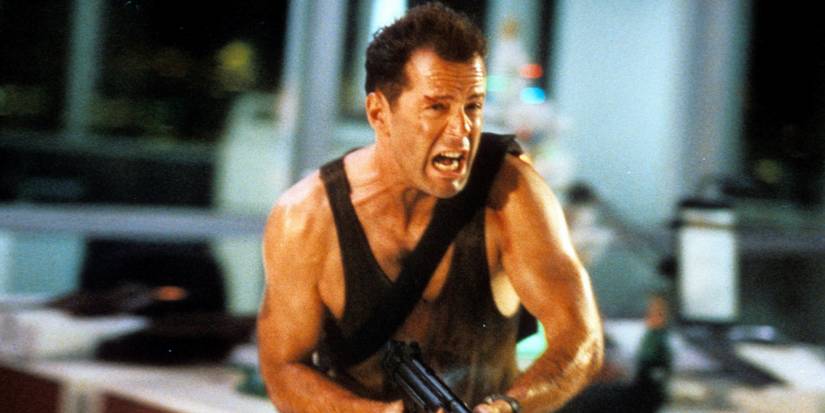
You simply cannot quote the most infamous line from Die Hard without profanity! Reshaping action thrillers forever, Die Hard tells the story of John McClane (Bruce Willis), a New York City police detective who attempts to save his estranged wife and several others taken hostage by terrorists during a Christmas party at a Los Angeles skyscraper, Nakatomi Plaza. Facing off against the notorious Hans Gruber (Alan Rickman), McClane is in a race against time in this unofficial-official Christmas caper. Based on Roderick Thorp’s novel, Die Hard packs a punch with strong language and violence all the way.
Though Die Hard has all the elements of an R-rated film, it uses them to elevate the story. The violence isn’t minimized, showcasing on-screen killings to amplify the stakes. It then makes McClane an even more powerful Everyman, who can still save the day with sheer brilliance and brawn. Though only one remains, the cat-and-mouse game between McClane and Gruber is one of the strongest examples of classic hero-versus-villain dynamics in ‘80s action flicks. Die Hard set the tone for a beloved franchise and showed how action films should be done moving forward. As wild as it may sound, Die Hard is a gateway film for many kids, as the R-rated they film they watch with their dads. Guilty as charged.
3
‘Fight Club’ (1999)


The first rule of fight club is don’t talk about fight club, but let’s be honest, how could you not talk about the sensational thriller? Directed by David Fincher and based on Chuck Palahniuk‘s 1996 novel, Fight Club follows a disillusioned, insomniac office worker (Edward Norton) who is trapped in a mundane capitalist existence. Looking for more in life, he starts a secret underground fighting club with a charismatic soap salesman, Tyler Durden (Brad Pitt), as a radical form of catharsis. With a monumental twist that defined the film forever, Fight Club is graphic for the story’s sake. And without it, we absolutely would not be talking about Fight Club today. It’s not a pillow party after all.
Because the story is a projection of the narrator, the graphic elements are necessary to depict his psyche. Fight Club is jam-packed with action. Throughout the film, the violence serves as an important metaphor for the self-destructive nature of its central character. No pain, no gain. And without pain comes dozens of F-bombs. And where there’s pain, there’s pleasure! Sex, intimacy, and nudity are quite present in the film, another important element to the overall arc. Fight Club uses its R-rating to brilliantly capture the alienation and existential dread of modern life, offering a profound critique of hyper-consumerism. If Fincher didn’t make the film in the manner he did, it would never have been as impactful.
4
‘Goodfellas’ (1990)
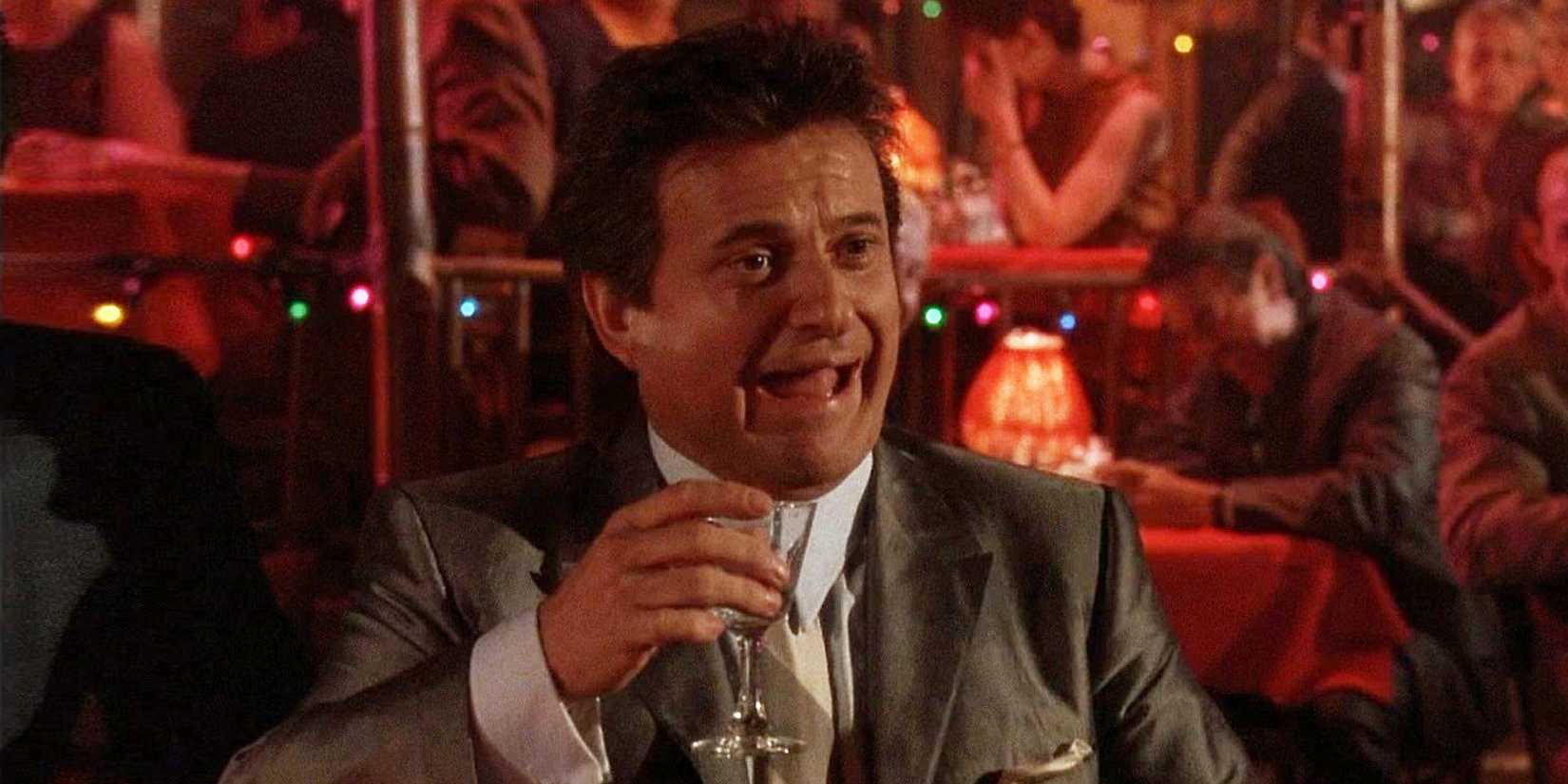
As we’ve learned from other iconic gangster films, believability only comes with authenticity, and mafia movies are only authentic with graphic violence. It’s the only way to truly capture the danger within. Goodfellas, directed by Martin Scorsese, is based on Nicholas Pileggi’s book. The film chronicles the 25-year rise and fall of mob associate Henry Hill (Ray Liotta), tracing his life from a teenage errand boy for the Italian-American mafia in Brooklyn to his descent into drug dealing, federal arrest, and his eventual placement in the Witness Protection Program. Goodfellas might have gotten away with a weaker rating, but with 300 instances of profanity and visceral, bloody depictions of shootings, beatings, and stabbings, there was truly no other way to tell Pileggi’s story.
The 1990 thriller revolutionized the crime genre with its relentless pacing, immersive first-person narration, and brutally honest depiction of the mafia lifestyle. Rather than bog it down in darkness, Scorsese balances the shock violence with dark humor, brought to life by its standout stars, Liotta, Lorraine Bracco, Joe Pesci, and Robert De Niro. Goodfellas isn’t sensationalized, but Scorsese’s sensational direction elevates the film to its legendary status. The paranoia he instills in his tight filming gives the stakes the weight they need. Though we may know the ending, the journey to get there certainly keeps the heart racing. Goodfellas is a classic and forever an important R-rated thriller.
5
‘John Wick’ (2014)

A story about a legendary hitman is going to be littered with violence, but in John Wick, the violence is stylized in a manner that is warranted and not gratuitous. That’s why the franchise has exploded to the heights it has already reached. If not for Derek Kolstad’s perfect first feature, it likely wouldn’t have become the franchise it is today. John Wick brings back Keanu Reeves in action as the titular character. The story follows Wick’s quest for vengeance after his beloved puppy — a final gift from his recently deceased wife — is killed and his vintage Mustang is stolen by mobsters, which pulls him back into the criminal underworld he tried to leave behind. Masterfully directed with a visceral visual vision, John Wick introduced audiences to an immersive, mythical world of assassins with killer fight choreography.
John Wick doesn’t hold back when it comes to graphic gun violence and bloodshed — it’s necessary for the story that’s told. And the graphic nature comes through death-defying fight choreography that combines hand-to-hand combat with gun work for impeccable gun-fu. The film uses long takes and wide angles to portray mesmerizing action sequences. Of course, since it’s Wick’s narrative, expect him to slaughter everyone and anyone who crosses his path. There have certainly been countless action films in the 21st century, but none looked quite like John Wick. A newfound iconic character, Reeves proved in this film that action is old hat, even when you teach him new tricks.
6
‘Joker’ (2019)

We have Christopher Nolan to thank for the risks filmmakers are taking in superhero films. While it seemed impossible to topple Heath Ledger’s Joker, in came Joaquin Phoenix through Todd Phillips’ vision, and a new Joker emerged. Based on the iconic DC comic character, Joker is the dark origin story of the infamous Batman archenemy. Phoenix plays Arthur Fleck, a mentally ill party clown and aspiring comedian in a decaying, recession-plagued Gotham City, whose descent into madness ignites a violent, anti-wealth revolution. Beneath the comic-book allure, Joker explores heavy themes of mental health, systemic inequality, and the way society treats its most vulnerable. In turn, it provides a fervent examination of a troubled individual pushed to the edge.
The titular character has always been synonymous with violence, and his origin story is no different. The film is littered with bloodbaths, many of which impact the overarching narrative. Whether using guns or scissors, if blood is spurting, it’s necessary for the arc. Beyond the violence and the disturbing behavior meant to depict mental decay, the story pushes to visceral places. The narrative contains psychologically heavy elements such as child abuse references and deep dives into mental illness. In exchange, it makes the comic book source material richly human and grounded in realism. Moral ambiguity around the story’s true “hero” is why Joker works. By blurring the line between reality and Arthur’s delusions, deciding whether the graphic moments are real or not enriches the narrative even further. Joker was perfect. If only we had left it there. No offense, Lady Gaga.
7
‘Nightcrawler’ (2014)

The premise of Dan Gilroy’s neo-noir thriller centers on the morbid and violent events. In order to truly tell Lou Bloom’s story, Nightcrawler could not hold anything back. And it didn’t. Starring Jake Gyllenhaal in a career-best, Bloom is a driven, sociopathic con man who discovers the cutthroat world of L.A. freelance crime journalism. By filming violent, graphic accidents and murders to sell to local news, he escalates his tactics from observer to participant to get the “money shot,” eventually manipulating his way to the top. The ultimate antihero story, Nightcrawler satirizes the modern news industry by illustrating the toxic relationship between unethical journalism and consumer demand.
Nightcrawler is not a film you seek out for comfort or a happy ending, though, depending on whose side you’re on, the ending might satisfy you. That said, Nightcrawler is an unflinching examination of a broken world where the villains of society may not be punished. For a story about intense crime scenes, Nightcrawler includes close-ups of dead bodies from a home invasion and fatal shootings. Rather than slasher-style gore, Nightcrawler showcases Bloom’s deeply unsettling nature as he manipulates and films tragic deaths strictly for profit. It’s twisted, but an enthralling story nevertheless. A truly intense thriller, Nightcrawler is a top-tier film of this century.
8
‘Parasite’ (2019)

It might come as a shock that a film like Parasite is rated R, but if you go back and truly examine it, you’ll soon understand. A masterclass psychological thriller, Bong Joon Ho’s Academy Award-winning film follows a destitute family of four as they con their way into working for a wealthy, oblivious household. Through deception, they secure jobs as tutors, a driver, and a housekeeper. Tensions erupt when they discover a dark secret hidden within their employers’ home, exposing the ruthless and tragic realities of class inequality. Serving as a gripping social commentary and satire on global capitalism, wealth disparity, and the invisible, often insurmountable barriers between the rich and the poor, Parasite’s flip from dark comedy to action-packed thriller is all built around the fight to survive.
Parasite remains a flawless genre-bending narrative that builds tension before culminating in a Shakespearean tragedy. A wonder in filmmaking, while one might think the early scenes where the Kims live in squalor were the most brutal, they’re not. Instead, the stunning set pieces serve as a brutal locale where heavy bloodshed at the hands of knives and rocks juxtaposes its splendor. With foul language understood in any language, the R-rating becomes more warranted. A defining film of the decade, Parasite’s effortless storytelling has led to wild entertainment.
9
‘Pulp Fiction’ (1994)
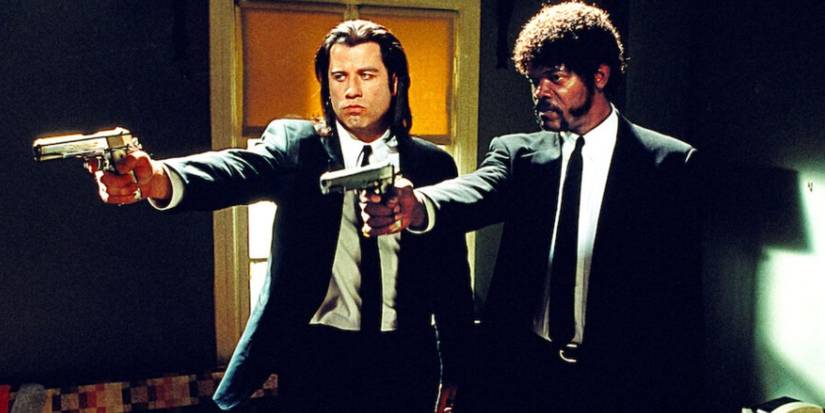
It’s a Quentin Tarantino film — are we shocked it’s rated R? Pulp Fiction is simply perfect and might be the director’s best. A film that tells four intertwining stories, Pulp Fiction focuses on the lives of LA mob hitmen Jules Winfield and Vincent Vega (Samuel L. Jackson and John Travolta), boxer Butch Coolidge (Bruce Willis), and a gangster’s wife, Mia Wallace (Uma Thurman). Bringing the theme of redemption to the forefront, Pulp Fiction gives you everything: a botched robbery, a drug overdose, and a fake boxing match, for a bloody good time. Helping to energize the ’90s with a unique approach to postmodern storytelling, Pulp Fiction masterfully united dark humor with highly stylized violence.
With sharp, quotable dialogue, dynamic character studies, and iconic images burned into our minds, Pulp Fiction revolutionized cinema in the ‘90s, and its impact still lingers today. It was proof that there can be some fun vibrancy lumped into the graphic nature of the story. Though not the most ever, but certainly up there, Pulp Fiction is nonstop F-bombs. To be honest, what would Pulp Fiction be without pervasive language? And then the sexual content and violence. It’s inherent to the story! Tarantino’s no-holds-barred approach made the movie endlessly entertaining. At this time, it’s safe to say that Pulp Fiction remains timeless. You know what you’re getting from the moment the movie begins.
10
‘The Silence of the Lambs’ (1991)
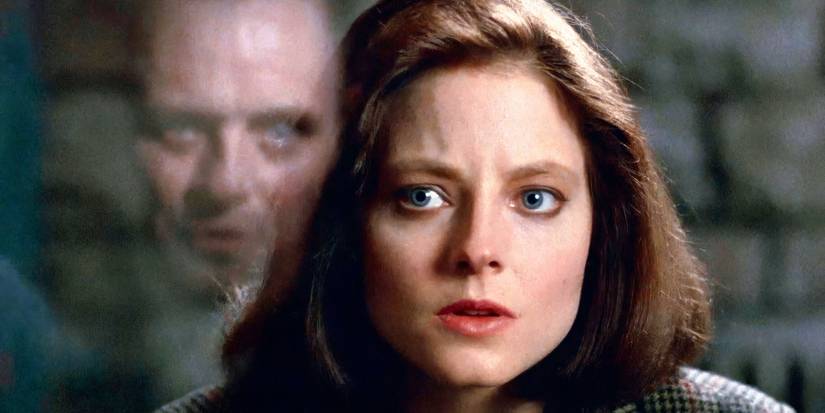
For the longest time, horror films tended to receive mild ratings despite their content. Hell, some films like Poltergeist even got a PG rating! But when The Silence of the Lambs, there was absolutely no other way to tell Thomas Harris’ story. The psychological horror thriller tells the tale of Clarice Starling (Jodie Foster), a young FBI trainee. To catch “Buffalo Bill” (Ted Levine), a serial killer who skins his female victims, she reluctantly seeks the help of Dr. Hannibal Lecter (Anthony Hopkins), a brilliant, manipulative psychiatrist and imprisoned cannibal. As the murky quid-pro-quo deal between the parties turns to a dark cat-and-mouse game, it ultimately results in Lecter’s orchestration of a bloody, brilliant escape from his maximum-security cell. Giving horror a seat at the table, The Silence of the Lambs is a film where nightmares are born.
Let’s just call it like it is: The Silence of the Lambs is rated R for strong, disturbing, and graphic violence, pervasive foul language, mature psychological horror, and brief nudity. That’s simply the nature of the story. Director Jonathan Demme ensures the traumatic elements — a kidnapper who makes “suits” out of his victims’ skin, mutilating and decomposing corpses, a cannibal — are never sugarcoated. By going hard and strong, The Silence of the Lambs makes the horrific cut deep. Through the art of the close-up, the sheer terror is captured as if you’re peering into the mind of a serial killer. The Silence of the Lambs was an R-rated thriller that earned the Big Five sweep at the Oscars.

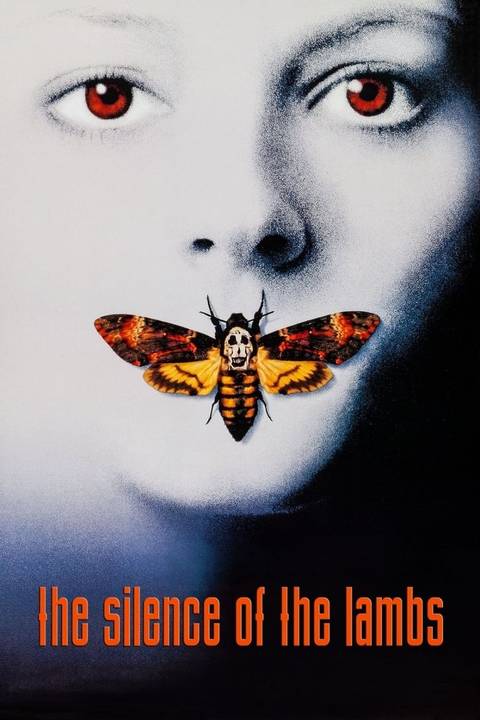
The Silence of the Lambs
- Release Date
-
February 14, 1991
- Runtime
-
119 minutes
- Director
-
Jonathan Demme
- Writers
-
Ted Tally, Thomas Harris
You must be logged in to post a comment Login