Entertainment
10 Scariest Stephen King Villains

You can write a good horror or thriller story without necessarily having an all-time great villain driving all the conflict, but it’s hard. Stephen King understands this well, and he has most certainly written his fair share of great horror and thriller stories, be they novels, novellas, or short stories. Even if you don’t read all that much, you’re still likely to know at least a few of the stories he’s written because of all the movie and TV adaptations of his.
Below, there’s a focus on the scariest villains Stephen King has ever written. This will be focusing on his books, so those characters who are more intimidating in adaptations might not appear here (like Warden Norton, who’s more monstrous in 1994’s The Shawshank Redemption than the 1982 novella “Rita Hayworth and Shawshank Redemption”). Also, the titular characters from Carrie and Cujo aren’t here, because while they’re frightening, it’s hard to call them villains, as they’re more tragic figures. There’s a focus below on nightmare-inducing Stephen King villains who are very much aware of the fact that they’re inducing nightmares (and, to be honest, would probably be happy to hear anyone in the real world has lost sleep because of them).
10
Greg Stillson
‘The Dead Zone’ (1979)

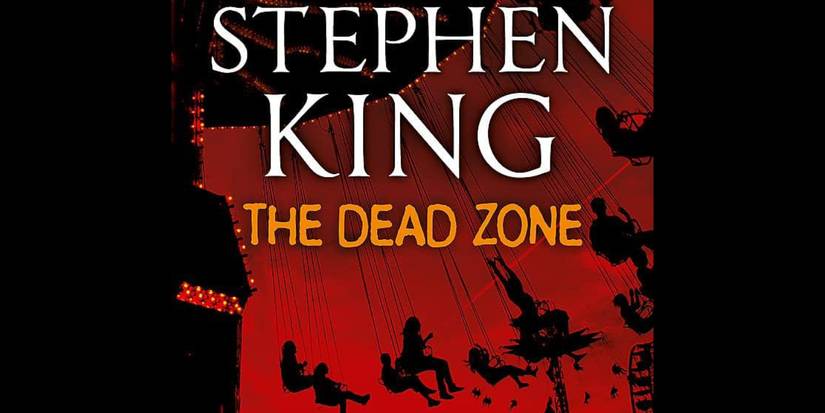
The Dead Zone is up there as one of Stephen King’s very best sci-fi-related stories, and it was also one of his earliest efforts within that genre. It’s got some unsettling parts, but it isn’t really full-on horror, as it’s instead more concerned with being a thriller/suspense kind of story about a man who can visualize things through touch, and this extends to him sometimes getting glimpses of the future.
He runs into a man named Greg Stillson, who has his sights set on becoming the president of the U.S. one day, and him doing so would potentially be world-ending, so much of The Dead Zone becomes about stopping Stillson from becoming president. Greg Stillson’s not a constant presence in the original novel, but he is a very brutal and compelling (eventual) antagonist, and it’s also worth mentioning that he’s done justice by Martin Sheen in the David Cronenberg-directed film adaptation (released in 1983).
9
Kurt Barlow
”Salem’s Lot’ (1975)
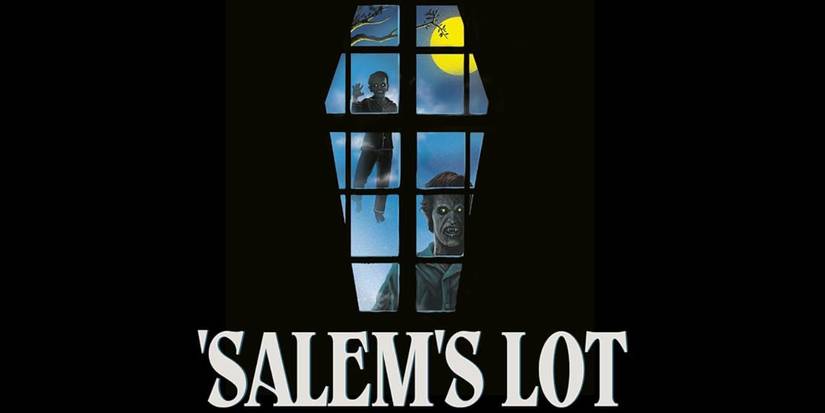
Stephen King was willing to acknowledge the influence of Dracula on ‘Salem’s Lot, which was his second published novel overall, and did indeed see him tackling the vampire sub-genre. Dracula was about a vampire (or arguably the vampire, in terms of pop culture influence) doing his thing in the late 1800s, while ‘Salem’s Lot is about a vampire threat within a small town in the 1970s, and those vampires are led by one named Kurt Barlow.
Barlow does what you’d expect in a vampire story like this, and is kept mysterious for a decent chunk of ‘Salem’s Lot. Well, more accurately, the vampires as a whole are operating sort of in the background for much of ‘Salem’s Lot, with the slow-burn approach working. And it does help that there is undeniable terror when Kurt Barlow does fully emerge and reveal his true intentions and all.
8
Leland Gaunt
‘Needful Things’ (1991)

It feels fitting to talk about Needful Things right after mentioning ‘Salem’s Lot, because they’re sort of similar, in terms of being about small towns that slowly get taken over and/or destroyed by a supernatural threat. In Needful Things, it’s Castle Rock that gets targeted, and Leland Gaunt is the mysterious being who brings about all sorts of hell to the town, largely through the opening of a store called Needful Things.
People get items they’ve always wanted there, but Leland has unusual ways of making people pay for those items, and he ultimately blackmails a bunch of them as a way to ensure they tear apart the town. Sometimes, Needful Things is darkly entertaining (like when unlikable characters are having their lives ruined), but then at other times, it’s more distressing. Leland Gaunt doesn’t discriminate, when he comes to his victims, and so the rather epic-length Needful Things definitely ends up feeling like the book equivalent of a roller-coaster.
7
Brady Hartsfield
The ‘Bill Hodges’ Trilogy (2014–2016)

The Bill Hodges trilogy is made up of Mr. Mercedes, Finders Keepers, and End of Watch. Brady Hartsfield is the overarching villain of the trilogy, to some extent, though the ending of Mr. Mercedes does mean he’s not a huge presence in Finders Keepers, and then there is an unusual layer to his “return” in End of Watch, which is a bit messy, as the previously suspense/thrill-heavy story becomes much more supernatural there.
Brady is still a pretty good villain in that last book, and him still being around – or out there – to some extent in the second is effective. Yet Mr. Mercedes is the one where he manages to feel the most intimidating, as he’s the titular character: a man who committed a mass murder by ramming a crowd of people with a Mercedes. He taunts Hodges, who’s a retired detective still haunted by the fact that particular case was never closed. Cue a cat-and-mouse narrative (and a good one at that).
6
Norman Daniels
‘Rose Madder’ (1995)

One of the few Stephen King novels without any movie or TV adaptation (yet), Rose Madder is about a woman named Rose, and her flight from her abusive husband, Norman. And Norman could well be the most intense of all Stephen King’s technically “mundane” or “ordinary” villains, in the sense that he doesn’t have supernatural powers. Well, not for most of the novel. Rose Madder does get more unusual and fantastical toward the end.
There are a few more villains without fantastical powers who rank ahead of Norman here, just because Norman Daniels feels almost cartoonishly evil at times, and that does have the effect of making you remember you’re reading something fictional. The kind of evil he does is sometimes vile and violent in skin-crawling ways, but then there are other points where King maybe pushes things a bit far. Norman’s a heightened kind of evil, and he is still efficiently scary at times (possibly a weird comparison, but it’s a bit like how Requiem for a Dream fluctuates between being genuinely terrifying, as a film about addiction, and then almost a little cartoonish at times, just because of how over-the-top that sense of terror eventually gets).
5
Jack Torrance
‘The Shining’ (1977)
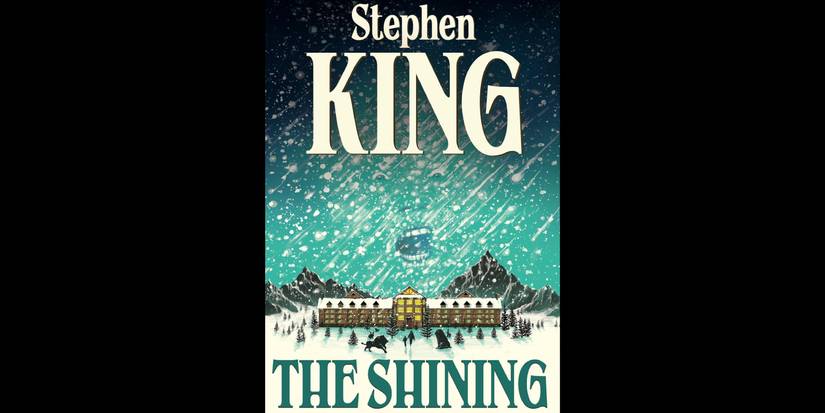
See, Jack Torrance doesn’t do quite as much by way of extreme violence in The Shining as Norman does in Rose Madder, but that helps Jack feel like a more believably real person, and so what happens to him – and what he does – ends up feeling scarier. Jack’s a struggling author who takes a caretaker job at a hotel that ends up being more than a little haunted, and his pre-existing personal demons become more overwhelming, and he becomes increasingly dangerous to his wife and son, too.
Jack Torrance is more monstrous in the movie version of The Shining, where he’s played by Jack Nicholson, or maybe it’s fairer to say he’s a different kind of scary in the film. In the novel, Jack (not Nicholson) is almost a tragic villain, but he is still a harmful person before all the stuff at the hotel, with the unleashing of his bad qualities being a big part of the book’s horror. He’s humanized to some extent, as a flawed protagonist who later shifts into the book’s main villain, and he’s grounded in a way that ensures he’s more frightening than most of King’s other antagonists, supernaturally gifted or otherwise.
4
James “Big Jim” Rennie
‘Under the Dome’ (2009)

Another villain without any wild or otherworldly powers, Big Jim is the main villain of Under the Dome, which does qualify as a sci-fi novel, albeit one where the sci-fi elements are downplayed for a good chunk of the story. Okay, an impenetrable dome covering the small town of Chester’s Mill is science fiction-y, and the cause is eventually explored, but much of Under the Dome before then is focused on people surviving, or dying.
Lots of people die because of Big Jim. He wants power over the town, and he sees the events of “Dome Day” as being of the kind that can accelerate his attempts to take over Chester’s Mill, and control all the people living there. Since Under the Dome is long, you have to spend a lot of time reading about all the terrible stuff Big Jim’s willing to do, making him easily rank among the easiest-to-hate characters King’s ever written about.
3
Randall Flagg
‘The Stand’ (1978), ‘The Eyes of the Dragon’ (1984), ‘The Dark Tower’ (1982–2004)
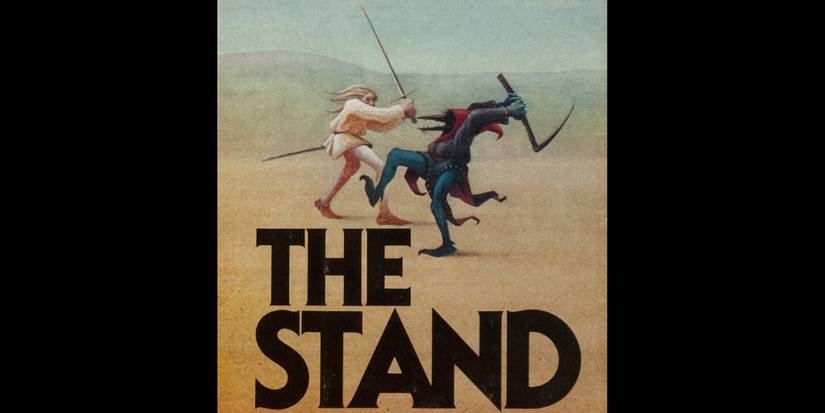
Things get complicated with Randall Flagg, because he’s the villain in multiple Stephen King stories, or some version of him shows up in a villainous role throughout a fair few Stephen King stories. The Stand is the one where he’s at his strongest, and probably most intimidating, since he thrives in a post-apocalyptic society, and ends up leading one of the two major factions (the evil one, specifically) that battle for the world’s future.
The fact that he keeps coming back as a central antagonistic force within the whole Stephen King multiverse scores him a few extra points.
Flagg is also significant throughout The Dark Tower series, albeit not the main antagonist, since the Crimson King fills that role… for the most part. Kind of. And then there’s The Eyes of the Dragon, which is a fantasy story, and a wizard named Flagg is the source of so much of the misery in the narrative. Sure, Randall Flagg has been defeated more than once, but many of the scariest parts of The Stand are scary because of him, and then the fact that he keeps coming back as a central antagonistic force within the whole Stephen King multiverse scores him a few extra points, too.
2
It (AKA Pennywise)
‘IT’ (1986)
Clowns are scary, and Pennywise is perhaps the quintessential scary clown. He’s more than just a scary clown, though, since Pennywise is one of many forms he takes on throughout IT, and so technically, he’s a creature known as It, rather than “Pennywise.” It’s whole thing is preying on people’s fears, and since different people find different things frightening, It transforms into different beings to most effectively rattle as many people as possible.
It does this every 27 years, with IT being about a group of kids confronting the mysterious entity, and then finding themselves having to regroup and defeat it again, as adults. It does a lot of damage in both timelines, and sure, fear is defeated at least once, by default (since you know the kids are going to become adults), but It doesn’t go down easily, and, as a villain, is designed to be as universally terrifying as possible.
1
Annie Wilkes
‘Misery’ (1987)
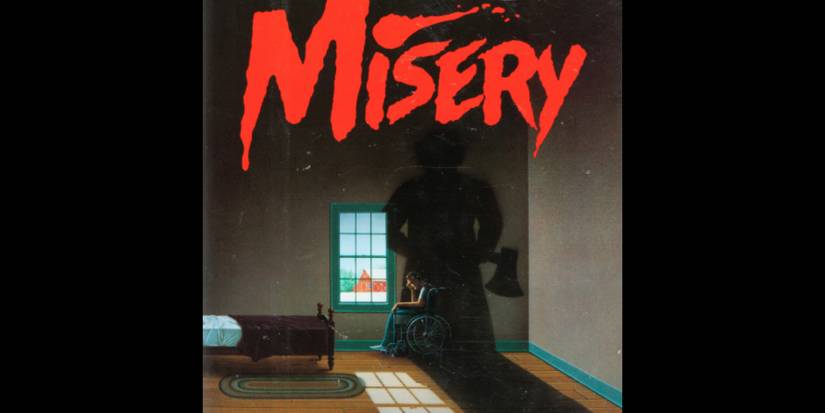
Admittedly, Annie Wilkes is not as powerful or overwhelming as Randall Flagg and It, so putting her ahead of them if you were ranking Stephen King villains who’ve done the most damage would be silly. But “fear” is a different thing, ranking-wise, and she is the scariest of Stephen King’s villains, considering – and for – the story she appears in: Misery.
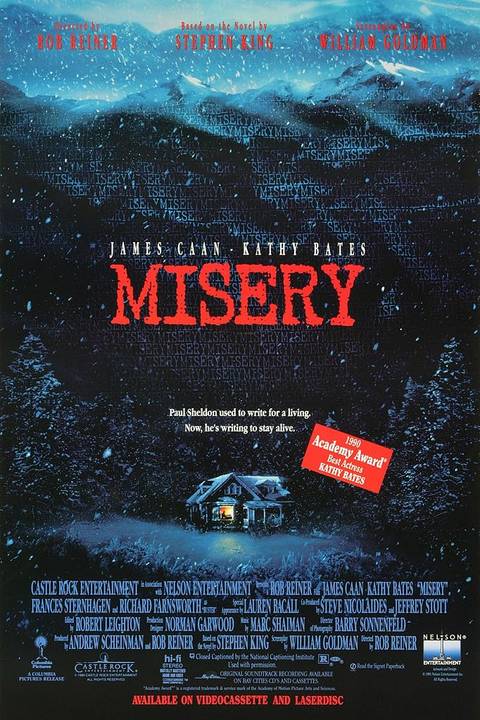
This one’s a psychological thriller about an author being taken captive by an obsessed fan: Annie. She holds him hostage and makes him rewrite and continue a series he’d already ended and mentally moved on from. Annie acts in increasingly frightening ways, with psychological torment not giving way to physical torment, as it’s more that, at a point, she starts psychologically and physically harming her prisoner at the same time. That is Misery, and it’s riveting, rather than wholly miserable, as a reader. And, yes, Kathy Bates was incredible as Annie Wilkes in the movie version of Misery, but the book version of Annie alone is enough to make her take the #1 spot here.

You must be logged in to post a comment Login