Entertainment
10 Sci-Fi Movies That Are About As Good As ‘Blade Runner’

Blade Runner is to science fiction what The Godfather is to crime/gangster cinema, sort of. Neither movie invented the genre either belonged to, with great sci-fi movies having existed for decades, and iconic gangster movies becoming popular back in the 1930s, yet both can be seen as redefining what was possible for those respective genres. With Blade Runner, it still holds up tremendously (and especially) well on a technical front, which is handy when it was made about the future.
You have a futuristic movie that ended up being appreciated in the future, to the extent that Blade Runner is actually now set in the past (the year 2019), but it’s still incredible and pretty close to flawless. Therefore, any movie that’s on the same level as Blade Runner is going to be within the realm of masterpiece territory, and that indeed can be said about the following sci-fi movies, most of them older classics that have also stood the test of time.
‘Blade Runner 2049’ (2017)
Duh. Good to start with the easiest one. Blade Runner 2049 is a pretty fantastic sequel all-around, and so much better than people were probably fearing a Blade Runner sequel might be, back pre-2017. It didn’t seem like a great idea, and maybe in a financial sense, it never was, since Blade Runner 2049 underperformed, though narratively and thematically (and quality-wise), this one did impress.
As the title suggests, it takes place 30 years on from Blade Runner, and depicts the dystopian world as having gotten noticeably worse, while the plot also (eventually) involves the first movie’s protagonist, Rick Deckard (played again by – a surprisingly enthusiastic and not checked-out – Harrison Ford). Visually, Blade Runner 2049 is one of the best-looking sci-fi movies in recent memory, and the fact that it exists as a worthy follow-up to such a legendary film is very much worth celebrating.
‘Godzilla’ (1954)

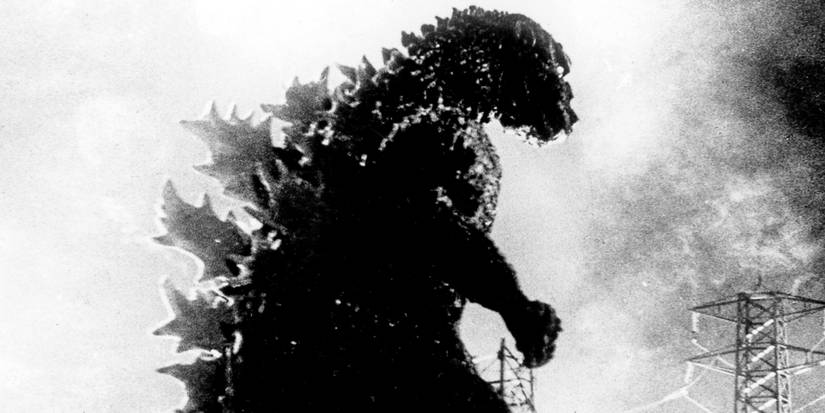
There are a few Godzilla movies that could be called legendary as far as science fiction cinema’s concerned, but it feels safest to single out the one that started it all. 1954’s Godzilla has a good deal less action than many of its sequels/follow-ups, and a focus on horror, still feeling pretty creepy in that regard, and also remaining relevant with the fears surrounding nuclear weapons that it explores so effectively.
Godzilla (1954) is probably the most thought-provoking film in the series it began, and also the heaviest.
Other Godzilla movies have social commentary, of course, though Godzilla (1954) probably proves the most thought-provoking and also the heaviest. It stands out in those ways, and for also being so significant for the giant monster movie sub-genre overall. Godzilla Minus One could well be a better starting point if you’ve somehow never seen a Godzilla movie before, just because it’s a little sleeker and more approachable pacing-wise, but historically, and as far as classics go… yeah, it’s got to be the original. Obviously.
‘Alien’ (1979)
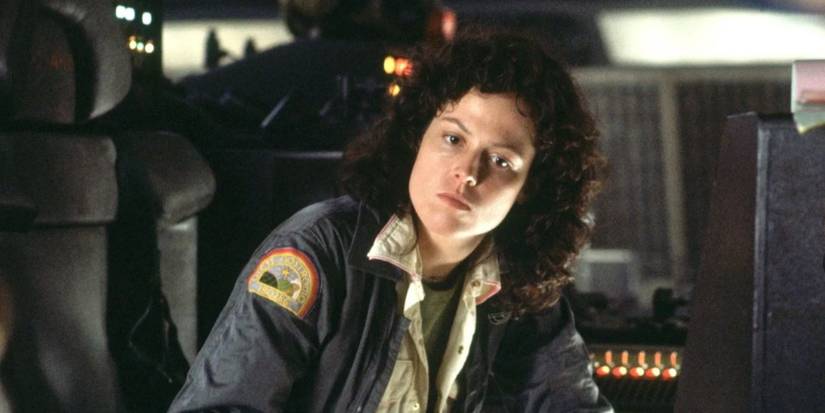
It’s tempting to say that it’s obvious Alien would be a sci-fi movie, given it’s called Alien, but then again, Parasite (2019) exists, and that one’s not about a literal parasitic creature or monster the way you’d expect it to be. And with Alien, there is a bit more to it beyond the narrative, which is really just people having to survive on board a small spacecraft where an alien is loose.
In that sense, Alien is easy to compare to Jaws, which also has a simple title and a straightforward premise, albeit with a little more under the hood if you want to dig into it, in that way. Both movies are amazingly well-crafted, too. Further, with Alien, it’s worth comparing it to Blade Runner and highlighting it as a classic of the sci-fi genre, since Ridley Scott was the director behind both.
‘The Thing’ (1982)
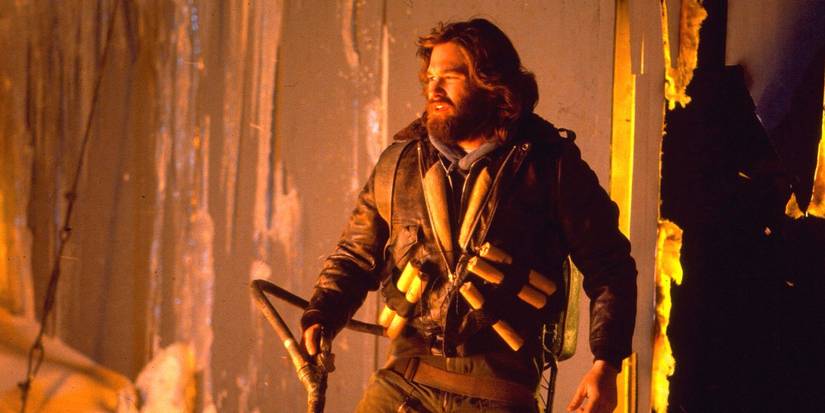
The setting is different from Alien, but the premise of The Thing is quite similar. There’s an alien, and people have to fight to stay alive. The Thing takes place on Earth, though it still manages to feel claustrophobic when needed, since it’s more specifically a film that takes place in Antarctica, and the conditions there keep the human characters confined to a research facility while the “thing” that wants to kill them is on the loose.
It does a lot with a little, and the level of suspense throughout is undeniably high. The Thing is also a bit of a miserable watch, owing to how dark and hopeless it feels for much of its runtime, but it’s a horror movie, so that ends up being a feature rather than a bug and all.
‘WALL·E’ (2008)

Possibly the best family-friendly sci-fi movie of all time, WALL·E is also a highlight within the entirety of Pixar’s output. It is another instance of the studio giving human emotions to things that don’t usually have human emotions, doing so after the first two movies with toys, and that one with the fish, but before there was the exploration of “what if emotions had emotions?”
And then as far as animated science fiction movies are concerned, they don’t get much better than WALL·E. It’s also a post-apocalyptic movie, in a sense, just a good deal more optimistic than most post-apocalyptic movies. Also, like with Godzilla, the concerns WALL·E is concerned with regarding humanity and its future (or lack thereof) remain relevant, not to mention surprisingly weighty for what might initially look like a kid’s movie.
‘Back to the Future’ (1985)

Back to the Future is about as comforting and easily approachable as comfort movies get, and so, unsurprisingly, it’s also very nostalgic. And it’s the kind of nostalgic that has that feeling on multiple fronts, as it was made more than four decades ago, and is very of its time stylistically, while the time travel plot also has its teenage protagonist ending up stuck in the past, 30 years earlier, so in that sense, Back to the Future would’ve felt nostalgic back in 1985.
Going much further than that is hard, discussion-wise. Back to the Future is a classic and one of those movies that’s potentially almost impossible to dislike. Maybe there’s someone out there who just doesn’t like it, and they’re well within their rights to not like it, but also, maybe you’re within your rights to think – ideally just to yourself, in the interest of not being too rude – that there might be something wrong with that particular individual.
‘Eternal Sunshine of the Spotless Mind’ (2004)


Romance movies focused on break-ups are already a little less common than more conventional (and pleasant) romance movies, but romance movies about break-ups that also count as sci-fi films? That’s an inevitably even smaller camp, and yet it’s a camp that Eternal Sunshine of the Spotless Mind belongs to. This one’s about a couple who’ve broken up, and they both choose to have a procedure that deletes all the memories they have of the other person.
You could play something outlandish like this for laughs, and you throw Jim Carrey into the mix, and you might expect something funny, or maybe more of a dramedy, like The Truman Show, yet that’s really not what you get here. Eternal Sunshine of the Spotless Mind is heavy-going, and it’s also one of those movies that gets admirably more difficult to watch the older/more heartbroken you get. That might not sell the film particularly well, but it’s what it’s going for and trying to do, so you have to admire it, even if you might not feel particularly keen about having it in rotation among other movies you might consider actually rewatchable.
‘The Empire Strikes Back’ (1980)

The first Star Wars might be more historically significant, and potentially also the bigger crowd-pleaser, yet it’s The Empire Strikes Back that’s the overall stronger film. Both films, and most in the Star Wars franchise, are fantasy in space, rather than strict science fiction, but that sub-genre (the space opera) does still require, you know, space and other sci-fi elements, so here The Empire Strikes Back is.
It’s relentlessly paced and undeniably exciting, even if you enter into it knowing the biggest surprises it has in store, or are otherwise familiar with much of it because it’s been so frequently parodied and referenced by other pieces of media. No matter; The Empire Strikes Back is still a strike. All 10 pins are knocked down. 10 out of 10 pins. Hey, 10 out of 10. What do you know? It’s all coming together, now.
‘2001: A Space Odyssey’ (1968)
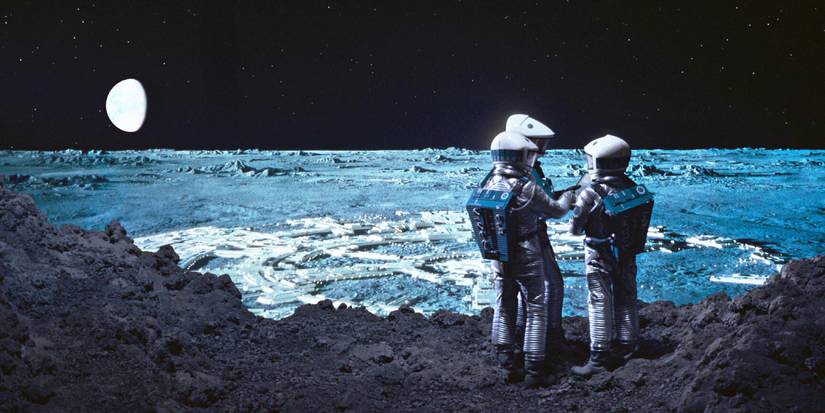
2001: A Space Odyssey is one of those rare movies that’s about almost everything, doing so by covering such a vast expanse of time. You get the early stretch of the movie dealing with humanity’s ancestors, then some stuff in the titular year (which wasn’t the distant future in 1968, but probably still seemed decently far off to most), and things conclude with a more mysterious sequence that seems like it’s taking place extensively into the future, kind of beyond comprehension and stuff.
Also, 2001: A Space Odyssey does this while being patiently paced, certainly not racing through all the years by any means. It takes its time while taking place over so much time, and that approach, coupled with the undeniable ambition, is one of many reasons why it’s such a fascinating and easy-to-revisit film (and it’s a landmark piece of science fiction in countless other ways, too).
‘Metropolis’ (1927)

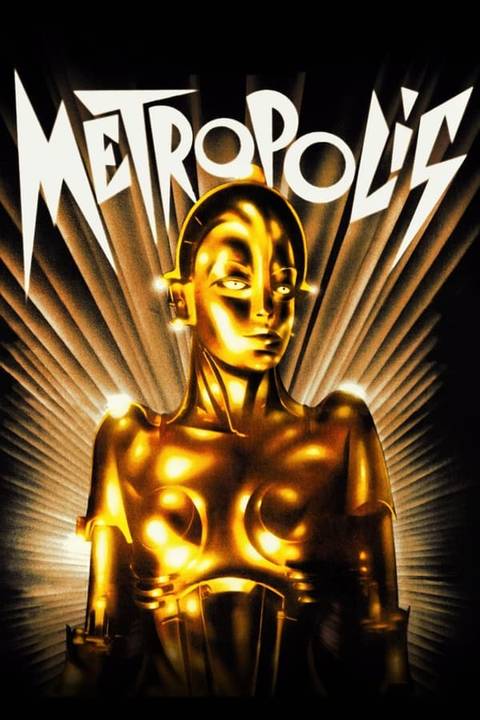
As mentioned before, Blade Runner was released far too late to come anywhere close to defining science fiction, as a genre within cinema, but Metropolis, on the other hand… yeah, this one kind of defined science fiction. There were some sci-fi movies released before 1927, with maybe the best known being 1925’s The Lost World, yet not many. And at least as far as feature-length sci-fi movies go, this was probably the first genuinely masterful one.
So, Metropolis has that going for it, and then visually and thematically, it’s also got quite a bit in it that seems likely to have influenced Blade Runner, plus a good many other sci-fi movies released post-1927. Technically, much of Metropolis still impresses, and it’s also easy to single it out as one of the greatest filmmaking accomplishments of its century, science fiction or otherwise.

Metropolis
- Release Date
-
February 6, 1927
- Runtime
-
114 minutes
- Director
-
Fritz Lang
- Writers
-
Thea von Harbou, Fritz Lang

