Entertainment
10 Sci-Fi Shows That Actually Get Time Travel Right

Time travel is an incredibly difficult plot device to get right. Science fiction typically has no problem coming up with plausible ways to explain elements that don’t actually exist, but different rules apply to time travel. It’s a concept that completely defies the laws of physics, making it a little too easy for writers who don’t know exactly what they’re doing to create logical paradoxes and inconsistencies that make it hard to fully immerse oneself in a show that incorporates time travel.
Throughout history, however, ten particular sci-fi shows have managed to get time travel right. Perhaps, like Dark, they came up with intricate internal rules that make it so that their time travel elements actually make sense; or perhaps, like Life on Mars, they focus on the more philosophical dimensions of time travel rather than the scientific ones. In any case, these are shows which prove that the genre actually can be done well.
10
‘Continuum’ (2012–2015)


Canadian science fiction has produced several of the genre’s greatest shows over the years, the Syfy gem Continuum easily being among the best. It’s one of those sci-fi shows that are criminally forgotten, a must-see both for those who love well-crafted and well-written time travel science fiction, as well as for those who love suspenseful crime dramas.
Whereas many lesser time travel shows try to tiptoe their way around the paradoxes that inevitably come with changing history, the way Continuum gets time travel right is by directly confronting those paradoxes and creating a story where branching timelines are the order of the day. Though the show’s rules start to get messier and more tangled up in its later seasons, the show as a whole manages to make time travel make more sense than it usually does.
9
‘Life on Mars’ (2006–2007)

British science fiction often feels like a genre all of its own, and there are very few British sci-fi shows better than Life on Mars. It’s a true masterpiece of a show, that’s for sure, but it’s probably better-suited for fans of gritty police procedurals than for die-hard sci-fi geeks. That’s because the science fiction in Life on Mars is both subtle and sparse, purely driven by the premise of a cop who’s hit by a car and wakes up in the 1970s.
Driven by that relatively simple high-concept premise, Life on Mars finds space to be one of those mystery shows that are perfect from start to finish, every bit as tense and suspenseful as it is creative. The show makes it delectably ambiguous whether what’s going on is actual time travel; and though its sequel series, Ashes to Ashes, confirms that this ’70s setting was actually a sort of limbo for dead and dying police officers, Life on Mars technically still qualifies as one of the most unique time travel shows out there.
8
‘Loki’ (2021–2023)


It was only in 2021 that Marvel Studios started making and releasing shows directly tied to the Marvel Cinematic Universe, and though that wave hasn’t produced all that many truly top-tier MCU products, Loki has a strong case for being the best of the bunch. After a somewhat slow start, this time travel and multiverse sci-fi extravaganza quickly turned into something far wilder and more creative than most of what the franchise had done before.
The series wisely doesn’t even bother to ground its time travel elements in any sort of scientific rigor, instead establishing a high-concept but perfectly plausible internal logic system and sticking to it. The MCU as a whole hasn’t been the same since. The way it all leads to one of those superhero show endings that are genuine masterpieces only further adds to why Loki is a must-watch for sci-fi fans.
7
‘The Lazarus Project’ (2022–2023)

Yet more proof that there’s nothing quite like top-tier British science fiction, The Lazarus Project is one of the best Netflix sci-fi shows that are a 10/10. Its approval rating of 100% from critics on Rotten Tomatoes is entirely well-deserved, offering a sky-high-stakes spin on typical time travel tropes by telling a story about an organization having to reset time in order to prevent mass-extinction events.
It’s a clever, unique, airtight concept that results in a show that still feels unlike anything else that time travel sci-fi has produced over the course of the small screen’s history. The strict internal logic that Lazarus Project sets up to make its time travel elements make sense works remarkably well the vast majority of the time, and even though low viewership got the show canceled after two seasons, it still feels like it had plenty of gas left in the tank.
6
‘The Peripheral’ (2022)

Loosely based on the book by William Gibson, The Peripheral is yet another example of a great time travel show that was tragically canceled well before it had the chance to display its full potential. But though anyone who’d rather not watch a canceled show that ends on a major cliffhanger may prefer looking elsewhere, people who don’t mind an unresolved narrative are guaranteed to fall in love with The Peripheral.
It’s one of the best sci-fi shows with fewer than eight episodes, and also one of the time travel shows that’s smartest about its time travel elements. By avoiding physical travel entirely, instead relying on a data-only model that sidesteps grandfather paradoxes, The Peripheral prevents itself from ever driving itself into an inescapable narrative corner.
5
‘11.22.63’ (2016)

Stephen King adaptations have produced several exceptional TV shows over the years, but it should come as no surprise that the one that may be the best of the bunch also happens to be based on King’s best sci-fi book. Indeed, 11.22.63 is an absolutely phenomenal adaptation, a thriller miniseries executive-produced by J. J. Abrams which is as well-written as it is well-acted and well-directed.
Does the time travel in 11.22.63 make strict scientific sense? Not really, but the miniseries gets time travel right by seeing it as more of a supernatural force, treating the past as a sort of stubborn entity that doesn’t stop resisting change. The result is a series that even die-hard fans of time travel shows should find exquisitely different and unique.
4
‘Steins;Gate’ (2011–2015)

Animation is at times looked down on even by the most passionate of sci-fi fans, despite having provided several of the genre’s greatest shows over the years. Case in point: the anime masterpiece Steins;Gate, based on the 2009 visual novel of the same name. It’s one of the best anime thrillers of all time, also widely considered one of the best anime series ever created by fans and critics alike.
The show’s story follows a strict set of rules and internal mechanics, at times even referencing real scientific theories like Kerr black holes and the Many-Worlds interpretation of quantum mechanics. As such, Steins;Gate should keep fans of both hard sci-fi and soft sci-fi equally satisfied, thanks to its understanding of time travel as a concept that deserves rigor and a focus on entertainment value in equal measure.
3
‘Travelers’ (2016–2018)

The Canadian-American co-production Travelers still holds a 100% approval rating from critics on Rotten Tomatoes, and every single positive review that created that perfect score was well-earned. It is, after all, one of the most addictive sci-fi shows ever created, perfectly blending high-stakes time travel with emotionally compelling and character-driven drama.
With its strict physical rules and its limiting time travel to characters’ consciousness, Travelers creates a fluid yet strict internal system that keeps the plot philosophically engaging while also making sense 99% of the time. That results in some incredibly entertaining and thought-provoking storylines, which makes this one of the best sci-fi shows to rewatch.
2
’12 Monkeys’ (2015–2018)

Four-season TV shows that are perfect are a rarity, but they sure do exist, as proven by Syfy’s 12 Monkeys. Loosely based on Terry Gilliam‘s ’90s cult classic film Twelve Monkeys, this criminally underrated masterpiece of a show is far and away one of the best sci-fi TV shows of the 2010s—regardless of subgenre—even if it doesn’t usually get as much recognition as it deserves.
Much like the exceptional film that inspired it, 12 Monkeys relies on a rigid timeline governed by a strict internal logic and closed bootstrap paradoxes. This gets time travel right not only because the show ends up making a surprising amount of sense—despite being just as intellectually challenging as any fan of the subgenre could possibly want—but also because it understands the many fascinating philosophical questions that make time travel interesting to begin with, like matters of predestination and fate.
1
‘Dark’ (2017–2020)
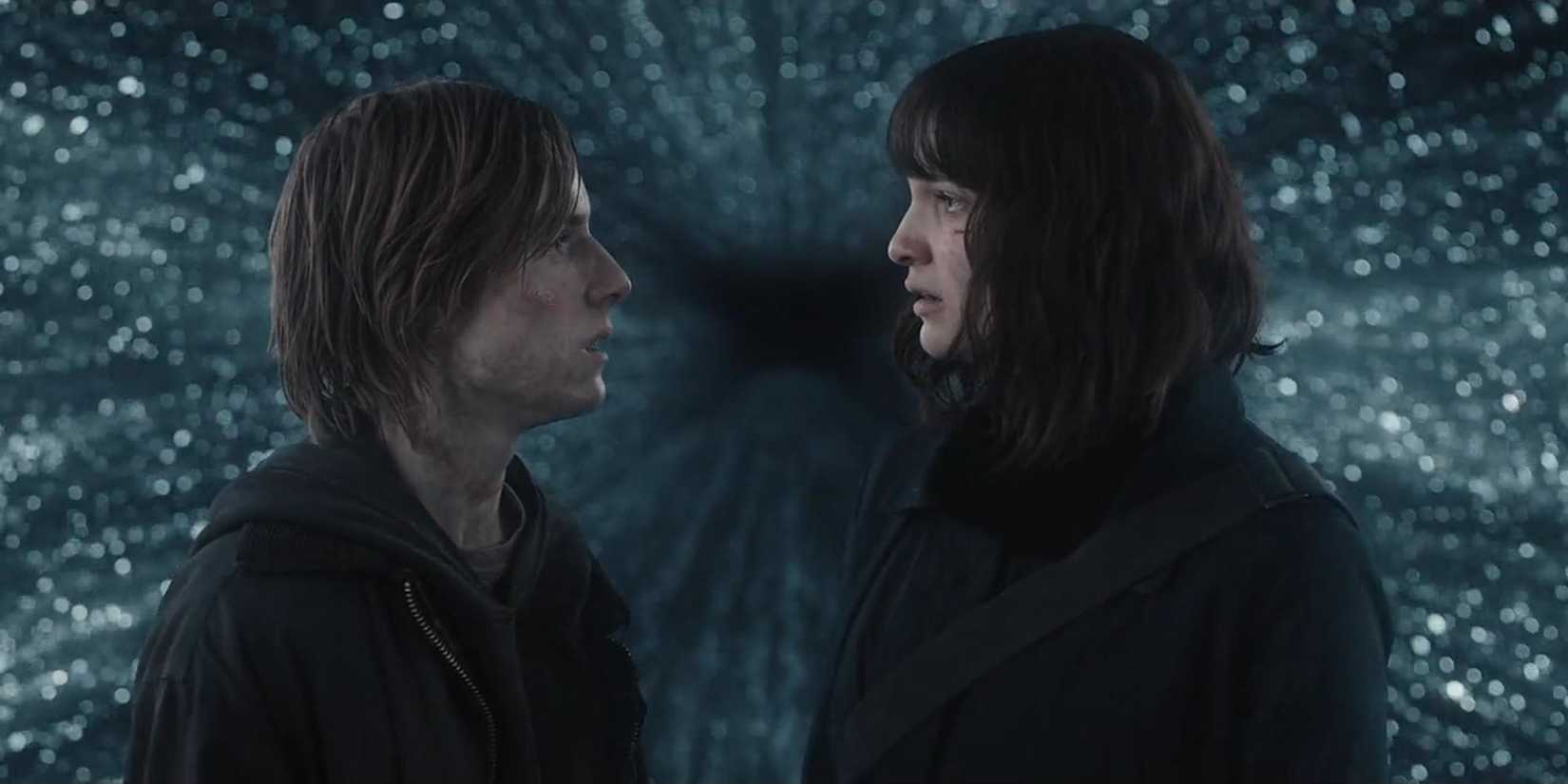
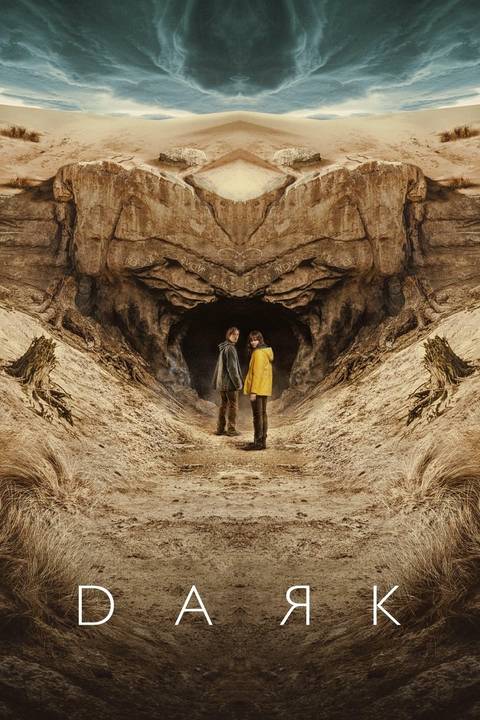
As the years have passed since its jaw-dropping conclusion, time has been kind to Netflix’s Dark, allowing it to age as perhaps the single most universally acclaimed time travel and multiverse sci-fi series the world has ever seen. For people who love Netflix shows full of shocking plot twists, this one should be considered essential viewing, because it also happens to probably be the most intellectually daunting sci-fi show of the last decade.
As complicated and attention-demanding as it may sometimes feel watching Dark, however, it’s also one of the most immensely satisfying experiences a sci-fi fan can have from the comfort of their living room. That’s largely because the show tends to get time travel exactly right, treating it with both mathematically strict rigor and a supernatural sense of mystery. Time travel shows can often be so confusing that they’re hard to enjoy, but Dark treats its sci-fi elements with such a refreshingly nuanced attention to detail that it becomes abundantly easy to enjoy it on every level.

Dark
- Release Date
-
2017 – 2020-00-00
- Network
-
Netflix
- Showrunner
-
Jantje Friese
- Directors
-
Baran bo Odar
-

Louis Hofmann
Jonas Kahnwald
-

Lisa Vicari
Martha Nielsen

You must be logged in to post a comment Login