Entertainment
10 Single-Location Thrillers That Are Gripping From Start to Finish, Ranked

The wonderful, magical thing about the thriller genre is that, on paper, you need very few elements to make it work. As long as your sense of suspense and tension is strong enough, you could potentially make the whole thing take place in a single location—and, indeed, many filmmakers have taken a stab at such an ambitious concept throughout history.
Sometimes, these filmmakers aren’t successful, but when they are, the result can be one of the greatest thrillers of all time. From David Fincher‘s Panic Room to Alfred Hitchcock‘s numerous single-location thrillers, these are films that show that the claustrophobia generated by a single-location film can actually work in a thriller’s favor when the director knows what they’re doing.
‘Phone Booth’ (2002)


Impeccably directed by Joel Schumacher and starring Colin Farrell at his very best, Phone Booth is one of those forgotten thrillers that have aged like fine wine. Rapidly paced and wise enough to only run for 80 adrenaline-fueled minutes, the film takes the concept of a man being held hostage inside a phone booth by a sniper and turns it into a surprisingly dense and nail-bitingly compelling thriller.
The film’s exploration of morality, voyeurism, and media manipulation at the turn of the century has aged surprisingly well, so Phone Booth is still every bit as exciting today as it was back in 2002. Schumacher’s masterful sense of tension is—at the risk of overusing the term—brilliantly Hitchcockian, delivering a true roller coaster ride of a movie that doesn’t let up until the credits roll.
‘Buried’ (2010)

Much in the same vein as Phone Booth, Buried is another single-location thriller set within the particularly claustrophobic confines of a rectangular object. In this case, it’s a wooden coffin, where a truck driver finds himself trapped. Being buried alive is a notoriously common phobia, making Buried all the more of a universally horrifying psychological thriller.
Rodrigo Cortés‘ awfully claustrophobic movie stars Ryan Reynolds in one of his best-ever performances, as he helps transform what might have otherwise been nothing more than a cheap gimmick into a truly gripping premise. There’s nothing revolutionary or groundbreaking about the story, but the way Cortés executes it results in a genuinely nightmarish, twist-filled injection of pure adrenaline.
‘Coherence’ (2013)
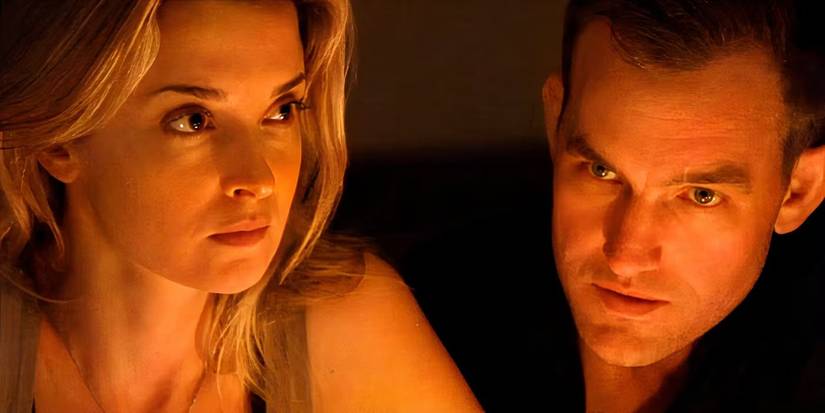
The science fiction psychological thriller Coherence, James Ward Byrkit‘s directorial debut, is a real mind-bender from beginning to end. It’s the type of sci-fi film you need to be a genius to fully understand, heavily inspired by the tone of The Twilight Zone. It’s low-budget genre filmmaking at its best, irrefutable proof that you don’t need much to make a sci-fi film work.
Set in a house during a group of friends’ dinner party, Coherence maximizes its low budget by relying on the intelligence and intensity of its screenplay, the quality of its performances, and the uniqueness of its setting. Those not used to mind-bending sci-fi will perhaps find it a little too confusing, but fans who love it when sci-fi films make them think ought to check out Coherence at least once in their lives.
‘Panic Room’ (2002)
When people rank David Fincher’s filmography, Panic Room is usually seen near the bottom of such lists, which automatically makes it one of the most criminally underappreciated thrillers of modern times. Elevated by Jodie Foster‘s powerhouse performance and her tremendous chemistry with Kristen Stewart, it’s one of the most Hitchcockian movies that Fincher has ever made.
When someone like Roger Ebert calls a film one of the most suspenseful ever made, you know that film means business. Indeed, Panic Room is inventively shot and written in such a taut manner that it feels impossible to look away from the screen at any point. It may be a little too mainstream and bare-bones for those who prefer more ornate and elaborate thrillers, but isn’t simplicity the whole point of a single-location thriller? As far as simplicity in thrillers goes, it’s rarely more effectively used than by Fincher in Panic Room.
’10 Cloverfield Lane’ (2016)


Matt Reeves‘ found footage monster film Cloverfield instantly proved itself as one of the most creative sci-fi movies of the 2000s upon its release in 2008. Eight years later, we got a sequel: 10 Cloverfield Lane, a movie so different from the original that it’s more of a spiritual successor than a direct sequel, really. At no point and in no way is that an issue, since 10 Cloverfield Lane would have set itself apart as a delectably unique sci-fi thriller, anyway.
Led by John Goodman, Mary Elizabeth Winstead, and John Gallagher Jr.‘s tour-de-force performances, this film makes a bunker seem like the scariest place on the planet in just a little over an hour and a half. Largely reliant on Goodman’s effectively terrifying performance, 10 Cloverfield Lane is one of the best sci-fi thrillers of all time, a smart and tension-filled gem with a flawless character-driven heart.
‘The Guilty’ (2018)

Not to be confused with its considerably inferior 2021 Hollywood remake starring Jake Gyllenhaal, the Danish crime thriller The Guilty is one of the greatest Scandinavian films of the last decade. It was Gustav Möller’s immensely impressive directorial debut, following a distressed Copenhagen police officer with a pending court hearing, who handles a difficult case over the phone within the confines of an emergency call center.
The Guilty is nothing short of one of the tensest thrillers of the last 10 years, whose real-time narrative is remarkably well-paced and flawlessly performed by Jakob Cedergren. It’s a high-concept thriller that knows exactly how to frame, block, and pace its story in such a way that the audience is constantly on the edge of their seats, stressfully biting their nails.
‘Wait Until Dark’ (1967)

Starring Audrey Hepburn and Alan Arkin, Terence Young‘s Wait Until Dark is one of the most intense movies of the 1960s. Set almost entirely within the walls of a Greenwich Village basement apartment where the protagonist and the audience are terrorized, it’s a claustrophobic and airtight thriller that’s still as suspenseful today as it was in the ’60s.
Wait Until Dark is a masterclass in how to make a timeless thriller, leading up to one of the most terrifying climaxes of any American thriller of the era. Combine Arkin’s mustache-twirling villainous performance with the flawlessly tension-filled way in which Young frames the apartment, and you get a ’60s classic that doesn’t get nearly as much love as it deserves nowadays.
‘Rope’ (1948)
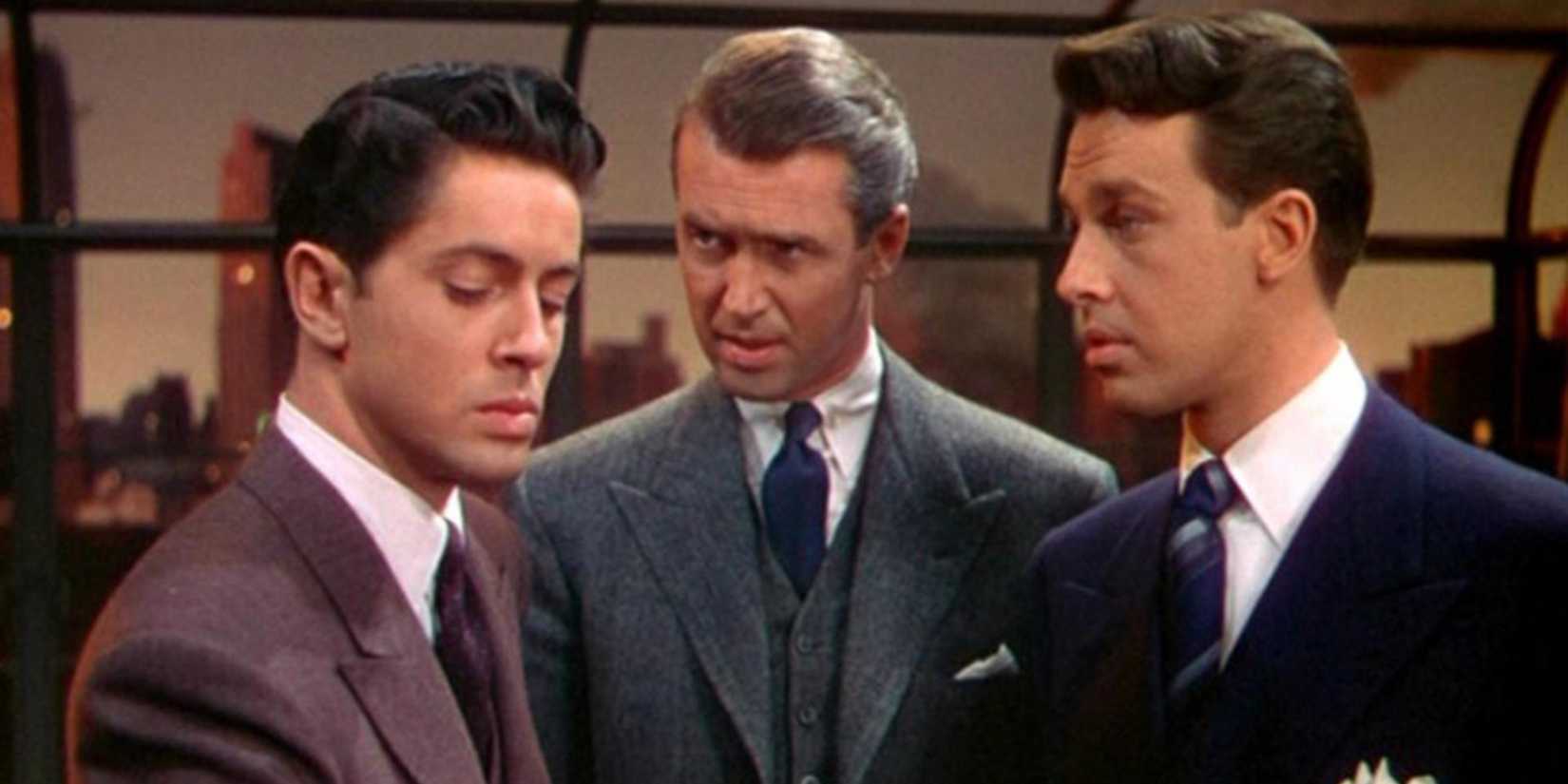
Alfred Hitchcock is known as the Master of Suspense for a reason. The thriller genre would likely not be what it is today without the director, who made several of the greatest outings the genre has ever offered throughout his career, including one of the most underrated movies of all time: Rope. It wasn’t Hitchcock’s first attempt at a single-location movie, but since it also takes place in real time, it’s arguably the most daring and experimental movie that the director ever made.
Edited to appear like it’s composed of only four long shots, the film was based on Patrick Hamilton‘s 1929 play of the same name, and it does feel like one of Hitchcock’s most theatrical films, which includes, of course, a single setting. The film received mixed reviews and performed poorly at the box office upon release, but with the years’ passage, cinephiles have come to praise it as an audacious and incredibly suspenseful little experiment by one of history’s greatest filmmakers.
‘Rear Window’ (1954)

After perfecting the formula in Rope, Hitchcock decided to make not only one, but two single-location masterpieces in 1954. Dial M for Murder is great, but Rear Window is almost transcendental. We’re talking about one of the greatest mystery movies of all time, the highest-quality representation of everything that made Hitchcock special.
James Stewart and Grace Kelly give truly perfect performances, plus Thelma Ritter is a scene-stealer. Then, there are the magnificent ways in which Hitchcock makes the protagonist’s apartment feel like a massive world unto itself. There’s nothing about Rear Window that isn’t worthy of the utmost admiration. Rear Window is perfect proof that in thrillers, less is, indeed, often more.
‘Dog Day Afternoon’ (1975)

His directorial debut was the courtroom drama 12 Angry Men, praised by many as one of the greatest films ever made, so Sidney Lumet was no stranger to making single-location films when he made Dog Day Afternoon. Based on the 1972 Chase Manhattan robbery and hostage situation in Brooklyn, this ahead-of-its-time masterpiece is one of the best heist thriller movies of all time.
With Al Pacino and John Cazale at their best, this tale about the complexities of identity in ’70s America is one of the most defining landmarks of the New Hollywood film movement. The setting of the bank drenches the film in pure character-driven tension, dismantling the whole heist thriller genre in ways that still come across as genius over half a century later.
You must be logged in to post a comment Login