Entertainment
10 Stellar Netflix Comedies That Are 10/10 but Nobody Remembers Today

In the age of streaming, Netflix was the pioneer in introducing original content to viewers beyond network and cable television. With greater freedom and fewer restrictions, Netflix produced some iconic series. From Stranger Things to The Crown, Ozark to Squid Game, when it comes to thrillers and dramas, the streamer has it on lock. But what about the original comedies? Why don’t they receive the same adoration?
Throughout Netflix’s history, there have been extraordinary original comedies that broke the mold. Some welcomed Hollywood legends to play and explore characters of a certain age, while others played into the absurdity that wouldn’t have resonated on network television. Yet, these 10 out of 10 shows have become victims of time, forgotten as new viral shows arrive. It’s time to celebrate the comedies that helped shape Netflix and the genre.
‘Bonding’ (2019–2021)


Sex has always been a part of television. Often used as a steamy moment to further the plot, sex sells. So, what happens when you use that premise, but explore a world of taboo? You get the brilliant dark comedy, Bonding. Created by Rightor Doyle, Bonding explores the friendship of Tiff Chester (Zoe Levin), a psychology grad student who works as a dominatrix, and Pete Devin (Brendan Scannell), her newly out gay bestie, who becomes her assistant. As Tiff and Pete navigate their personal lives by day, at night, they work in the BDSM underworld, where they go by the monikers Mistress May and Master Carter. Allowing audiences to explore the taboo world of kink as they use their exploration to find themselves, Bonding is a dark comedy with heart.
Raunchy but light-hearted, Bonding went where very few shows had gone before. Bonding lightened up the dark world of BDSM without compromising the community. Instead, it served as a place where the characters could express vulnerability, learn to communicate, and establish boundaries in all their relationships. With each episode running half the time as a typical sitcom, Bonding was a fast-paced comedy that kept audiences engaged. A short-and-sweet binge that is highly satisfactory, the series was niche without being nonjudgmental. Doyle takes care to ground the story in authenticity while also keeping it fresh and feisty. Levin and Scannell had sensational chemistry that made you see your own bestie in them. Sadly, only running for two seasons, Bonding was a blink-and-you-missed-it comedy.
‘Dead to Me’ (2019–2022)


It might be unfair to claim that Dead to Me is a forgotten series, but the truth is, the more time away, the less it remains in the conversation. Over the course of three seasons, Dead to Me centered on the intense friendship between Jen Harding (Christina Applegate), a hotheaded widow, and Judy Hale (Linda Cardellini), an eccentric optimist she meets in grief counseling. Their friendship takes a turn when the truth is revealed that Judy hid the fact that she killed Jen’s husband in a hit-and-run. With secrets galore, tying them closely together, their friendship endures a rocky road as they face more twists and turns. A tragicomedy about grief and whether certain actions can ever be forgiven, Dead to Me masterfully balanced laugh-out-loud humor with immense emotion, anchored by a thrilling plot.
Created by Liz Feldman, the series came at the right time for both audiences and the two women in the central roles. Applegate and Cardellini had sensational chemistry in their odd-couple dynamic, bringing out the best in one another as characters and actresses. With a unique spin on female friendship, Dead to Me finds that what should be a complex circumstance is actually a way to bond over trauma. The deeper the series went, the more Jen and Judy faced the ups and downs of their relationship. They both made mistakes while also being present to lift the other up. Trauma and grief are easy themes; Dead to Me tackled them with sharp wit. Dead to Me wanted audiences to decide what makes a person good or bad, but in the end, we all have both inside, thus we have to forgive others for being the same.
‘Dear White People’ (2017–2021)
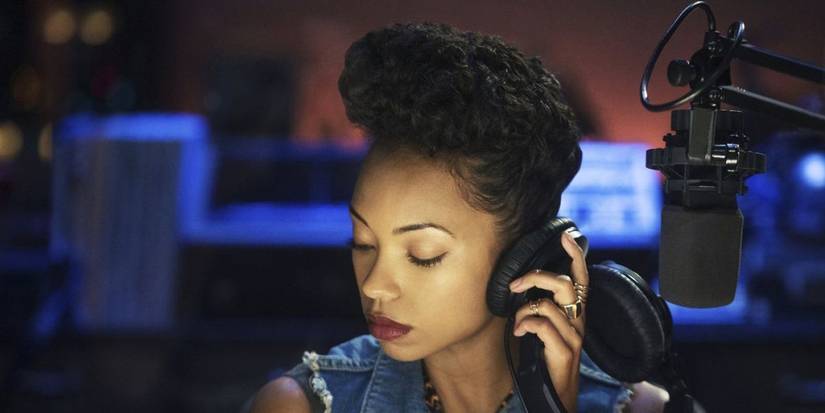
After the success of the film of the same name, writer-director Justin Simien returned to the source material to create a four-season run of Dear White People. Following the lives of several Black college students at Winchester University, a fictional Ivy League institution, Dear White People explored issues of racial tensions, identity, and politics. With themes tackling microaggressions, systemic racism, and cultural appropriation head-on, Dear White People‘s sharp, satirical tone forced viewers to think and became the ultimate conversation-starter series.
An ensemble piece, the ability to generate a diverse group of individuals uniting over a similar perspective was its strongest suit. Though very thematically focused, the characters were richly crafted. From Logan Browning as Sam White, a radio host trying to get people to wake up to society, to DeRon Horton as Lionel Higgins, a highly intelligent aspiring journalist trying to find his voice, the characters you knew from the film were further fleshed out through new stories. Confidently utilizing modern pop culture and social themes to hold up a mirror to society, Dear White People was topical and timeless.
‘Grace and Frankie’ (2015–2022)

Right from the jump, having Jane Fonda and Lily Tomlin reunite was an immediate draw. Hoping that Dolly Parton would pop in to complete the 9 to 5 trio was always top of mind. But once the novelty wore off and the story became the central focus, Grace and Frankie proved itself to be an underdog contender as one of the greatest comedies of the 2010s. Created by Marta Kauffman and Howard J. Morris, the seven-season series told the story of two women in their 70s—the stiff, refined Grace Hanson (Fonda) and the eccentric artist Frankie Bergstein (Tomlin)—whose lives are upended when their husbands, Sol Bergstein (Sam Waterston) and Robert Hanson (Martin Sheen), announce they are in love and plan to marry. Forcing a friendship they never thought imaginable, Grace and Frankie was a rare comedy that showcased the realities of life after 70 while exploring how, at any age, new beginnings can arrive when you least expect them.
Wonderfully tender and strongly acted, Grace and Frankie became the ultimate comfort watch. This was not The Golden Girls with four Hollywood stars getting a chance to act in a hit again. Grace and Frankie was a fervent exploration of the reality of aging through pathos and humor. As a single-camera comedy, Grace and Frankie was able to weave in dramatic moments to capture the story’s authenticity. You could easily have turned this into a multi-cam show based solely on over-the-top scenarios, but grounding it in the resilience of the human spirit made it relatable. Of course, as long as you could get past President Jed Barlet and DA Jack McCoy as a gay couple, Grace and Frankie is perfect. As the series went on, Grace and Frankie lost its novelty, being overshadowed by new original content. What never left was Fonda and Tomlin being at the top of their game within this new demographic. Grace and Frankie was an important, groundbreaking series that invited big-name stars to tackle themes they relate to.
‘Lady Dynamite’ (2016–2017)

Sometimes, all it takes is your own show where you poke fun at yourself to find a new devoted audience. Such was the case for Maria Bamford and her sleeper hit, Lady Dynamite. Loosely based on her life, the series is a surreal, meta comedy that follows Maria as she attempts to rebuild her life and career in Los Angeles after a six-month break in recovery for bipolar II disorder. Wonderfully chaotic and uniquely Bamford, Lady Dynamite addressed Bamford’s bipolar disorder and obsessive-compulsive disorder, and rather than make it a show about self-pity, it became an honest portrayal of mental health told through humor.
Created by Pam Brady and Mitch Hurwitz for Netflix, Lady Dynamite was a meta masterpiece. The fourth-wall breaking was never a distraction; rather, it was an element that elevated the comedy and allowed Bamford to speak her truth. A journey straight into Bamford’s mind, the style in which the stories are presented offers a glimpse of how Bamford experiences life. The non-linear approach was highly experimental, which resulted in the ultimate payoff. Furthermore, she gets to speak her mind about sitcom conventions and the struggles within the industry. Whether you experienced it yourself or know someone who has, Lady Dynamite was a daring show that tackled mental health while network comedies steered clear of it. Lady Dynamite was ahead of its time; the doors the series opened for modern comedy seemed to leave the show on the other side of it.
‘Master of None’ (2015–2021)

Fresh off a successful run on Parks and Recreation, comedian Aziz Ansari rode the momentum and created a star vehicle for himself with Master of None. The dramedy follows Dev Shah (Ansari), a 30-year-old actor in New York navigating his career, romance, and cultural identity. By Season 3, the series switched perspective, giving the lead to Lena Waithe, playing Denise, one of Dev’s friends, a 37-year-old lesbian novelist, mostly following their romantic, professional, and personal experiences. The complete millennium experience, anxiety included, Master of None took relatively specific themes, like the gap between first-generation Indian-American children and their immigrant parents, and mixed them with more universal themes, including racism, sexism, and modern romance, to give a platform to minority voices.
With high-quality filmmaking and whip-smart writing, Master of None began as a deeply personal project for Ansari, resulting in humanistic storytelling. Mostly adopting a self-contained episode narrative, each episode allowed a specific theme to take center stage. Master of None was a modern comedy that avoided classic sitcom tropes. Diverse storytelling and visibility have become more prominent since Master of None, making it seem like a show of the past. If you haven’t watched the series, no time like the present to “treat yo self’” with a forgotten great.
‘One Day at a Time’ (2017–2020)

Perhaps the most criminally underrated and underappreciated comedy to ever play on Netflix was the wholesome reboot of the classic sitcom One Day at a Time. Reimagined for a Cuban-American family at the center of the story, the sitcom followed Penelope Alvarez (Justina Machado), a newly separated Army veteran and nurse, raising her radical teen daughter, Elena (Isabella Gomez), and socially adept tween son, Alex (Marcel Ruiz), with the help of her old-school, Cuban-born mother, Lydia (Rita Moreno). Bringing the multigenerational stories of a Latino family to the forefront, the show perfectly marries old-school sitcom with contemporary storytelling.
Even if the Alvarez family didn’t look like your family, their experiences together as a unit may still have resonated. One Day at a Time was exceptionally heartfelt, tackling important topics respectfully. Equally as progressive as the original Norman Lear series was at its time, the show brought classic tropes that made multi-camera series so beloved while ensuring such themes of PTSD, racism, and sexuality were handled with care. One of the most rewarding elements of the series was the comedic masterclass coming from Machado and Moreno. Despite receiving critical acclaim, One Day at a Time sadly didn’t earn the respect it deserved when it was forced to end its run on Pop rather than Netflix. Beyond poignant, One Day at a Time is an exceptional series for the entire family.
‘Unbreakable Kimmy Schmidt’ (2015–2019)

The 2010s became a time when single-camera comedies took daring risks. In the mockumentary style, you had shows like The Good Place that played with the surreal and the absurd for a delightfully hilarious premise. Enter Tina Fey and Robert Carlock with a hilariously absurd comedy, Unbreakable Kimmy Schmidt. After 15 years of captivity in an underground bunker in Indiana, where the Reverend Richard Wayne Gary Wayne (Jon Hamm) held her, and three other women, 29-year-old Kimmy Schmidt (Ellie Kemper) decides to leave her past behind and start over in New York City. Adjusting to life in the concrete jungle after life in a doomsday cult, she rooms with Titus Andromedon (Tituss Burgess), a flamboyant, self-absorbed, struggling actor; deals with eccentric, crime-prone landlady Lillian Kaushtupper (Carol Kane); and works as a nanny for wealthy, insecure socialite Jacqueline White (Jane Krakowski). Like a cartoon strip come to life, Unbreakable Kimmy Schmidt balances the dark with the light for an outrageously comical satire with gags galore.
Like 30 Rock, Unbreakable Kimmy Schmidt uses every waking moment to offer social commentary where no one is safe. With a character as the eyes and ears of a brand-new world, unafraid to speak her mind on anything and everything, the show pokes fun at the mundane. New York City plays a character, but in this version, it’s as colorful as the characters. The ensemble lifts the show to great heights. Even at their worst, each character is a delight. They have such wonderful idiosyncrasies that pop through the screen. With bits in every episode, from Pinot Noir to the origin of Jacqueline’s identity, Unbreakable Kimmy Schmidt was a laugh riot. There’s no doubt the show could have run longer than four seasons, but alas, the series went out on a tremendous high.
‘Wet Hot American Summer: First Day of Camp’ (2015)
The hype was real, and it was warranted. Upon the announcement of a serialized version of Wet Hot American Summer with many original characters reprising their roles, those who hadn’t signed up for Netflix purchased a subscription. Serving as a satirical prequel to the cult classic film, Wet Hot American Summer: First Day of Camp follows the counselors and campers of Camp Firewood on their chaotic first day of summer in 1981. With the original ensemble playing younger versions of themselves, Wet Hot American Summer: First Day of Camp was as absurd as it sounds. As it should have been. For fans of the characters, the series provided extra tidbits into the origins of the characters’ relationships and behaviors seen in the original movie. By having adult-only time, the over-the-top hilarity flows naturally.
As a serialized show, the plot centers on saving the camp from toxic waste dumped by a company. But it’s the individual subplots that shine brightest. The brilliance of this series lies in the reunion of actors whose careers blew up after the film. With the likes of Elizabeth Banks, Bradley Cooper, Janeane Garofalo, Amy Poehler, and Paul Rudd joined by new cast members including Jason Schwartzman, Chris Pine, Jon Hamm, and Kristen Wiig, Wet Hot American Summer: First Day of Camp was nonstop laughs. No matter where they are in their careers, every star is committed to the bit, in on the absurdist meta jokes. It mocked teen comedies while then poking fun at investigative journalism, political thrillers, legal dramas, and spy films within the context of an ’80s camp life. Though only a season, the follow-up show Wet Hot American Summer: Ten Years Later brought back much of the series’ cast, along with new stars Adam Scott, Melanie Lynskey, and Dax Shepard. The legacy of the franchise remains in our hearts.
‘W/ Bob & David’ (2015)

Outside of legacies like Saturday Night Live and MAD TV, finding success as a fledgling sketch comedy show can be difficult. Then Netflix took a beloved ’90s HBO sketch series and rebooted it. In 2015, Bob Odenkirk and David Cross paid homage to Mr. Show with Bob and David with four episodes of W/ Bob & David. In the spiritual successor, Odenkirk and Cross bring on the laughs in four 30-minute episodes. Combining live-on-stage studio segments with pre-recorded digital shorts, W/ Bob and David saw the stars head back to their humble beginnings while proving that, even with higher-profile fame, they still have the comic goods.
17 years after the original ended, W/ Bob and David retained the anarchic spirit while introducing more nuanced, refined scripts. The series thrives on both actors’ natural chemistry and comedic tension. Perhaps a major reason the show has been forgotten over time is that Netflix removed the third episode for a sketch featuring blackface. Though the stars objected to the decision, arguing it was satire, the growing racial tension in the country in 2020 left the streamer with no choice. Though there was a desire for more, the single season came and went with little fanfare.


You must be logged in to post a comment Login