Entertainment
10 Thriller Books of the 21st Century That Are Perfectly Written

Thrillers tend to focus on the plot, engaging readers with clever twists, mysterious characters, and relentless pacing. However, the genre’s best novels serve up stellar prose alongside the tense storytelling; indeed, they are finely constructed on a sentence-by-sentence level.
With that in mind, this list looks at some of the best-written thriller books of the last quarter-century. Some blur the boundaries between literary fiction and genre writing, while others incorporate elements of horror or historical fiction. Despite their differences, all the titles below boast exceptional technical skill.
‘My Sister, the Serial Killer’ (2018)


“The most loving parents and relatives commit murder with smiles on their faces.” Korede is a hardworking nurse whose younger sister Ayoola has an alarming habit of killing her boyfriends, allegedly in self-defense. Each time it happens, Korede quietly helps dispose of the evidence, convincing herself that protecting her family is the right thing to do. However, that fragile arrangement begins collapsing when Ayoola develops an interest in the man Korede secretly loves. Korede grows increasingly concerned that he will be her sister’s next victim.
It’s an intriguing premise that Nigerian author Oyinkan Braithwaite spins into a tense dark comedy rippling with psychological tension and barbed social commentary. This debut novel earned rave reviews and took home the 2019 Los Angeles Times Book Prize for Best Mystery/Thriller.
‘Where the Crawdads Sing’ (2018)


“There are some who can live without wild things, and some who cannot.” This one was adapted into a so-so movie starring Daisy Edgar-Jones, though the original novel is a lot stronger. The story alternates between Kya Clark’s isolated childhood in the marshes of North Carolina and the later investigation into the death of local celebrity Chase Andrews. As the timelines gradually converge, we come to understand the protagonist’s years of loneliness and quiet observation.
Along the way, Where the Crawdads Sing melds several styles and subgenres, including drama and coming-of-age, all of them united by the expertly sustained murder mystery. It’s a tricky balancing act that author Delia Owens pulls off with aplomb. She also excels at her descriptions of nature, practically turning the marsh into a character in its own right. Not for nothing, the book was a runaway success, selling well over 18 million copies.
‘The Girl with the Dragon Tattoo’ (2005)

“People always have secrets. It’s just a matter of finding out what they are.” Published only after author Stieg Larsson‘s death, The Girl with the Dragon Tattoo was an immediate global sensation, hugely reshaping thriller writing in the late 2000s. The plot pairs journalist Mikael Blomkvist with the brilliant hacker Lisbeth Salander as they reopen the decades-old disappearance of Harriet Vanger, a mystery that has haunted one of Sweden’s wealthiest families for generations.
Harking back to the great mystery tradition, the plotting here is masterful, loaded with misdirection and subtle clues that first appear insignificant but later turn out to be crucial. Complementing this, the prose style is economical and punchy, written in plain language and deploying a dry but effective procedural tone. It’s brisk and clear and keeps the pages turning the whole way through.
‘Gone Girl’ (2012)
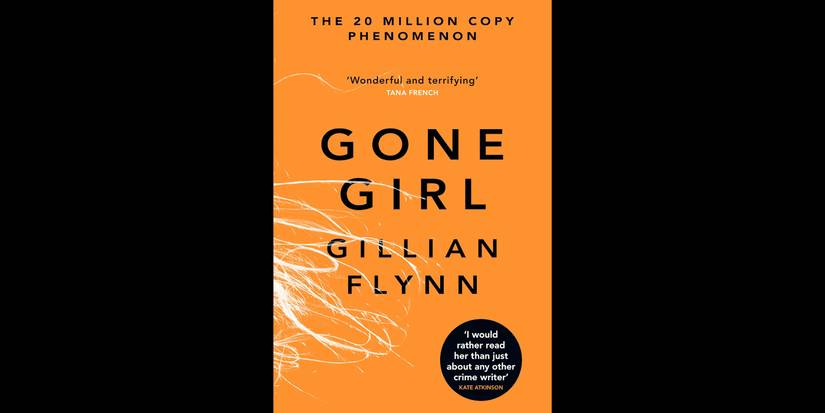
“Like a child, I picture opening her skull, unspooling her brain and sifting through it…” Gone Girl has already cemented its reputation as one of the most impactful thrillers of the century so far. It begins with the disappearance of Amy Dunne on her fifth wedding anniversary, leaving her husband Nick under immediate suspicion. Competing narratives emerge, and hidden motivations come to light, forcing readers to reconsider everything they believed they understood about both characters.
The book plays the audience like a fiddle, hitting us with red herrings and shocking narrative switcheroos, and keeping the psychological tension at a fever pitch. The writing style is sharp and cynical, almost cold to the touch, filled with dark humor and sharp cultural critique. The best example is the iconic “Cool Girl” monologue, which is masterful even without Rosamund Pike‘s brilliant delivery.
‘A Brief History of Seven Killings’ (2014)

“Reason is for rich people. We have madness.” Although it extends far beyond conventional thriller boundaries, A Brief History of Seven Killings contains enough political intrigue, assassination plots, criminal conspiracies, and white-knuckle action to please the genre’s fans. Inspired by the attempted assassination of iconic singer Bob Marley in 1976, the novel follows an enormous cast of politicians, gang leaders, journalists, intelligence operatives, and ordinary citizens as decades of violence reshape both Jamaica and the wider world.
Along the way, the writing style effortlessly shifts between several distinct narrative voices, each possessing a singular rhythm and vocabulary. It’s symphonic and energetic, full of stream-of-consciousness and unfiltered, racing thoughts. The imagery is larger than life, too, making the characters and settings (and the unflinching violence) practically leap off the page. It’s all quite musical, influenced by reggae and hip-hop.
’11/22/63′ (2011)

“We never know which lives we influence, or when, or why.” 11/22/63 ranks among the very best of Stephen King‘s 2010s output, confidently blending thriller mechanics with time travel, historical fiction, and romance. In it, English teacher Jake Epping discovers a portal leading to 1958. Presented with the opportunity to prevent JFK‘s assassination, he embarks upon a mission that becomes far more complicated than he ever imagined. Every attempt to alter history creates unforeseen consequences, and the past itself appears determined to resist being changed.
This premise could easily have crashed and burned into a pulpy mess, yet King pulls it off gracefully, resulting in one of his most enjoyable and well-rounded stories from that period. The main characters are compelling and likable, the plot is always engaging, and, despite the immense narrative ambition, the emotional weight never falters, even across 800-plus pages.
‘The God of the Woods’ (2024)

“He liked to trick people, to confuse and disorient them until they lost their bearings, and their minds.” The God of the Woods is the most recent novel by Liz Moore, who also wrote Long Bright River. Set around an Adirondack summer camp in the 1970s, the story begins with the disappearance of thirteen-year-old Barbara Van Laar, whose older brother vanished under similarly mysterious circumstances years earlier. Investigators, family members, camp staff, and locals become entangled in the search, dredging up secrets and traumas that have shaped the community for decades.
What we have here is an unusually intelligent crime novel, one that combines expert pacing with genuine psychological depth. Rather than relying on constant twists, the novel patiently builds suspense through layered perspectives, carefully revealed history, and richly developed relationships. Moore’s handling of multiple timelines is particularly impressive as well.
‘In the Woods’ (2007)

“I had learned early to assume something dark and lethal hidden at the heart of anything I loved.” This psychological mystery (Tana French‘s first book) swept the thriller awards circuit in 2008, including winning an Edgar Award. It follows Dublin detectives Rob Ryan and Cassie Maddox as they look into the murder of a twelve-year-old girl in the same woods where, twenty years earlier, two of Rob’s s childhood friends disappeared without explanation. Rob himself was found traumatized and unable to remember what happened.
French builds this setup into a truly haunting thriller, nimbly fusing police procedural and character study. Perhaps most of all, In the Woods stands out from most crime novels thanks to its three-dimensional characters, who react to their circumstances in believable ways. It also paints a vivid, immersive portrait of contemporary Ireland, another element that gives the book a lot of personality.
‘Mystic River’ (2001)

“The person you love is rarely worthy of how big your love is.” Many readers will know this one from the phenomenal film adaptation directed by Clint Eastwood. Mystic River is the magnum opus of author and screenwriter Dennis Lehane, who also penned Shutter Island and Small Mercies. The novel revolves around childhood friends Jimmy Marcus, Sean Devine, and Dave Boyle, whose lives were permanently altered after a traumatic event in their youth.
When Jimmy’s teenage daughter is murdered decades later, the investigation forces all three men to confront painful memories they have spent years trying to bury. This sets the stage for a heartbreaking mystery/drama hybrid, one that at times feels like a Greek tragedy set in a suburban setting that’s both simultaneously familiar and alien. It’s melancholy and thematically dense, with so much to say about stolen innocence, tribal loyalties, and the way violence propagates across generations.
‘London Falling’ (2026)

“If you misstepped on a slick cobble after a night out drinking, the black water could suck you under in an instant.” Although it’s a work of nonfiction, London Falling reads like the tensest thriller. Written by Say Nothing‘s Patrick Radden Keefe, it’s an investigation into the death of the ordinary English teenager Zac Brettler, who leaped into the River Thames in 2019. However, as the author digs deeper, he finds out that Zac had been hanging out with several potentially unsavory businessmen… and telling them that he was the son of a Russian oligarch.
In piecing together the chain of events that led up to Zac’s death, Keefe constructs a grim but compelling portrait of an entire city, one where crime and corruption roil beneath the surface, and the authorities frequently turn a blind eye to wrongdoing by those with money and power. It’s a remarkable, compulsively readable book but also a rather sobering and somber experience.
You must be logged in to post a comment Login