Entertainment
10 Thriller Books That I Knew Would Be Masterpieces From the First 10 Pages

Thrillers arguably have more riding on their opening pages than almost any other kind of literary genre. After all, they need to grab the reader’s attention quickly and reel them in, all in just a scene or two. Plenty succeed at producing an effective hook, but the truly great ones offer something more.
The titles below all establish immediate, undeniable stakes, whether that’s through visceral violence, a shocking revelation, a particularly memorable character, or simply gorgeous, atmospheric prose. From the sci-fi tension of Dark Matter to the masterful true-crime of London Falling, here are some thrillers that start strong and sustain that quality till the end.
‘Killing Floor’ (1997)


“I was arrested in Eno’s Diner.” It’s difficult to imagine a more efficient introduction to Jack Reacher. Killing Floor, the first entry in the Reacher series, begins with its wandering protagonist quietly eating breakfast in a Georgia diner when police arrive and arrest him for murder. Lee Child doesn’t waste time on an elaborate introduction or pages of backstory. Reacher is dropped straight into trouble. And thus one of the most iconic action/thriller protagonists was born.
The character’s unusual lifestyle is fascinating from the outset. He owns almost nothing, has nowhere particular to be, and can therefore walk directly into situations most sensible people would flee. In other words, Reacher is the quintessential “lone wolf” folk hero. On the prose side, author Lee Child writes all this in short, rapid-fire, punchy sentences, with no-nonsense first-person narration stripping away all filler.
‘Her Last Breath’ (2026)

“By the time they found her, she had been dead for hours.” The majority of the book is set deep inside “Devil’s Staircase,” a remote, pitch-black cave system in the Cascade Range. Main character Tess reluctantly agrees to join her friend Allie for a caving expedition, only for them to be preyed upon by a mysterious man. The plot switches back and forth between Tess’ ordeal in the caves and her interview with the police the following day, where dark secrets about Allie’s begin to come to light.
The tale is full of twists, and it really hits the ground running. From the beginning, we’re dealing with rockfalls, trapped characters, a dead body with a gunshot wound, and police suspicions falling on the protagonist. Ultimately, Her Last Breath is an intense, claustrophobic book, perfectly capturing the terror of isolation and tight crawlspaces.
‘Wrong Place, Wrong Time’ (2022)


“Jen is waiting for her son to come home.” In this one, Jen waits up late for her teenage son Todd, watches him approach the house, and then sees him stab a stranger. Her ordinary life is destroyed in seconds. She eventually falls asleep after the nightmare of his arrest… only to wake up the previous morning, before the murder has happened. Then she wakes up another day earlier. Author Gillian McAllister turns that time-travel device into an ingenious mystery structure.
Rather than just being a gimmick, the time-travel becomes a procedural puzzle. To stop the future murder, Jen must play detective in her own past, searching for the chain of events that eventually leads her son to commit an apparently inexplicable act of violence. Sci-fi and domestic thriller mechanics fit together surprisingly naturally here, serving as a way to engage with themes of regret, parental guilty, and the difficult of really knowing another person, even family.
‘Dark Matter’ (2016)
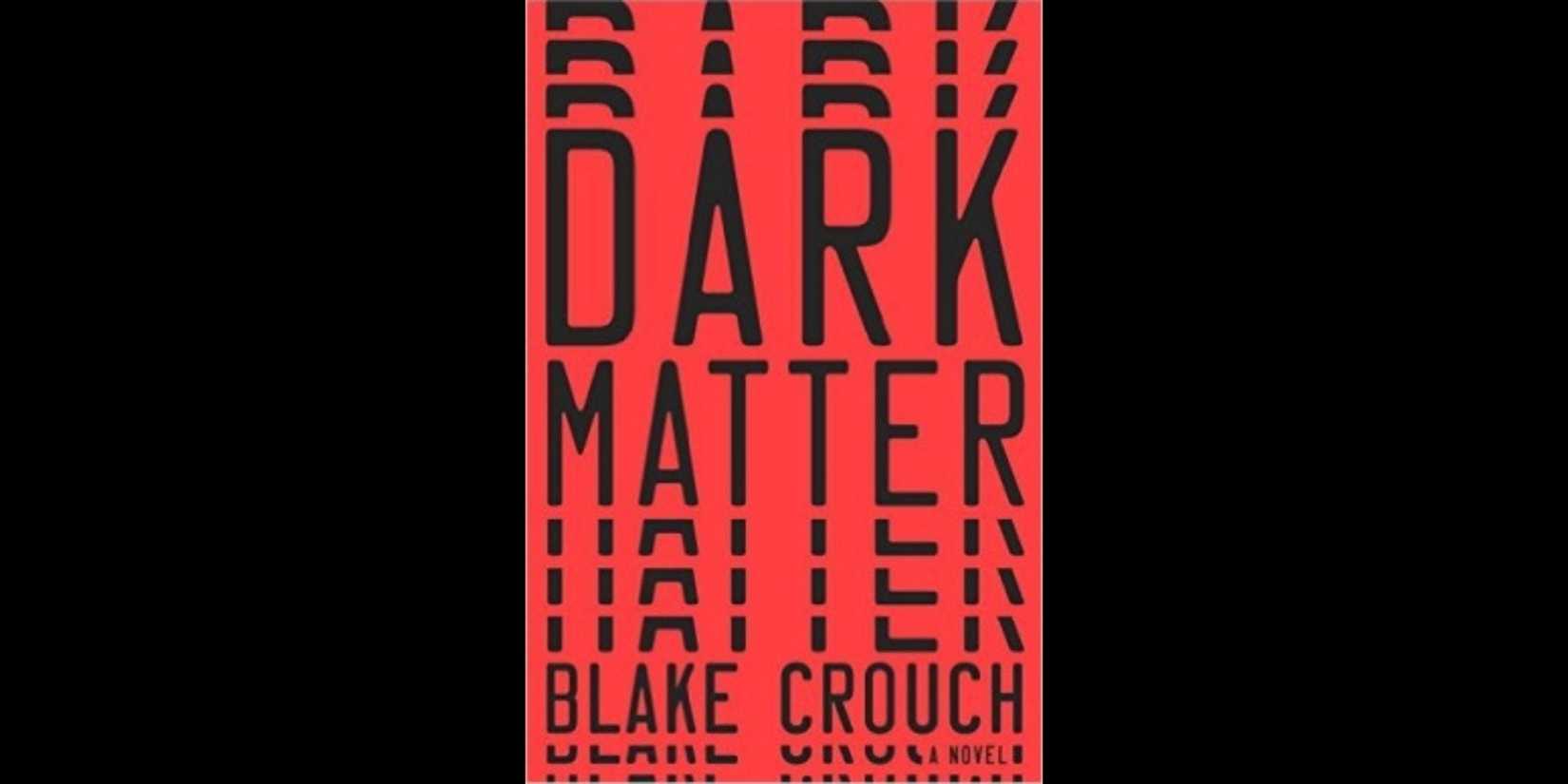
“Are you happy with your life?” This is a fantastic sci-fi thriller by Blake Crouch, who also wrote the Wayward Pines trilogy (adapted into a TV show starring Matt Dillon and Carla Gugino). In this one, protagonist Jason Dessen is a physics professor with a wife and son. He loves his family, yet there are roads not taken lingering beneath that happiness. This becomes frighteningly real when Jason is abducted by a masked stranger, drugged, and wakes in a reality where the life he remembers apparently never happened.
From here, Crouch takes a concept rooted in quantum mechanics and gives it the momentum of a chase thriller. The science matters in this book, but the character’s emotions matter more. Jason doesn’t want to explore infinite realities for their own sake; he wants to get home. While the mechanics of the multiverse are vast and dizzying, the thriller stays grounded because Jason’s motivation is simple and pure: love.
‘My Sister, the Serial Killer’ (2018)

“Ayoola summons me with these words: Korede, I killed him.” Protagonist Korede’s younger sister Ayoola has killed another boyfriend, and Korede is once again called upon to help clean up the mess. There is no prolonged mystery about whether Ayoola is responsible and very little initial interest in why she did it. The darkly funny question is considerably more practical: what exactly do you do when someone you love keeps murdering people?
So begins Oyinkan Braithwaite’s subversively funny, razor-sharp satirical thriller, one that took home a bevy of crime fiction awards on release. The tone is delightfully dry and cynical. For example, there are scenes that contrast the horrific reality of scrubbing blood out of car trunks with everyday sibling annoyances, like Ayoola posting glam shots on Instagram while her boyfriend is missing. Yet beneath the comedy, My Sister, the Serial Killer has a lot to say about toxic bonds and the dark side of family loyalty.
‘Mr Mercedes’ (2014)

“Augie Odenkirk was the first of the city-center hopefuls to get up that morning.” Mr Mercedes is a gripping, old-school cat-and-mouse detective thriller from the master himself, Stephen King, and it opens with an act of violence that ranks among the most disturbing scenes the author has written (which is truly saying something). In it, hundreds of desperate people are gathered outside a job fair before dawn. King spends time introducing several of them, creating little lives and relationships within the crowd. Then a Mercedes emerges from the fog and deliberately plows into them.
The driver escapes, leaving eight people dead and many more injured. From here, the plot focuses on Bill Hodges, a depressed, retired homicide detective on the brink of suicide, and the unhinged Brady Hartsfield, who sends Bill taunting letters taking credit for the crime. The suspense comes from watching both characters try to outsmart and manipulate the other.
‘Gone Girl’ (2012)
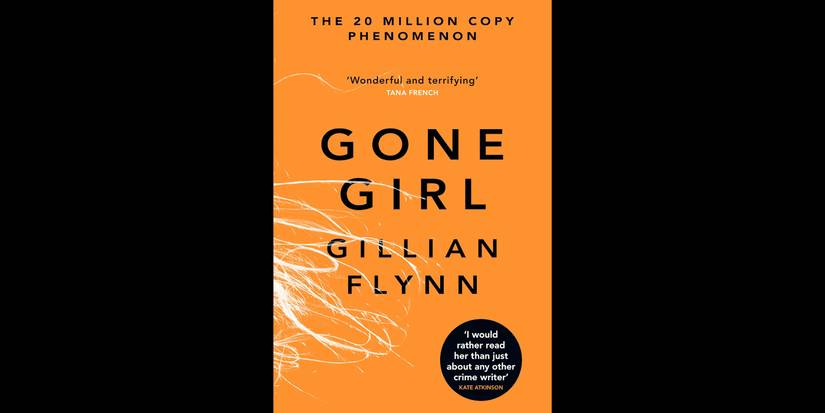
“When I think of my wife, I always think of her head.” A landmark of 2010s thriller writing, Gone Girl begins when Amy Dunne disappears on their fifth wedding anniversary. Her husband Nick naturally becomes the center of suspicion, and his strange behavior hardly helps his case. From the very first pages (heck, even the first paragraph), the writing sounds affectionate and vaguely sinister at the same time, immediately establishing the uneasy ambiguity that will define the whole book.
Indeed, the masterstroke here is making the reader’s relationship with information itself unstable. Nick narrates the present while entries from Amy’s diary gradually reconstruct their marriage, and the discrepancies between those accounts become impossible to ignore. There are unreliable narrators, juicy twists, shocking bursts of violence, and a savage autopsy of a modern marriage soured by resentment and unmet expectations.
‘In Cold Blood’ (1966)

“The village of Holcomb stands on the high wheat plains of western Kansas, a lonesome area that other Kansans call ‘out there.’” This iconic book, a cornerstone of modern crime writing, is a novel that recounts a true story. The opening pages describe the isolated rural community of Holcomb, Kansas, a sleepy place where nothing particularly extraordinary seems likely to happen. Yet the reader already knows that something did. In 1959, Herbert and Bonnie Clutter and two of their children, Nancy and Kenyon, were killed inside their home.
That knowledge hangs over Truman Capote‘s descriptions of the Clutter family and their final ordinary day, transforming mundane details into sources of dread. Over the rest of the book, he reconstructs the crime and its aftermath while also zooming in on the killers, Perry Smith and Richard Hickock. In the process, he practically single-handedly created what we now call true crime.
‘The Secret History’ (1992)
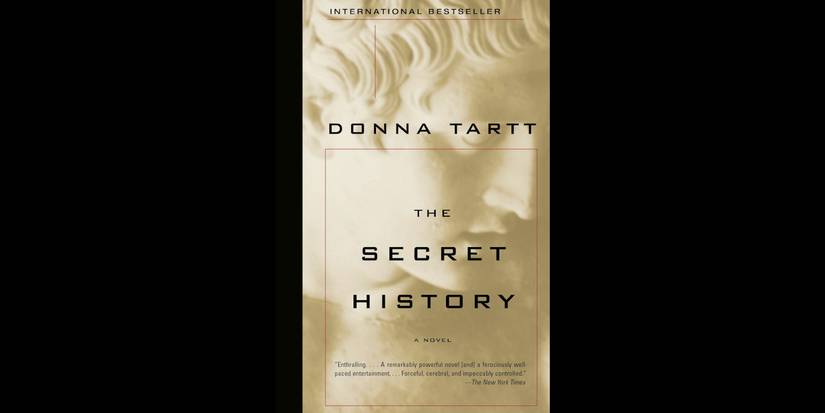
“Does such a thing as ‘the fatal flaw,’ that showy dark crack running down the middle of a life, exist outside literature?” The Secret History doesn’t make readers wait long to discover that Bunny Corcoran is dead. Author Donna Tartt reveals his murder almost immediately, then turns backward to explain how a group of privileged classics students at an elite Vermont college reached the point where killing one of their friends seemed necessary. It’s an opening that inverts the usual machinery of a thriller.
The question isn’t really who committed the murder, but why, and what living with it will do to everyone involved. Indeed, the novel brilliantly explores the characters’ psychology, particularly their guilt and paranoia. This comes through on the prose level, too. Unlike fast-paced techno-thrillers, The Secret History is a slow-burn literary thriller. Tartt’s writing is rich, decadent, and deeply immersive, paying homage to Greek tragedy.
‘London Falling’ (2026)

“A whole life that was just an edifice of lies.” This is another work of nonfiction, but it’s as tense and compelling as any made-up thriller. Written by Say Nothing‘s Patrick Radden Keefe, it tells the story of Zac Brettler, a 19-year-old middle-class teenager who leaped to his death from a luxury balcony into the River Thames in 2019. Through interviews and investigations, Keefe reveals that Zac had been socializing with sleazy London businesspeople and even gangsters… and that he had been telling them he was the son of an uber-wealthy Russian oligarch.
The book meticulously pieces together a character study of Zac, asking why he began spinning these elaborate lies, as well as reconstructing the timeline of events that led up to him plunging into the cold water below. In doing so, Keefe paints a broader, damning portrait of a city unmoored and morally bankrupt. Compulsively readable yet sobering and eerie.
You must be logged in to post a comment Login