Entertainment
10 Worst Remakes of Beloved ’70s Movies, Ranked

The worst remakes of beloved ’70s movies usually commit the same fatal sin: they inherit a premise that already had pressure built into it, then flatten that pressure into product. The ’70s were messy, nervous, suspicious, and often spiritually bruised. Even the populist hits from that decade had grit in the joints. The violence felt uglier. Institutions felt less trustworthy. Men looked weaker, angrier, more confused, or more morally compromised. Women in genre films were often trapped inside systems that looked normal from the outside and rotten from within. The atmosphere mattered because the culture’s nerves were already exposed.
That is exactly why so many remakes of ’70s movies feel weirdly bloodless even when they are louder, slicker, and more expensive. They remember the thing you can put on a poster. They forget the social panic, the grime, the moral trap, the class resentment, the suburban dread, the humiliating vulnerability. A good remake has to understand what hurt in the original. These movies mostly just remember what sold.
10
‘Halloween’ (2007)

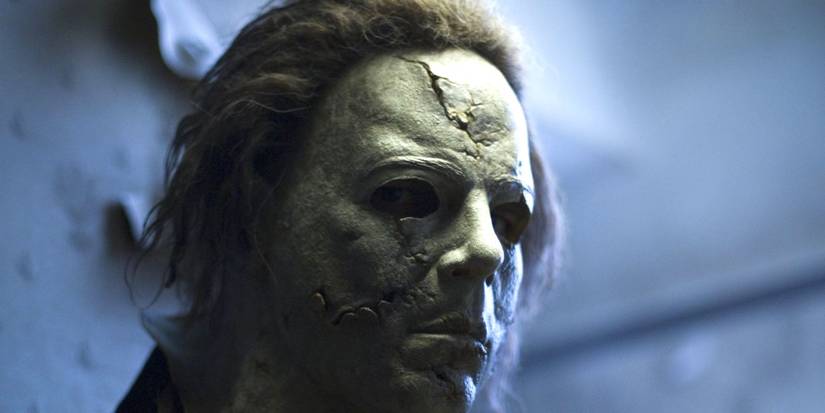
Rob Zombie’s Halloween is not empty in the way some of the others are. It has intention. It has grime. It has a filmmaker’s fingerprint all over it. That is part of what makes the failure so interesting. This is not a cynical Xerox. It is a sincere misunderstanding. John Carpenter’s original is terrifying because Michael Myers (Nick Castle) is less a person than an intrusion. He is blankness with a knife. He drifts through suburbia and makes ordinary space feel spiritually unsafe. Hedges, sidewalks, afternoon light, babysitting, all of it starts to feel cursed because Michael is barely legible in human terms.
Zombie hates that kind of abstraction. He wants filth, abuse, broken homes, humiliations, ugly social roots. So he stuffs Michael’s childhood with explanation. The trouble is, explanation is not depth here. It is reduction. Michael becomes less mythic, less impossible, less like evil moving through space and more like a case file screaming for attention. That would already be a problem, but Zombie’s other weakness piles on top of it: everybody in the movie lives at the same shrill, vulgar register. Laurie Strode (Scout Taylor-Compton) and Dr. Loomis (Malcolm McDowell) are trapped inside a world that is degraded from frame one. And horror like Halloween needs contrast. It needs clean air before the poison. This version starts poisoned, which sounds “darker” until you realize fear has nowhere left to spread.
9
‘The Longest Yard’ (2005)

The original The Longest Yard is one of those deceptively loose ’70s movies that actually knows exactly what it is doing. On the surface, it’s just convicts playing football. But when you peel a layer, it is actually anti-authoritarian sports comedy built on humiliation, macho ruin, institutional sadism, and the weird dignity that can emerge in a rigged system when losers decide they would still rather hit back than behave. Paul Crewe (Burt Reynolds) in the original is already disgraced, already morally compromised, already spiritually beaten down in that perfect ’70s antihero way.
The remake turns a lot of that into broader, more crowd-pleasing underdog entertainment. That is not a crime in itself. A remake can shift the register. But the writing keeps softening the bitterness that made the original bite. Paul Crewe (Adam Sandler) is more digestible, less corroded, more built for eventual likability. The prison becomes a comedy venue more than a pressure system. Even when the movie has fun, and it sometimes does, it feels safer than it should. A prison-football movie should still have some meanness in its bloodstream. This one is too eager to entertain cleanly.
8
‘Death Wish’ (2018)

The ugly beauty of the original Death Wish is that it never really lets Paul Kersey (Charles Bronson) off the hook. The movie knows the revenge fantasy is seductive, but it also understands that seduction as moral damage. Bronson’s Kersey does not become some triumphant action icon in any spiritually healthy sense. He hardens. He narrows. The city’s violence enters him and rearranges what he is willing to be. That discomfort is the point. Vigilantism is not just empowerment there. It is infection.
The remake keeps the bones and throws away too much of the infection. Paul Kersey (Bruce Willis) should feel like a man crossing into a state he cannot come back from, but the writing keeps smoothing that descent into more familiar action-revenge mechanics. Once that happens, you lose the queasiness that made the original worth arguing about. Revenge movies are easy. Morally ugly revenge movies that implicate the audience in the pleasure are harder. The remake wants the gunfire and the outrage while avoiding too much of the rot. And that is exactly what this story should never avoid.
7
‘Straw Dogs’ (2011)

This is one of the most difficult remakes on the list because Sam Peckinpah’s original Straw Dogs is simply about humiliation, sexual tension, masculine weakness, social performance, class resentment, intellectual fragility, and the horrifying way violence can awaken things a man would rather believe are not in him. David Sumner (Dustin Hoffman) in the original is not a sturdy hero pushed too far either but a man who does not know what force lives inside him until the siege demands an answer, and the answer is not cleansing. It is sickening.
The remake translates too much of that unease into more standard Southern-hostility thriller energy. David Sumner (James Marsden) is less spiritually baffling than the role needs to be, and the whole conflict becomes more legible in ways that weaken it. The locals are hostile, the marriage is tense, the old boyfriend energy is bad, the house becomes a battleground, all the plot machinery is there. But Straw Dogs should feel morally dangerous. You should be watching a man become competent at violence and feel no comfort in it at all. The remake does not fully trust that discomfort. It starts behaving more like a siege thriller and less like a nightmare about civilization cracking open to reveal how thin it was.
6
‘The Taking of Pelham 123’ (2009)

The original The Taking of Pelham 123 is a great urban pressure-cooker thriller because it understands that systems are dramatic. A hijacked subway train, city bureaucracy, labor tensions, criminal intelligence, civic personality, procedural improvisation, all of it clicks because every human being feels positioned inside a larger machine that is overheating. The threat is not just the gunmen. The threat is that New York itself has to respond as a living, burdened organism.
The remake keeps the basic skeleton and inflates the personalities. That sounds fun in theory. Walter Garber (Denzel Washington) and Ryder (John Travolta) should be electric on paper. But the film keeps pushing everything outward, toward bigger acting, bigger score cues, bigger emotional emphasis, and in doing so it loses the elegant procedural tension of the original. Ryder becomes more performative and less unnerving. Garber gets bulked up into a more explicitly guilty, redemptive protagonist. The result is not terrible scene to scene, but the story loses the civic tightness that made the original feel so alive. The machine has been replaced by star wattage.
5
‘Rollerball’ (2002)

The original Rollerball is one of the coolest examples of science fiction and action working together without either side getting dumbed down for the other. The sport matters because the politics matter. Corporate power wants spectacle without individual transcendence. The public gets addicted to violence. The player becomes a problem the second he starts looking too singular, too legendary, too human inside the machine. Jonathan E. (James Caan) is compelling because his very persistence begins threatening the logic of the system. That is a real idea. That is not just a setup.
The remake seems to have looked at the title and concluded that rollerblading violence, MTV editing, metallic chaos, and nihilist sports energy would be enough. But without the social idea, it is just noise. Jonathan Cross (Chris Klein) never becomes symbolically dangerous to the world around him. He is merely present inside it. And that is devastating for a story like this. Rollerball should make mass entertainment feel politically sinister. The remake behaves like mass entertainment already won and nobody writing it was smart enough to notice.
4
‘Get Carter’ (2000)

The original Get Carter is one of the meanest, most clear-eyed revenge films ever made. Jack Carter (Michael Caine) returns home as a dangerous man already shaped by vice, crime, and emotional hardening (not as a romantic Avenger). The film works because the investigation into his brother’s death becomes a guided tour through a city’s rot, and Carter is not morally above any of it. He belongs to the same darkness he is moving through. That is what gives the revenge its foul taste.
The remake keeps trying to make Jack Carter more sympathetic in a way that weakens the whole enterprise. Jack Carter (Sylvester Stallone) becomes more mournful, more recognizably bruised, more conventionally redeemable. But Get Carter is not supposed to redeem its avenger. It is supposed to let him cut through filth like somebody who already carries the same stain. The more accessible the hero becomes, the less poisonous the story is. And once the poison is gone, you are left with a revenge movie that has style residue and very little soul.
3
‘The Stepford Wives’ (2004)

This one is especially infuriating because the original is such a razor-sharp genre concept. It is not “men turn wives into robots” in some goofy high-concept vacuum. It is suburban misogyny rendered as science-fiction horror. It is the male fantasy of frictionless domesticity turned into annihilation. Women do not merely become obedient. They are emptied out, polished, displayed, and stripped of real personhood so their husbands never again have to cope with female will, mess, thought, contradiction, or independence. The chill in the original comes from how recognizable the desire underneath the horror is.
The remake turns that into upscale camp. Not clever poison. Not destabilizing satire. Camp. That decision kills almost everything. Joanna Eberhart (Nicole Kidman) should feel like a woman watching the language of perfect home life turn mechanically predatory around her. Instead the film keeps tipping toward broadness, reassurance, and audience-safe joke rhythms. It is too charmed by its own decorative world. The Stepford premise only bites when the film is willing to say something ugly and specific about how patriarchy dreams of femininity. This version mostly wants to be glossy and cute in a story that absolutely should not be cute.
2
‘The Omen’ (2006)
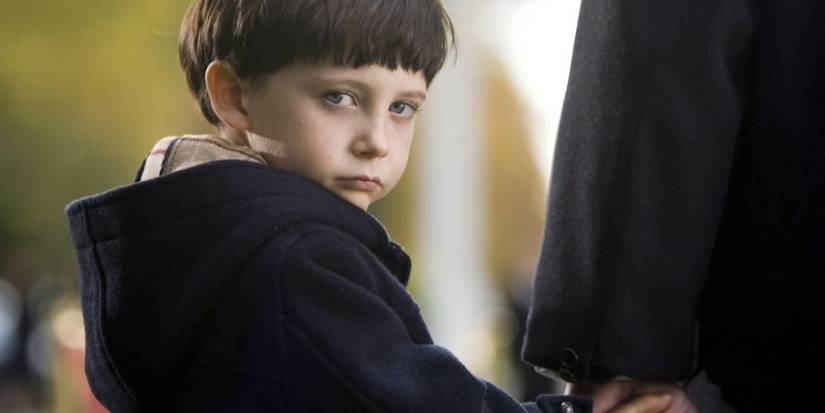
This is the most frustratingly faithful failure on the list. You can feel the movie trying to assure horror fans that it remembers all the right stations: Damien’s eerie presence, the nanny, the priest warnings, the church panic, the family dread, the accidental revelation that your child may be a vessel for apocalypse. All the pieces are there. And that is exactly why the weakness becomes so obvious. It proves, scene by scene, that remembering the beats is not the same as carrying the dread.
The original The Omen was so loved because it treats its premise with terrifying seriousness. Robert Thorn (Gregory Peck) slowly realizes that modern privilege, diplomacy, fatherhood, and rationality may all be useless against a biblical evil already growing inside his own house. The remake copies the map and misses the conviction. Robert Thorn (Liev Schreiber) and Katherine Thorn (Julia Stiles) move through the same broad ordeal, but the movie never makes you feel the full spiritual indecency of what is happening. The Antichrist should not feel like a franchise concept but reality itself curdling.
1
‘The Wicker Man’ (2006)

This had to be number one because it is the clearest example here of a remake not merely failing, but failing to comprehend its original on the level of worldview. The Wicker Man is not about a weird island and pagans. It is about ideological collision. It is about a devout, sexually repressed, morally rigid Christian policeman walking into a culture whose rituals, eroticism, and social harmony are all structured around a completely different understanding of life, sacrifice, fertility, and order. The horror comes from the fact that he thinks he is investigating them when really they have already read him perfectly. The ending, therefore, becomes not just shocking but cosmological. His belief system is not enough to save him from theirs.
The remake throws almost all of that away. It swaps in paternal guilt, louder conspiracy-thriller mechanics, and a more generalized “creepy isolated community” approach that completely misses the original’s spiritual trap. Edward Malus (Nicolas Cage) is not undone by the limitations of his own moral certainty in the same way Sergeant Howie (Edward Woodward) was. He is just dragged through increasingly bizarre set pieces until the movie bursts into camp notoriety. The memes do not even annoy me as much as the misunderstanding does. The original burns because every ritual, every smile, every song, every sensual provocation has been tightening the same noose. The remake just flails. And that is why it sits at the bottom. It does not know what kind of story it is desecrating.
You must be logged in to post a comment Login