Entertainment

12 Years Later, This Ruthless Sci-Fi Flop Has Aged Like Fine Wine

Published

on

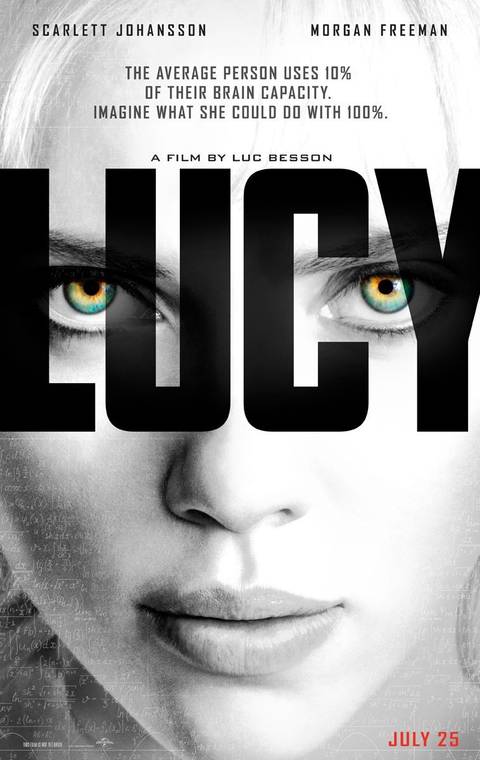
It’s a commonly accepted fact that human beings only use 10 percent of their brains, and if people can accomplish so much without even being able to access all of the resources at their disposal, what would happen if someone found a way to tap into the remaining 90 percent? That question, based on that very much true fact, is the basis of Luc Besson’s 2014 sci-fi action movie Lucy. The movie made a ton of money, specifically $469 million from a $40 million budget, but remains particularly divisive among critics and audiences — despite the fact that it’s pretty cool.

The main reason for some of Lucy’s shaky legacy is that the absolutely true “10 percent of your brain” concept that the movie is based on is actually… completely fake nonsense. That’s the kind of issue that people who point out plot holes because they’re smarter than the movie are unable to get over, much like the hollow earth in the MonsterVerse series, but the counterargument from Lucy fans is, simply: Who cares? Now Lucy is coming to Netflix on April 1, giving everyone a chance to expand how much of their brain they use.

Advertisement

What Is ‘Lucy’ About?

Lucy (Scarlett Johansson) running down a hallway in ‘Lucy’
Image via Universal Pictures

Scarlett Johansson stars as Lucy, a normal woman using a normal percentage of her brain who gets involved with South Korean drug runners. While being forced to transport a bag containing a synthetic sci-fi drug, Lucy is accidentally dosed with a huge amount of the stuff and begins to develop superpowers — super strength, telekinesis, and more. At the same time, though, her emotions and capacity to feel pain are effectively eliminated.


Advertisement

Collider Exclusive · Sci-Fi Survival Quiz
Which Sci-Fi World
Would You Survive?

The Matrix · Mad Max · Blade Runner · Dune · Star Wars

Five universes. Five completely different ways the future went wrong — or sideways, or up in flames. Only one of them is the world your instincts were built for. Ten questions will figure out which dystopia, galaxy, or desert wasteland you’d actually make it out of alive.

💊The Matrix

Advertisement

🔥Mad Max

🌧️Blade Runner

🏜️Dune

🚀Star Wars

Advertisement

01

Advertisement

You sense something is deeply wrong with the world around you. What do you do?
The first instinct is often the truest one.


02

Advertisement

In a world of scarcity, what resource do you guard most fiercely?
What we protect reveals what we believe survival actually requires.


03

Advertisement

What kind of threat keeps you up at night?
Fear is useful data — if you’re honest about what you’re actually afraid of.


04

Advertisement

Which of these comes most naturally to you?
Your strongest skill is your best survival asset — use it accordingly.


05

Advertisement

How do you deal with authority you don’t trust?
Every dystopia has a power structure. Your approach to it determines everything.


06

Advertisement

Which environment could you actually endure long-term?
Survival isn’t just tactical — it’s physical, psychological, and very much about where you are.


07

Advertisement

Who do you want in your corner when things fall apart?
The company you keep is the clearest signal of who you actually are.


08

Advertisement

A comfortable lie or a devastating truth — which can you actually live with?
Some worlds offer one. Some offer the other. Very few offer both.


09

Advertisement

Where do you draw the line — if you draw one at all?
Every survivor eventually faces a moment that tests what they’re actually made of.


10

Advertisement

What would actually make survival worth it?
Staying alive is one thing. Having a reason to is another.


Your Fate Has Been Calculated
You’d Survive In…
Advertisement

Your answers point to the world your instincts were built for. Read all five — your result is the one that resonates most deeply.

The Matrix

You took the red pill a long time ago — probably before anyone offered it to you. You’re a systems thinker who can’t help but notice the seams in things, the places where the official version doesn’t quite line up. In the Matrix, that instinct is the difference between life and permanent digital sedation. You’d find the Resistance, or it would find you. The machines built an airtight prison. You’d be the one probing the walls for the door.

Advertisement

Mad Max

The wasteland doesn’t reward the clever or the well-connected — it rewards those who are hard to kill and harder to break. That’s you. You don’t need comfort, community, or a cause larger than the next horizon. You need a vehicle, a clear threat, and enough fuel to outrun it. You are unsentimental enough to survive that world, and decent enough — just barely — to be something more than another raider.

Advertisement

Blade Runner

You’d survive here because you know how to exist in moral grey areas without losing yourself completely. You read people accurately, keep your circle small, and ask the questions others prefer not to answer. In a city where humanity is a legal designation rather than a feeling, you hold onto something that keeps you functional. You’re not a hero. But you’re not lost, either. In Blade Runner’s world, that distinction is everything.

Dune

Advertisement

Arrakis is the most hostile environment in the known universe — and you are precisely the kind of person it rewards. Patience, discipline, pattern recognition, political awareness, and an understanding that the long game matters more than any single victory. Others come to Dune and are consumed by it. You’d learn its logic, earn its respect, and perhaps, in time, reshape it entirely.

Star Wars

The galaxy far, far away is vast, loud, and in a constant state of violent political upheaval — and you wouldn’t have it any other way. You’re someone who finds meaning in being part of something larger than yourself. You’d gravitate toward the Rebellion, or the fringes, or whatever pocket of the galaxy still believes the Empire’s grip can be broken. Whatever you are, you fight. And in Star Wars, that willingness is what makes the difference.

Advertisement

Advertisement

While running from bad guys, Lucy meets up with a scientist (Morgan Freeman) who explains the totally inaccurate “10 percent of your brain” thing. As Lucy starts to use more and more of her brain, she begins to perceive time and reality in new ways. The scientist convinces her that she should find a way to pass on what she has learned about existence, so she takes as much of the drug as she possibly can to finally achieve 100 percent brain power. At that point, things get super weird, and to say anything else would spoil one of the movie’s big thrills.

‘Lucy’ Is a Thrilling Sci-Fi Spectacle

Lucy (Scarlet Johansson) manipulating reality in the film Lucy.
Image via Universal Pictures

If you can get past the basic premise and all of the “science” being stupid (seriously, people can accept that a lightsaber works, but why can’t we pretend that Lucy takes place in a world where the 10 percent thing is true?), Lucy is a good sci-fi action movie. It plays to Johansson’s strengths, namely her ability to play both very human and very detached from her humanity — which she also tapped into when she played Black Widow in the Marvel movies. Speaking of, Johansson also knows her way around action scenes, which Lucy has plenty of.

Advertisement

Lucy is, ultimately, a dumb movie that has the confidence of a smart movie, which often makes for a fun experience. The Matrix doesn’t feature unimpeachable science (which is perfectly fine, because the genre is called science fiction and not science textbook), but imagine how silly it would be if the Wachowskis had a very wrong idea about how computers work. It would be wild, and Lucy is that kind of wild. That is sort of director Luc Besson’s specialty, though, and Lucy fits in his canon alongside movies like The Fifth Element, La Femme Nikita, and Léon: The Professional. It is a little more grounded than his recent Dracula adaptation, though, which is kind of remarkable since this is a movie based on a concept with even less basis in reality than vampires.

Lucy, as mentioned up above, will be on Netflix on April 1.


Advertisement


Advertisement

Release Date

July 25, 2014

Runtime

90minutes

Advertisement

Director

Luc Besson

Advertisement

Writers

Luc Besson

Franchise(s)
Advertisement

Lucy

Advertisement

Advertisement


Advertisement

Source link

Advertisement

You must be logged in to post a comment Login

Leave a Reply

Cancel reply

Trending

Exit mobile version