Entertainment
13 War Movies That Are Perfect From Start to Finish

War is hell, and it’s simply a reality of the world we live in. From the earliest days of cinema, filmmakers have explored violent conflict from all kinds of angles with different intentions. On screen, depictions of war can serve as cautionary tales, tributes to those who served, pure spectacle—or some combination of all of these. The best of these films remain relevant, studied, rewatched, and sometimes controversial.
Even lesser war movies can serve as a respectable entertainment, even as history lessons, but the following intends to single out and praise exceptional motion pictures that explore history and humanity to unforgettable effect. These are all among the greatest war movies ever made, each pretty much perfect from beginning to end.
13
‘Zero Dark Thirty’ (2012)
Directed by Kathryn Bigelow


Mired in controversy even before it was released, and artistically resplendent all-around, director Kathryn Bigelow and writer Mark Boal‘s follow-up to Best Picture winner The Hurt Locker (also one of the greatest of all war films), Zero Dark Thirty is a gripping, lengthy and intensely personal examination of the manhunt for Osama bin Laden. In the role that garnered her first Academy Award nod, Jessica Chastain plays CIA analyst Maya, a composite character based on multiple women who were largely responsible for tracking down the leader of Al-Qaeda.
Over two hours of absorbing procedural leads up to a breathless, muscular, intensely realistic reenactment of the successful Navy SEAL mission that took out the most wanted man in the world in May 2011. It’s important to note Zero Dark Thirty has always been highly controversial for its depiction of torture. It’s also been widely acclaimed and even favorably compared to Bigelow’s much-lauded Hurt Locker; which pair to form an uncommonly psychological double bill of the war genre.
12
‘Come and See’ (1985)
Directed by Elem Klimov

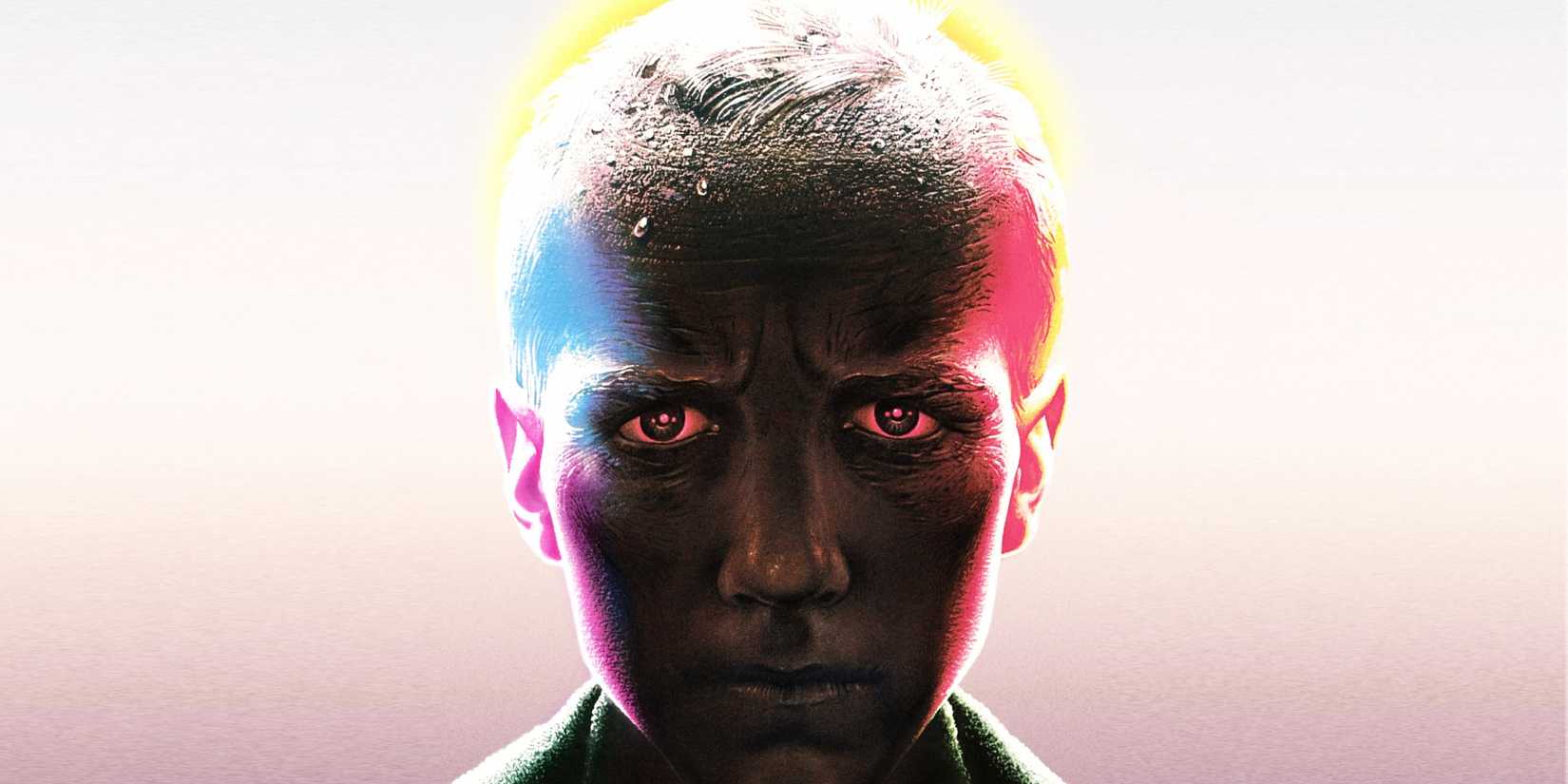
From its poetic early stretches to a finale that’s perhaps the most notoriously intense and disturbing in all of film, Elem Klimov‘s Come and See sees the Nazi occupation of Belarus through the eyes of teen Florya (Aleksey Kravchenko, in world film’s most effective loss-of-innocence performance). This darkest of all coming-of-age movies follows the boy as he recesses from a naïve, wide-eyed patriot who dreams of the resistance to a shell of a young man, all within a matter of hours.
In the final scenes of Come and See, the Nazis burn a packed, locked church to the ground. It isn’t seen so much as heard. It’s a scene that probably should be accompanied by a surgeon general’s warning. That’s not to in any way not recommend the movie; it’s a European cinema landmark that every cinephile should watch once, if only once. Sometimes it’s the movies that remind us of what evil looks like and is capable of. Come and See becomes the rarest of things: an exploration of the ugliest parts of humanity that is breathtakingly beautiful in its artistry.
11
‘The Best Years of Our Lives’ (1946)
Directed by William Wyler

An ensemble cast including Dana Andrews, Fredric March, Myrna Loy, Teresa Wright, Virginia Mayo and perhaps most notably non-actor and real-life vet Harold Russell, former U.S. Army operative William Wyler‘s critically revered box-office hit (this was the most-attended film in North America post-Gone With the Wind) explores the lives of three U.S. servicemen of varying ranks returning to their homes of varying social stature. This is an essential American drama, and one of the first movies about the social aftermath of the Second Great War.
The ironic title The Best Years of Our Lives is frankly about as captivating as the film itself. This is a picture that explored the intergenerational cost of war in a way that was ahead of its time; it’s still a highly potent work enlivened by terrific performances. Along with the more escapist and purely entertaining Casablanca, this represents the greatest of the Greatest Generation.
10
‘Black Hawk Down’ (2001)
Directed by Ridley Scott

Ridley Scott is a visual stylist without peer, one of the most purely talented compositors of moving images to ever live; it’s also not really a hot take to say he’s often only as good as the script he’s working with. In his follow-up to Best Picture winner Gladiator, he’s working with a propulsively dramatic and focused script by Ken Nolan, about military catastrophe, namely the 1993 Battle of Mogadishu, which stranded dozens of U.S. soldiers in hostile Somali desert.
Black Hawk Down is a high-wire act that successfully balances action that’s both fittingly harrowing and pulse-pounding, all while juggling many characters in a way that only strengthens the punch to the gut, the statement about the cost of war. Black Hawk Down was nominated for four Oscars including Best Director, and Roger Ebert named it the best film of Scott’s career, ahead of classics like Blade Runner, Alien and Thelma & Louise.
9
‘Platoon’ (1986)
Directed by Oliver Stone

Oliver Stone has directed numerous American movies that are varying levels of controversial, many that are great with some notable misfires. The Oscar-winning, boldly confrontational Vietnam War drama Platoon stands as perhaps his magnum opus. Charlie Sheen stars as an idealistic university student whose idealism and psyche take a hit upon enlisting in 1967. Tom Berenger and Willem Dafoe also star.
In addition to directing the picture, and its immersive, groundbreaking action scenes, former Vietnam infantryman Stone wrote the script, notable for its compelling characters who fundamentally spar along the lines of morality and the futility of the war. This is the first Hollywood movie about the Vietnam War written and directed by a veteran, and out of eight nominations, Platoon won four Academy Awards, including Best Picture and Best Director. This is the first of three Vietnam War pictures from Stone, followed by similarly acclaimed Born on the Fourth of July and the tepidly received Heaven & Earth.
8
‘Hacksaw Ridge’ (2016)
Directed by Mel Gibson

Bombastic, graphically violent, and sentimental in the extreme in a way that borders on schmaltz without ever crossing that line, Mel Gibson‘s Hacksaw Ridge tells the story of Desmond Doss (Andrew Garfield), Congressional Medal of Honor recipent who never lifted a weapon in battle. It’s a story that almost feels too sensational to be real, but the basic facts that drive the film (Doss rescued 75 men, and ultimately became the first conscientious objector to receive the U.S. Armed Forces’ highest military decoration) simply play out, if in remarkably dramatic fashion.
Garfield received his first Academy Award nod, for a nimble, something like balletic performance that’s still a career-best. Supporting turns from Vince Vaughn, Hugo Weaving, Luke Bracey and the ever-underrated Teresa Palmer are also of great value to the film. This is a picture whose resounding emotional power is hard to overstate.
7
‘Three Kings’ (1999)
Directed by David O. Russell

At this point in time, David O. Russell‘s professional reputation is—well, let’s just say it could be better. Still, it’s impossible to ignore the fact that he’s made some of the finest, critically acclaimed and audience-approved American films of the past quarter-century: from Siliver Linings Playbook to American Hustle to The Fighter. Some would even contend his best movie is this dark comedy set in the aftermath of the Persian Gulf War.
George Clooney, Mark Wahlberg and Ice Cube star in the genre-bending thriller with elements of classic American caper in its DNA, but with a modern and even prophetic cynicism. It’s about U.S. soldiers who attempt to steal gold from Saddam Hussein’s troves, when a kidnapping and chaos ensues. The production was infamous (succinctly, Russell was reportedly overbearing on set and even fought with Clooney), but the end result is stunning to this day. In a rave four-star review, Roger Ebert called Three Kings “a weird masterpiece, a screw-loose war picture that sends action and humor crashing head-on into each other and spinning off into political anger.”
Directed by Stanley Kubrick

There’s a case to be made for Dr. Strangelove or: How I Learned to Stop Worrying and Love the Bomb being Stanley Kubrick‘s best war movie (or perhaps its Paths of Glory), but the perfectionist auteur’s penultimate movie absolutely feels like his definitive statement in the genre. Based on Gustav Hasford‘s autobiographical book The Short-Timers (Hasford co-wrote the script along with Kubrick and Michael Herr) Vietnam war pic Full Metal Jacket plays out in two distinct halves: the first playing out in a South Carolina boot camp under the tutelage of an abusive drill seargeant (R. Lee Ermey), then the screen time is dedicated to deployment and all-out warfare.
Though Full Metal Jacket released to critical acclaim and is widely regarded as a remarkably intense (if exceptionally cynical and perhaps even nihilistic) war classic today, it’s worth noting Roger Ebert had a famous dissenting opinion, giving a thumbs down on his TV show, saying in print he felt the movie was “unsure of where to go.” Ebert also famously never embraced Kubrick’s iconic and disturbing sci-fi adaptation A Clockwork Orange.
5
‘Saving Private Ryan’ (1998)
Directed by Steven Spielberg

Saving Private Ryan is absolutely not Steven Spielberg‘s only war film, but as was the case with Kubrick and Full Metal Jacket, this arguably feels like an iconic director’s definitive contribution to the genre. As was the case with 1930’s All Quiet on the Western Front, this is a watershed moment in terms of how combat is depicted on-screen, most famously in its hyper-realistic depiction of D-Day. Spielberg’s epic drama centers on a group of soldiers (spearheaded by Tom Hanks‘ Captain John Miller), tasked with the mission of safely delivering the titular officer (Matt Damon) home after his three brothers die in combat.
As sentimental as Full Metal Jacket is cynical (each so very fitting within their respective directors’ filmographies), Saving Private Ryan is specifically an American enterprise, bookended with haunting scenes filmed on-location in the Normandy American Cemetery. For over a quarter-century, Saving Private Ryan has been a uniquely emotional experience for veterans and their families.
4
‘Casablanca’ (1942)
Directed by Michael Curtiz

The best WWII film made during wartime remains, quite possibly, the most enduringly beloved winner of the Academy Award for Best Picture. Humphrey Bogart played many iconic, much-quoted roles in the Golden Age of Hollywood, smooth-talking club owner Rick Blaine is the part he’s best remembered for, and one of the best screen heroes of all time.
In Casablanca, expatriate Blaine is gobsmacked when former flame Ilsa Lund (Ingrid Bergman) walks into his gin joint (of all the gin joints), only now she’s partnered with noble freedom fighter Victor Laszlo (Paul Henreid). There are only two letters of transit out of Casblanca, you see, and this is where the drama kicks off. It’s as absorbing and affecting as screen drama has ever been, and the best thing about Casablanca is how proud we are of everyone in the end; all of the heroes make the difficult, but right choices. This is the best of us.
You must be logged in to post a comment Login