Entertainment
15 Best International Fantasy Movies, Ranked

While there have been plenty of great fantasy films produced in the U.S. and other English-speaking countries, one would be doing a disservice to themselves by not branching out and exploring such films from other territories. The fantasy genre is one that, perhaps more than any other, knows no limits, so limiting oneself to only watching fantasy movies in English doesn’t feel in line with the genre as a whole.
The following international fantasy movies offer a sampling of how fascinating the genre is and always has been around the world. The following films come from places around the world, including Spain, Germany, Japan, Sweden, and Mexico, and are ranked below, beginning with the very good and then ending with the titles that can count themselves among the very best fantasy movies ever made.
15
‘I Dream in Another Language’ (2017)

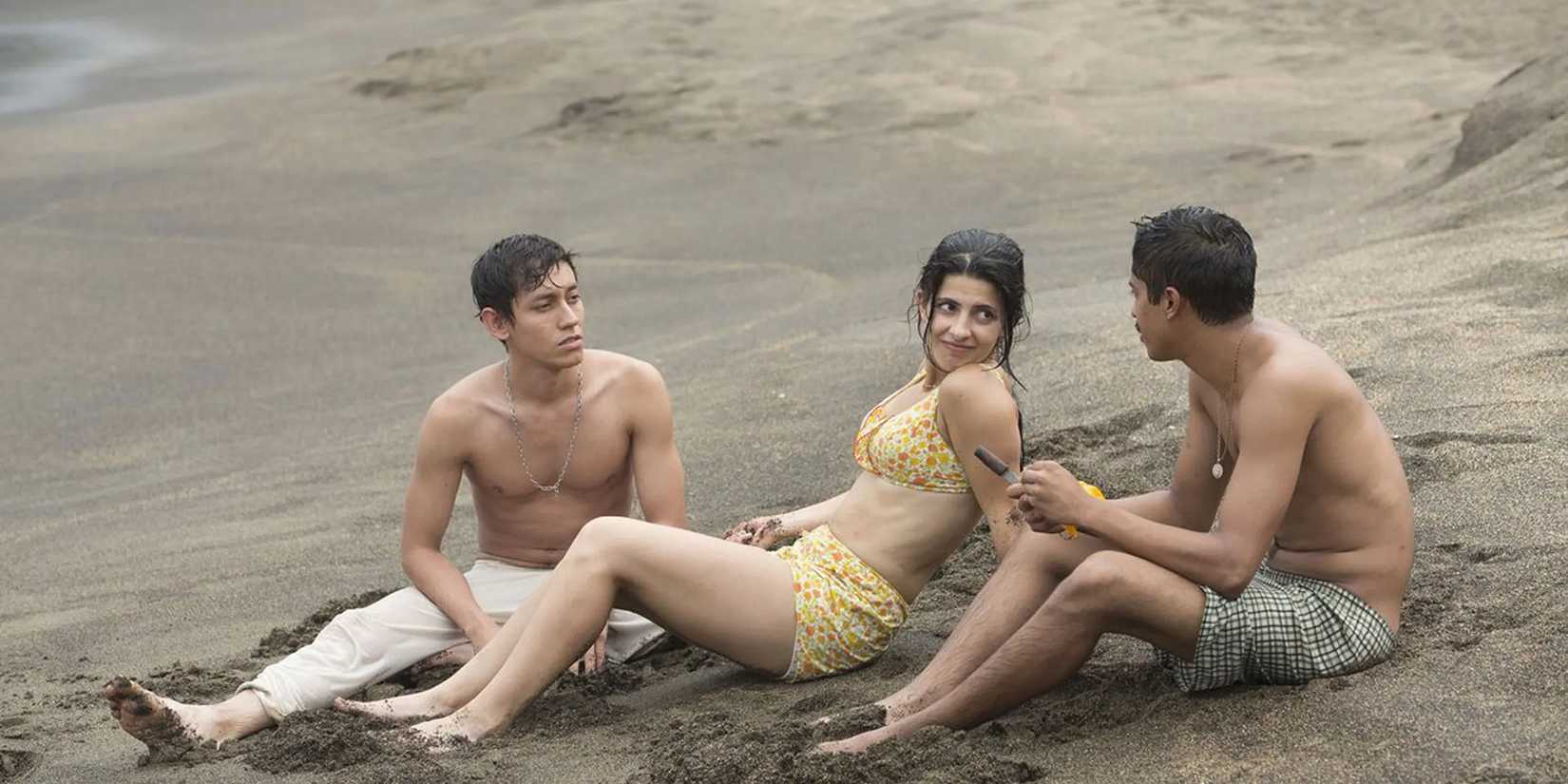
Magical realism and Latin American literature are so intricately tied together that they’re almost inseparable, and Mexico in particular has a delectably rich fantasy tradition. From that history of magical realism came Ernesto Contreras‘ I Dream in Another Language, a drama about a linguist (Fernando Rebeil) who travels to a Mexican jungle in order to research a dying indigenous language. The only problem? Its last two remaining speakers refuse to talk to each other.
It’s one of the best fantasy movies of the 21st century, a study of cultural erasure, regret, and reconciliation that’s often nothing short of a tear-jerker. As deeply rooted as it is in Mexican traditions of magical realism, it’s a universally delightful romance drama that everyone who loves low fantasy should check out at least once in their lives. —Diego Pineda Pacheco
14
‘Time of the Gypsies’ (1988)
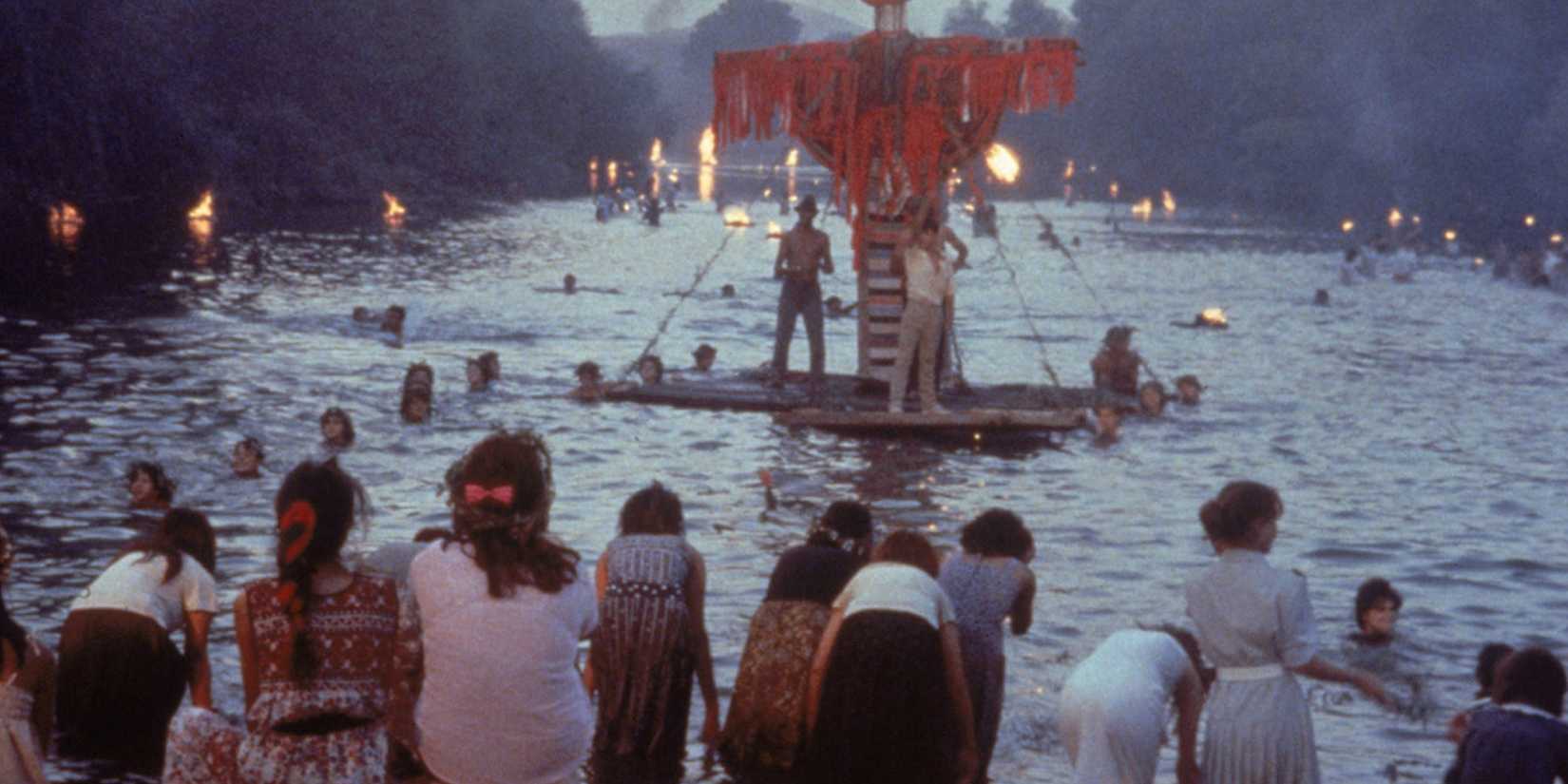
Some of history’s greatest genre films come from countries that no longer exist, and Yugoslavia was a nation that produced a particularly rich body of fantastical work. The country’s greatest filmmaker was undoubtedly Emir Kusturica, whose Time of the Gypsies follows a young Romani man (Davor Dujmović) with telekinetic powers who’s seduced by the world of petty crime.
It’s yet another example of beautifully poetic and cinematic magical realism, a masterpiece that blends fantasy with gritty neorealism in a way that lends the story even more emotional depth than it already had on the page. With its unforgettable score, its stellar performances, and the authentic feel of being among the first major feature films spoken entirely in the Romani language, it’s an ’80s classic that has only gotten better with age. —Diego Pineda Pacheco
13
‘Dreams’ (1990)

Not only was Akira Kurosawa the greatest Japanese filmmaker in history; he may very well have been the best in history, regardless of country of origin. For proof of those superlatives, people often look at classics like Seven Samurai or High and Low, but there’s one awfully underappreciated Kurosawa masterpiece that’s among the best ’90s fantasy movies that nobody remembers: Dreams, a collection of stories based upon Kurosawa’s own recurring dreams.
It’s one of the most unforgettable multi-story movies ever made, a deeply personal and wonderfully unique semi-autobiography that’s unlike anything else fantasy—or even cinema in general—has ever seen since. Visually gorgeous, imaginative, and tonally complex, it may not have been Kurosawa’s last movie, but it nonetheless serves as a deeply moving swan song to the career of one of the all-time greats. —Diego Pineda Pacheco
12
‘The Spirit of the Beehive’ (1973)

The spirit of The Spirit of the Beehive can be felt in numerous unconventional fantasy films that have followed in its wake, including some directed by the legendary Guillermo del Toro. It’s a Spanish film that follows a young girl whose life is changed after seeing and being affected by 1931’s Frankenstein, all before becoming even more overwhelmed by the ideas of spirits and even a fantasy world she may or may not be able to cross over into.
The Spirit of the Beehive is odd and oftentimes grounded, being something like low fantasy or magical realism… alternatively, the fantasy parts can be read as being merely in one character’s head, which could make the film more of a psychological drama. Anyway, it’s up to one’s interpretation, and there is a somber feeling of childhood innocence/discovery explored throughout the film, with some fantastical ideas potentially being included as a result.
11
‘Wings of Desire’ (1987)


There are numerous languages spoken throughout Wings of Desire, but most of it’s in German, with the film being a co-production between (then West) Germany and France. It’s rightly held up as one of Wim Wenders’ best-ever films, and sees the director tackling a fantastical romance storyline, but also bringing his distinct style to it, making it feel surprisingly realistic or at least somehow mundane, in a way, even with the main characters being angels and all.
The narrative of Wings of Desire centers on a pair of angels who oversee humanity without being able to interact directly with any people, and what happens when one of the angels starts wishing he could become human. It’s a slow but continually engaging film, strong on atmosphere and with the capacity to emotionally impact those who are willing to sit with it patiently throughout its leisurely paced and visually dazzling two-hour runtime.
10
‘Ugetsu’ (1953)

Perhaps a little like Wim Wenders, Kenji Mizoguchi is a filmmaker best known for his dramas, some of them with historical settings and some intended to reflect then-modern-day Japan, but one of his most noteworthy movies – 1953’s Ugetsu – belongs to the fantasy genre. It’s in contrast to most of the other films he made, because if one goes to Letterboxd, for example, Ugetsu is his only film (and he has about 50 directorial credits) that’s tagged as belonging to the fantasy genre.
It has a historical setting, thanks to being set during the 16th century, but also works in folktale/ghost story elements; never enough to be an over-the-top fantasy film or anything approaching the horror genre, but enough to ensure Ugetsu stands out. It’s a sometimes eerie and always absorbing film, and perhaps one of Mizoguchi’s most beautiful (and that’s saying something).
9
‘The Tale of the Princess Kaguya’ (2013)

Directed by Isao Takahata, far and away one of the most groundbreaking filmmakers in the history of anime cinema, Studio Ghibli’s The Tale of the Princess Kaguya is one of the best fantasy masterpieces of the last 15 years. Inspired by the 10th-century folk story The Tale of the Bamboo Cutter, it’s a coming-of-age story about a beautiful young woman coveted by five nobles, who sends her suitors on seemingly impossible tasks in order to avoid marrying a stranger she doesn’t love.
It’s a centuries-old tale full of tropes that have been present in cinema for as long as the fantasy genre has existed, yet Takahata finds all sorts of ways to make the whole narrative feel fresh and modern. The score is beautiful, the watercolor animation is consistently jaw-dropping, and the story is so profoundly moving that not a single second of the nearly two-and-a-half-hour runtime is ever a dead spot. —Diego Pineda Pacheco
8
‘The Seventh Seal’ (1957)
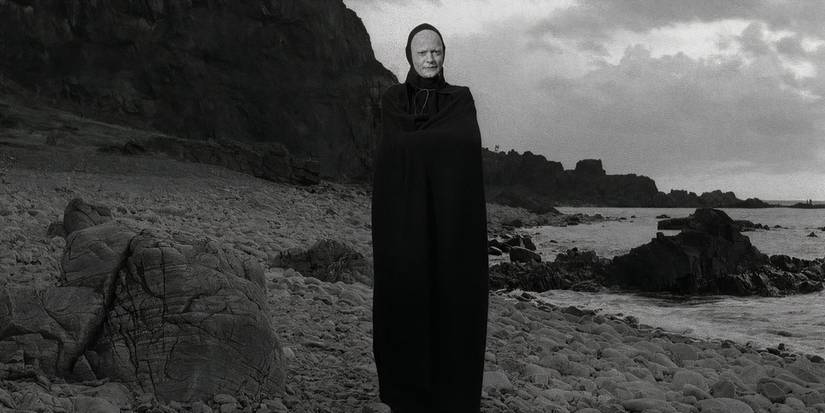
You can’t really talk about iconic international fantasy movies without mentioning Ingmar Bergman, who made his mark on the genre with a couple of his most well-known works, perhaps most famously with The Seventh Seal. It’s a movie you’ll likely find out about through references and parodies before actually watching it, what with the famed plot of “playing a game of chess with Death” being at the film’s center.
But The Seventh Seal is more than just a medieval/fantastical The Queen’s Gambit. Chess takes a backseat to a story about losing one’s religion, seeking redemption, and finding a purpose among all the difficulties that life throws one’s way. It’s a downbeat but not entirely hopeless film, and it’s a film worth returning to and continuing to analyze, given there’s a lot here, and it’s difficult to entirely absorb it all after just one viewing.
7
‘Die Nibelungen’ (1924)

Die Nibelungen was released in two parts, both coming out in 1924, with Siegfried and Kriemhild’s Revenge adding up to one single epic-length story that plays out over approximately 4.5 hours. It’s generally seen as one of German filmmaker Fritz Lang’s best films, but not always one of his very best, which might be the “downside” of him having directed a handful of even greater films, like M, Metropolis, and The Testament of Dr. Mabuse.
Both parts of Die Nibelungen ultimately demonstrate Lang’s surprising range, showcasing how he was able to craft fantasy films back during the silent era better than just about any of his contemporaries. Now over a century old, Die Nibelungen still impresses and contains plenty of excitement, being a must-watch for anyone who’s watched and appreciated any of Lang’s better-known classics from around the same time.
6
‘Princess Mononoke’ (1997)

Anime films encompass all sorts of genres, fantasy naturally included. Few do the medium of animation and the genre of fantasy as much of a service as the untouchable Hayao Miyazaki, with numerous great works of fantasy to his name. There are probably two films of his, however, that stand out above the others, with the first of those being Princess Mononoke.
This 1997 film is arguably Miyazaki’s darkest and most epic movie (though The Boy and the Heron is also a contender), and is almost definitely his most violent. It tells a sprawling adventure/fantasy story with a fascinating conflict for its main character to get entangled in, and a blunt but effective environmental message at the heart of it all. Princess Mononoke impresses both technically and narratively, and is rightly considered one of the best anime films ever made.
You must be logged in to post a comment Login