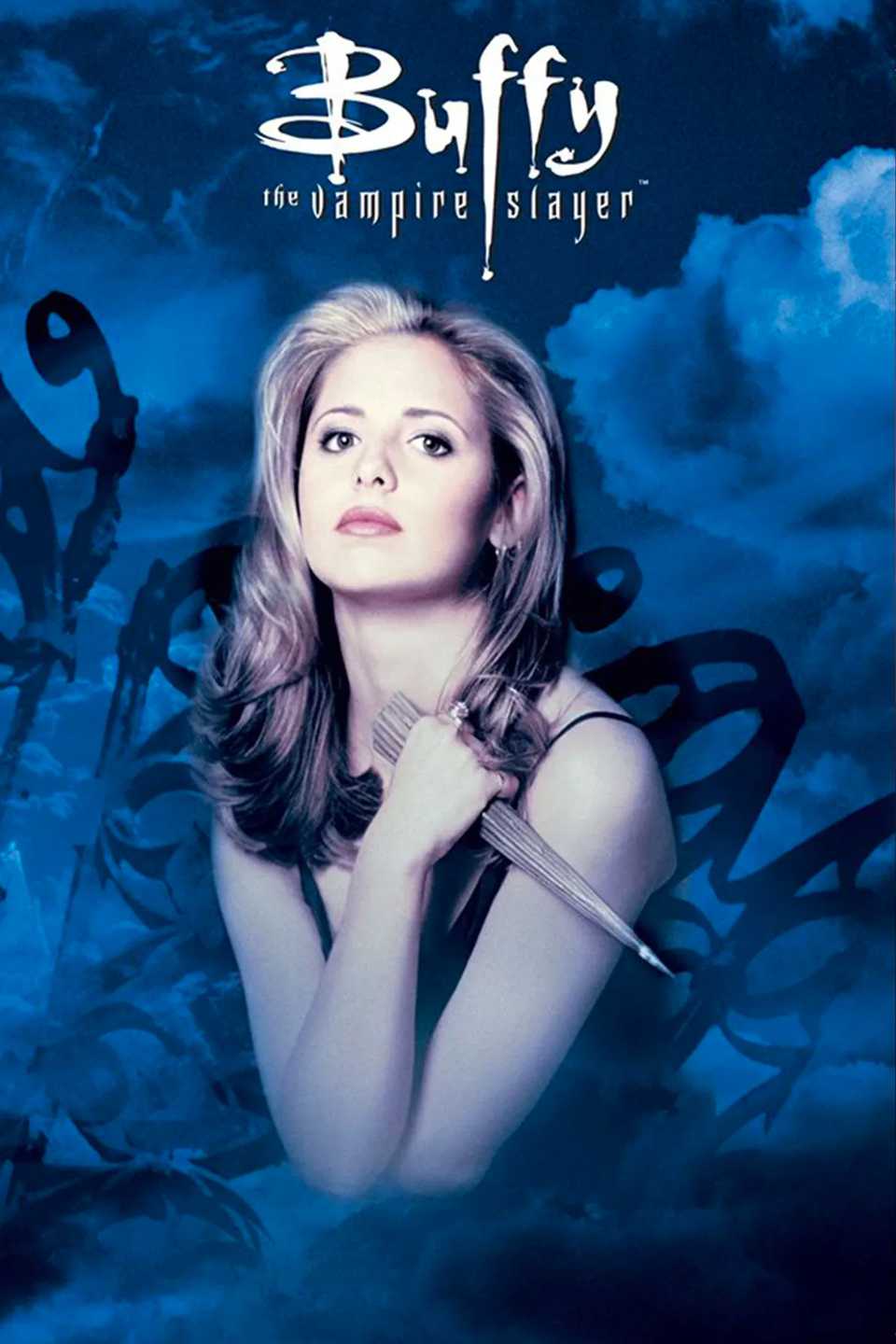
Buffy the Vampire Slayeris iconic, in more ways than one. From subverting the supernatural horror genre to introducing a colorful ensemble of characters that are still beloved to this day, Buffy has stood the test of time. Fans new and old can watch the series and be just as enchanted with it as when it first released.
But there’s one way that Buffy has helped define current culture. It’s a small detail in the last season, something that anyone could easily mistake for just another line of dialogue. But while we might be accustomed to the line, at the time, it was a groundbreaking addition to our modern vocabulary. In a show that initiated a new wave of vampire media, it’s one small piece of dialogue that shows the true impact of a show like Buffy the Vampire Slayer.
Advertisement
Before ‘Twilight’, Vampires Were Buffy’s Thing
Modern audiences might not understand the scale of Buffy the Vampire Slayer‘s influence on pop culture. From 1997-2003, Buffy aired with weekly episodes delving into one girl’s fight against the supernatural. Adapted from the movie with the same name, Joss Whedon reinvented the plucky Buffy Summers (Sarah Michelle Gellar) and gave her a whole new world to save. With the show’s instant success, vampires were back in fashion, and Buffy became a household name.
Advertisement
Collider Exclusive · Horror Survival Quiz Which Horror Villain Do You Have the Best Chance of Surviving? Jason Voorhees · Michael Myers · Freddy Krueger · Pennywise · Chucky
Five killers. Five completely different ways to die — if you’re not smart enough, fast enough, or self-aware enough to avoid it. Only one of them is the villain your particular set of instincts gives you a fighting chance against. Eight questions will figure out which one.
🏕️Jason
🔪Michael
Advertisement
💤Freddy
🎈Pennywise
🪆Chucky
Advertisement
01
Something feels wrong. You can’t explain it — you just know. What do you do? First instincts are the difference between the survivor and the first act casualty.
Advertisement
02
Where are you most likely to find yourself when things go wrong? Setting is everything in horror. Where you are determines which rules apply.
Advertisement
03
What is your most reliable survival asset? Every survivor has a quality the villain didn’t account for. What’s yours?
Advertisement
04
What kind of fear is hardest for you to fight through? Knowing your weakness is the first step to not dying because of it.
Advertisement
05
You’re with a group when things start going wrong. What’s your role? Horror movies are brutally clear about who survives group situations and who doesn’t.
Advertisement
06
What’s the horror movie mistake you’re most likely to make? Honest self-assessment is a survival skill. Denial is not.
Advertisement
07
What’s your best weapon against something that can’t be stopped by conventional means? Every horror villain has a weakness. The survivors are always the ones who find it.
Advertisement
08
It’s the final scene. You’re the last one standing. How did you make it? The final survivor always has a reason. What’s yours?
Advertisement
Your Survival Odds Have Been Calculated Your Best Chance Is Against…
Your instincts, your strengths, and your particular way of thinking under pressure point to one villain you actually have a fighting chance against. Everyone else — good luck.
Advertisement
Camp Crystal Lake · Friday the 13th
Jason Voorhees
Advertisement
Jason is relentless, but he is also predictable — and that is the gap you would exploit.
He moves in straight lines toward his target. He doesn’t strategise, doesn’t adapt, doesn’t outsmart. He simply pursues.
Your ability to keep moving, use the environment, and resist the panic that freezes most victims gives you a genuine edge.
The Crystal Lake survivors were always the ones who stopped running in circles and started thinking about terrain, water, and distance.
You think like that. Which means Jason, for all his indestructibility, would face someone who simply refused to be where he expected.
Haddonfield, Illinois · Halloween
Michael Myers
Advertisement
Michael watches before he moves. He is patient, methodical, and almost impossible to detect — until it’s too late for anyone who isn’t paying close enough attention.
But you are paying attention. You notice the shape in the window, the car parked slightly wrong, the silence where there should be sound.
Michael’s power lies in the invisibility of ordinary suburbia — the fact that nothing ever looks wrong until it already is.
Your spatial awareness and instinct to map every room, every exit, and every shadow before you need them is precisely the quality Laurie Strode had.
You are not a victim waiting to happen. You are someone who already suspects something is wrong — and acts on it.
Elm Street · A Nightmare on Elm Street
Freddy Krueger
Advertisement
Freddy wins by getting inside your head — using your own fears, your own memories, your own subconscious as weapons against you. That strategy requires a target who can be destabilised.
You are harder to destabilise than most. You’ve faced uncomfortable truths about yourself and you haven’t looked away.
The survivors on Elm Street were always the ones who understood what was happening and chose to face it rather than flee from it.
Freddy’s greatest weakness is that his power evaporates in the presence of someone who refuses to give him the fear he feeds on.
Your psychological resilience — the ability to stay grounded when reality itself becomes unreliable — is exactly the quality that keeps you alive here.
Derry, Maine · It
Pennywise
Advertisement
Pennywise is ancient, shapeshifting, and feeds on terror — but it has one critical vulnerability: it cannot function against someone who genuinely stops being afraid of it.
The Losers Club didn’t survive because they were braver than everyone else. They survived because they faced their fears together, and faced them honestly.
You ask the questions others avoid. You look directly at what frightens you rather than turning away.
That directness — the refusal to let fear fester in the dark — is Pennywise’s worst nightmare.
It chose the wrong target when it chose you. You are exactly the kind of person whose fear tastes like nothing at all.
Chicago · Child’s Play
Chucky
Advertisement
Chucky’s greatest advantage is that nobody takes him seriously until it’s already too late. He exploits the gap between how something looks and what it actually is.
You don’t have that gap. You take threats seriously regardless of how they present — and you never make the mistake of underestimating something because of its size or appearance.
Chucky relies on surprise, on the delay between recognition and response. You close that delay faster than almost anyone.
Your instinct to treat every unfamiliar thing with appropriate scepticism — rather than dismissing it because it seems absurd — is the exact quality that keeps you breathing.
Against Chucky, not laughing is already winning. You are very good at not laughing.
Advertisement
The series had a huge ripple effect on pop culture, even to this day. Buffy herself changed gender expectations in horror, with the blonde girl fighting back against the forces of evil instead of succumbing to them. You can’t have a girl fighting supernatural forces without someone connecting her back to Buffy. With storylines surrounding serious topics such as addiction and grief and the inclusion of LGBTQ characters, Buffy the Vampire Slayer helped pave the way for TV to tackle real-life conversations. The show has been referenced in countless pieces of media, even inspiring many more. While Twilight exploded in popularity in the 2010s, Buffy set the groundwork for vampire media. Before it was Edward and Jacob, it was Angel and Spike.
One Line That Changed The World
With all that iconic success under her belt, Buffy made a huge splash in current culture in a small way. As the show straddled the end of the 20th century and the beginning of the 21st, Buffy wasn’t immune to the rapid change underway in society. In 2002, in Season 7, Episode 4, “Help,” Willow (Alyson Hannigan) says the line, “Have you Googled her yet?” Up until then, ‘Google’ had never been used as a verb on TV. It was an entirely new phenomenon that demonstrates the show’s place in the early 21st century.
Modern viewers might hear that line and think nothing of it. People say ‘Google’ all the time; it’s not something unheard of to use in everyday conversation. But back in 2002, when the digital age was still developing, this was huge. It not only demonstrated the emergence of technology like search engines, but also showed how, through shows like Buffy, the modern world was being crafted. Nowadays, words like ‘iPhone’ and ‘apps’ are common staples in our vocabulary, but in the early 2000s, they would have been meaningless. Buffy‘s inclusion of the verb ‘Google’ shows how the series not only impacted pop culture, but was impacted by society adapting to a new era.
Advertisement
Buffy the Vampire Slayer continues to have left a mark on pop culture, in big and small ways. Buffy‘s impact can be felt through the clothes people wear, the supernatural media they consume, and the words they speak without even realizing it. For a show about a girl saving the world, it’s certainly true that she helped change it.


You must be logged in to post a comment Login