Entertainment
25 Best Psychological Thrillers of the 21st Century

You know a psychological thriller when you see one, even if the term “psychological thriller” isn’t the easiest to define. Most thrillers get at least a little psychological, but also, you’d call the Mission: Impossible movies thrillers, but they’re not really psychological thrillers, you know? The focus might be more on action, or the thrills might come from something that’s more universal rather than personal, and so with those sorts of thrillers, they may not really be psychological.
But also, some psychological thrillers do also function as action movies, and really, if something has a focus on a person’s internal struggles with some kind of high-stakes or otherwise stressful situation, then it can qualify as a psychological thriller, for present purposes. The more important distinction to make here might be the notion that something released in the year 2000 technically isn’t eligible to be counted among the best 21st-century psychological thrillers, just because that year was technically the final one of the 20th century (sorry, Memento, American Psycho, and Unbreakable).
25
‘Split’ (2016)


That intro you either just read or scrolled past mentioned Unbreakable, which was a unique superhero movie of sorts that was probably more of a psychological thriller, albeit one that, you know, had people with superpowers at its center. It was directed by M. Night Shyamalan, and then he also did Split, which was a pretty twist-heavy and unusual movie, with the big twist being that, like, it was actually something of a sequel to Unbreakable.
Sorry if that’s a spoiler, but it’s also hard to avoid nowadays, since Split is known for being ultimately the middle chapter of a trilogy that began with Unbreakable and concluded with the flawed (but still interesting) Glass. Split might well be the best of the three, in any event, focusing on a man with dissociative identity disorder, and a handful of young women who have to survive after being kidnapped by him. It does a lot with a little (the premise is simple and all), and also boasts a knockout central performance from James McAvoy.
24
‘Caché’ (2005)

Caché is more thrilling than most Michael Haneke movies, since he’s a director who more often operates within the realm of psychological dramas than psychological thrillers. There are enough by way of thrills here, though, once you get past the very patient pacing, with Caché being about a married couple who find themselves the target of an unknown adversary who keeps sending them unsettling videotapes.
It’s a film all about surveillance, and the sense of discomfort that comes with being watched, scratching the same unsettling itch as something like 1997’s Lost Highway, all the while also standing out for being quite Hitchcockian with the kind of suspense it ultimately delivers. Caché is well-executed, and it does succeed at lingering in one’s mind long after it’s over, even if parts of it might not technically be super thrilling while the whole thing’s actually playing out.
23
‘Shutter Island’ (2010)

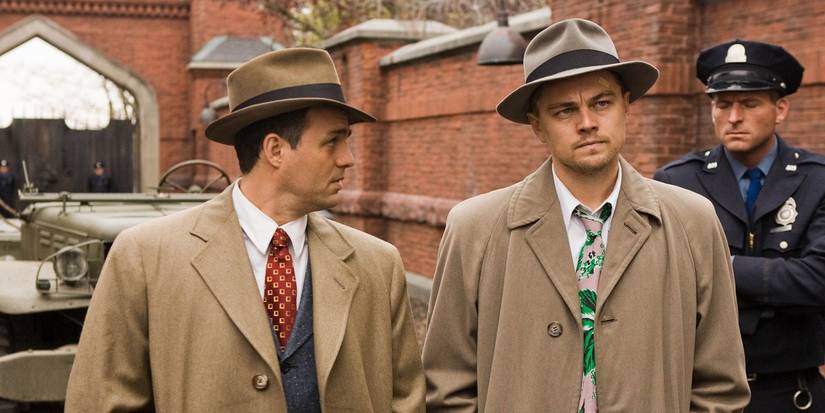
Shutter Island is almost a case of Martin Scorsese doing a crowd-pleaser, because there is a bit more that’s conventionally appealing here than some of the other films he’s done recently (and a more digestible runtime, too). It’s still dark, though, and not really a crowd-pleaser in the traditional sense, being about a pair of detectives who go to an island, investigating the disappearance of a patient from a criminal psychiatric facility on said island.
Where it goes beyond that can be spoiled quite easily, with Shutter Island being the sort of movie that’s most memorable because of the sudden turns in the narrative it has. Good twist, though… or twists? What are you in for? Wouldn’t you like to know? No, don’t know. If you’ve somehow not had a movie like this ruined for you, and are still yet to see it, it’s worth prioritizing, because therein lies something appealing about psychological thrillers: the sense of surprises (or series of surprises) they often contain.
22
‘Buried’ (2010)

The premise of Buried couldn’t be simpler, and it’s always easy to summarize by saying, “Imagine that one scene from Kill Bill where the Bride is trapped underground in a coffin, but stretched out for a whole movie.” That’s the film. And, to make it sound even more ambitious, Ryan Reynolds plays not just the main character, but really, the film’s only character (at least the only one you see on-screen), and he might not ordinarily sound like the kind of person who could carry a movie like this.
The commitment to having the camera stay inside the coffin pretty much the whole time is bold, and it pays off.
In this more serious role, though, he’s surprisingly good, and then, unsurprisingly, Buried is also extremely stressful and claustrophobic for its whole runtime. The commitment to having the camera stay inside the coffin pretty much the whole time is bold, and it pays off. In the right hands, a movie about a guy who can’t move while getting stressed and calling people for about 90 minutes really can turn out very compelling.
21
‘Mother!’ (2017)

If not for a soon-to-be-mentioned movie about burning salt (not really, but it’s fun to be ambiguous, for now), Mother! is probably the most divisive film you’re going to see mentioned here, and it is fairly understandable how/why it’s not for everyone. There’s a lot of allegorical stuff going on here, and Mother! jumps back and forth between feeling on-the-nose and kind of obscure, more or less without warning whether it’s going to be one or the other.
At its core, Mother! is about a woman trying to deal with a bunch of people who keep coming to her house, and disrupting her peace. Allegorically, it’s in line with biblical stories, and it’s interesting to engage with it in that way, sure, but the visceral nature of what Mother! offers, just as an emotional experience, is as immense as it is intense. That sheer immensity/intensity is why it’s here (sorry to you if you’re someone who has a problem with that).
20
‘The Prestige’ (2006)

Christopher Nolan likes getting in the heads of his characters, and also seems fond of getting in your head (yes, you!) as the viewer, since he’s pretty good at the whole psychological thriller thing. Memento is one of his best but, as mentioned before, that did technically come out in the 20th century, as did Following, which was his first film, and does honestly remain one of his most interesting.
There’ll be one more Nolan movie mentioned later on, but for now, here’s The Prestige, which is a twist-heavy psychological drama/thriller movie with some interesting science fiction elements, too. There is also one historical figure who plays a decently important role in The Prestige, Nikola Tesla (played by David Bowie, in an inspired casting choice), but don’t expect this to be a historically accurate film in the same way Oppenheimer (for the most part) was.
19
‘Saltburn’ (2023)

Saltburn is that one previously alluded to movie that might well have more detractors than Mother!, just because… who knows why, actually? If you’re a detractor, you know why. Good for you. But as someone who likes this film, it’s difficult to understand some of the vitriol. It’s about class warfare, shown from the perspective of a psychologically troubled person, and there is a very intentional flip in perspective/sympathy, at a point.
Maybe some people don’t really like who’s villainized, and who is eventually shown to be a bit more sympathetic than originally seemed. It’s the sort of film that can be disliked for more than one reason, and at least two of those reasons are incredibly different. But if you can get behind the roller-coaster ride Saltburn provides (or get onboard, maybe?), then there is a great deal to appreciate and think about here.
18
‘Burning’ (2018)

The best thing to do, with Burning, is to just not say what it’s about. “Oh, are you being lazy and trying to get out of summarizing a plot synopsis?” you might be asking. No! Not really. It’s just that Burning only has a few main characters, and the story they’re involved with takes a very long time to play out, with the film having an almost epic-length runtime (just under 2.5 hours) while very deliberately not being an epic.
So, if you say too much, the whole thing’s ruined. You do just have to watch it, provided you have enough free time, all the while trusting that you’re in good hands. Those hands belong to director Lee Chang-dong, who turned in his best and most acclaimed movie here, and it’s also based on a story by the always interesting Haruki Murakami, in case you feel the need for another pair of good/reliable hands before jumping into this one.
17
‘Das Experiment’ (2001)
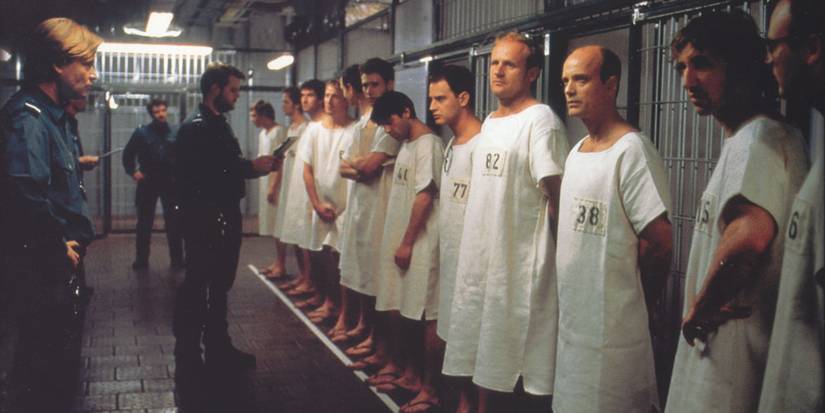
Taking the Stanford prison experiment of 1971 and using it as the basis of an entire psychological drama/thriller film, Das Experiment is indeed unsettling and oftentimes suspenseful. The real-life experiment involved assigning some participants the role of “prison guards,” and others the role of “prisoners,” then observing the sorts of dynamics that developed between the two groups based on the titles they’d been given.
The real-life Stanford prison experiment was somewhat divisive, but definitely not as explosive or as violent as Das Experiment is, with there not really being an attempt here to capture that whole real-life situation accurately. But what it says about human nature is interesting, and as a film that asks, “What’s the worst way that whole experiment could’ve ended up?,” Das Experiment is effective.
16
‘I Saw the Devil’ (2010)

There are some thrillers where once they really kick off, they don’t stop, and then there are others like I Saw the Devil that don’t really take much time at all to “kick off,” and so they end up feeling relentless from start to finish. That I Saw the Devil can do this while also being nearly two and a half hours long makes it extra impressive.
And, further, the film’s mostly just about two characters: one of whom is a serial killer, and the other being someone who wants to track down said serial killer and, preferably, make him feel the sort of terror he’s inspired in others. I Saw the Devil manages to go to new – and alarmingly extreme – places as a cat-and-mouse sort of film, and stands as a must-watch movie for anyone with a sufficiently strong stomach (just because it is undeniably gruesome at times).
You must be logged in to post a comment Login