Entertainment
27 Years Later, HBO’s 6-Part Crime Show Is Still a Masterpiece From Start to Finish

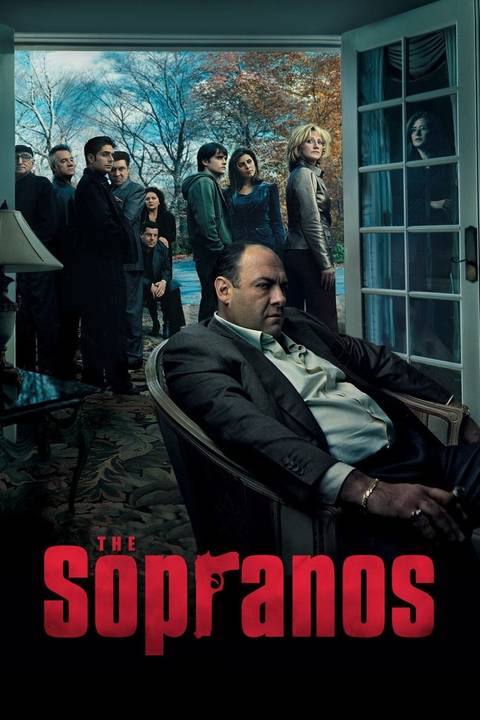
The Sopranos is widely regarded as one of the best shows to ever be created and nearly 30 years after its premiere, it’s pretty easy to see why. David Chase’s six-season saga takes viewers on a journey through the mind and life of Tony Soprano, who’s played by James Gandolfini, and while the characters all evolve, the family ends the show largely how they started it. And while the ending may have left viewers feeling a little unfulfilled, it’s one of the rare series that feels oddly complete when it ends.
The Sopranos paved the way for prestige drama, but few shows have been able to match the precision that Chase achieved with this classic. Part of what makes The Sopranos so great is that the creators trusted viewers to buy into the characters and love them for their flaws. They didn’t devalue the show by throwing in seemingly random plot lines or sharp 180 turns in character arcs. Everything feels deliberate, and the show stays thematically coherent from the opening scene to the last line, something few shows are able to achieve.
‘The Sopranos’ Is Barely A Crime Show
On paper, The Sopranos is a mob series and the entire Soprano family is dealing with the struggle of enjoying the benefits of that life while rejecting the worst parts of it. Of course, there are turf wars, people are killed, and FBI operations come together and fall apart. But Chase essentially made the criminal activity this burden or mundane task that needed to be done. Almost as if it was just another job the characters in the show had, seemingly treating it the same way you would any other career.
That decision took the show from a mob drama focused solely on violence, to making the flashy acts of violence almost a side player in the show. The show’s real focus is interpersonal relationships and its six seasons are built on psychology. Instead of focusing on the violent triumphs of the characters, Chase’s storytelling focuses on the collapse of the characters, forcing viewers to love them for all of their flaws, not for their power.
Tony Soprano Changed What a TV Protagonist Could Be


One of the greatest main characters on television, Tony changed what a protagonist could be and what viewers would accept from them. Before him, antiheroes were usually softened and redeemed, but Chase actively chose to keep Tony the same person he was at the beginning of the show. There is no real redemption arc for him. He starts the show as a violent, narcissistic, man who deeply loves his family and ends it the same way despite spending years grappling with the moral conundrums that come with his career path.
The moral discomfort that happens in The Sopranos is why the series has survived nearly 30 years. It refuses catharsis and at times, the violence is pointless. Therapy doesn’t cure Tony. It sometimes leaves him angry or with a rationale for why he behaves worse. The series also allows Tony to be a deeply contradictory character. He’s brutal, but also charming, pathetic and powerful, terrifying and also tender, sometimes within the same episode or even the same scene. It makes for one of the most realistic characters of all time and gives viewers an ability to understand a man that, in real life, they may never be able to relate to.


‘The Sopranos’ Made James Gandolfini a Legend, but It Came at a Cost
It took a lot to create Tony Soprano.
A Supporting Cast Without Weak Links
Tony may be the focal point of the show, and Gandolfini’s performance is one for the ages, but The Sopranos thrives on the quality of the ensemble cast and their stories. Chase treats domestic life with the same seriousness as he does organized crime. Carmela Soprano, portrayed by Edie Falco, is given as much depth and complexity as a character as Tony. Her arguments with Tony over donations to Meadow Soprano’s college or AJ’s behavioral problems are given the same dramatic weight as mafia disputes.
Characters who could have turned into cheap stereotypes on other shows, like Paulie Walnuts, Christopher Moltisanti and even Uncle Junior, are complex and contradictory. Yes, they’re in Tony’s orbit and without him, we wouldn’t be watching a show about them, but, their characters also simultaneously feel like they exist totally independently of Tony. And for the characters that drift in and out of the show, their deaths or disappearances occur without much fanfare, showing the brutal reality that life goes on.
The Final Season’s Fearless Commitment

For many great shows, they outlive their welcome and the final season shows some of their greatest flaws. But, instead of turning its back on everything that made the show incredible by giving the audience comfort, Chase made the last season bleak, slow and almost heavy with dread. There’s no sharp growth, the characters don’t change, and for many consequences, they become unavoidable.
And, you can’t really talk about The Sopranos without mentioning the controversial final scene. It’s one of the most debated endings in television history, but it has endured precisely because it refuses explanation. Whether interpreted as literal death, existential ambiguity, or thematic culmination, it aligns perfectly with the show’s core idea that life is unstable, meaning is fragile, and certainty is an illusion.
Even critics who initially resisted the finale later acknowledged that it fit the series’ worldview and was a perfect ending to the show.
In an era of reboots and legacy sequels, The Sopranos stands out for something radical in that it ends. It tells the story it wants to tell and stops. No season exists purely to maintain momentum. No character overstays their purpose. The show’s confidence in its own limits is part of what makes it feel timeless. Twenty‑seven years on, The Sopranos isn’t just remembered as a classic. It remains a benchmark—one that countless shows have chased, referenced, or borrowed from, and almost none have surpassed.

- Release Date
-
1999 – 2007
- Network
-
HBO
- Showrunner
-
David Chase
- Directors
-
Tim Van Patten, John Patterson, Alan Taylor, Jack Bender, Steve Buscemi, Daniel Attias, David Chase, Andy Wolk, Danny Leiner, David Nutter, James Hayman, Lee Tamahori, Lorraine Senna, Matthew Penn, Mike Figgis, Nick Gomez, Peter Bogdanovich, Phil Abraham, Rodrigo García
- Writers
-
Michael Imperioli, Jason Cahill, Lawrence Konner, David Flebotte, James Manos, Jr., Salvatore Stabile, Toni Kalem, Mark Saraceni, Nick Santora
You must be logged in to post a comment Login