Entertainment
3 Years Later, This ‘9-1-1’ Buck Line Is Still the Best Quote of the Entire Series

With nine seasons under its belt and a tenth set to premiere on ABC this October, 9-1-1 has built quite a legacy already. The series is especially notable for its massive annual opening emergencies, including the tsunami, to the “Bee-nado,” to last season’s four-episode outer space emergency. At its heart, though, 9-1-1 has always been a show about a tight-knit found family who comes together to save the lives of strangers each week.
It is the emotional core of 9-1-1 that has fueled the series for over seven years now, keeping fans closely connected to the main characters and their journeys, all throughout both their most joyful and most tragic moments. Back in Season 6, Buck (Oliver Stark) spoke a line that, three years later, feels like the thesis statement of 9-1-1. This quote is the best explanation of why 9-1-1 continues to resonate so deeply with its fans, and what the series is all about.
In ‘9-1-1’ Season 6, Episode 11, “In Another Life,” Buck Delivers the Best Line of the Series
9-1-1‘s best line comes from the Season 6 episode “In Another Life,” in which Buck lives out an alternate life while in a coma after being struck by lightning. In this reality, Buck and Maddie’s (Jennifer Love Hewitt) older brother, Daniel (Aaron Staton), never died as a child. Because of this, Buck grew up feeling loved and supported by his parents, and he never put himself in danger to get their attention. He wakes up in this reality and learns that here, he became a teacher instead of a firefighter. Buck may have the family he always wanted in this world, but it comes with a number of costs, including Bobby’s (Peter Krause) life.
“In Another Life” ends with one of 9-1-1‘s most emotional scenes ever, in which Buck has to fight to leave his coma dream and return to his real life after being unhooked from the ventilator. The dream version of Bobby shows Buck what’s really going on and tells him that it’s up to him whether he leaves and survives. Buck is given the choice to stay in this world with a set of parents who finally see him. Still, Buck chooses to fight his way out, but he’s stopped by Daniel, who turns into another version of Buck. Buck then gets out by quoting an old Bobby line, telling his other elf, “There is not a locked room anywhere that, with the right tools and enough time, you can’t break into. I know that, ’cause I’m a firefighter.”
Buck’s Iconic Coma Dream Quote Sums Up the Heart of ‘9-1-1’
-

Eddie, Hen, Buck, and Ravi giving Chimney a gift in 9-1-1 Season 9 Image via ABC -

Chimney, Athena, and Maddie looking through the dispatch computer in 9-1-1 Season 9 Episode 13 Image via ABC -
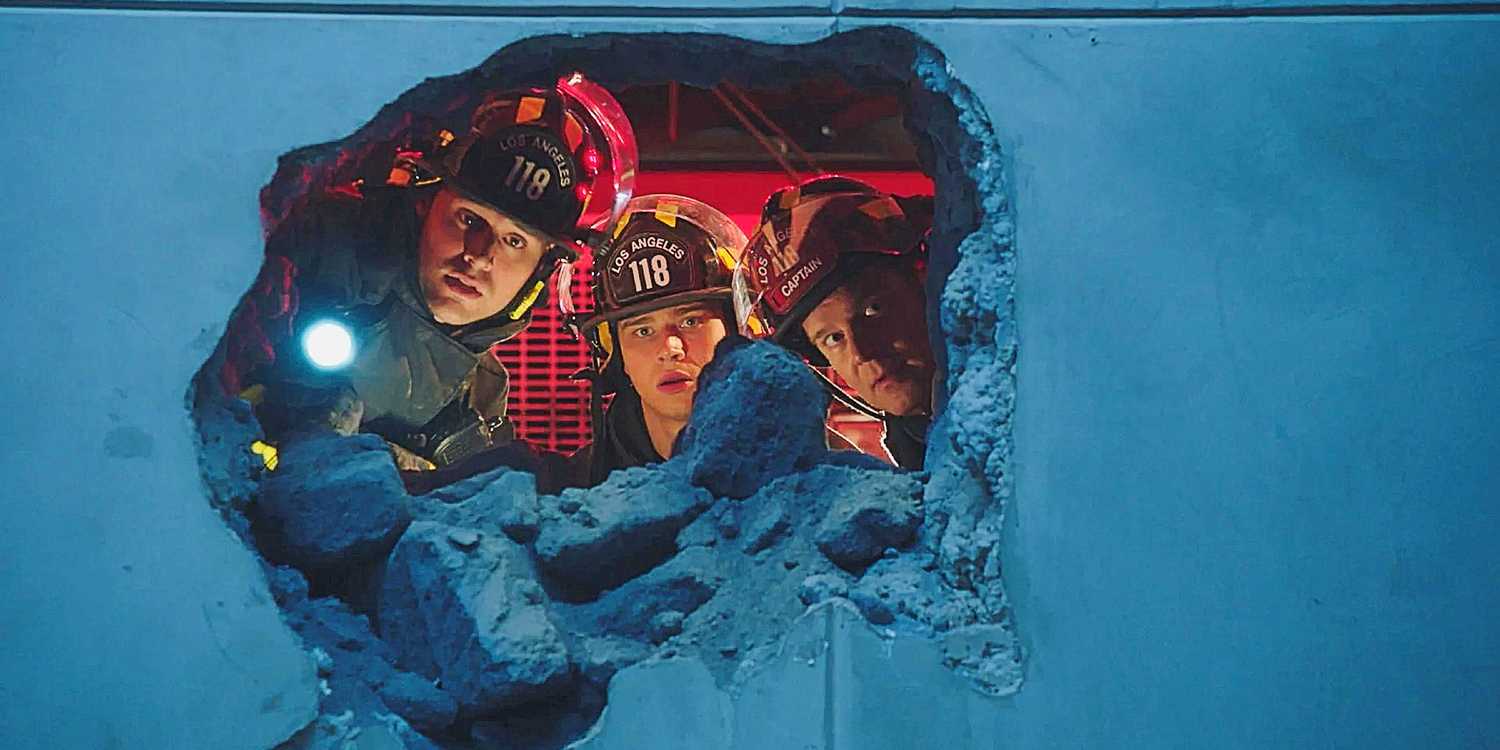
Eddie, Buck, and Bobby in 9-1-1 Ocean’s 911 Image via FOX -

Buck and Athena holding hands in 9-1-1 Season 9 Episode 15 Image via ABC -

Buck, Bobby, Eddie, Chimney, and Hen standing in front of a firetruck in 9-1-1 Season 8. Image via ABC

-

Eddie, Hen, Buck, and Ravi giving Chimney a gift in 9-1-1 Season 9 Image via ABC -

Chimney, Athena, and Maddie looking through the dispatch computer in 9-1-1 Season 9 Episode 13 Image via ABC -
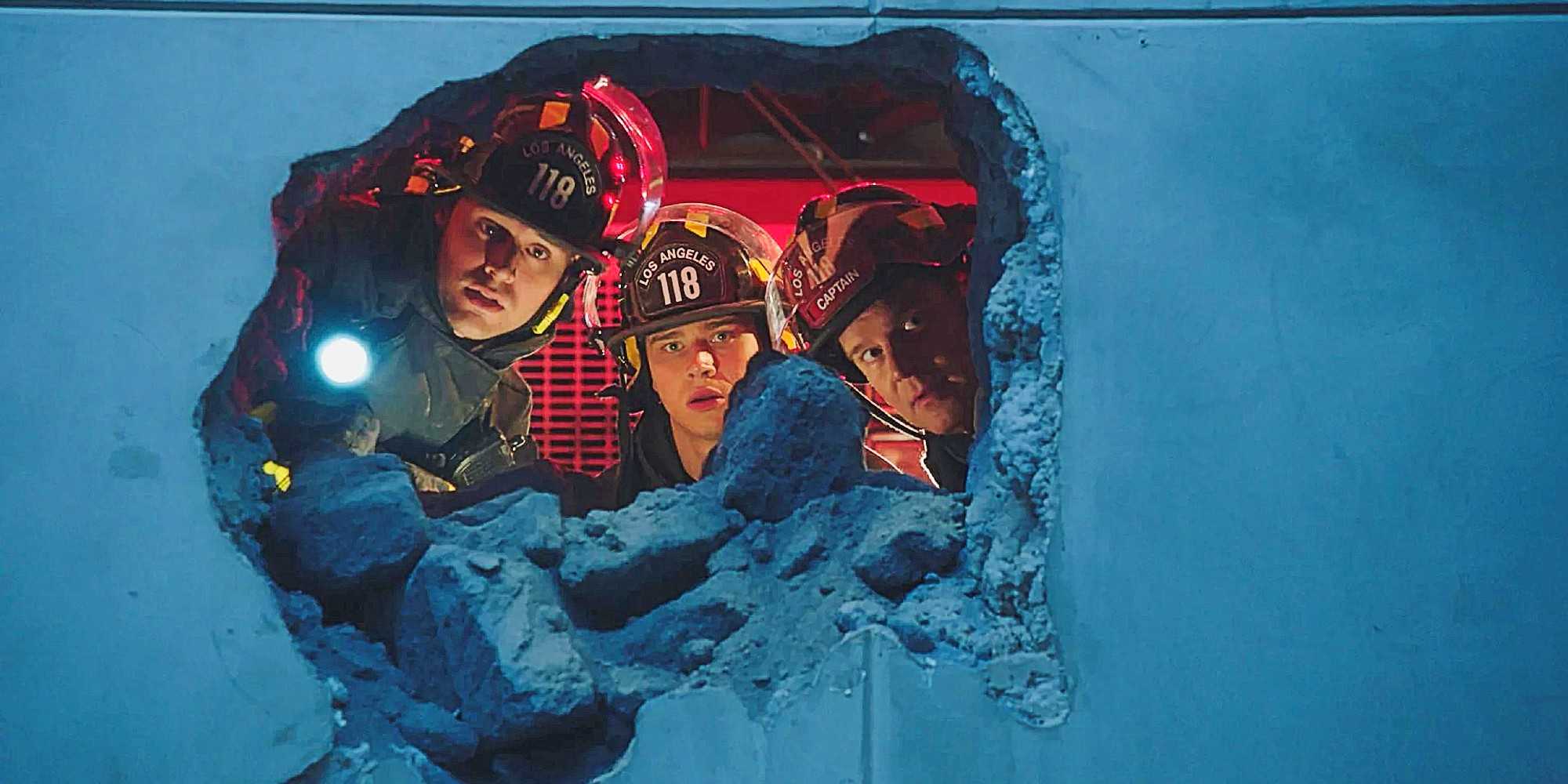
Eddie, Buck, and Bobby in 9-1-1 Ocean’s 911 Image via FOX -

Buck and Athena holding hands in 9-1-1 Season 9 Episode 15 Image via ABC -

Buck, Bobby, Eddie, Chimney, and Hen standing in front of a firetruck in 9-1-1 Season 8. Image via ABC

In the Season 5 episode “Brawl in Cell Block 9-1-1,” Bobby delivered the first version of this quote to a doctor while responding to a call at a prison, stating, “I have been a firefighter for nearly three decades, and trust me when I say: there is not a locked room anywhere that the right tools and enough time can’t break open.” It has always been fitting that this phrase of Bobby’s, which was spoken in a practical sense on the job, became crucial to an emotional Buck scene the following season. For the 118, being firefighters is not just what they do, but who they are. On the job, the 118 all know that there’s almost always a way to save someone. In his coma dream, Buck uses this same sentiment to get back to his family. This quote also represents the message at the heart of 9-1-1: no matter how bad things look, there is pretty much always a way out.
This message has been applied throughout the series, as the main characters have survived a number of potentially fatal injuries. More than that, though, each 9-1-1 character has had to fight back from deep emotional pain, including grief and mental health struggles. Bobby had to rebuild his life after the tragic deaths of his entire family, for which he blamed himself. Eddie (Ryan Guzman) has been struggling with PTSD throughout the series. Bobby and Buck have both struggled with addiction, and all of the characters have dealt with immeasurable grief — particularly after the death of Bobby in Season 8. Still, the members of the extended 118 family continue to endure and help each other in the process. They fight their way through while also saving others’ lives, continuing to further the legacy that Bobby built. There is no better reflection of this than Buck’s coma dream quote, which used this core phrase of Bobby’s to save Buck’s life.
9-1-1 is available to stream on Hulu.
You must be logged in to post a comment Login