Entertainment
5 Ambitious Gothic Stories That Robert Eggers Should Adapt

Nobody is stewarding Gothic cinema quite like Robert Eggers, the daring director widely considered a modern master of horror. Since his debut folk horror classic The Witch in 2015, Eggers has spent the last decade building a spectacularly sinister and immersive filmography. Eggers’ elevated horror is known for its meticulous attention to detail, historical authenticity, and slow-burn atmospheric dread. He is also notoriously untethered when it comes to genre conventions or labels, veering away from the horror bracket in 2022 to create the action-filled revenge epic, The Northman, based on a Scandinavian folktale.
What too remains consistent about Eggers’ work is his avoidance of and distaste for shooting contemporary settings. He has made it very clear that making a modern film is off the table, even narrowing down his time period cut-off to, ideally, pre-World War II. Luckily, Gothic literature of the past and present has no shortage of strange, ambitious, and macabre stories that would benefit from the Eggers treatment. These five stories are but a small sampling of Gothic literary potential, sourced from Victorian-era classics and more recent historical horror books alike, that would keep Eggers far away from the contemporary cell phone-ridden world and ensconced in bygone eras where his creative genius thrives.
5
‘Ligeia’ (1838)
By Edgar Allen Poe


Practically any Poe story could be singled out for an Eggers-led adaptation. In fact, Eggers has already dabbled with Edgar Allen Poe‘s particular vein of Gothic madness, having directed a short film adaptation of “The Raven” in 2008. One particularly intriguing, though lesser-known story in Poe’s compiled tales is “Ligeia,” first published in 1838. “Ligeia” is told by an unnamed opium-addicted narrator, who recounts an opulent, obsessive tale of undying love.
The titular Ligeia refers to the narrator’s first wife, a captivating raven-haired woman who, upon falling gravely ill, composes a poem on mortality called “The Conqueror Worm.” After Ligeia dies, the narrator remarries. However, his second wife, Lady Rowena, seems to be haunted or, perhaps, overtaken by the presence of the first. Seemingly repeating her fate, Lady Rowena also grows ill and passes away, but while the narrator holds vigil over her body, something strange happens: Rowena slowly returns from the dead, only she’s transformed into Ligeia. Whether Ligeia is a vampire, a ghost, a hallucination, or something else entirely is largely left up for interpretation. Eggers could certainly have a field day putting his spin on this story’s murky supernatural waters, playing with Poe’s decidedly unreliable narrator.
4
‘Between Two Fires’ (2012)
By Christopher Buehlman
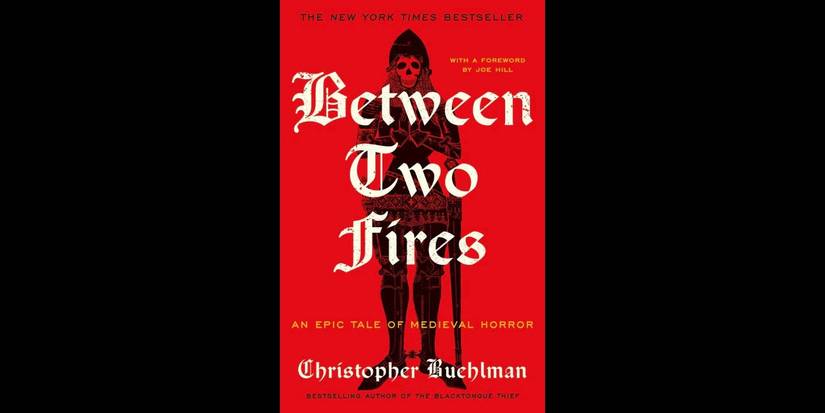
A popular dream adaptation pick for Eggers devotees, Christopher Buehlman‘s Between Two Fires is a sprawling historical horror novel set in the Middle Ages. Visceral, brutal, and fantastical, this book traces a disgraced knight across France during 1348, when the world is thoroughly overturned by the Black Death. The knight is accompanied by a mysterious young girl with Joan of Arc-style visions, looking to get to Avignon. The duo encounters demons and other unearthly horrors along the way, as well as a priest, Frere Matthieu of Saint Martin le Preux, who ultimately joins them in hopes of finding his brother, Robert Hanicotte, a cardinal working under Pope Clement.
Eggers has already proven his knack for directing a gruesome supernatural epic through The Northman. This apocalyptic story would likewise dip into historical horror and dark fantasy, while leaning even further into mystical, religious conflict. At once a realistic historical fiction venture and a medieval fantasy road movie populated by plague victims, angels, and demons, Buehlman’s Between Two Fires is exactly the kind of bleak, grimly engrossing project Eggers could do justice to on screen.
3
‘The Silent Companions’ (2017)
By Laura Purcell
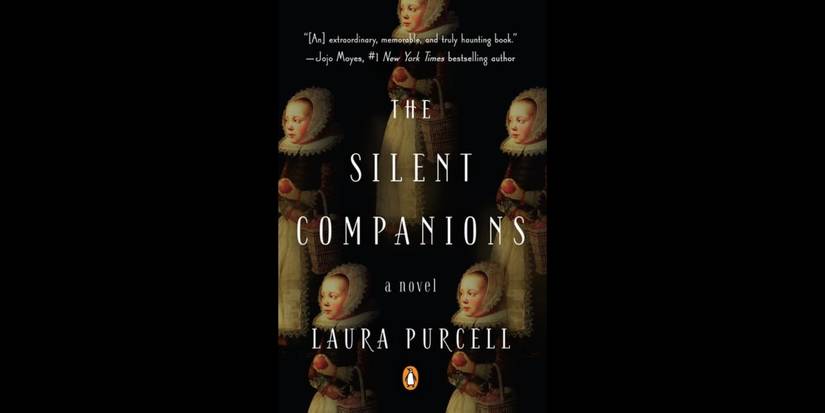
A 19th-century Gothic story like The Silent Companions is perfect for Eggers’ scrupulous period filmmaking, especially after the success of Nosferatu. Laura Purcell‘s Victorian Gothic novel follows Elsie, who marries handsome heir Rupert Bainbridge, only to be widowed just weeks into their marriage. Left pregnant and isolated in her late husband’s country estate, she soon discovers some truly unexpected, uncanny companions. Specifically, behind a locked door, she finds a bunch of painted life-size wooden figures, one of which eerily resembles herself. The estate residents are terrified of the figure, and her own superstition starts to grow as the art form seems to have a life of its own.
This Victorian ghost story has all the ingredients for a traditional horror movie set-up, but the simple haunted house trope is not the sum total of Purcell’s storytelling. The narrative evolves into a much more multidimensional puzzle, moving between two time periods: Elsie in the 1800s timeline and her late husband’s ancestor, Anne Bainbridge, in the 1600s. Between those two timelines are various interludes that take place in an asylum. Befitting Eggers’ style in both its scope and its impeccable suspense-building, The Silent Companions would be a female-led adaptation that beautifully splices the Gothic strengths of both Nosferatu and The Witch.
2
‘Ring Shout’ (2020)
By P. Djèlí Clark
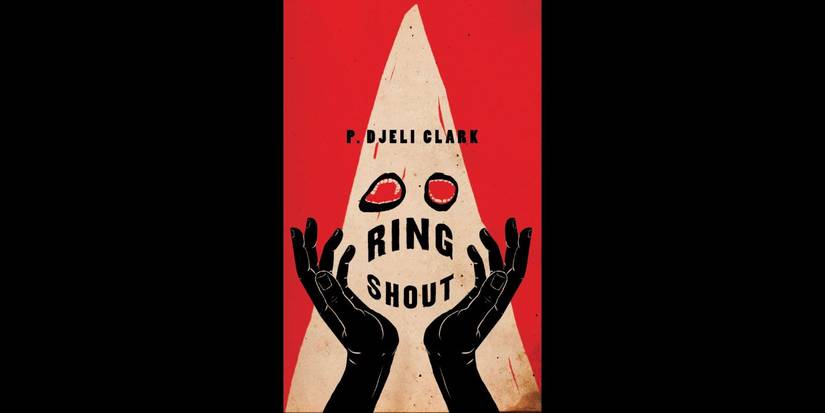
Eggers has explored New England folk horror, Icelandic mythology, and Victorian Gothic horror. Now, perhaps it’s time for Eggers to tackle the Southern Gothic. P. Djèlí Clark’s Ring Shout would offer him a particularly ambitious entry point. Set in Prohibition-era Georgia, the novella introduces Maryse Boudreaux and her group of fierce resistance fighters, battling all-too-real demons reborn from the white supremacist propaganda film, The Birth of a Nation.
Clark works at the intersection of fantasy, sci-fi, and horror to explore America’s dark past and the ongoing fight against racial violence and oppression. With rich folkloric roots, comparable to the recent Southern Gothic hit, Sinners, Clark’s Ring Shout is a creative, satisfying Southern Gothic thrill ride packed into just under 200 pages. The book did get picked up for a TV adaptation in late 2020, set to star Kiki Layne, but the project has seemingly stalled over the last five years. If Eggers could snag the film rights, Ring Shout could allow him to chart a brand-new chapter in his dedicated historical filmography: the 1920s American South.
1
‘The Strange Case of Dr Jekyll and Mr Hyde’ (1886)
By Robert Louis Stevenson
This Victorian horror classic has certainly stood the test of time. Robert Louis Stevenson‘s Strange Case of Dr Jekyll and Mr Hyde has inspired countless movie adaptations throughout the decades. The 1931 film adaptation is perhaps the most acclaimed of the bunch, but the story’s enduring appeal on and off-screen has ensured that the phrase “Jekyll and Hyde” remains in our contemporary lingo. Regardless if you’ve read the book, which is, in fact, a brisk novella, the double-life concept or a dark side run wild is widely familiar. This alone makes the story a strong contender for an Eggers adaptation, as the director often takes a popular trope, legend, or concept and then strips it back to its Gothic roots.
Less of a monster movie and more a quintessential psychological horror slow-burn, it’s not hard to imagine how Eggers could cultivate a foggy, claustrophobic, repressive Victorian backdrop. In Stevenson’s story, Dr. Henry Jekyll, a London scientist, concocts a potion to separate and subdue the evil side of himself. In doing so, the alter ego ends up taking over and wreaking havoc as the violent criminal, Edward Hyde. As The Substance made clear, keeping the balance isn’t so easy. All in all, this famous novella truly wears many hats, as a form of allegory, detective fiction, doppelgänger literature, and, of course, Gothic horror, which are all well-suited to Eggers’ signature macabre, genre-bending flair.
You must be logged in to post a comment Login