Entertainment
5 Greatest Stanley Kubrick Movie Masterpieces, Ranked

Stanley Kubrick is one of the greatest directors of all time. Putting aside personal preferences, there’s simply no debating that he had a profound impact on the state of cinema with films that defined and redefined their respective genres. He made challenging films that pushed as many technical boundaries as they did narrative ones. With perhaps the exception of his first two films, Fear and Desire and Killer’s Kiss, each of Kubrick’s films could also be considered masterpieces. They each represent some of the very best of cinema, with some frequently cited as among the greatest films ever made.
With a filmography filled with masterpieces, it’s hard to determine which five should be considered the director’s greatest, but what is the internet for if not to make bold (or not so bold) statements that could potentially foment vitriolic discourse? Stating that Kubrick is a genius filmmaker is not a controversial viewpoint, but everyone has what they consider to be his all-time greatest films. It’s genuinely hard to argue that any ranking of his movies is incorrect when they are all so fantastic, but it’s doubtful that anyone could deny that these five movies could be considered the greatest of all his masterpieces.
5
‘The Shining’ (1980)


Only in a career as impressive as Kubrick’s could a film as iconic as The Shining, which has a legitimate claim to the throne of greatest horror film ever made, rank at the lower end of his masterpieces. This adaptation of Stephen King‘s novel, which King famously hated for the changes it made to his source material, is a slow-burn horror that doesn’t shock with jump scares or tremendous gore, but rather lets dread slowly seep in from the corners of the screen until it completely envelops the audience. By the time they realize how utterly surrounded they are by the madness, just as the characters are, the film has reached its climax, and Jack Nicholson is chasing his family around with an axe.
The story is simple enough. A dried-out writer and his family move into a remote hotel to serve as its winter caretakers, but as the season goes on and the hidden horrors of the hotel reveal themselves, the father loses his grip on his sanity. From frame one, as the camera swoops over the vast Colorado landscape and Wendy Carlos‘ score thrums, Kubrick is instilling fear in the audience. That fear continues through John Alcott’s cinematography, between carefully composed shots and incredible use of the Steadicam that tracks young protagonist Danny around on his big wheel through the immaculately crafted sets, which defies all sense of logical space to further put the audience on edge. The Shining is a masterpiece of creeping terror.
4
‘A Clockwork Orange’ (1971)
As controversial a film as Kubrick ever made, A Clockwork Orange still manages to shock more than five decades after its release. Adapted from Anthony Burgess’ novel, it’s a dystopic film about a future society rife with a bit of the old ultraviolence. It’s a film meant to disturb, and, with Kubrick’s typically cold and clinical style, it did just that with many critics and audiences when it was first released. Same as The Shining, it has gained a cult following for those who can stomach its perverse thrills. Its level of violence may seem slightly tame today, but it was a part of a movement of films that brought more visceral violence to cinemas in the late ’60s and early ’70s, pushing the boundaries of what was considered acceptable.
Malcolm McDowell gives a career-defining performance as Alex DeLarge, the sociopathic leader of his gang of droogs, who spend their nights spreading terror and violence. After being betrayed by his gang, he is sent to prison for his crimes, where he undergoes radical re-education. The film famously ends with Alex reverting to his violent ways, whereas the novel features an epilogue where the character truly has reformed. Alas, Kubrick found Alex incapable of redemption and believed the ending of the book to be unrealistic. It’s a powerful punctuation to Kubrick’s most upsetting masterpiece.
3
‘Paths of Glory’ (1957)
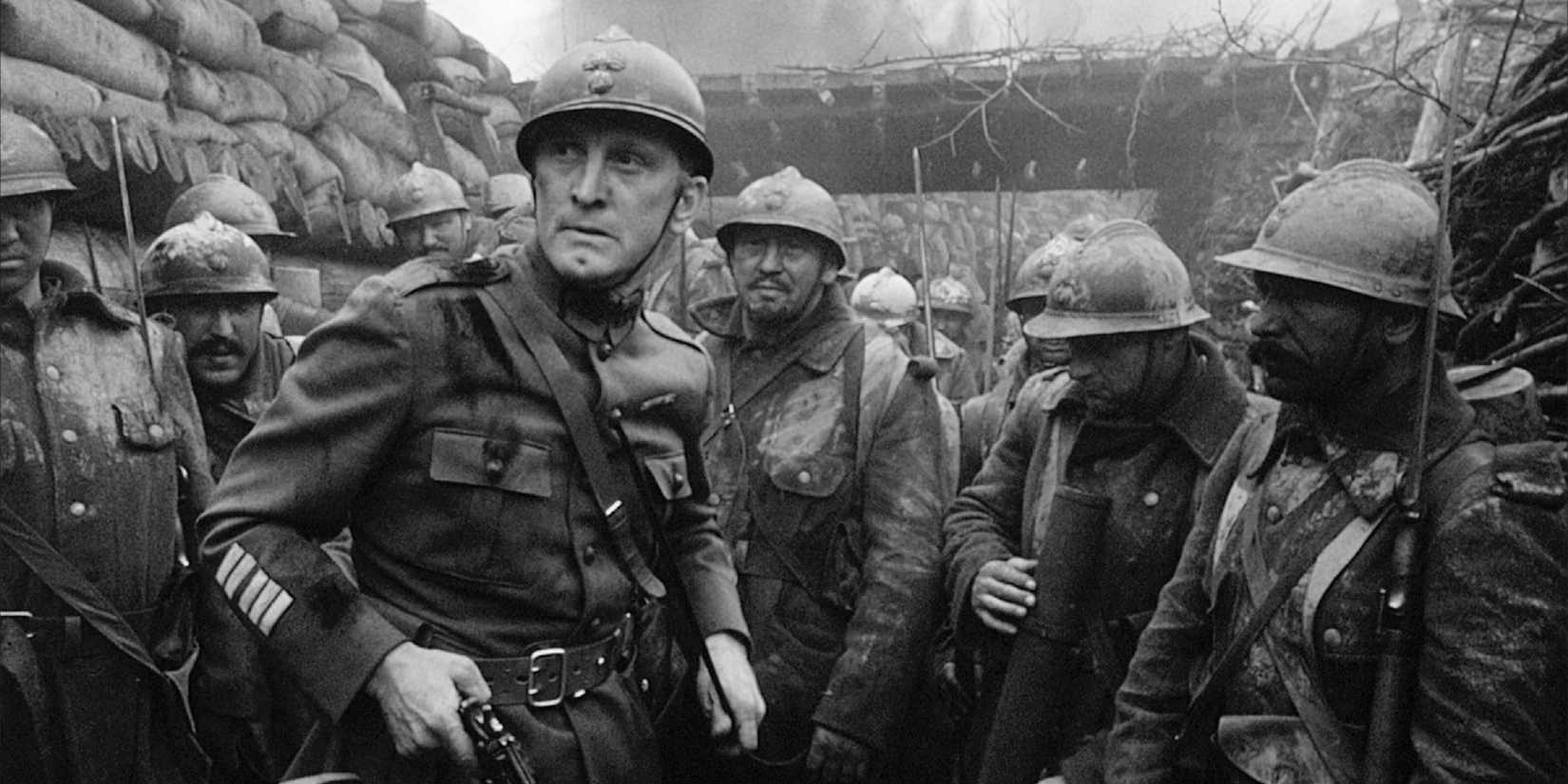
From Kubrick’s most disturbing film to his most compassionate, Paths of Glory is an anti-war film that, even while depicting the grim realities of combat and the cold indifference of military hierarchies, still finds the humanity within the hearts of heroes. Based on the novel of the same name by Humphrey Cobb, itself inspired by true events, it details a French regiment during World War I ordered on a suicide mission and the subsequent court-martial that follows. The courtroom scenes are just as dramatically visceral as the battle sequences, both directed with the same meticulous attention to detail that Kubrick had already developed as a filmmaker.
Kirk Douglas portrays the commanding officer who passionately defends the court-martialed men to no avail. It’s a heartwrenching ending that Douglas himself had to fight for against Kubrick, who had initially intended a happier ending in a change to the novel, suggesting a much warmer heart than many would assume from the often coldly cynical director. Regardless of the ending, Paths of Glory shows a humanistic side of the director not often glimpsed in his work, and it’s possibly his most moving masterpiece.
2
‘Dr. Strangelove or: How I Learned to Stop Worrying and Love the Bomb’ (1964)

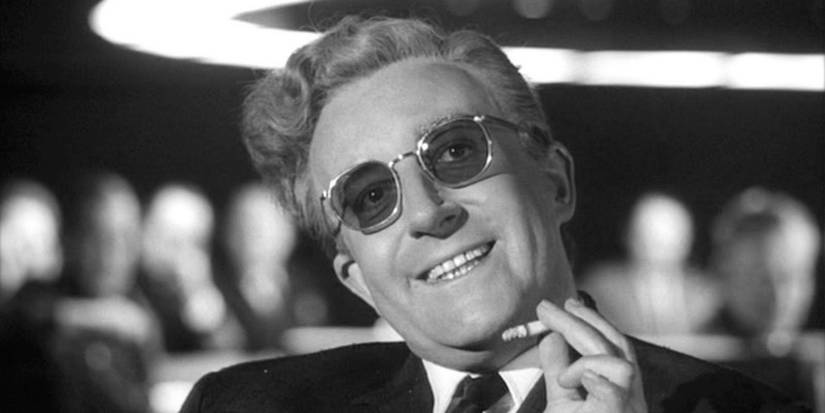
Dr. Strangelove is the only Kubrick comedy, even though a wicked sense of humor and irony runs through his other work, but the laughs here are very much coming from the belly. It’s another adaptation by Kubrick, this one of the Cold War novel Red Alert, which provided the basic plot structure but differs greatly from the movie in that it is a straight-faced thriller. Kubrick found while developing the novel that there was inherent humor and patent absurdity in the premise, and so he recalibrated the story to something satirical, and ended up with one of the funniest films ever made.
After General Jack D. Ripper goes mad with the thought that the Soviets are trying to pollute Americans’ precious bodily fluids, he goes rogue and issues an attack order to aircraft armed with nuclear payloads. His actions cause a panic in the War Room at the Pentagon as the President and his advisors debate how to handle the situation. It’s wild and wacky, if not a little disconcerting, and it features Peter Sellers giving three equally hysterical performances as a British officer, the American President, and the titular Dr. Strangelove, a nuclear expert and one-time Nazi whose hand hasn’t quite lost its allegiance to the Führer. It’s Kubrick’s one and only laugh-out-loud masterpiece.
1
‘2001: A Space Odyssey’ (1968)
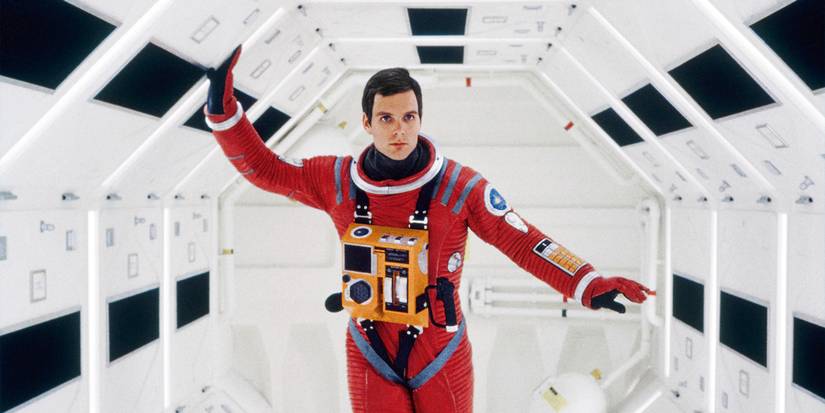
Kubrick’s greatest masterpiece and the greatest science fiction film of all time, 2001: A Space Odyssey is an epic that explores the dark reaches of space and the intimate corners of humanity at the same time. Written with famed author Arthur C. Clarke, Kubrick crafted a visionary film featuring landmark visual effects that still hold up today, along with prescient themes of artificial intelligence and humanity’s destructive nature. Spanning time and space, it is a true cinematic journey.
Set predominantly in the then-future titular year, and made before we had even landed on the moon, the film follows a group of astronauts in their interstellar investigation of an alien monolith. Their journey comes with perils in the form of HAL 9000, the A.I. supercomputer that turns homicidal, and the monolith itself, which sends the last astronaut on a psychedelic trip through the space-time continuum that fans have been debating ever since the film’s release. Kubrick deliberately avoided explicit explanation of the climax and larger implications, allowing viewers to draw individual conclusions. It’s a metaphysical masterpiece that has only gotten better with time.

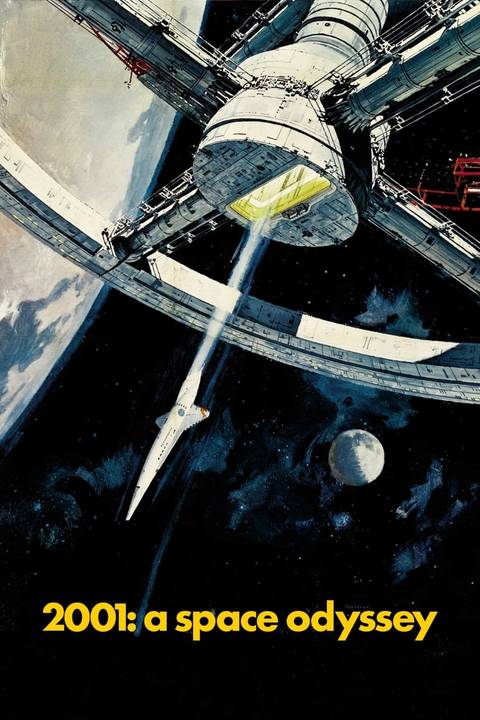
2001: A Space Odyssey
- Release Date
-
April 10, 1968
- Runtime
-
149 minutes
- Director
-
Stanley Kubrick
- Writers
-
Stanley Kubrick, Arthur C. Clarke
-

Keir Dullea
Dr. David Bowman
-
Gary Lockwood
Dr. Frank Poole

You must be logged in to post a comment Login