Entertainment
5 Hard Sci-Fi Books That Are Perfectly Written

Hard sci-fi has a reputation problem. Say the phrase out loud, and most people picture a 700-page brick full of equations, where the plot stops every 20 pages so the author can explain how a fusion drive works. Greg Egan‘s Diaspora gets brought up constantly for burying its plot under pages of theoretical physics that read like a textbook. William Gibson‘s Neuromancer is a genre-defining classic, but plenty of readers admit they feel lost trying to keep up with its dense, jargon-heavy prose.
But hard sci-fi doesn’t have to feel like homework. The best books in the genre are filled with real science, but they never make you feel like you need a degree just to keep up. That’s the sweet spot these five books hit.
1
‘Project Hail Mary’ (2021)

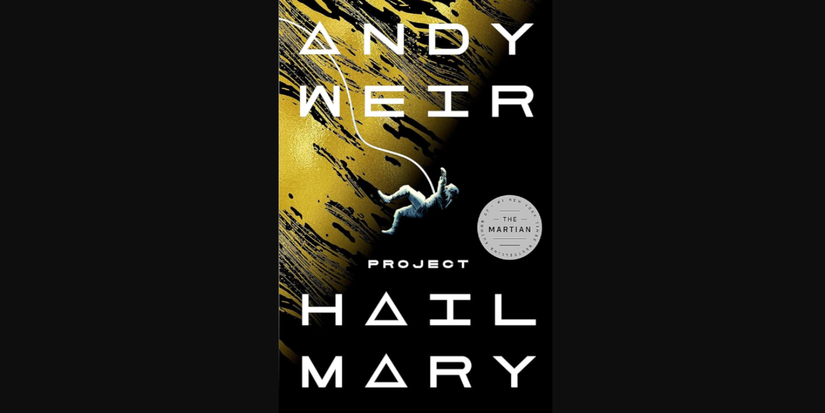
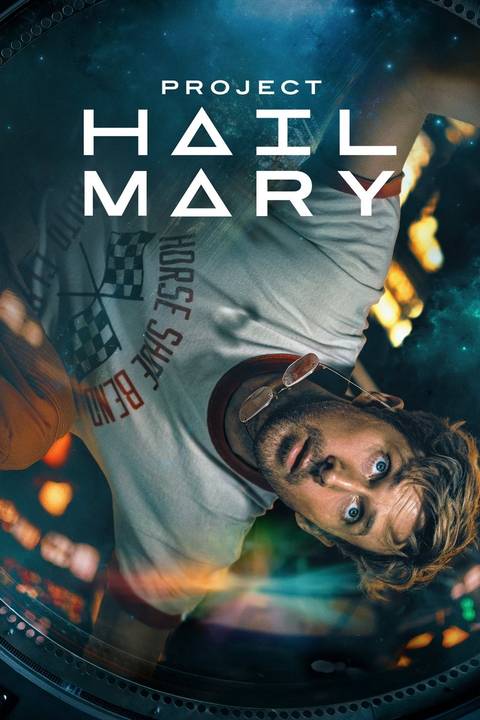
The movie adaptation was easily one of the best films of 2026, but its biggest criticism was that it had to leave out much of the book’s fascinating scientific problem-solving. The novel lets you live inside Ryland Grace’s thought process, and that is where it truly shines. For example, the movie has Grace (Ryan Gosling) simply look out a window and realize he’s in space. In the novel, he slowly notices that something feels wrong. While climbing a ladder, he realizes his body doesn’t move quite the way he expects.
Then he starts running experiments. He drops objects and times how long they take to hit the floor with a stopwatch, and he realizes the gravity is all wrong. After that, he builds a pendulum to calculate the acceleration. From those results, he figures out that the gravity inside the ship is actually being created by constant acceleration. And that is how he realizes he isn’t on Earth at all, but aboard a spacecraft that is continuously under thrust. It’s a brilliant sequence, and moments like that are everywhere in the novel. The movie is a masterpiece in its own right, but if you loved it, the book is even better.
2
‘The Three-Body Problem’ (2006)
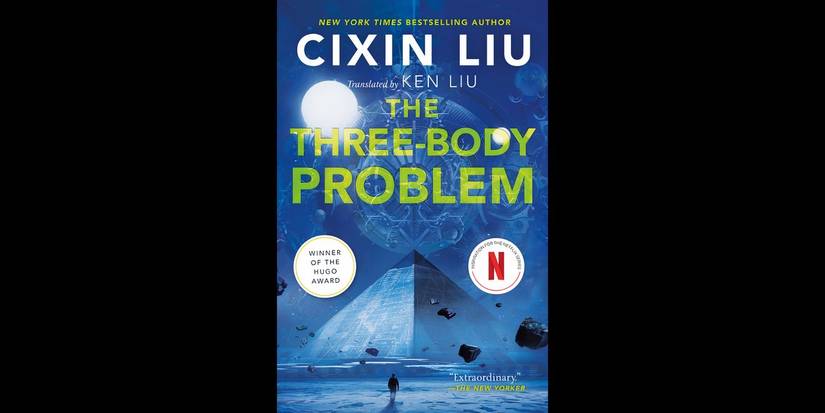
This is the first novel in Liu Cixin‘s Remembrance of Earth’s Past trilogy, and it covers first contact, game theory, the physics of higher-dimensional space, and the long, unsettling arc of what happens when two civilizations discover each other across light-years. The first book is also the most grounded of the three. It follows a young astrophysicist in 1960s China who watches her father get killed during the Cultural Revolution. Embittered with humanity, she eventually uses the sun as a massive amplifier to broadcast a message deep into space, calling out to any alien civilization willing to either save or conquer Earth.
Decades later, the story focuses on nanotechnologist Wang Miao, who starts seeing a mysterious countdown overlaid across his vision no matter where he looks. At the same time, some of the world’s most prominent physicists start committing suicide, seemingly because the fundamental laws of physics have stopped making sense to them. Liu won the Hugo Award for Best Novel in 2015 for this book, and it was the first translated novel ever to do it!
3
‘Ready Player One’ (2011)

Ernest Cline‘s novel is set in 2045, in a dystopian version of America where most people spend their waking hours inside the OASIS, a massive virtual reality universe. When OASIS creator James Halliday dies, he leaves behind an Easter egg hidden somewhere inside the simulation, along with the promise that whoever finds it inherits his fortune and total control of the OASIS. Teenager Wade Watts becomes obsessed with cracking the puzzle, which means obsessively studying every piece of 1980s pop culture that Halliday loved growing up.
Steven Spielberg made a fantastic movie out of this, but like any novel-to-movie adaptation, a lot of the coolest details had to be left out. The novel describes how, to log in safely without wasting scarce real-world resources, Wade uses a modified exercise bike to generate his own electricity. The challenges themselves are far more elaborate too, including a full playthrough of the Dungeons & Dragons module “Tomb of Horrors” and a 3D recreation of the text adventure Zork, along with flick syncs, which are basically movie-karaokes where players have to mentally step into a movie and act out every line and movement of the protagonist to pass specific gates.
4
‘We Are Legion (We Are Bob)’ (2016)

Bob Johansson dies in a car accident and wakes up 117 years later as an AI running inside a space probe. Dennis E. Taylor‘s premise is already absurd before the story turns Bob into humanity’s best shot at surviving whatever comes next. Because Bob can replicate himself, the “legion” of the title ends up being dozens of versions of the same guy, each one drifting off to explore the galaxy with a slightly different personality shaped by their own experiences.
Taylor gets into real hard sci-fi concepts, like scanning a human brain and mapping its neural pathways into a matrix to create a sentient digital copy or turning raw space rocks into functioning manufacturing plants using automated 3D printers and molecular assemblers. He also spends real time on interstellar travel physics and the biology of alien ecosystems Bob encounters along the way. But none of these big concepts ever weigh the story down, because Bob is always having fun, cracking jokes and dropping movie references no matter how dire things get. If you love the tone of Andy Weir’s books like The Martian or Project Hail Mary, this is the closest thing you’ll find that scratches that same itch.
5
‘Seveneves’ (2015)

Seveneves opens with the moon breaking apart for no explained reason, and calculations quickly reveal that within two years, the debris will trigger a “Hard Rain” that bombards Earth’s surface for the next 5,000 years. The book breaks down the terrifying physics of orbital decay — how the hard rain will boil all the oceans and destroy the Earth’s atmosphere, instantly wiping out all life on the planet. The rest of the novel is about what humanity actually does with those two years.
It is full of petty politics and hard sci-fi concepts, real rocket-science math like calculating changes in velocity, gravity assists, perigee, and apogee to move ships, as well as the repurposing of the International Space Station into a modular habitat, while dealing with constraints like zero-gravity living and solar radiation shielding. The back half of the book becomes a fascinating exploration of what it would actually take to rebuild a species from a handful of people and the challenges that come with it, like the mathematics of engineering human diversity using frozen genomes. It’s a bleak book in places, but one that fully commits to the science behind the story.

- Release Date
-
March 15, 2026
- Runtime
-
157 minutes
- Director
-
Christopher Miller, Phil Lord
- Writers
-
Drew Goddard, Andy Weir
- Producers
-
Aditya Sood, Amy Pascal, Andy Weir, Christopher Miller, Phil Lord, Rachel O’Connor, Ryan Gosling
You must be logged in to post a comment Login